
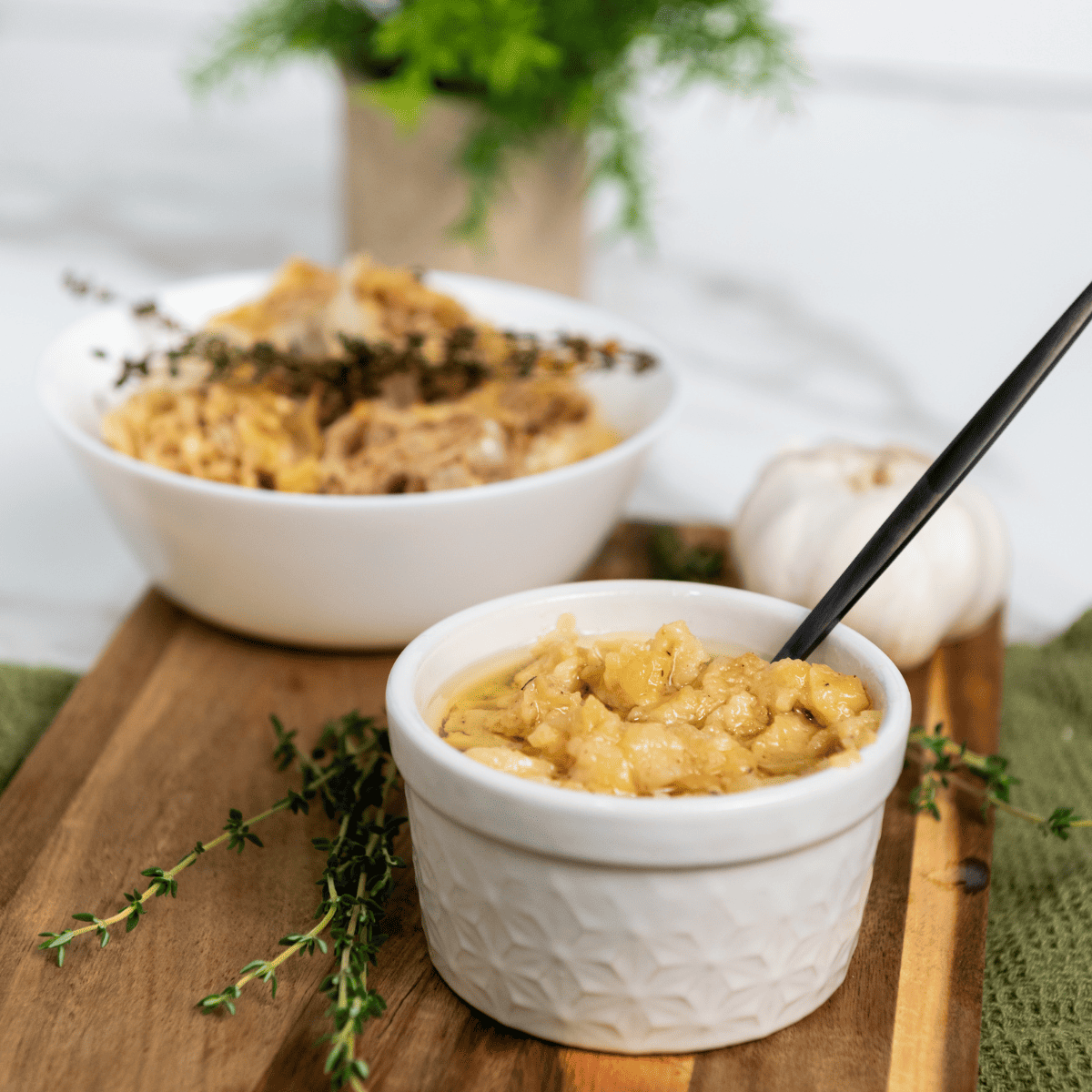
Air Fryer Garlic Confit turns whole peeled cloves into soft, sweet, spreadable gold — slow-cooked in olive oil at a low temperature until they collapse under a fork. No oven heating up your kitchen for two hours. No standing over a pot. Forty minutes in the air fryer and you have both buttery confit garlic and a jar of garlic-infused oil that makes everything you cook taste like you tried harder than you did.
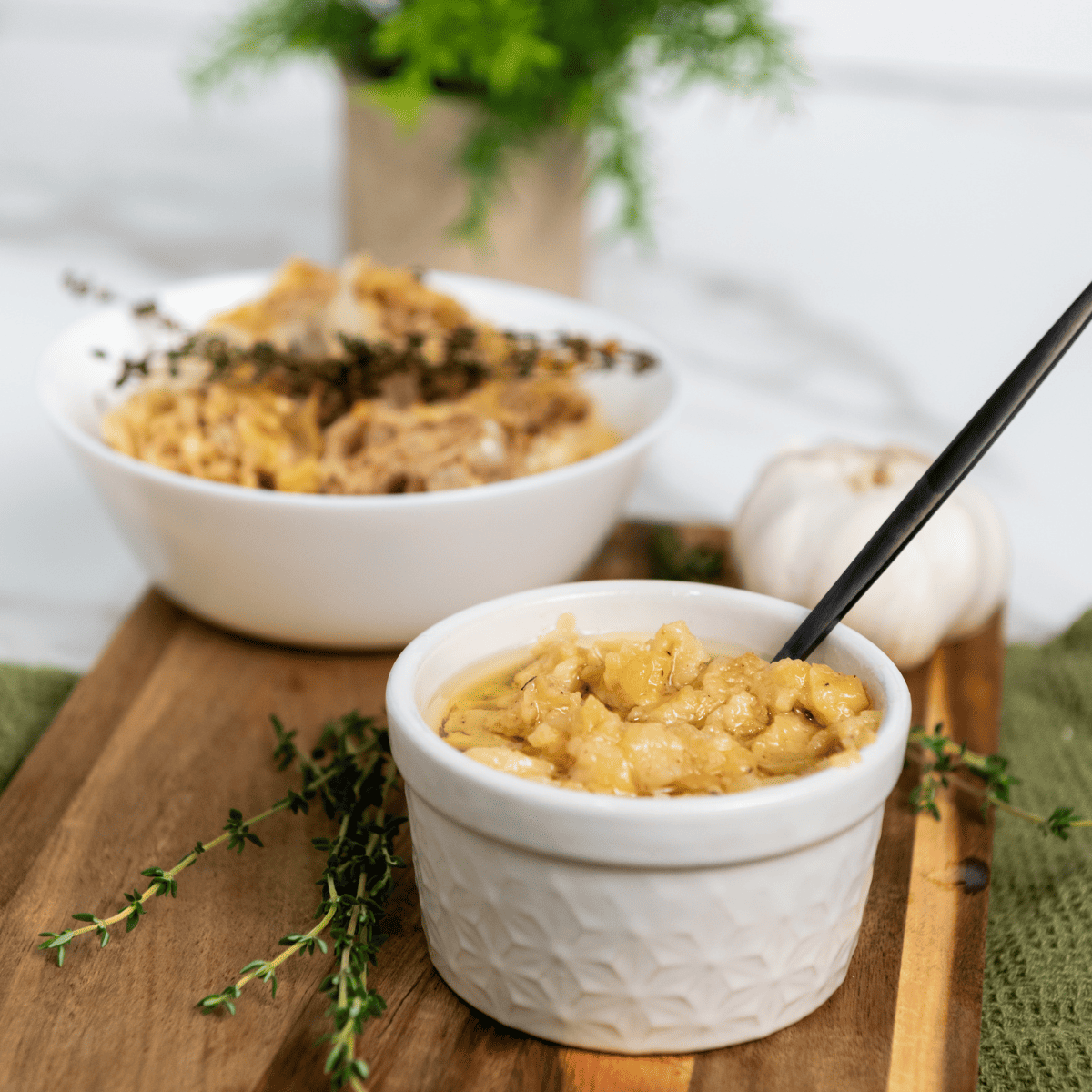
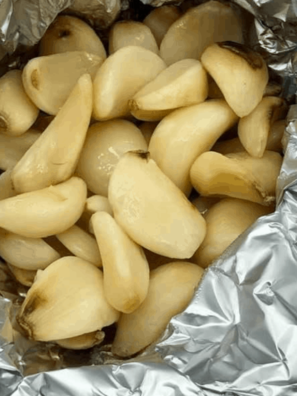
If you’ve ever made roasted garlic in the air fryer, think of confit as its richer cousin. Roasted garlic is wrapped in foil and browned. Garlic confit is fully submerged in oil and coaxed — lower heat, longer time, softer finish, and no bitter edges.
⚠️ Read This Before You Make Garlic Confit
I’m putting this at the top instead of burying it, because most garlic confit recipes online, get it wrong.
Garlic stored in oil is a botulism risk. Garlic carries Clostridium botulinum spores from the soil. Oil creates an oxygen-free environment. Cooking at 250°F does not kill those spores. That combination is exactly what the bacteria need.
Here’s what the actual food safety authorities say:
- The National Center for Home Food Preservation confirmed through research that garlic-in-oil stored at room temperature is at risk for botulism, and that garlic-in-oil should be made fresh and refrigerated at 40°F or lower for no more than 4 days.
- USDA FSIS sets the limit at no more than 7 days refrigerated.
- Both agree it freezes safely for several months.
So: fridge for up to 4 days. Freeze anything you won’t use by then. Never leave it on the counter — not overnight, not for an hour “to soften the oil.” Botulinum toxin is odorless and tasteless. There is no home test. Bad confit looks and smells exactly like good confit.
The good news: freezing works beautifully, and I’ll show you the ice cube tray method below. Make a big batch, freeze it in portions, pull one out whenever you need it.
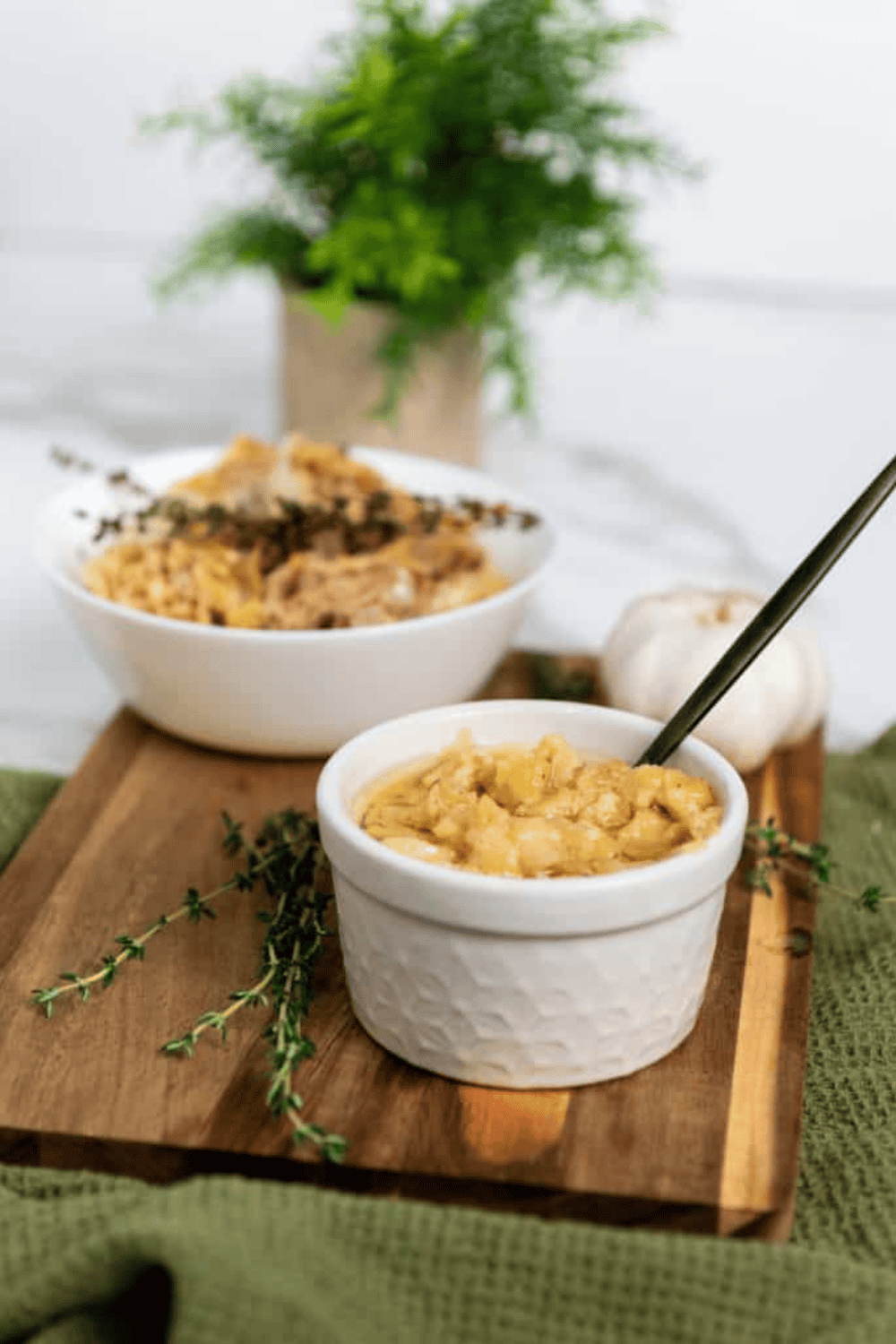
What Does Confit Mean?
Confit comes from the French confire, meaning “to preserve.” It’s a slow-cooking technique where food is submerged in fat and held at a low temperature for a long stretch. Traditionally it was duck or goose, cooked and stored in its own rendered fat. The method has since expanded to vegetables and fruit.
With garlic, the oil isn’t there to fry anything — it’s there to conduct gentle, even heat and keep the cloves from drying out or browning. The result is garlic that’s lost every bit of its raw bite and turned sweet, nutty, and almost jammy.
One important correction to the old French logic: confit was a preservation method in an era before refrigeration and before we understood botulism. Modern food science says otherwise. Treat this as a fresh food, not a pantry item.
Why the Air Fryer Beats the Oven for Garlic Confit
- It’s faster. The oven takes 90 minutes to 2 hours at 250°F. The air fryer gets there in 30–40.
- The convection is the whole point. Circulating air surrounds a small ramekin evenly, so you don’t get the hot-spot scorching you’d get from a stovetop burner.
- It doesn’t heat your house. Running a full oven for 2 hours to cook one head of garlic is absurd in July.
- It’s genuinely hands-off. Set it, walk away, stir once.
- Small batches make sense. An oven punishes you for cooking a little. An air fryer doesn’t care.
Ingredients Needed
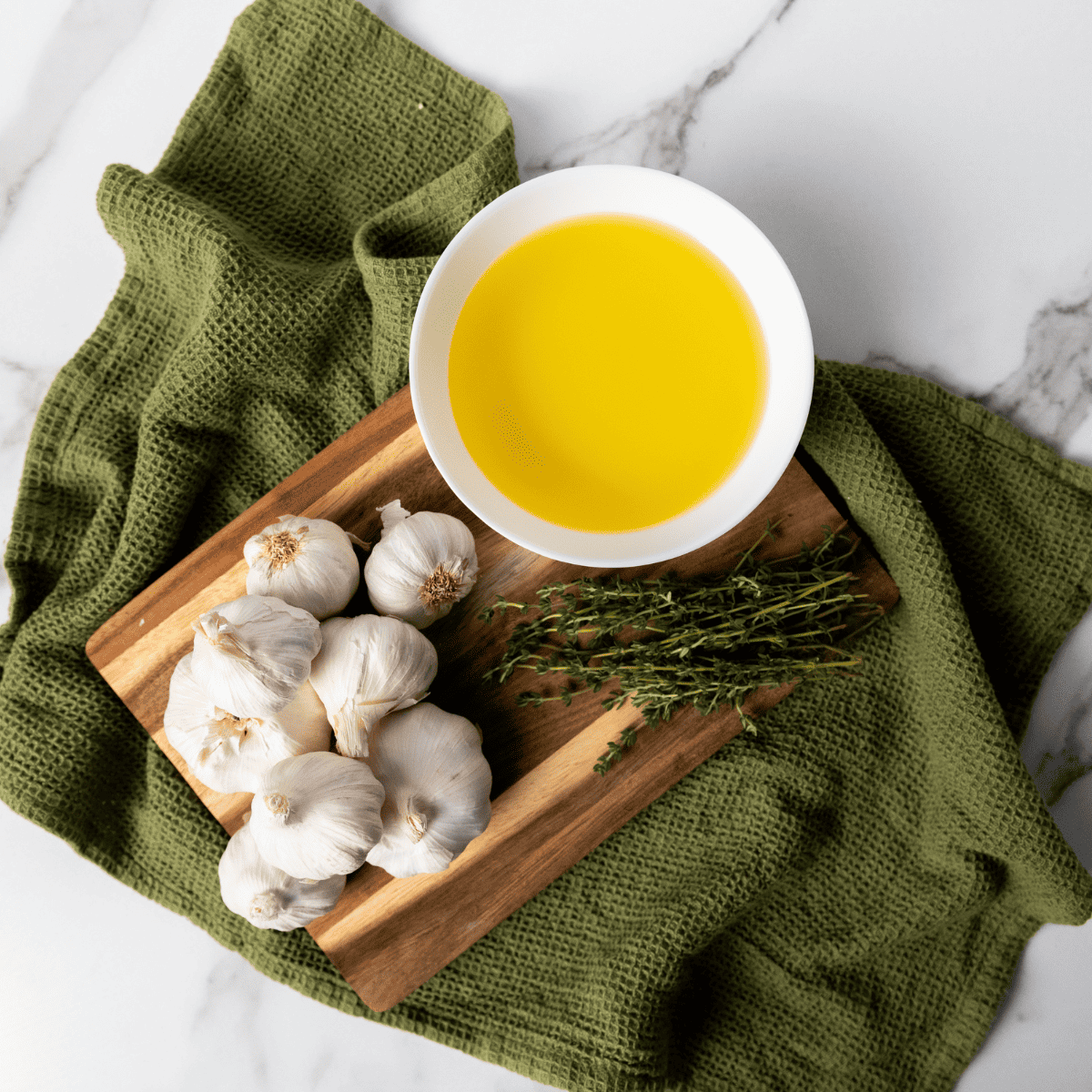
- Garlic cloves — Fresh, whole, peeled. Pre-peeled cloves from the produce section are a completely legitimate shortcut and I use them constantly. Do not use jarred minced garlic; it’s packed in water or acid and will turn to mush.
- Olive oil — Enough to fully submerge. Regular olive oil is ideal here. Extra virgin works and tastes great, but you’re paying for delicate flavor compounds that 40 minutes of heat will flatten. Avocado, grapeseed, or a neutral oil all work if you’d rather save the good stuff for the salad.
- Fresh thyme — Optional but excellent. Rosemary, bay leaf, or a strip of lemon peel are all fair game.
- Sea salt and black pepper — Light hand. You can always salt whatever you’re spreading it on.
How to Peel Garlic Fast
Peeling 30 cloves is the only real work in this recipe. Break the head apart, drop the cloves skin-on into a jar or a metal bowl with another bowl on top, and shake it hard for 20–30 seconds. Most of the skins release on their own. Pick out the stragglers by hand. This is the same trick I use for air fryer roasted garlic.
Equipment
- An air fryer — basket or oven style, both work
- A small oven-safe dish — a ramekin, a mini loaf pan, or a small cake barrel. It needs to be deep enough to submerge the cloves and small enough that you’re not wasting a cup of oil.
- Aluminum foil — for covering. Don’t skip this. See below.
- A clean glass jar — for storage
- An ice cube tray — for freezing
How to Make Air Fryer Garlic Confit
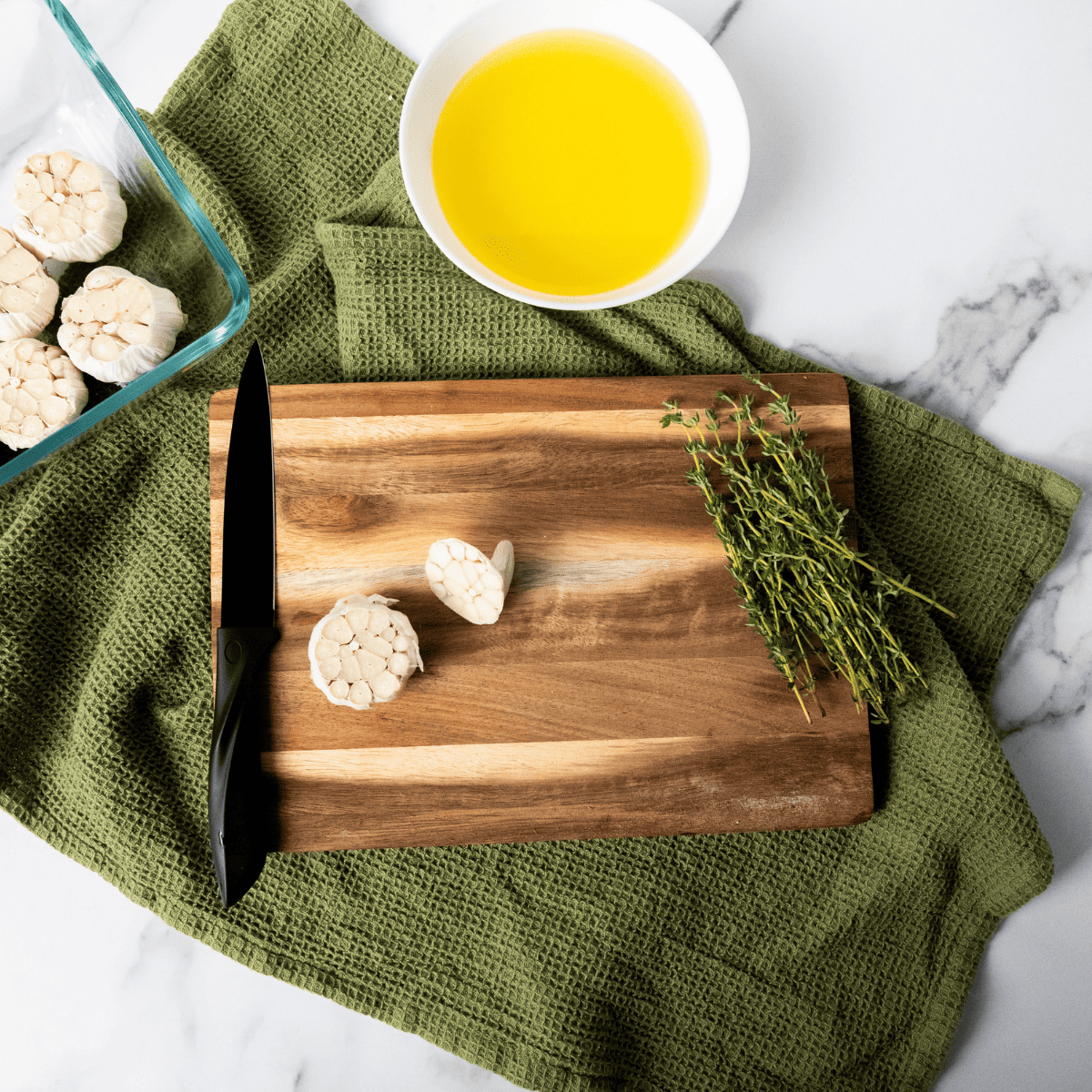
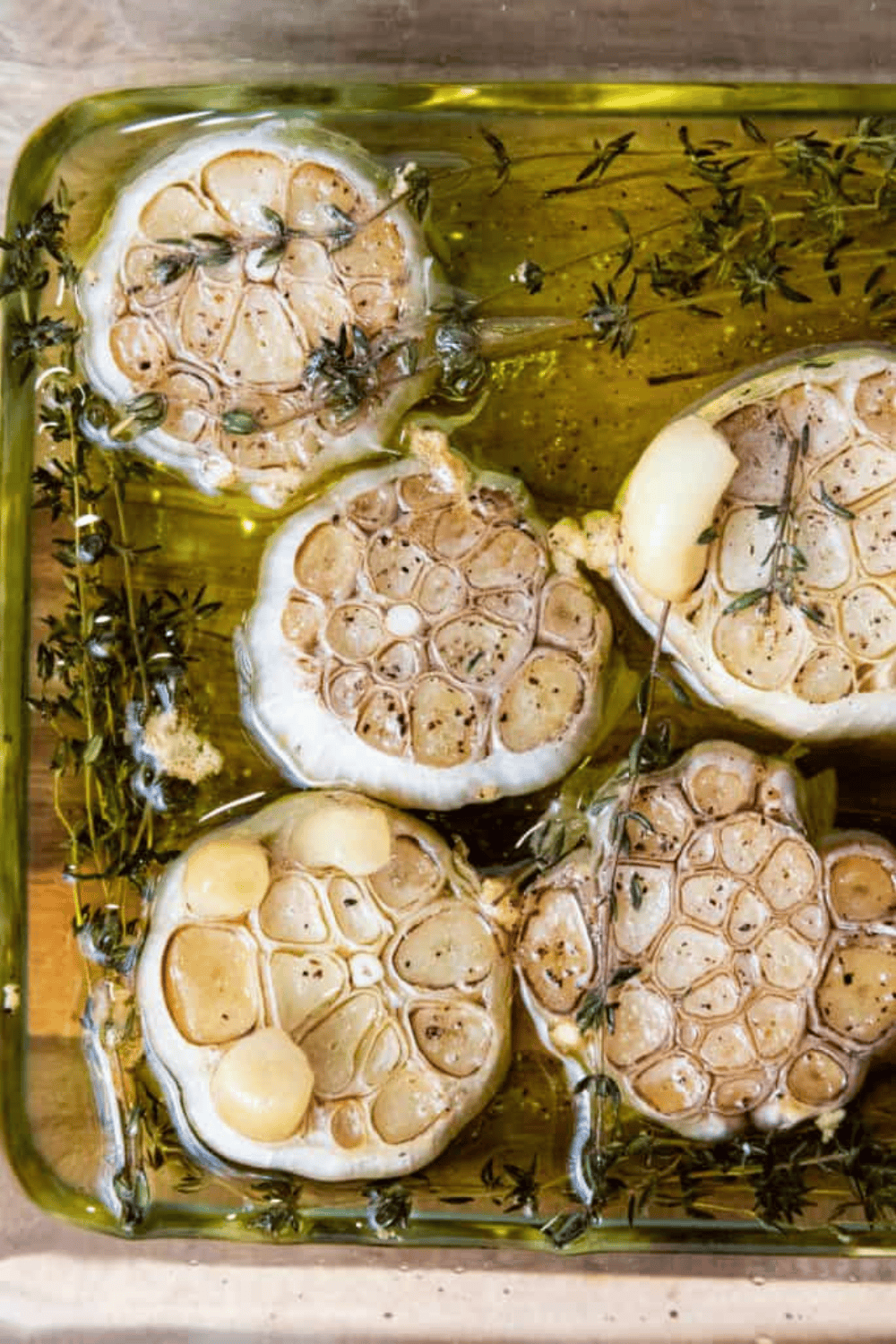
Step One: Preheat the air fryer to 250°F (120°C) for 3–5 minutes. Yes, preheat. A cold start means the cloves sit in warming oil in the 40–140°F danger zone longer than they need to.
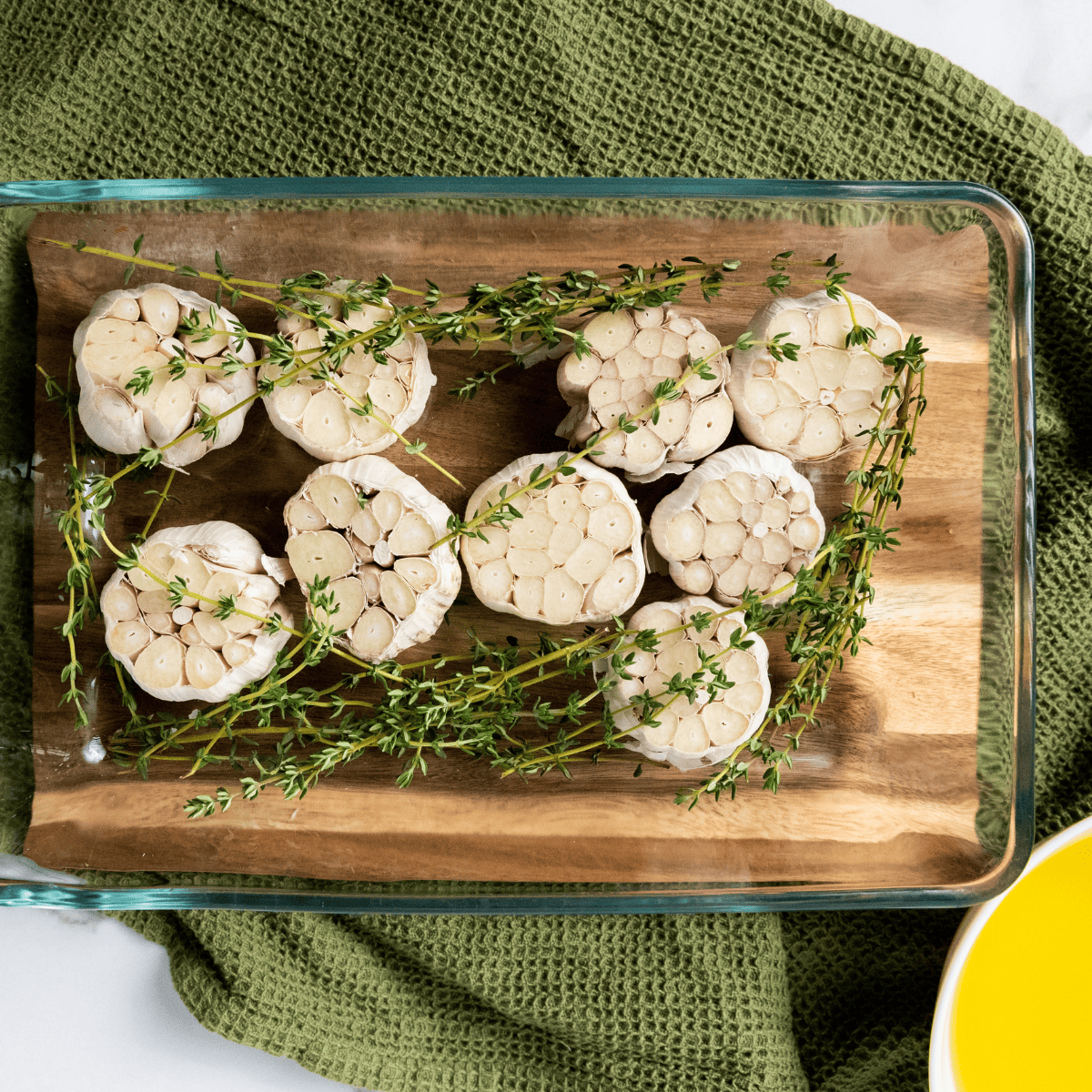
Step Two: Arrange the peeled cloves in your dish in a single, snug layer. Don’t stack them and don’t crowd them — you want oil touching every surface.
Step Three: Pour in oil until the cloves are completely submerged, with about ¼ inch over the top. Any clove poking above the oil line will brown and go bitter. Tuck in the thyme, add salt and pepper.
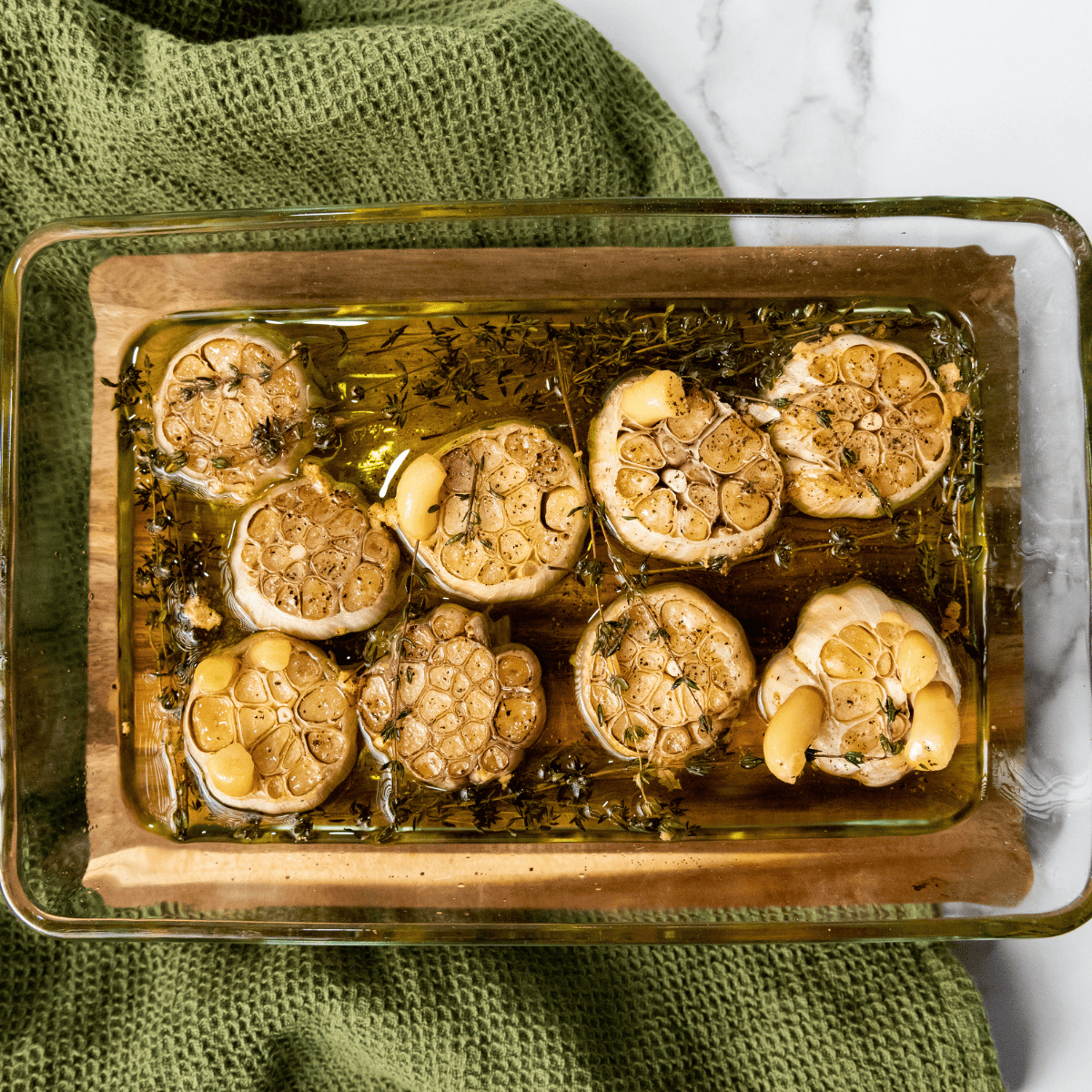
Step Four: Cover the dish tightly with foil. This is the step most air fryer confit recipes leave out, and it’s the difference between confit and disappointment. Uncovered, the direct convection blast browns the tops of the cloves long before the centers go soft. Foil traps the heat and turns your air fryer into a tiny oven.
Step Five: Air fry at 250°F for 30–40 minutes, stirring gently at the halfway mark. Start checking at 25 minutes. Done means a clove smashes with zero resistance under the back of a spoon and is pale gold — not brown.
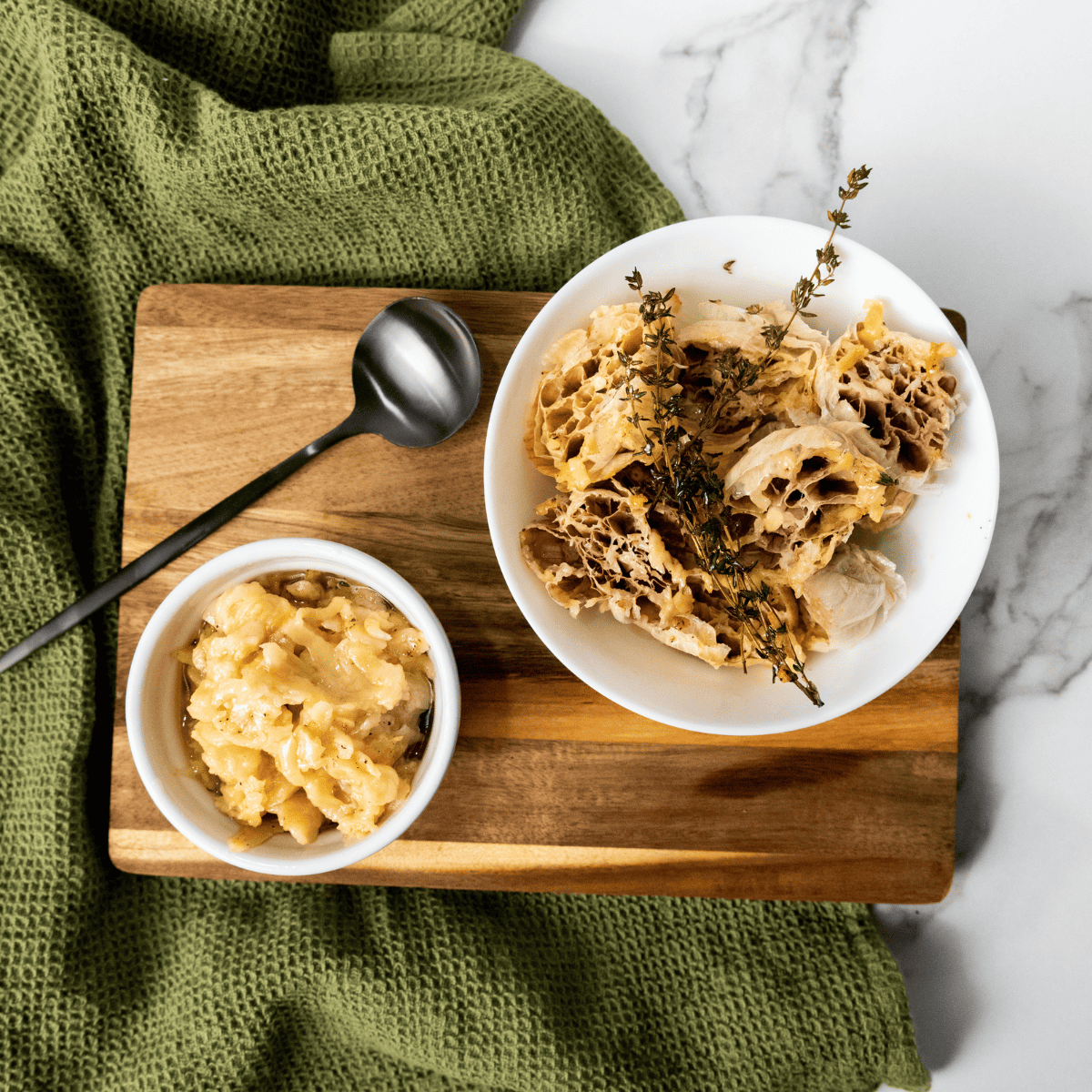
Step Six (optional): Want color? Pull the foil for the last 2–3 minutes. Watch it. It goes from gold to burnt in under a minute.
Step Seven: Remove and cool to room temperature — but no longer than an hour. Transfer cloves and oil to a clean jar, keep everything submerged, and get it into the fridge immediately.
Garlic Confit Time Chart by Quantity
Eight cloves is a tasting portion. Most people confit a head or three. Here’s how the timing scales — all at 250°F (120°C), covered with foil:
| Amount of garlic | Approx. cloves | Oil needed | Cook time |
|---|---|---|---|
| 1 small head (~50g) | 10–12 | 3–4 tbsp | 22–28 min |
| 2 heads (~100g) | 20–25 | ⅓ cup | 28–34 min |
| 3–4 heads (~200g) | 40–50 | ½–⅔ cup | 35–45 min, stir twice |
| ½ lb pre-peeled (~225g) | 50–60 | ¾ cup | 40–50 min, stir twice |
Two things that shift these numbers: clove size (a fat elephant garlic clove takes noticeably longer than a small hardneck one), and your machine. A basket air fryer runs hotter and closer than an oven-style unit. Check early the first time and write your number in the margin.
How to Store Garlic Confit Safely
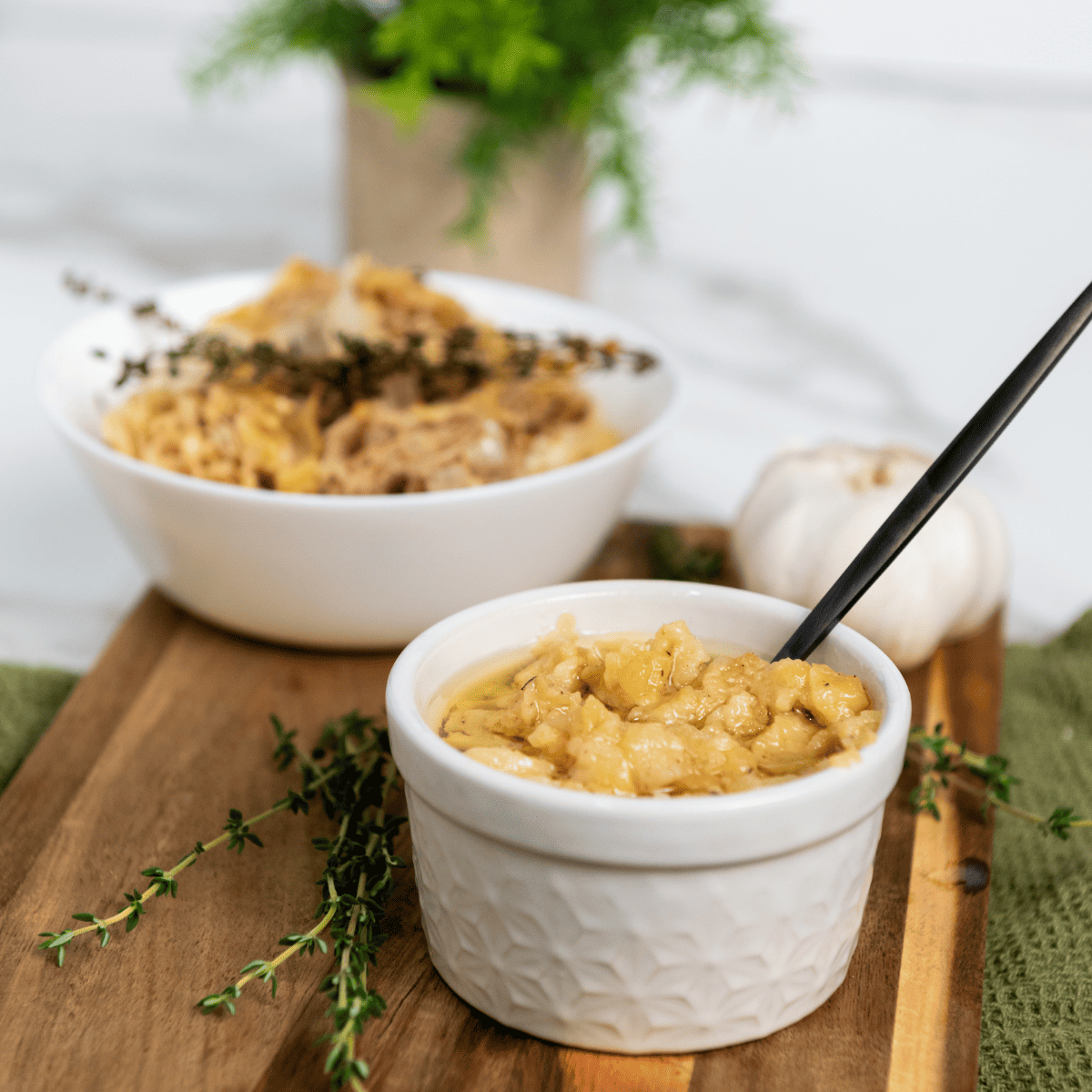
- Refrigerator — 4 days. Clean glass jar, cloves fully submerged in oil, lid on, straight into the fridge once cooled. Label the jar with the date you made it and the date it has to go. Four days later, use it or freeze it. The oil will solidify and cloud in the fridge — that’s normal and reverses at room temperature.
- Freezer — several months, and this is the right way to store it. Spoon the cloves into an ice cube tray, cover each cube with the infused oil, and freeze solid. Pop the cubes into a freezer bag, press the air out, label and date. One cube is roughly one portion — drop it straight into a hot pan, no thawing.
- Reheating. Warm what you need in a small pan over low heat, or just add the frozen cube directly to whatever you’re cooking. Don’t reheat the whole jar and re-refrigerate it.
- Never store it at room temperature. Not in a cabinet, not on the counter, not “just until dinner.”
Recipe Tips
- Submerged means submerged. Exposed cloves brown, and brown cloves taste bitter. Add more oil than feels necessary.
- Cover it. Foil is doing real work here — it’s the single biggest upgrade to this recipe.
- Low and slow, no negotiating. Cranking to 350°F to save time gives you fried garlic, not confit. Different food, worse outcome.
- Uniform cloves cook uniformly. Set the tiny ones aside for something else, or pull them out early.
- Save the oil like it’s the point. Because it kind of is. It’s as valuable as the cloves.
- Cheap oil is fine. The heat flattens delicate EVOO notes. Use the mid-tier bottle.
- Make more than you think. It disappears fast, and the freezer handles the surplus.
Troubleshooting
My garlic turned brown and tastes bitter. Temperature ran too high, or the cloves weren’t fully covered in oil. Confit should be pale gold. Foil the dish next time and add more oil.
My cloves are still firm after 40 minutes. Big cloves, or a cool-running air fryer. Give it another 10 minutes covered and check again. Basket air fryers also lose heat every time you open them.
My garlic turned blue or green. Harmless. It’s a reaction between sulfur compounds in the garlic and trace copper or acidity. Common with young garlic. Perfectly safe to eat.
The oil solidified in the fridge. Completely normal for olive oil. Let it sit out for 10 minutes and it liquefies. Do not microwave the jar.
How do I know if it’s gone bad? You don’t — and that’s the point of the 4-day rule. Botulinum toxin has no smell, no taste, no visual sign. Date the jar and trust the date.
How to Use Garlic Confit
The cloves mash into a paste with the back of a spoon and go anywhere raw garlic goes, minus the bite.
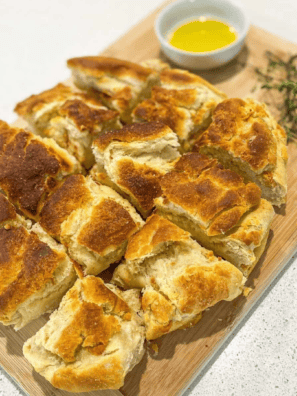
Spread it. Mash a few cloves onto a warm slice of air fryer white bread, a wedge of air fryer focaccia, or a garlic and herb biscuit. Flaky salt on top.
Build better garlic bread. Swap the confit paste in for the raw minced garlic in air fryer garlic toast or brush the infused oil over air fryer garlic knots — confit doesn’t scorch the way fresh garlic does under high heat. It’s also a serious upgrade to air fryer garlic crescent rolls, and it’ll rescue a tray of frozen Texas toast garlic bread.
Stir it into everything creamy. Four or five mashed cloves in air fryer mashed potatoes is the single best use for this. It also folds into Ninja Foodi shrimp risotto and deepens an Olive Garden-style creamy garlic sauce without any raw sharpness.
Cook with the oil. Toss air fryer roasted vegetables or garlic roasted carrots in it before they go in. Start Ninja Foodi spaghetti bolognese with it instead of plain oil. Rub it under the skin of an air fryer rotisserie chicken.
Put it on an appetizer board. Serve the jar alongside bruschetta and let people smear cloves onto the toasts themselves. It belongs with the rest of my air fryer dips and appetizers.
Air Fryer Garlic Confit Recipe FAQs
Is garlic confit safe to eat? Yes — when it’s stored correctly. Garlic in oil is an anaerobic, low-acid environment where Clostridium botulinum can grow, and cooking at 250°F doesn’t destroy the spores. The National Center for Home Food Preservation says refrigerate garlic-in-oil no more than 4 days; USDA FSIS allows up to 7. Freeze anything beyond that. Never store it at room temperature.
How long does garlic confit last? Four days in the refrigerator, or several months in the freezer. If a recipe tells you weeks or months in the fridge, it’s wrong.
Can I make garlic confit without an air fryer? Yes. Oven: 250°F, covered, 90 minutes to 2 hours. Stovetop: lowest possible heat, cloves submerged, 45 minutes to an hour — the oil should barely shiver, never bubble. Same storage rules apply either way.
What temperature should garlic confit be cooked at? 250°F (120°C). Low is the entire point. Higher heat fries the garlic and browns it instead of softening it.
Why cover it with foil? Air fryers move a lot of hot air, which browns exposed surfaces fast. Foil traps steam and heat so the cloves cook evenly and stay pale gold instead of going bitter on top.
What oil should I use? Olive oil is traditional and tastes best. Avocado, grapeseed, or neutral oils all work. Skip extra-virgin’s premium tier — the heat flattens what you’re paying extra for.
Can I use pre-peeled garlic? Absolutely. It’s the same trick I recommend for air fryer roasted garlic and it saves the only tedious part of this recipe.
Can I add other flavors? Yes — thyme, rosemary, bay leaf, black peppercorns, chili flakes, lemon peel. Note that adding fresh herbs doesn’t change the storage rules at all; fresh herbs in oil carry the same risk garlic does.
What’s the difference between garlic confit and roasted garlic? Roasted garlic is cooked in its skin at higher heat until browned and caramelized — deeper, more toasted flavor. Garlic confit is peeled and submerged in oil at low heat until soft and sweet, with almost no browning. You get infused oil as a bonus, plus more delicate flavor.
Air Fryer Garlic Confit
Description
Ingredients
- 1 small head garlic, about 10–12 cloves, peeled
- ¼ cup olive oil, or enough to fully submerge
- ¼ teaspoon sea salt
- ¼ teaspoon black pepper
- 3 sprigs thyme
Instructions
- Preheat the air fryer to 250°F (120°C) for 3–5 minutes.
- Arrange the peeled garlic cloves in a single layer in a small oven-safe dish that fits your air fryer. Don’t crowd them.
- Pour in enough olive oil to submerge the cloves completely, about ¼ inch above the tops. Add the salt, pepper, and thyme.
- Cover the dish tightly with aluminum foil.
- Air fry at 250°F for 30–40 minutes, stirring gently at the halfway point. The confit is done when a clove mashes with no resistance and is pale gold.
- Optional: remove the foil for the final 2–3 minutes for light color. Watch closely.
- Cool to room temperature — no more than 1 hour. Transfer the cloves and oil to a clean glass jar, keeping the cloves fully submerged.
- Refrigerate immediately. Label with the date.
Equipment
- Baking Pan
Notes
Nutrition
Share this recipe
We can’t wait to see what you’ve made! Mention @forktospoon or tag #forktospoon!

Josephine. B
Hi Laurie, Can “Garlic Confit” be frozen for longer keeping rather than just in the fridge?
Cheers,
Josephine B
Laurie
Hi Josephine: I have made this before and froze it, for future use. I would recommend freezing it in ice cube trays, and then place the frozen cubes into a freezer safe bag. It should last for about 1-2 months.