
Cook frozen salmon in the air fryer from frozen — no thawing needed! Flaky, tender fillets in 16 minutes with a maple Dijon glaze. Full timing chart, doneness guide & 7 variations.
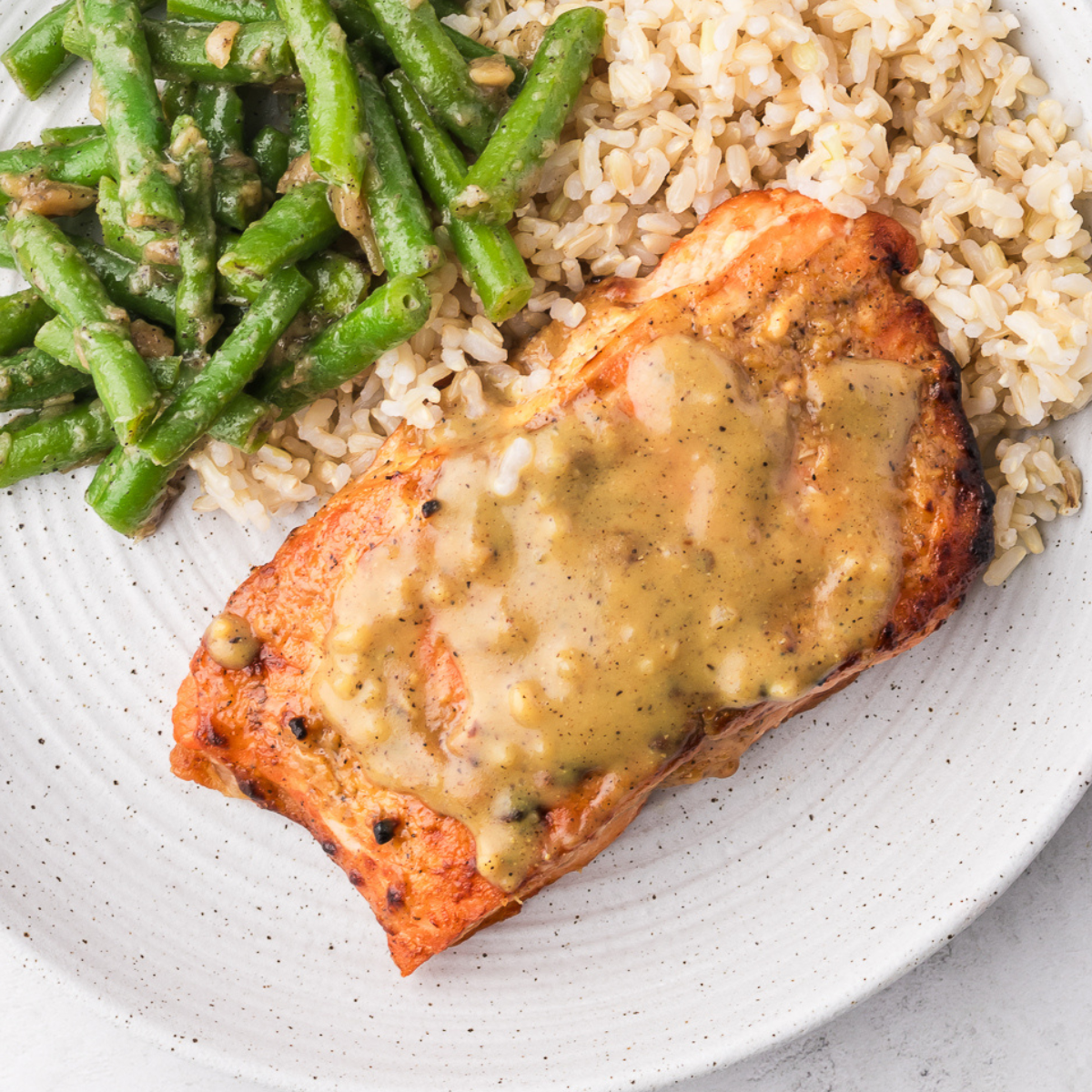
The one thing that makes this recipe work where others fail: Most recipes tell you to season the salmon before it goes in frozen — and that’s the problem. Seasoning applied to a frozen surface either falls off as ice melts or sits in a watery puddle that steams the fish instead of roasting it. This recipe uses a two-stage method: cook plain for 7 minutes to defrost the surface, then apply your glaze or seasoning to the now-tacky surface and finish cooking. The glaze adheres perfectly, caramelizes in the final 7–9 minutes, and you get a restaurant-quality result straight from the freezer.!
I discovered this recipe the same way most people do — I forgot to thaw the salmon. It was 5:30 PM on a Wednesday, I had hungry kids, and four frozen salmon fillets staring back at me from the freezer. I’d been air frying long enough to know that frozen proteins usually work fine, so I just tried it.
What surprised me wasn’t that it worked — it was how well it worked. The air fryer’s circulating heat defrosts and cooks simultaneously in a way that no other appliance can quite replicate. The result was flaky, moist salmon with slightly crisp edges and a maple Dijon glaze that caramelized beautifully. I’ve since made it dozens of times, testing different fillets, temperatures, glazes, and timing. Everything I know is below.
If you love salmon, don’t miss my other Air Fryer Salmon Recipes like AIR FRYER SALMON CACCIATORE, AIR FRYER SALMON BOWLS, AIR FRYER PEACH SALMON, and AIR FRYER HONEY ORANGE GLAZED SALMON!
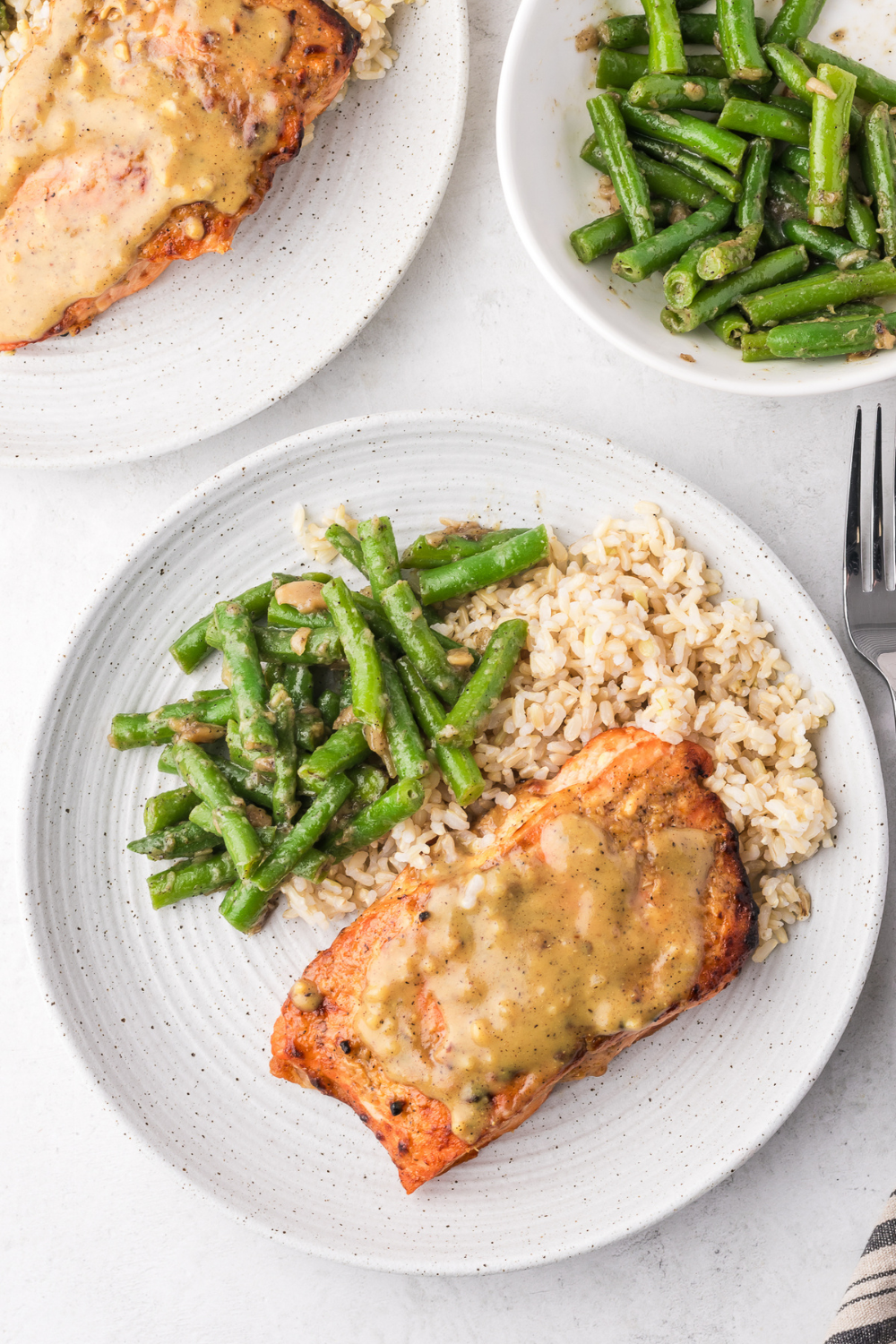
Why the Air Fryer Is the Best Way to Cook Frozen Salmon
There are four ways to cook frozen salmon without thawing: oven, stovetop, microwave, or air fryer. Here’s why the air fryer wins:
| Method | Time | Result | Verdict |
|---|---|---|---|
| Air fryer | 14–18 min | Crispy exterior, flaky interior, caramelized glaze | ✅ Best overall |
| Oven (400°F) | 25–30 min | Good texture, less browning, more steam in the pan | ✅ Good alternative |
| Stovetop (covered pan) | 15–18 min | Can be good but creates more steam — harder to get browning | ⚠️ Requires attention |
| Microwave | 6–8 min | Rubbery texture, no browning, steamed flavor | ❌ Last resort only |
The air fryer wins because superheated circulating air cooks from all sides simultaneously — defrosting and roasting at the same time. This is why you get a slightly crispy, caramelized exterior while the interior stays moist and flaky. No other method does this as efficiently from frozen.
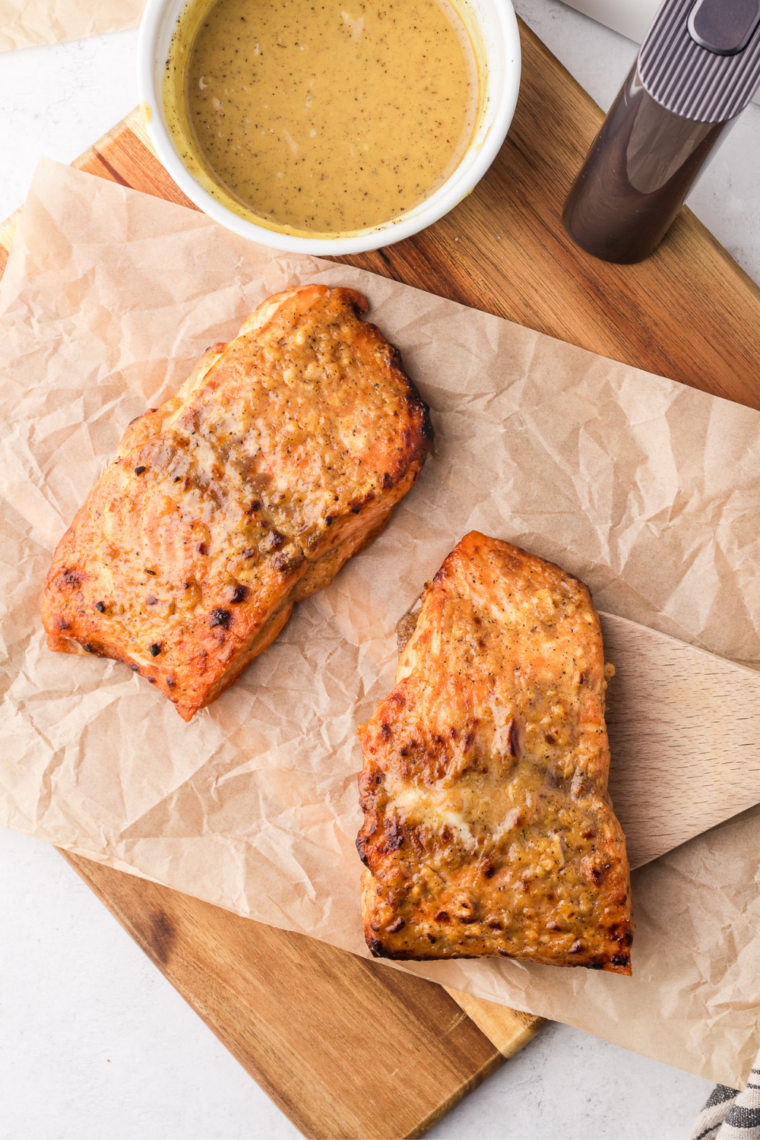
Wild-Caught vs. Farm-Raised Frozen Salmon — What to Buy
The type of frozen salmon you buy affects the cooking time, flavor, and texture of the finished dish. Here’s what you need to know before you shop:
| Type | Examples | Thickness | Fat Content | Cooking Notes |
|---|---|---|---|---|
| Wild-caught sockeye | Trident, Costco wild | Thinner (½–¾ inch) | Leaner | Cooks 1–2 min faster; more prone to drying out — watch the temp carefully, pull at 125–130°F |
| Wild-caught coho | Various brands | Medium (¾–1 inch) | Moderate fat | Forgiving and flavorful; good all-around choice |
| Farm-raised Atlantic | Most store brands | Thicker (1–1.5 inch) | Higher fat | Richest flavor, most forgiving — fat keeps it moist even at 145°F. Most beginner-friendly |
| Individually wrapped portions | Gorton’s, Aldi, Trader Joe’s | Standardized 4–6 oz | Varies by brand | Best for this recipe — consistent size means consistent timing; less ice buildup |
My go-to: Individually wrapped wild-caught portions from Costco or Trader Joe’s. The individual wrapping means zero ice buildup between fillets, they’re already portioned, and wild-caught means you’re getting better omega-3 content and cleaner flavor. Farm-raised Atlantic is the most forgiving option for beginners because the higher fat content means it’s harder to dry out.
Ingredients Needed
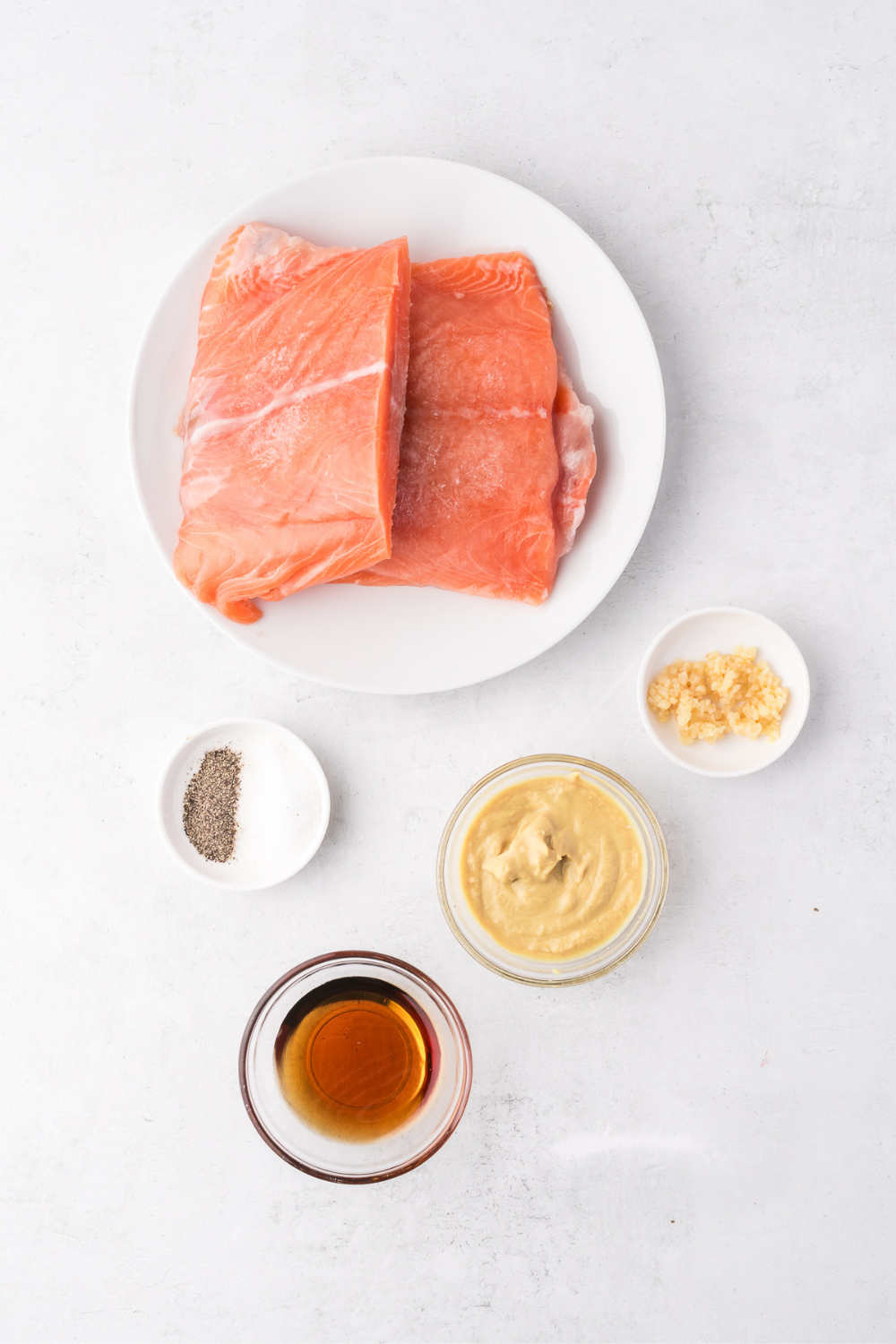
- Frozen Salmon Fillets: Skin on pieces cook evenly and stay moist
- Olive Oil Or Avocado Oil: Adds richness helps seasoning stick after thawing
- Kosher Salt And Black Pepper: Simple seasoning enhances natural salmon flavor
- Cooking Spray: Prevents sticking and helps salmon release easily
- Dijon Mustard: Tangy base that builds bold flavor in glaze
- Pure Maple Syrup: Natural sweetness balances mustard and caramelizes beautifully
- Garlic Cloves: Fresh minced garlic adds strong savory depth
- Soy Sauce: Boosts umami and deepens overall glaze flavor
- Kosher Salt: Enhances all flavors and balances sweetness
- Black Pepper: Adds mild heat and subtle spice finish
- Fresh Lemon Juice: Brightens glaze and adds fresh citrus note
Glaze note: The maple Dijon sauce is applied in Stage Two — after the first 7 minutes of cooking. This is deliberate. Applying glaze to a frozen surface means it sits in ice melt water and never adheres or caramelizes. After 7 minutes, the surface is defrosted and tacky — the perfect canvas for the glaze to cling and caramelize in the final minutes.
How to Cook Frozen Salmon in the Air Fryer — Step by Step
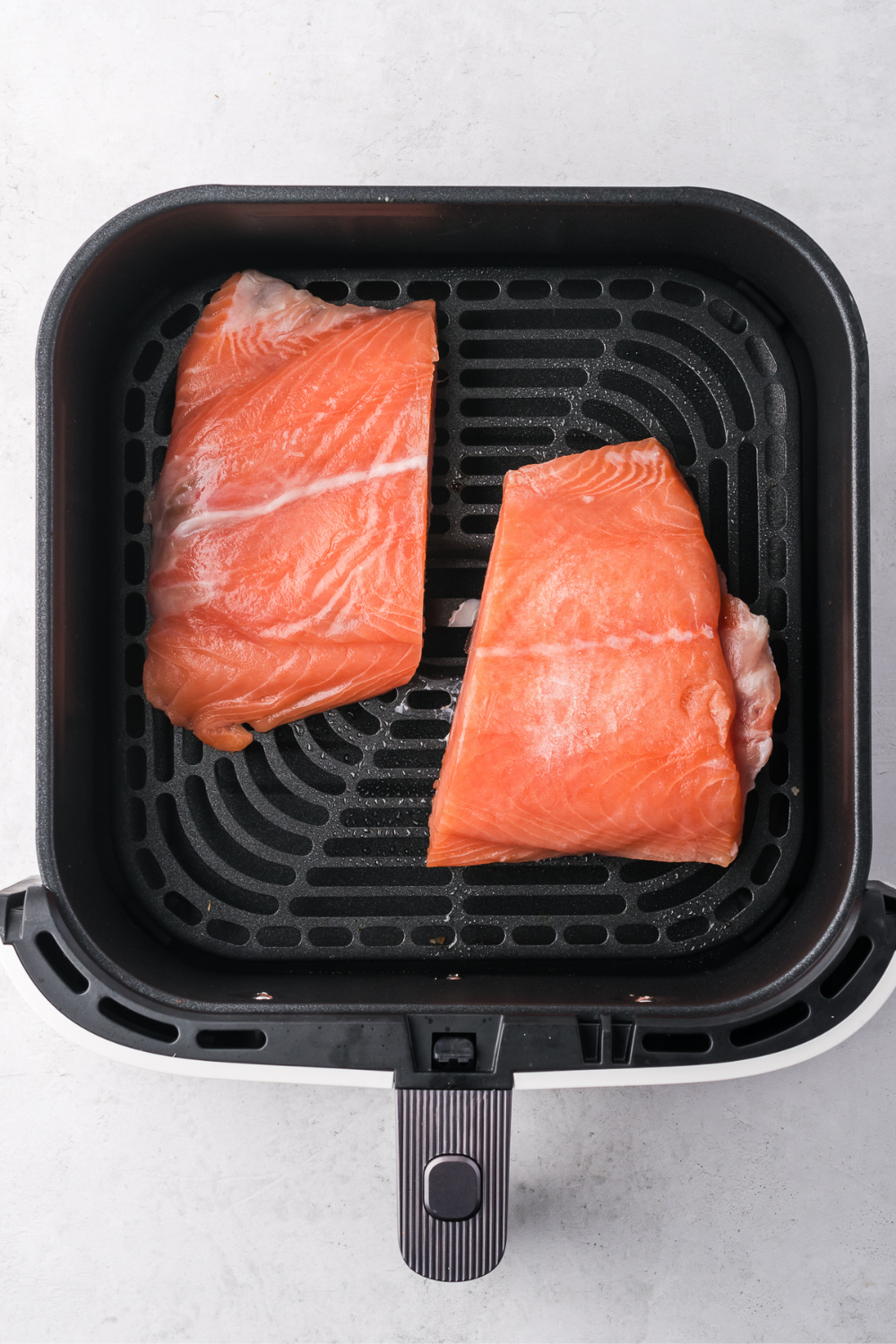
Step 1: Remove the frozen salmon from its packaging. If there’s visible ice or frost on the surface, gently pat it off with a paper towel. You’re not thawing the fish — just removing the loose ice that would otherwise create steam in the air fryer and prevent proper browning. A quick 10-second pat is all it takes. No rinsing needed.
Step 2: Preheat your air fryer to 390°F for 3–5 minutes. Spray the basket with cooking spray or line with a parchment paper liner (pre-cut air fryer liners with holes work best — the holes allow airflow underneath the fish). Do not use solid aluminum foil — it blocks airflow and prevents the bottom of the fish from cooking evenly.
Step 3: Place the frozen salmon fillets skin-side down in a single layer in the basket, leaving at least ½ inch of space between each fillet. Do not season yet. Air fry at 390°F for 7 minutes. At this point the surface of the salmon will be defrosted and slightly opaque — the fish is partially cooked and the top surface is ready to hold seasoning.
Why cook unseasoned first? When seasoning is applied to a frozen surface, it slides off in the melt water as the fish defrosts. By cooking plain first, the surface reaches a temperature where proteins begin to set — creating a tacky texture that the glaze can bond to. This is the same principle behind the professional technique of “mopping” BBQ sauce onto meat only in the final stage of cooking. The glaze stays on, caramelizes, and forms a proper crust instead of pooling in liquid at the bottom of the basket.
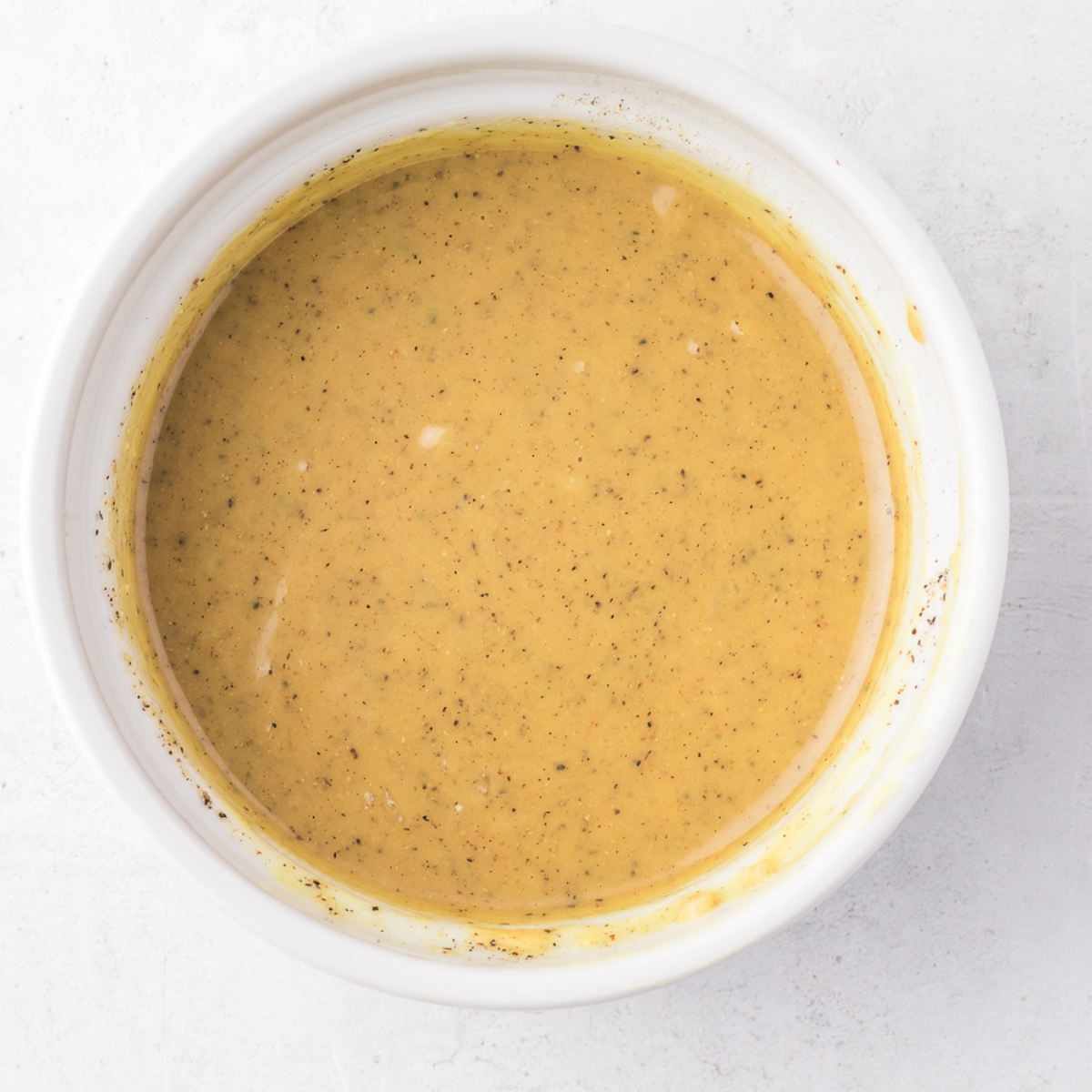
Step 4: In a small bowl, whisk together the Dijon mustard, maple syrup, minced garlic, soy sauce, salt, pepper, and lemon juice (if using) until smooth. Taste it — it should be tangy, slightly sweet, and savory. Adjust ratios to your preference: more maple for sweeter, more Dijon for tangier, a pinch of cayenne for heat.
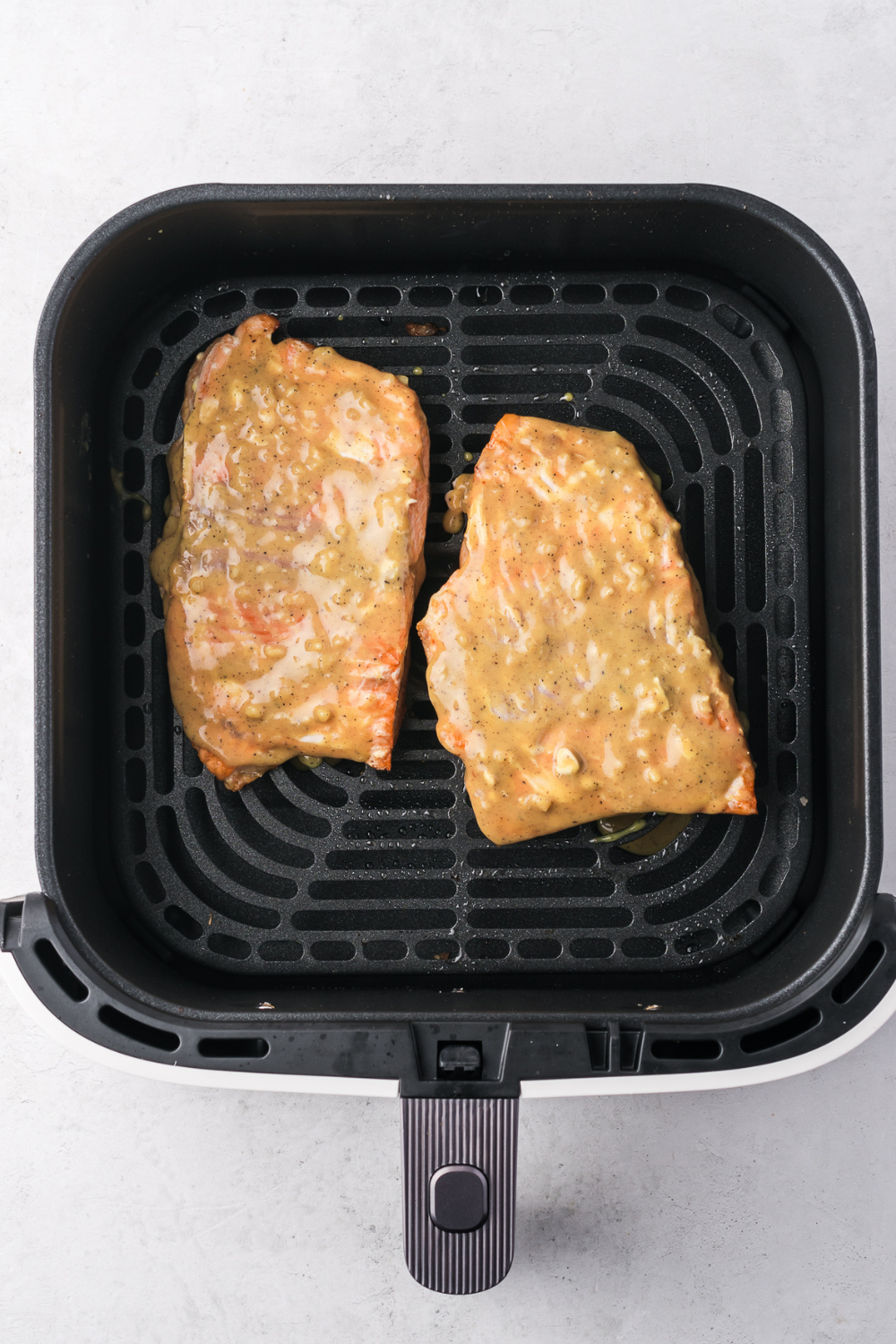
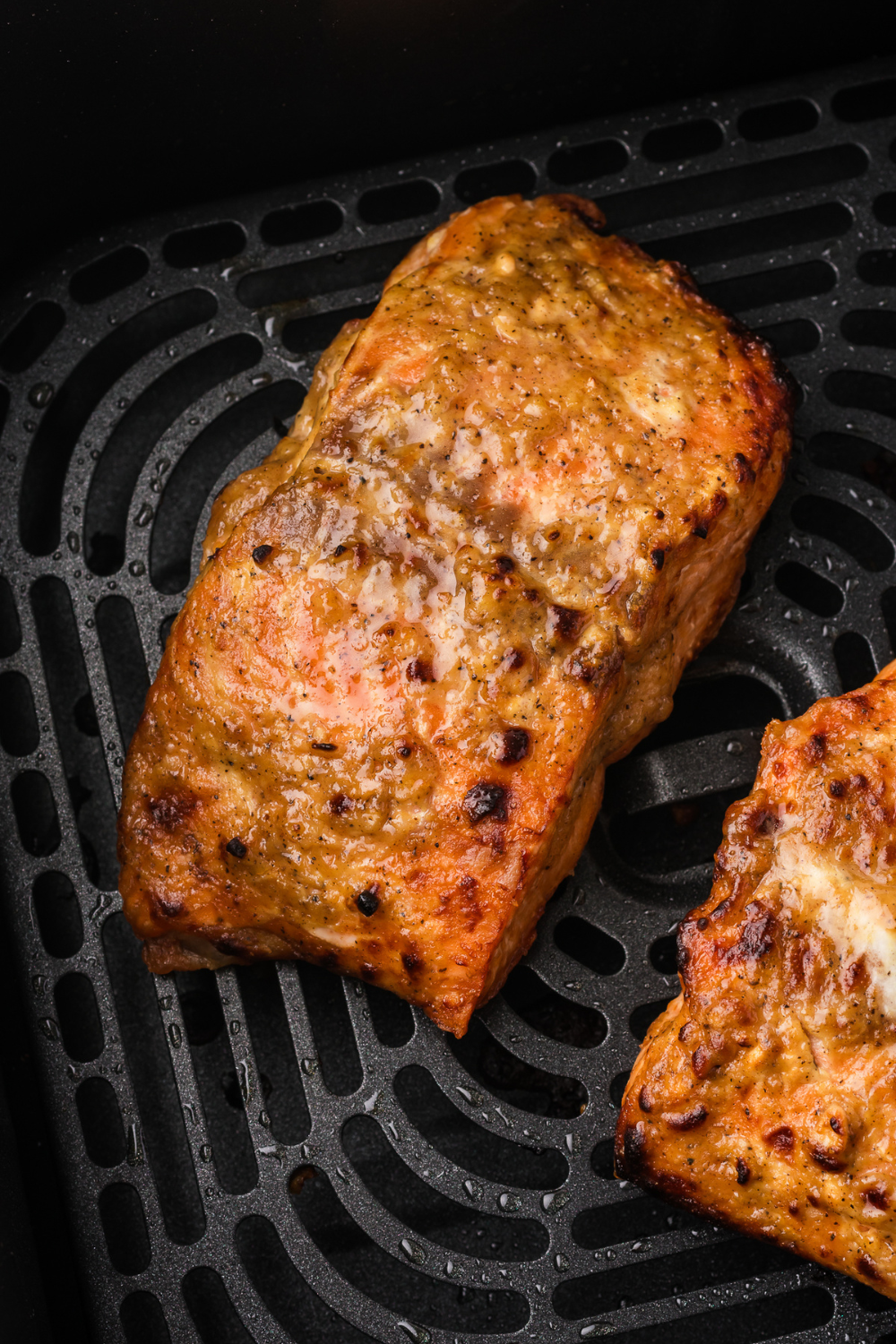
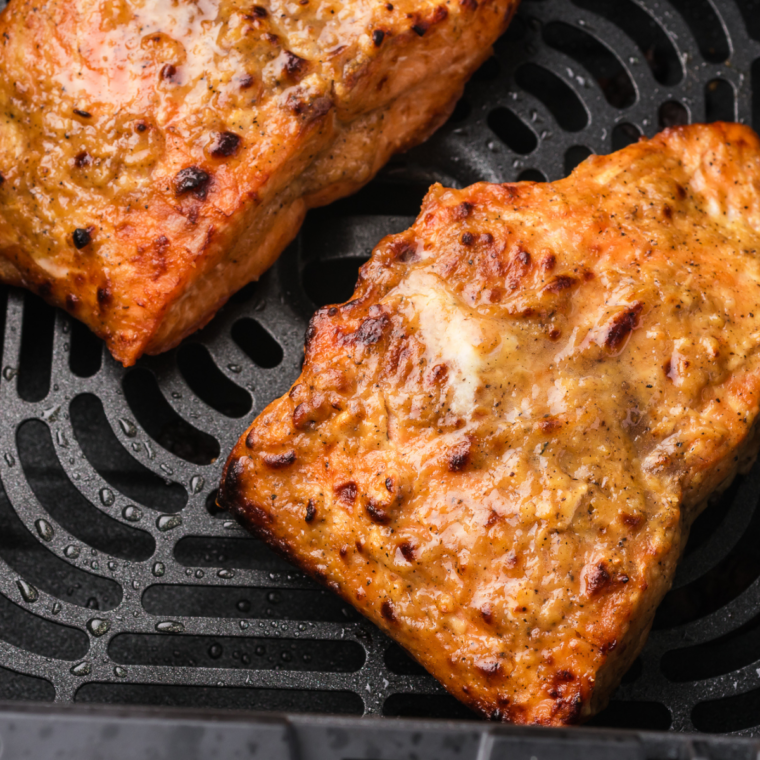
Step 5: Open the air fryer at the 7-minute mark. The fillets should now be defrosted on the surface and slightly opaque on the outside. Brush the top of each fillet generously with the maple Dijon glaze. Season with a pinch of salt and pepper over the glaze. Close the air fryer and cook for an additional 7–9 minutes, depending on fillet thickness (see timing chart below). Do not flip — cooking skin-side down the entire way gives you moist flesh on top and a slightly crisped skin on the bottom.
Step 6: Insert an instant-read thermometer into the thickest part of the fillet. Pull the salmon when it reaches your desired internal temperature (see doneness guide below). The salmon will continue cooking for about 1 minute after removal. Let it rest on the basket or a plate for 2 minutes before serving — this allows the juices to redistribute and prevents the fillet from falling apart when plated.
Frozen Salmon Air Fryer Timing Chart — By Thickness
| Fillet Thickness | Stage One | Stage Two (after glazing) | Total Time |
|---|---|---|---|
| Thin (under ¾ inch) Wild sockeye, small portions | 6 min | 5–7 min | 11–13 min |
| Standard (¾–1 inch) Most store portions, coho | 7 min | 7–8 min | 14–15 min |
| Thick (1–1.5 inch) Farm-raised Atlantic, center cut | 7 min | 8–10 min | 15–17 min |
| Very thick (1.5+ inch) King salmon, large portions | 8 min | 10–12 min | 18–20 min |
All times are for a preheated 390°F air fryer. Always verify with an instant-read thermometer — air fryer wattage varies significantly by brand and model.
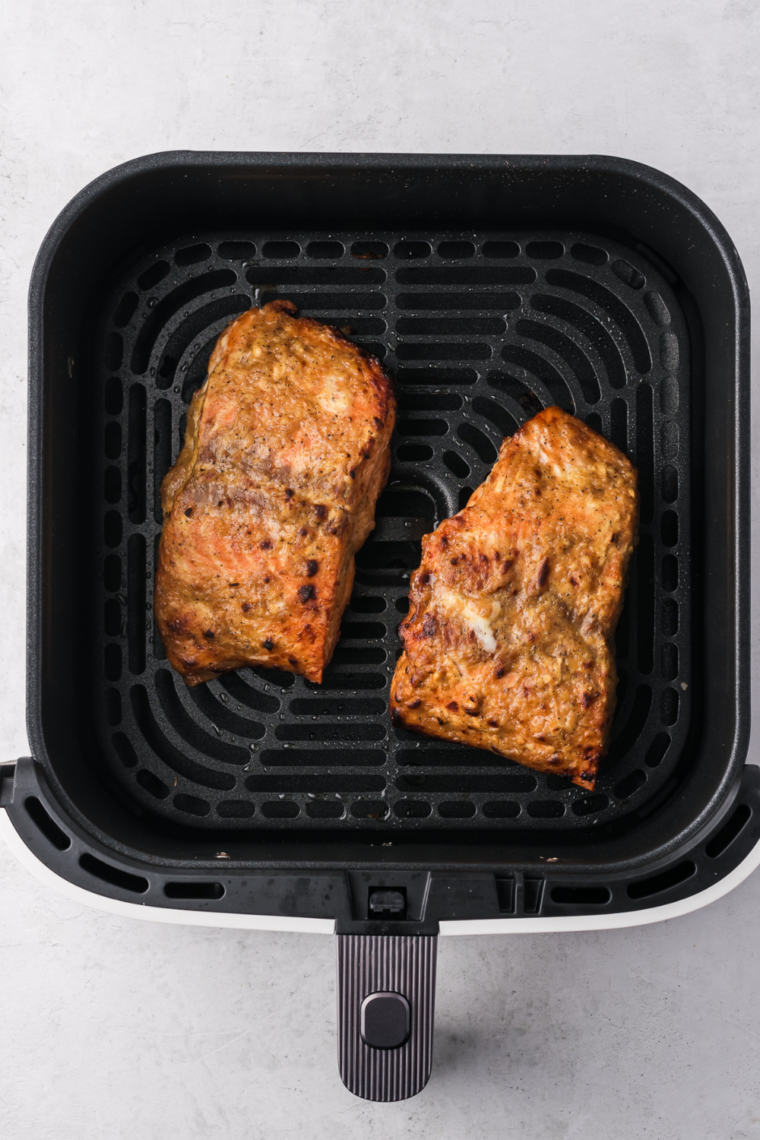
Salmon Doneness: The 125°F vs. 145°F Debate
The USDA recommends an internal temperature of 145°F for all fish. At 145°F, salmon is fully cooked, the flesh is opaque and firm, and it flakes cleanly. This is the safe, conservative target, and what I recommend for this recipe.
However, many chefs and most restaurant kitchens pull salmon at 125–130°F (medium) for a silkier, more moist texture. At this temperature the center is still slightly translucent, the flesh is tender and buttery, and the omega-3 fats haven’t fully rendered out. This is considered a “medium” cook — similar to how you’d eat a medium-rare steak.
For frozen salmon specifically, my recommendation is to target 130–135°F rather than 145°F, especially for wild-caught varieties which are leaner. Wild-caught salmon at 145°F can be noticeably drier than farm-raised at the same temperature. The additional fat in farm-raised Atlantic salmon gives it more margin for error at higher temperatures.
| Internal Temp | Doneness | Texture | Best For |
|---|---|---|---|
| 120–125°F | Medium-rare | Translucent center, very silky — Japanese and restaurant-style | Sushi-grade wild salmon; adventurous eaters only |
| 125–130°F | Medium | Slightly translucent center, extremely moist and buttery | Wild-caught sockeye and coho; salmon lovers |
| 130–135°F | Medium-well | Just opaque, very moist, slight give when pressed | The sweet spot for most home cooks — recommended |
| 140–145°F | Well done | Fully opaque, flakes cleanly, firmer texture | USDA standard; safest option; good for farm-raised Atlantic |
Food safety note: The USDA safe minimum internal temperature for fish is 145°F. Cooking to lower temperatures is a personal choice and carries a small food safety risk, particularly for immunocompromised individuals, pregnant women, and young children. When in doubt, cook to 145°F.
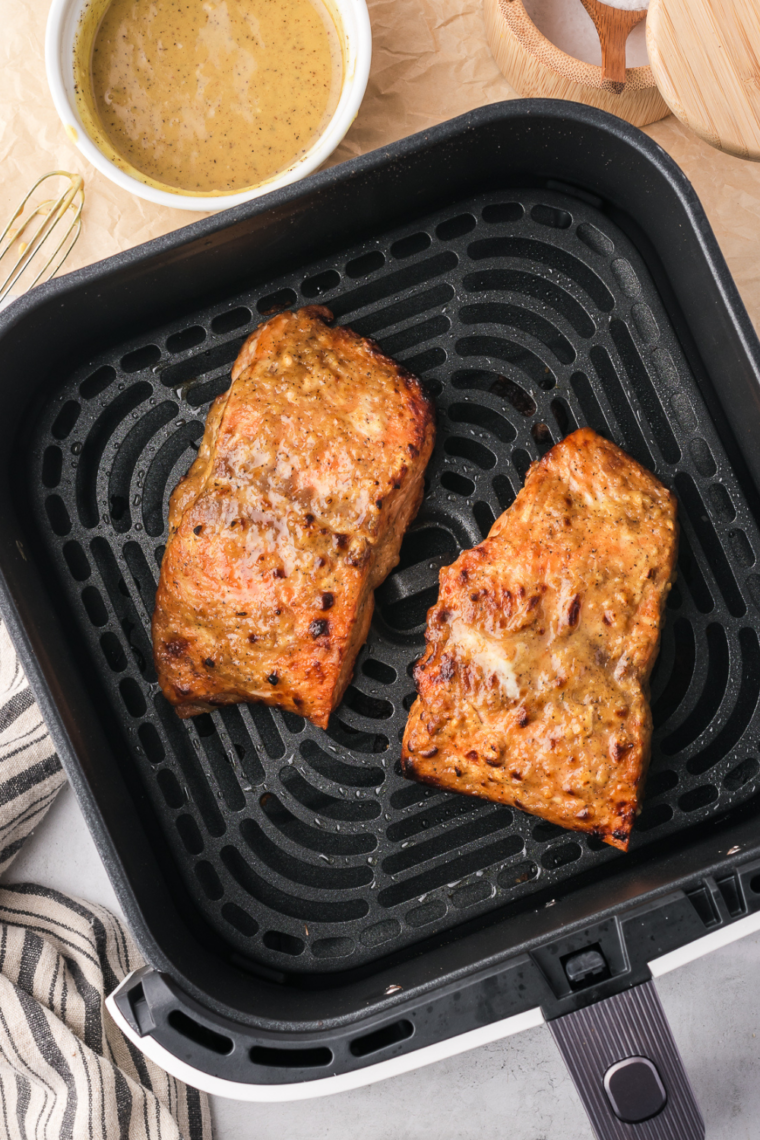
7 Seasoning Variations — From Simple to Show-Stopping
- Maple Dijon (Original): Dijon mustard maple syrup garlic soy sauce create tangy sweet glaze. Apply halfway through cooking for caramelized flavorful finish
- Honey Garlic Soy: Honey soy sauce garlic sesame oil ginger create sticky glaze Brush on mid cook and finish with sesame seeds
- Cajun Blackened: Smoked paprika garlic powder cayenne onion powder thyme seasoning blend. Apply as dry rub with oil for bold crust
- Lemon Garlic Herb: Olive oil garlic lemon zest fresh herbs create bright flavor Add midway then finish with fresh lemon juice
- Brown Sugar And Garlic: Brown sugar garlic powder smoked paprika salt create sweet crust. Press onto salmon halfway for caramelized crispy edges
- Everything Bagel: Cream cheese base with everything bagel seasoning creates savory topping. Spread and press seasoning on during mid cook stage
- Miso Ginger: White miso rice vinegar honey ginger creates umami glaze. Brush on halfway and serve with rice or veggies
What to Serve with Air Fryer Frozen Salmon
- Salmon Rice Bowls: Flake cooked salmon over jasmine or brown rice
Add avocado edamame cucumber and drizzle with sriracha mayo
Use honey garlic soy version for best flavor combo - Air Fryer Asparagus Or Green Beans: Toss vegetables with oil and simple seasoning. Air fry at high heat until tender with crisp edges. Cook right after salmon for easy one basket cleanup
- Creamy Mashed Potatoes: Serve salmon over rich buttery mashed potatoes
Let glaze drip into potatoes for extra flavor. Maple Dijon version pairs especially well here - Simple Lemon Quinoa: Cook quinoa in broth with lemon zest and parsley
Light fresh side that balances rich salmon. Works best with lemon garlic herb variation - Salmon Tacos: Flake salmon into warm corn tortillas. Add cabbage lime and chipotle crema. Cajun blackened version brings bold taco flavor
- Over A Green Salad: Slice salmon and place over mixed greens. Add tomatoes red onion and lemon vinaigrette. Warm salmon slightly softens greens and adds richness
Make-Ahead, Storage & Reheating
- Storage: Let cooked salmon cool to room temperature (no more than 30 minutes). Transfer to an airtight container and refrigerate for up to 3 days. Do not leave cooked fish at room temperature for more than 2 hours.
- Freezing cooked salmon: Cooked salmon can be frozen in a freezer-safe container for up to 3 months, though the texture softens after freezing. Use frozen cooked salmon in salmon patties, pasta, or salmon cakes rather than serving it whole — these applications hide any texture change.
Reheating
| Method | Setting | Time | Notes |
|---|---|---|---|
| Air fryer | 325°F | 3–4 min | Best method — keeps the exterior slightly crisp. Don’t go above 350°F or it dries out fast. |
| Oven | 275°F covered with foil | 10–12 min | Add a splash of water or lemon juice under the foil to create steam and prevent drying. |
| Stovetop | Low heat, covered skillet | 4–5 min | Add a tablespoon of water or butter, cover, and steam gently. Good for flaking into bowls. |
| Cold (no reheat) | — | — | Cold salmon over salad or in a grain bowl is genuinely excellent and requires zero effort. |
Frequently Asked Questions
Can I cook frozen salmon directly in the air fryer without thawing? Yes — absolutely, and this recipe is specifically designed for it. You go straight from freezer to air fryer basket with no thawing at all. The only prep is removing any loose surface ice with a paper towel pat. The two-stage cooking method (7 minutes plain, then season and finish) ensures the fish cooks evenly and the glaze caramelizes properly.
How long does it take to cook frozen salmon in the air fryer? At 390°F, most 4–6 oz fillets take 14–16 minutes total using the two-stage method: 7 minutes plain, then 7–9 more minutes after applying glaze. Thinner wild-caught fillets (under ¾ inch) may be done in 11–13 minutes total. Thick farm-raised Atlantic fillets (1.5+ inch) may need up to 18–20 minutes. Always use an instant-read thermometer — it’s the only reliable doneness indicator regardless of timing.
What temperature should frozen salmon reach in the air fryer? The USDA safe minimum is 145°F for all fish — this is fully cooked, opaque, and firm. For a moister result, many cooks and restaurants target 130–135°F (medium-well), which gives a silkier texture. Wild-caught salmon especially benefits from not being pushed to 145°F, as it’s leaner and dries out faster. Pull at 130°F for medium-well, or 145°F for fully set. Pregnant women, immunocompromised individuals, and young children should cook to 145°F.
Do I need to flip the salmon while air frying? No — this recipe is designed to cook skin-side down the entire time. The circulating air in the air fryer reaches the top surface without flipping, and keeping the skin-side down the whole way gives you a slightly crisp bottom and moist flesh on top. Flipping risks breaking the fillet and smearing your glaze. Leave it skin-side down from start to finish.
Should I leave the skin on frozen salmon for air frying? Yes — skin-on is strongly recommended. The skin acts as a natural barrier between the delicate flesh and the air fryer basket, preventing sticking and keeping the bottom of the fillet moist. It also gets slightly crispy in the air fryer, which is a bonus. After cooking, the skin either crisps up and becomes worth eating, or peels away cleanly and easily if you prefer not to eat it.
Why should I season frozen salmon halfway through cooking instead of before? Seasoning applied to frozen salmon slides off as the surface ice melts — it ends up pooling in melt water at the bottom of the basket instead of sticking to the fish. After 7 minutes of cooking, the surface is defrosted and the proteins have begun to set, creating a tacky surface that holds glaze and seasoning. This two-stage approach is used in professional kitchens for exactly this reason and it’s the single most impactful technique change you can make for better results.
Can I cook multiple frozen salmon fillets at once? Yes — as many as fit in a single layer with ½ inch of space between each fillet. Do not overlap or stack. The air fryer cooks by circulating hot air around each piece — overcrowding creates a steam environment instead, and you end up with poached rather than air-fried salmon. For large batches, cook in sequential rounds. The basket stays hot between batches so each subsequent round takes slightly less time.
Can I use fresh or thawed salmon with this recipe? Yes. For fresh or thawed salmon, skip Stage One entirely. Pat the fillets dry, season or glaze the surface, and air fry at 390°F for 8–12 minutes depending on thickness. Check at 8 minutes and add time in 1-minute increments until you reach your desired internal temperature. Fresh salmon has much less margin for overcooking than frozen — check earlier and more often.
What’s the difference between wild-caught and farm-raised frozen salmon for this recipe? Wild-caught salmon (sockeye, coho, king) is leaner, has a more pronounced salmon flavor, and cooks faster due to thinner fillets. It’s more prone to drying out — pull it at 130°F. Farm-raised Atlantic salmon has more fat, a milder flavor, and thicker fillets — it’s more forgiving and harder to overcook. Both work excellently in this recipe; the fat content of farm-raised just gives you more margin for error.
More Air Fryer Recipes
- GORTON’S FISH STICKS AIR FRYER
- AIR FRYER TRADER JOE’S BATTERED FISH NUGGETS
- AIR FRYER ROCKFISH
- AIR FRYER SWAI FISH
- AIR FRYER FROZEN FISH STICKS
- AIR FRYER FLOUNDER FISH
Don’t Forget To Pin!
Share Your Creations! Are you active on Facebook? Join our Air Fryer Recipes Group, where hundreds of thousands of Air Fryer enthusiasts gather and share your photos! I’m always thrilled to see what you’ve made. For those on Instagram, don’t forget to tag me @forktospoon – I can’t wait to admire your culinary adventures!
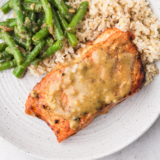
Frozen Salmon in the Air Fryer
Description

Ingredients
Salmon:
- 4 frozen salmon fillets, 4–6 oz each, skin-on preferred
- 1 tablespoon olive oil, or avocado oil
- Kosher salt and black pepper, to taste
Maple Dijon Glaze:
- 2 tablespoons Dijon mustard
- 1 tablespoon pure maple syrup
- 2 cloves garlic , minced (or ½ tsp garlic powder)
- 1 teaspoon soy sauce
- ½ teaspoon kosher salt
- ¼ teaspoon black pepper
- 1 teaspoon fresh lemon juice, optional, brightens the glaze
Instructions
- Take the frozen salmon out of packaging. Pat the surface gently with paper towels to remove any loose ice or frost. Do not rinse or thaw — just remove surface ice that would create steam during cooking.
- Preheat air fryer to 390°F for 3–5 minutes. Spray the basket with cooking spray or line with a perforated parchment liner. Do not use solid foil — it blocks airflow.
- Place frozen salmon fillets skin-side down in a single layer, with space between each fillet. Do not add seasoning or oil yet. Air fry at 390°F for 7 minutes.
- While Stage One cooks, whisk together the Dijon mustard, maple syrup, minced garlic, soy sauce, salt, pepper, and lemon juice in a small bowl until smooth.
- Open the air fryer at 7 minutes. The fillet surfaces should be defrosted and slightly opaque. Brush each fillet generously with the maple Dijon glaze. Season with a pinch of salt and pepper. Return to the air fryer and cook for an additional 7–9 minutes depending on fillet thickness (see chart below).
- Insert an instant-read thermometer into the thickest part. Pull at 130–135°F for moist medium-well, or 145°F for fully cooked per USDA guidelines. Do not flip at any point — cook skin-side down the entire time.
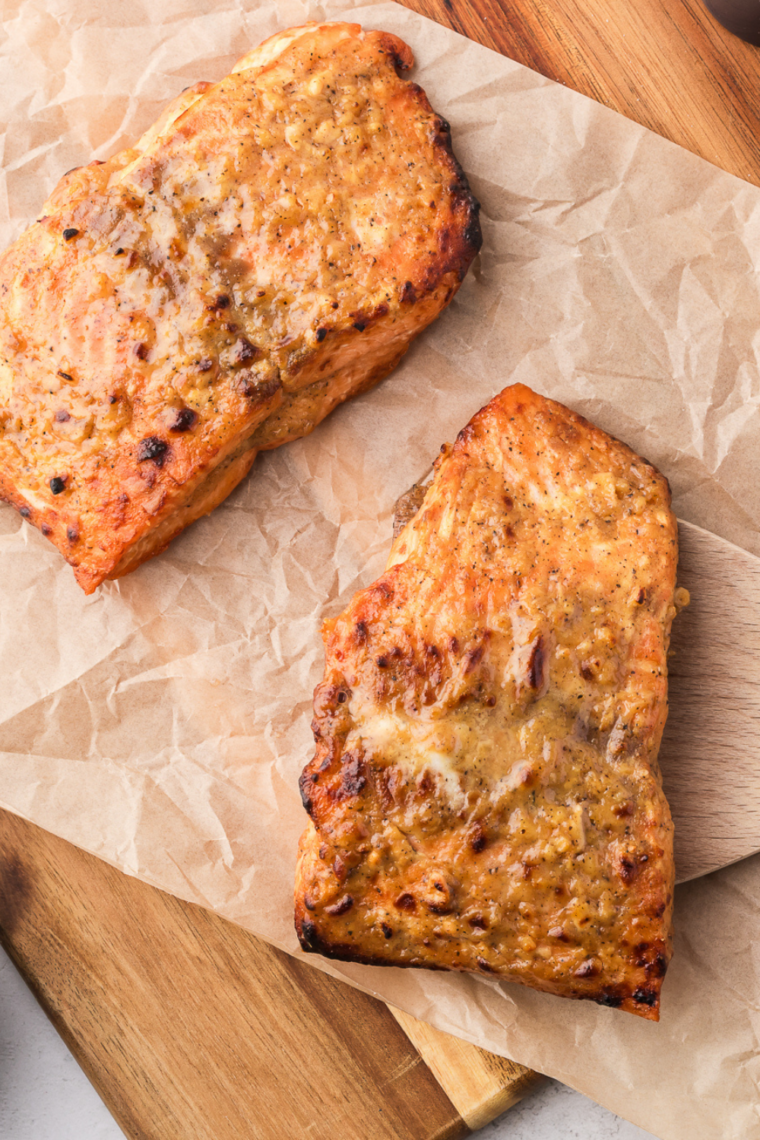
- Let salmon rest 2 minutes before serving. Serve with lemon wedges, fresh herbs, or additional glaze. The skin will either be crispy and worth eating, or peel away easily if preferred.
Equipment
- Cooking Spray, Or olive oil, avocado oil.
- Parchment Paper, optional
Notes
| Fillet Thickness | Stage One | Stage Two | Total |
|---|---|---|---|
| Thin (under ¾ inch) | 6 min | 5–7 min | 11–13 min |
| Standard (¾–1 inch) | 7 min | 7–8 min | 14–15 min |
| Thick (1–1.5 inch) | 7 min | 8–10 min | 15–17 min |
| Very thick (1.5+ inch) | 8 min | 10–12 min | 18–20 min |
Nutrition
Share this recipe
We can’t wait to see what you’ve made! Mention @forktospoon or tag #forktospoon!

tlovertonet
Saved as a favorite, I really like your blog!
Rene J Baatenburg
I placed the salmon in the air fryer with the skin side up, with no sauce. After 7 minutes when I turned it, over the skin easily came off in one piece!
Salmon back in the air fryer, with the non skin side up and and sauce on top. 7 minutes more, done. so easy. (I had to air fry it a little longer than 7 minutes per side to get the temp to 145)
Hope this helps. Such a good recipe!
Isabella
Love this. Can you clarify if you start w skin side up, add glaze, then flip to have skin side down?
Rene J Baatenburg
I placed the salmon in the air fryer with the skin side up, with no sauce. After 7 minutes when I turned it, over the skin easily came off in one piece!
Salmon back in the air fryer, with the non skin side up and and sauce on top. 7 minutes more, done. so easy. (I had to air fry it a little longer than 7 minutes per side to get the temp to 145)
Hope this helps. Such a good recipe!
Nancy
Love all your air fryer recipes. Thank you
Kathy
YUMMMMY!! I LOVE this salmon recipe! I’m not much into spicy and did not have Dijon mustard, so I used regular mustard and used the other ingredients. I will make this every time I air fry salmon!
John Robertson
first day with a air fryer and the first thing cooked the Salmon steak was terrific
MaryJane
I have never enjoyed a filet of salmon more! The sauce is amazing! I made this for myself, but now I need to have people over so I can share this recipe! Thanks!
Bethany B
The sauce really surprised me with how good it is! This was a quick/ lazy meal for me so I used garlic powder in place of fresh- still super tasty. I also added a touch of (hear me out) MSG. Couldn’t recommend this method enough. Delicious.