This copycat Kinder’s Buttery Garlic & Herb seasoning takes five minutes, costs about a dollar a batch against roughly eight for the bottle, and fills a standard 8 oz spice jar. More importantly, it’s built from the actual ingredient panel instead of a guess at what the blend tastes like.
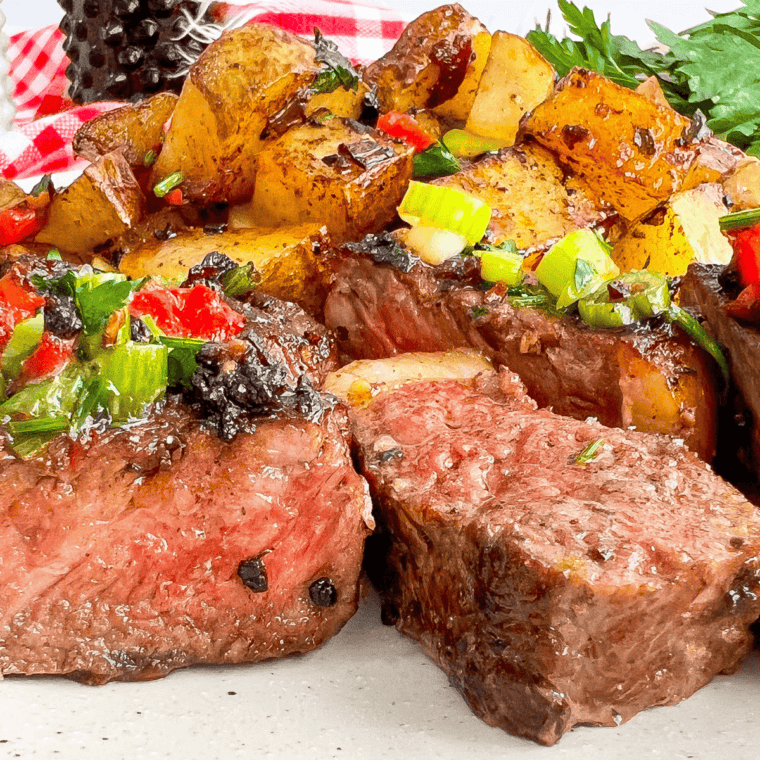
That distinction matters more than it sounds, because most copycat versions of this seasoning get the same two things wrong. They under-sweeten it badly, and they leave out the dairy that makes it taste buttery in the first place.
What Is Actually in Kinder’s Buttery Garlic & Herb Seasoning?
Straight off the label, in order by weight: salt, cane sugar, dehydrated garlic, spices, maltodextrin, dextrose, dehydrated onion, lemon juice, chili pepper, lemon peel, sunflower oil, turmeric (for color), natural flavor, rice concentrate, butter flavor. And in bold at the bottom of the panel: Contains: milk.
Three things jump out of that list.
- Cane sugar is the second ingredient — ahead of the garlic. Not a pinch, not a background note. Sugar outweighs everything in the jar except salt. That’s why this blend browns so beautifully on chicken skin and roasted potatoes while a straight garlic-salt blend just sits there and stays pale.
- There is real dairy in it. The natural butter flavor is built from butter and sweet buttermilk, which is why the bottle carries a milk allergen warning. Buttermilk is the piece nobody replicates at home, and it does two jobs at once — richness, plus a gentle tang that keeps the blend from tasting flat and salty.
- Turmeric is listed specifically “for color.” Not for flavor. That’s the warm golden cast the powder has in the jar. Skip it and your version comes out a dull gray that looks wrong sprinkled over fish or cauliflower, even when it tastes right.
One correction while we’re on the label: I’ve seen this blend’s tang credited to citric acid. Citric acid isn’t on this panel at all. Lemon juice and lemon peel are, listed as separate line items, which means the brightness here is genuine citrus rather than a generic sour salt. Small distinction, but it changes what you reach for in the baking aisle.
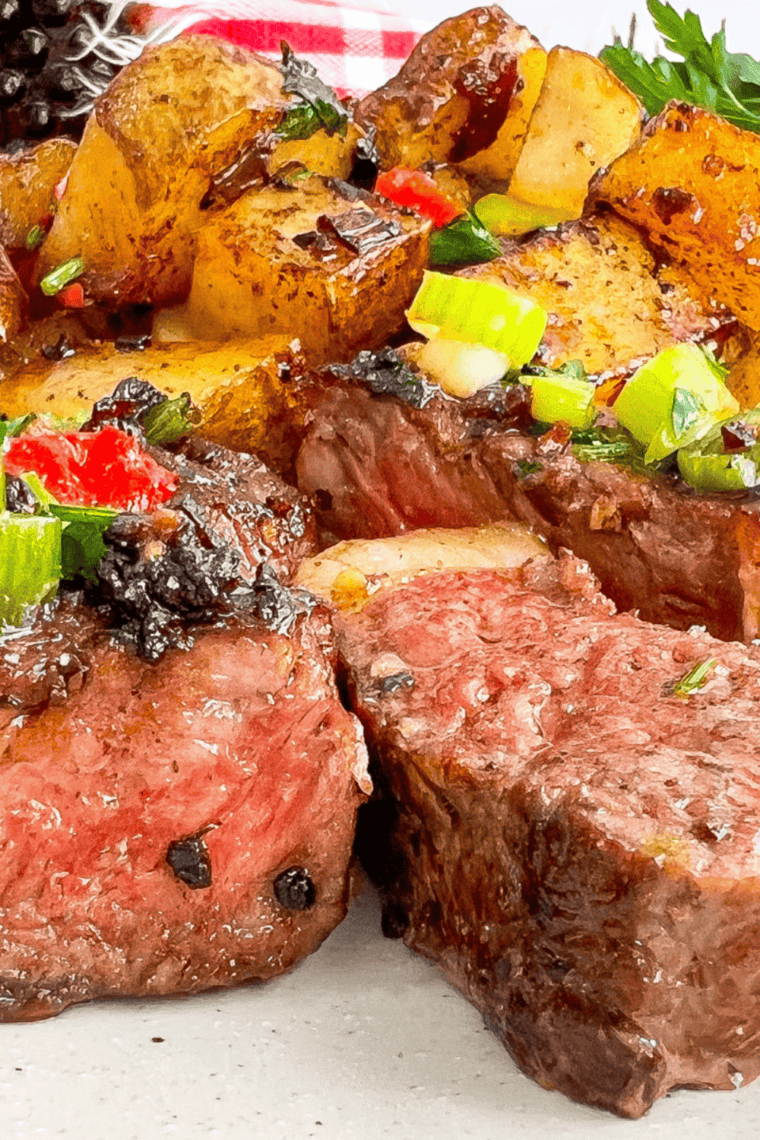
Kinder’s Garlic & Herb vs. Buttery Garlic & Herb: What’s the Difference?
These are two different products and people mix them up constantly in the spice aisle.
The plain Garlic & Herb is the leaner, brighter one — garlic, sea salt, lemon peel, chili, Mediterranean herbs. Sharp and clean. If that’s the bottle in your cabinet, the recipe you actually want is our copycat Kinder’s Garlic & Herb seasoning.
Buttery Garlic & Herb adds three things the plain version doesn’t have: butter and buttermilk, noticeably more sugar, and turmeric for color. It’s rounder, richer, and faintly sweet. It behaves like a finishing seasoning as much as a rub.
The practical rule: reach for the plain one on steak and grilled vegetables. Reach for this one on fries, popcorn, garlic bread, and roasted chicken.
Why You’ll Love This Recipe
- Five minutes, no cooking. Measure, whisk, jar, done.
- Roughly 85% cheaper than the retail bottle, and you’re not paying for the shaker.
- Built from the real ingredient panel, not reverse-engineered from taste memory.
- You control the salt, which the store version leads with by a wide margin.
- Makes a full cup — about two retail bottles’ worth.
Ingredients
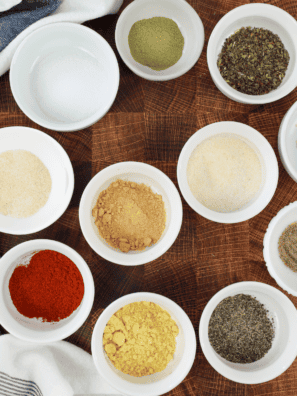
Here’s exactly what goes into this copycat Kinder’s Buttery Garlic & Herb seasoning, and why each one is on the list. The full measurements are in the printable recipe card at the bottom of the post.
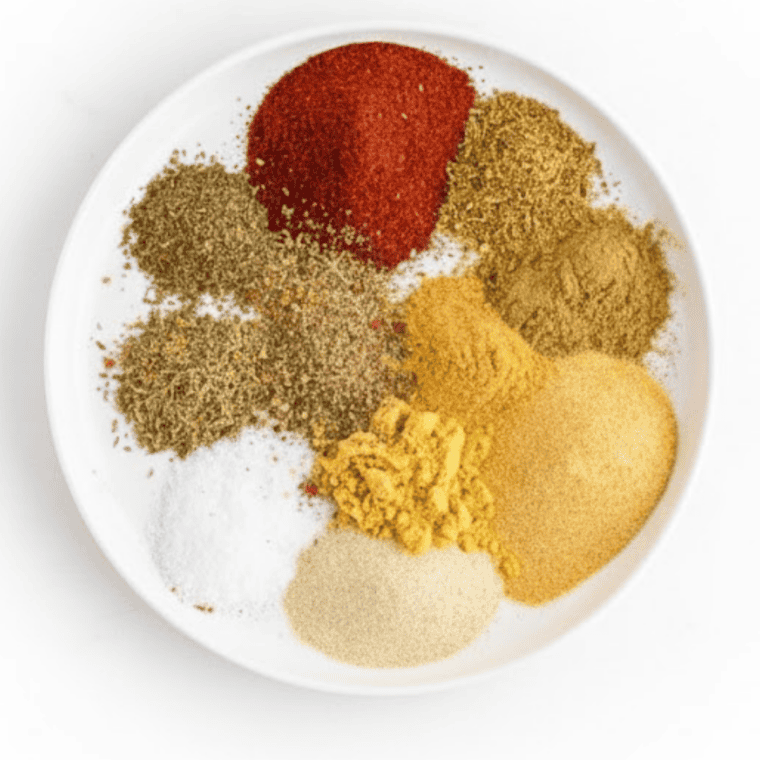
- Fine sea salt: The blend’s backbone; fine crystals stay evenly suspended.
- Granulated cane sugar: Second on the label; drives golden caramelization on chicken.
- Granulated garlic: The headline flavor; coarser grind resists clumping in oil.
- Onion powder: Savory base note underneath the garlic; adds real depth.
- Butter powder: Delivers the buttery richness the seasoning’s name promises.
- Buttermilk powder: Milk tang your tongue reads as butter; skip nothing here.
- Lemon juice powder: Brightness that keeps butter and garlic from tasting heavy.
- Dried lemon peel: Aromatic citrus perfume; grind fine to avoid visible flecks.
- Ground turmeric: Pure color; gives the blend its warm golden cast.
- Red chili flakes: Background warmth, not heat; grind them fine too.
- Dried parsley: The visible herb; rub between your palms until dusty.
- Dried thyme: Woodsy, faintly floral note keeping the herbs from flattening.
- Fine black pepper: Gentle bite; fine grind prevents settling in the jar.
- Sunflower oil: One teaspoon makes the blend cling to wet food.
Substitutions and Variations
- No butter powder? Swap in 2 tablespoons nonfat dry milk instead.
- No buttermilk powder? Sour cream powder works, measure for measure.
- No lemon juice powder? Use ¾ teaspoon citric acid plus extra peel.
- No dried lemon peel? Dry fresh zest at 170°F, then grind.
- Make it dairy free. Drop both dairy powders; finish dishes with olive oil.
- Make it lower sodium. Halve the salt; add mushroom powder for depth.
- Make it sugar free. Use allulose — it still browns like real sugar.
- Make it spicier. Double the chili flakes and add ¼ teaspoon cayenne.
- Make it smoky. Stir in 1 teaspoon smoked paprika, like Woodfired Garlic.
- Turn it into a dipping butter. Whisk 2 tablespoons into melted butter, like Cowboy Butter.
- Turn it into a marinade. Whisk with olive oil and lemon juice; marinate 2 hours.
How to Make It
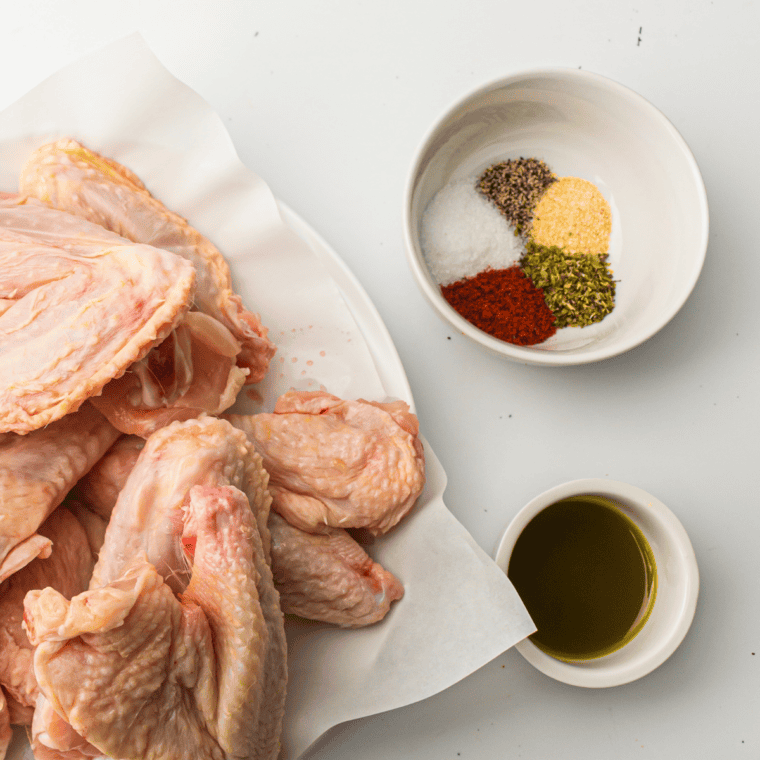
Step 1: Grind what needs grinding. Chili flakes, dried lemon peel, and thyme go into a spice grinder or mortar for about 15 seconds. Rub the parsley fine between your palms. You want a uniform powder with no visible pieces.
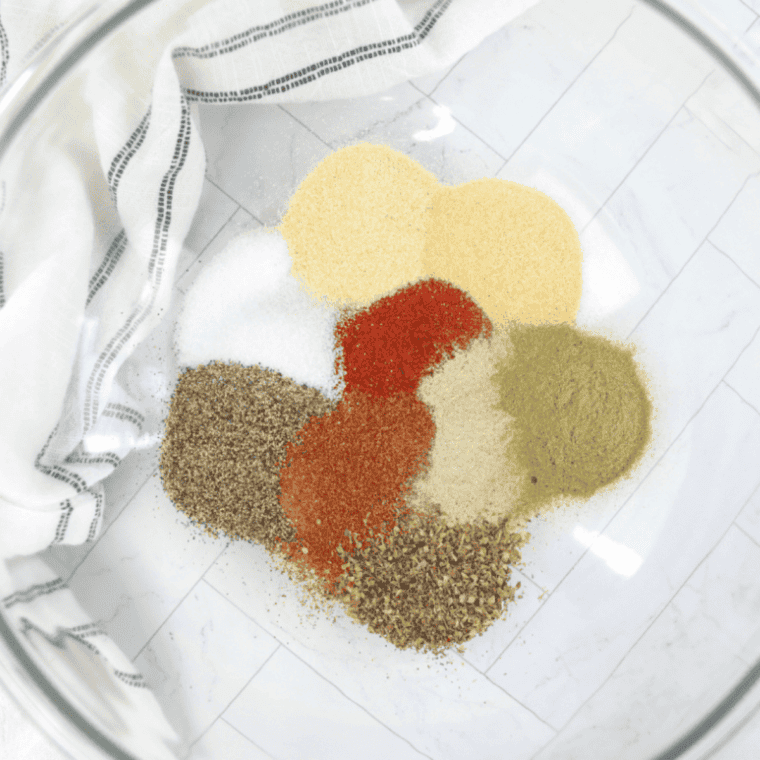
Step 2: Whisk the dry ingredients. Combine everything except the oil in a medium bowl. Whisk a full 30 seconds, breaking sugar clumps against the side of the bowl with the back of a spoon. Look for even pale gold with no white streaks — streaks mean the turmeric hasn’t distributed and you’ll get patchy color on food.
Step 3: Add the oil last. Drizzle the teaspoon of sunflower oil over the surface and whisk hard for another 30 seconds. The blend will look slightly damp and pebbly. That’s correct.
Step 4: Rest it, then break it up. Jar it and leave it 24 hours. The oil and dairy powders firm into small clumps overnight. Shake hard or push it through a coarse sieve and it returns to free-flowing powder, with the oil now coating every particle. Skipping this is the most common reason a homemade blend feels gritty.
How to Use Copycat Kinder’s Buttery Garlic & Herb Seasoning
Start with about 1 tablespoon per pound of meat or per sheet pan of vegetables, then adjust. This blend is saltier and sweeter than a plain garlic seasoning, so a heavy hand shows up fast.
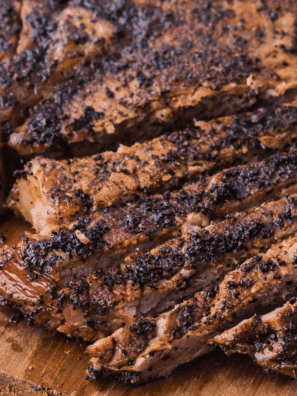
Chicken thighs. This is what the blend was built for — the sugar caramelizes and the buttermilk browns. Use it in place of the dry rub on air fryer BBQ chicken thighs, or swap it for the ranch mix on air fryer ranch chicken thighs for a richer, lemonier result. It’s also excellent on air fryer chicken thigh bites, where the extra surface area means more caramelized edges per bite.
A full sheet-pan dinner. Season both components with the same blend in air fryer chicken thighs and vegetables and everything comes out tasting like it belongs together.
Roasted potatoes. Toss them hot out of the basket so residual steam grabs the powder — cold potatoes won’t hold it. It works anywhere a seasoned-potato recipe calls for a blend, including air fryer ranch roasted potatoes, air fryer rosemary roasted potatoes, and air fryer parmesan potatoes, where the butter note and the cheese are a natural pair. Air fryer roasted potatoes and tomatoes is another good fit — the lemon in the blend cuts the sweetness of the blistered tomatoes.
Fries. Dust them the second they come out. Try it on the fries in air fryer easy poutine french fries before the gravy goes on, or on air fryer truffle potatoes if you want something genuinely over the top. Sweet potatoes take it well too — it’s very good on air fryer roasted sweet potatoes, where the sugar in the blend plays off the sugar in the potato.
Garlic bread. Stir 1½ teaspoons into 4 tablespoons of softened butter and spread it over the slices before you make garlic bread in the air fryer. This is a legitimate upgrade over the frozen stuff.
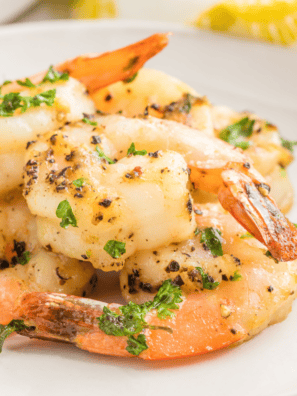
Popcorn and popcorn shrimp. Grind a tablespoon extra fine first so it sticks to popcorn kernels instead of collecting at the bottom of the bowl. And a light dusting over crispy air fryer popcorn shrimp right out of the basket turns a freezer bag into something worth serving.
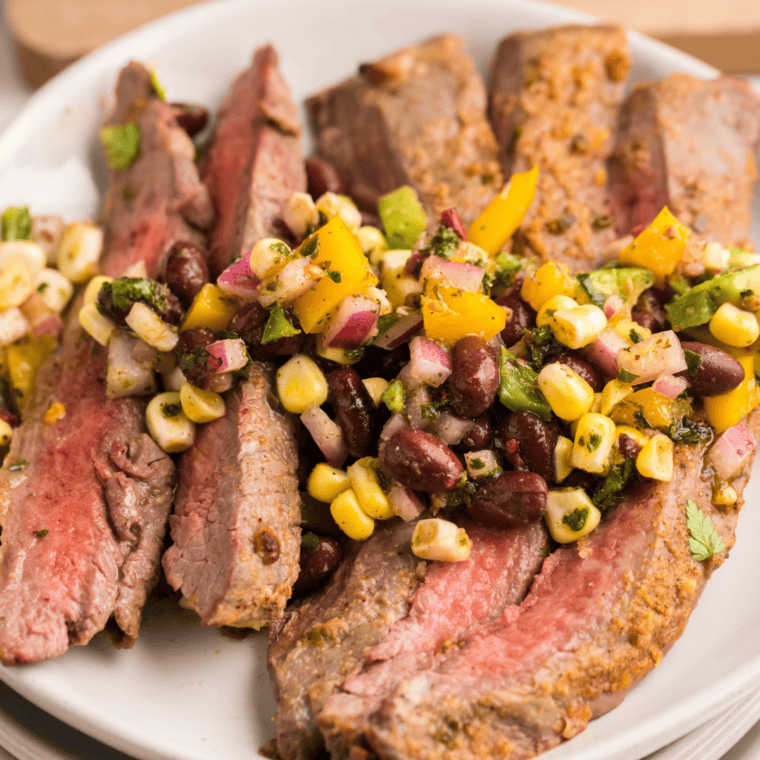
Compound butter. Two tablespoons of seasoning into a stick of softened butter, rolled in parchment and chilled. Slice it onto a hot steak.
One caution. Because of the sugar, keep this off anything sitting over direct high flame for long — sugar scorches at grill temperatures. Season after searing, or work on the indirect side.
Storage
Airtight, cool, dark, away from the stove. Three months, which is shorter than a dry-only blend, because the butter and buttermilk powders carry milk fat that eventually goes stale and faintly cardboard-y.
Doubling the batch? Freeze half in a sealed jar and it’ll hold six months or better. Let it come to room temperature before opening so condensation stays out.
If you left the dairy powders out entirely, it keeps six months like any other seasoning blend.
Frequently Asked Questions
What is in Kinder’s Buttery Garlic & Herb seasoning? The label lists salt, cane sugar, dehydrated garlic, spices, maltodextrin, dextrose, dehydrated onion, lemon juice, chili pepper, lemon peel, sunflower oil, turmeric for color, natural flavor, rice concentrate, and butter flavor. It contains milk.
Does Kinder’s Buttery Garlic & Herb contain real butter? Yes. The natural butter flavor is made with butter and sweet buttermilk, which is why the bottle carries a milk allergen warning. It isn’t a synthetic butter flavoring.
Is Kinder’s Buttery Garlic & Herb dairy free? The store version is not. This copycat can be — leave out the butter powder and buttermilk powder, and finish the cooked dish with olive oil or a dairy-free butter instead.
Is this seasoning gluten free? Every ingredient in this homemade version is naturally gluten free. Check individual spice labels if you have celiac disease, since cross-contamination varies by brand.
Can I use fresh garlic instead of granulated? Not for a shelf-stable jar. Fresh garlic introduces moisture and the blend will spoil within days. Keep the jar entirely dry and add fresh garlic to the dish itself.
Why is my homemade version paler than the store bottle? Turmeric. It’s on the label specifically for color and it’s the ingredient most copycats skip. Half a teaspoon per cup is plenty — more starts to taste earthy.
How is this different from Kinder’s Buttery Steakhouse? Different blend entirely. Buttery Steakhouse is onion-forward with red bell pepper and parsley, built for beef. This one is garlic-forward with lemon and considerably more sugar, built for chicken and vegetables.
Can I make it without lemon juice powder? Yes. Use ¾ teaspoon citric acid plus an extra ½ teaspoon dried lemon peel. Not identical — citric acid is sour without being citrusy — but close, and easier to find.
Can I turn it into a marinade? Whisk 2 tablespoons of seasoning with ¼ cup olive oil and 2 tablespoons lemon juice, then marinate chicken or pork 2 to 4 hours.
How much does one batch make? About 1 cup, which fills a standard 8 oz spice jar — roughly two retail bottles.
More Copycat Kinder’s Seasonings
If this one earns a permanent spot in your cabinet, these will too:
- Copycat Kinder’s The Blend Mix — salt, cracked pepper, and crunchy garlic; the everyday all-purpose
- Copycat Kinder’s Woodfired Garlic Seasoning — smoky roasted garlic, no dairy
- Copycat Kinder’s Cowboy Butter — dry blend or dipping sauce, garlic and lemon forward
- Copycat Kinder’s The Steak Blend — bold and smoky for steaks and burgers
- Copycat Kinder’s Sweet Heat Seasoning — sweet, smoky, and spicy
- Copycat Kinder’s Hickory Brown Sugar Rub — smoky-sweet for ribs and pork
- Copycat Kinder’s The Greek Blend — oregano, dill, and garlic
- Copycat Kinder’s Honey Mustard Seasoning — sweet and tangy for chicken and fries
Copycat Kinder’s Buttery Garlic & Herb Seasoning
Description
Ingredients
- 4 tablespoons fine sea salt
- 3 tablespoons granulated cane sugar
- 3 tablespoons granulated garlic
- 2 tablespoons butter powder
- 1 tablespoon buttermilk powder
- 1 tablespoon onion powder
- 2 teaspoons lemon juice powder
- 2 teaspoons dried parsley, rubbed fine
- 1 teaspoon dried lemon peel, ground fine
- 1 teaspoon dried thyme, ground
- 1 teaspoon fine black pepper
- ¾ teaspoon red chili flakes, ground fine
- ½ teaspoon ground turmeric
- 1 teaspoon sunflower oil
Instructions
- Grind the chili flakes, dried lemon peel, and thyme in a spice grinder for about 15 seconds. Rub the parsley fine between your palms.
- Add all ingredients except the sunflower oil to a medium bowl. Whisk 30 seconds, breaking up sugar clumps, until the color is an even pale gold with no white streaks.
- Drizzle the sunflower oil over the surface and whisk hard for another 30 seconds. The blend will look slightly damp and pebbly.
- Transfer to an airtight jar and rest 24 hours. Shake vigorously or push through a coarse sieve to break up clumps before first use.
Equipment
- Mixing Bowl
- Whisk
Notes
- Buttermilk powder is what makes this taste buttery rather than just salty — it’s the ingredient most copycats skip. Baking aisle, near the dry milk.
- To make it dairy free, leave out the butter and buttermilk powders and finish the cooked dish with butter or oil instead.
- Because of the milk fat, this keeps about 3 months at room temperature versus 6 for a dry-only blend. Freeze a second batch if you’re doubling.
- The sugar will scorch over direct high heat. Season after searing, or cook on the indirect side of the grill.
- No lemon juice powder? Use ¾ teaspoon citric acid plus an extra ½ teaspoon dried lemon peel.
Nutrition
Share this recipe
We can’t wait to see what you’ve made! Mention @forktospoon or tag #forktospoon!