You dipped the last slice of bread and there’s still half a bowl of leftover French toast batter sitting on the counter. Don’t pour it down the drain — that mixture of eggs, milk, cinnamon, and vanilla is a legitimate custard base, and it’s the starting point for at least ten other things.
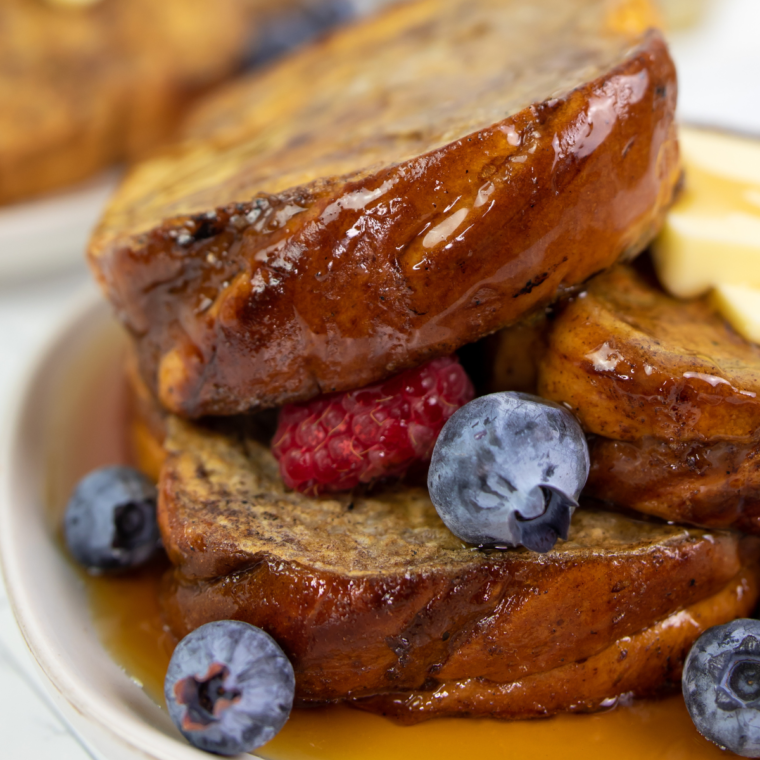
Here’s the short version: leftover French toast batter keeps 2 days in the refrigerator or up to 1 month in the freezer, and it can be turned into crepes, bread pudding, muffins, Yorkshire puddings, battered fruit, or savory French toast with almost no extra effort.
Below you’ll find exactly how long the egg mixture stays safe, the right way to store it, and ten tested ways to use it up. If French toast is a weekend regular in your house, you’ll also want my air fryer cinnamon baked French toast and Ninja Foodi French toast.
Can You Save Leftover French Toast Batter?
Yes. Leftover French toast batter can be saved, as long as you get it into the refrigerator quickly and use it within two days.
The reason it needs care is simple: French toast batter is a raw egg-and-dairy mixture, which means it belongs in the same food-safety category as raw egg custard. It’s perfectly safe to store — it just isn’t shelf-stable, and it won’t tell you when it’s gone off until you smell it.
Two rules cover almost every situation:
- Never store batter with bread already soaking in it. The bread disintegrates into paste and the whole thing becomes unusable. Soak your bread right before it hits the pan, every time.our next delicious breakfast, and have an ingredient ready for other culinary creations.
- Refrigerate within 2 hours. If the bowl sat out on the counter longer than that while you cooked and ate, discard it. This is the USDA’s standard danger-zone window for raw eggs and dairy.
How Long Does French Toast Batter Last?
| How you store it | How long it lasts | Notes |
|---|---|---|
| Refrigerator, airtight, at or below 40°F (4°C) | 2 days | Stir before using; it will separate |
| Freezer, airtight, air pressed out | 1 month | Texture changes slightly on thawing |
| Room temperature | 2 hours, then discard | Raw egg safety limit — no exceptions |
| Batter with bread already soaking in it | Do not store | Bread turns to mush |
Two days is the honest limit, not a conservative guess. Past that, an uncooked egg-and-milk mixture starts developing off flavors well before it becomes visibly spoiled, so you end up with French toast that tastes faintly sour even though nothing looks wrong.
How to Store Leftover French Toast Batter
In the refrigerator
- Pour the batter into an airtight container — a glass jar with a screw lid is ideal because you can shake it to recombine rather than dirtying a whisk. Get it into the coldest part of the fridge, which is the back of a lower shelf, not the door. Label it with the date. It’s a thirty-second habit that saves you from the “is this from Saturday or Sunday?” guessing game.
- Expect separation. The milk and egg will settle into layers within a few hours. That’s normal and reverses completely with a shake or a stir.
In the freezer
- If you know you won’t get to it inside two days, freeze it instead of gambling. Pour the batter into a freezer bag, press out as much air as you can, seal it, and lay it flat — flat-frozen bags stack and thaw much faster than a solid block in a container.
- Thaw overnight in the refrigerator, never on the counter. Then whisk it hard. Freezing and thawing an egg-and-dairy mixture will make it look slightly grainy or curdled at first, which puts people off unnecessarily; thirty seconds of vigorous whisking brings it back together. Frozen-and-thawed batter is best used for cooked applications like bread pudding or muffins rather than delicate crepes, where the texture matters more.
- If your leftovers are actual cooked slices rather than raw batter, here’s how to freeze French toast instead.
10 Ways to Use Leftover French Toast Batter
Air Fryer French Toast Sticks
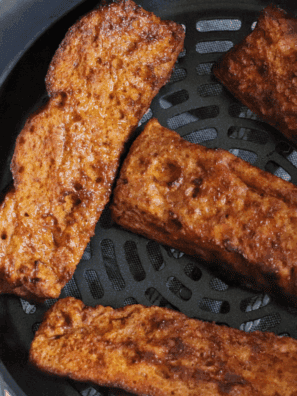
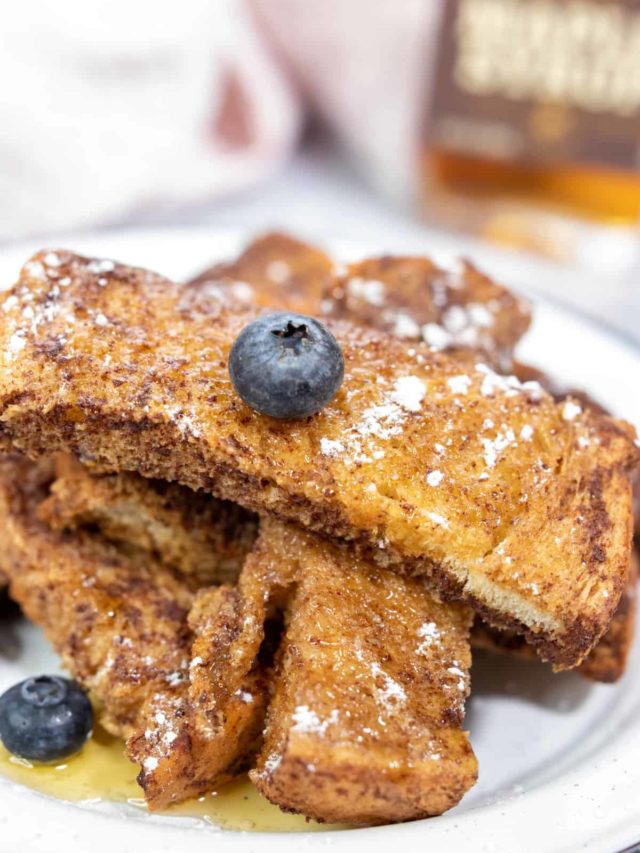
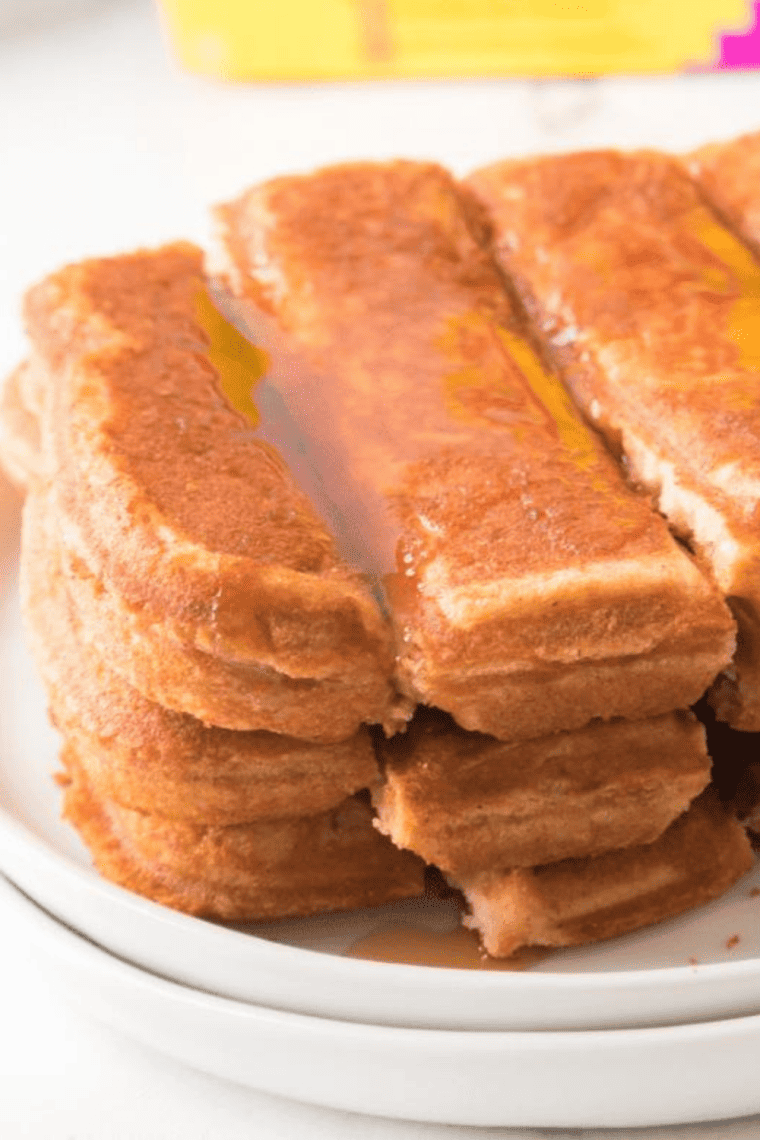
The easiest use, and the best one for a small amount of batter. Cut bread into 1-inch strips, dip for 20 to 30 seconds a side, and air fry at 370°F for 8 to 10 minutes, flipping halfway. Roughly ½ cup of batter coats eight sticks. My full method is here: air fryer French toast sticks.
Savory French Toast
Per 1 cup of batter, whisk in ¼ cup grated Parmesan or sharp cheddar, 1 tablespoon chopped chives, and a good pinch of black pepper. Cook as usual and serve with sour cream or a green salad.
One honest caveat: this works beautifully if your original batter was plain eggs and milk, and only passably if you loaded it with cinnamon and vanilla. Sweet spice plus cheese is a specific taste. If your batter is heavily spiced, skip to number 3 or 7.
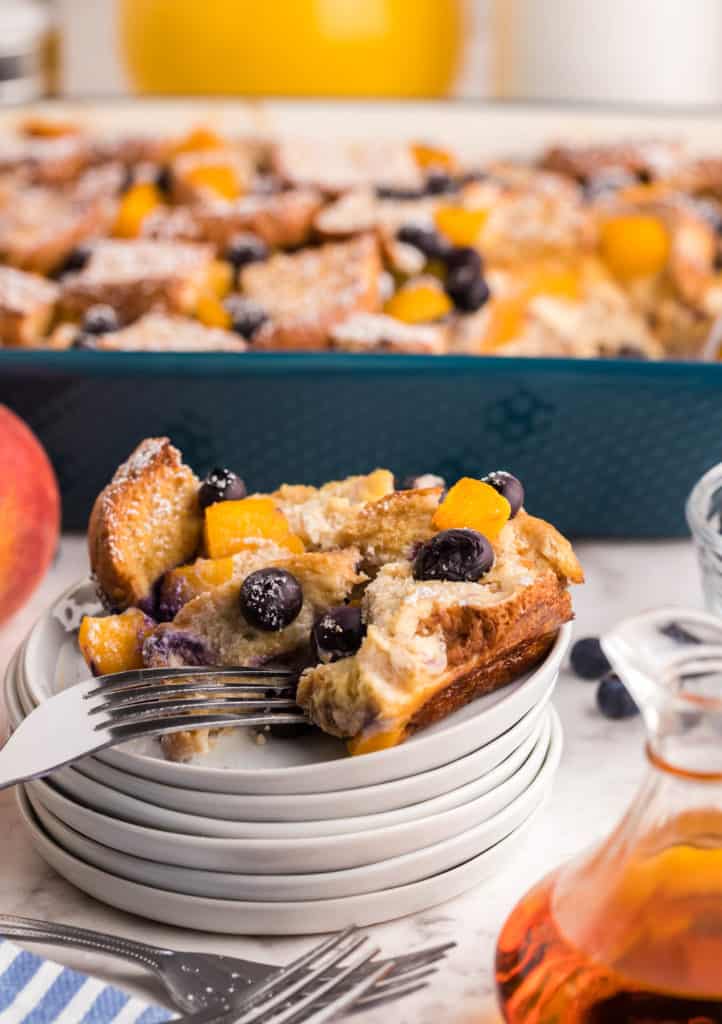
Bread Pudding
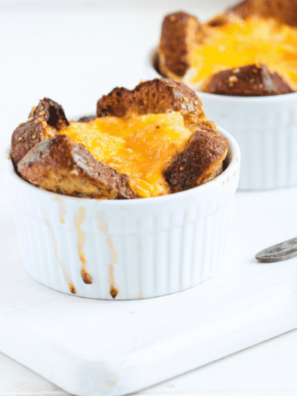
This is the single best use for a large quantity of leftover custard, because bread pudding is essentially French toast batter’s final form. Combine 4 cups of cubed day-old bread with about 1½ to 2 cups of batter, let it soak 15 minutes so the liquid reaches the center of every cube, fold in raisins or chocolate chips, and bake at 350°F for 35 to 40 minutes until the center is set and no longer wobbles. Full recipe: air fryer bread pudding.
Crepes
French toast batter has no flour in it, so it won’t make crepes on its own — but it’s already two-thirds of the way there. For each 1 cup of batter, whisk in ¾ cup all-purpose flour and 2 to 3 tablespoons additional milk until it’s the consistency of heavy cream and pours off the whisk in a ribbon. Rest it 15 minutes so the flour hydrates, then cook ¼ cup at a time in a buttered 8-inch nonstick pan over medium, about 1 to 2 minutes on the first side and 30 seconds on the second.
The cinnamon and vanilla already in the batter mean you get subtly spiced crepes without adding anything. Fill with fruit and whipped cream, or go savory with ham and Gruyère.
Battered Fruit
Slice apples or bananas about ½ inch thick, or leave strawberries whole. Dip in the batter, then pan-fry in butter over medium heat for 2 to 3 minutes per side until the coating sets and turns golden. Finish with cinnamon sugar or a drizzle of honey.
Firm fruit works far better than soft here — pears and apples hold their shape, while peaches collapse and steam the coating from inside.
Air Fryer Yorkshire Puddings
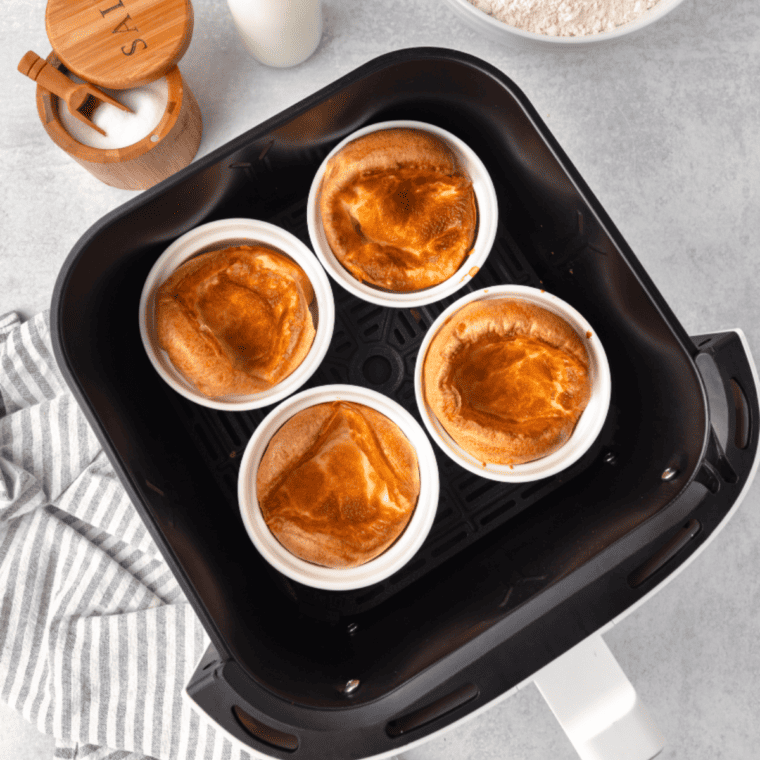
Traditional Yorkshire pudding is roughly equal parts egg, milk, and flour — so leftover batter plus flour gets you most of the way. Whisk 1 cup of flour and a pinch of salt into 1 cup of batter, then let it rest at least 30 minutes.
The non-negotiable part is heat: get the greased muffin tin genuinely smoking hot in a 425°F oven before the batter goes in, or they won’t climb. Bake 20 to 25 minutes without opening the door. Here’s my full Yorkshire pudding method.
Air Fryer Blueberry Muffins
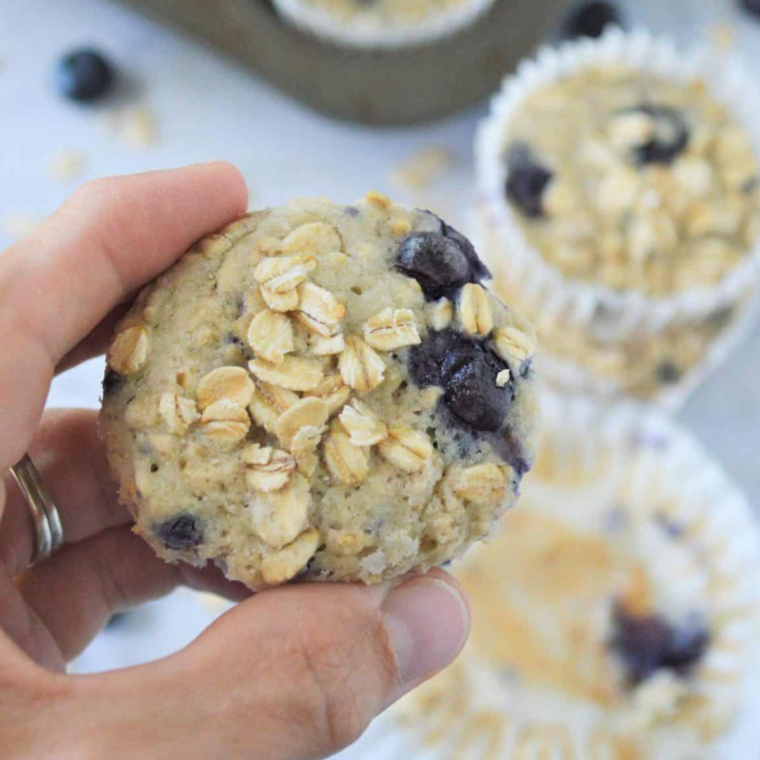
Turn 1 cup of batter into muffins by adding 1½ cups flour, 2 teaspoons baking powder, ⅓ cup sugar, and ¼ cup melted butter. Mix only until the flour disappears — overmixing makes them tough and tunneled. Fold in berries or chocolate chips and bake at 350°F for 18 to 20 minutes, or air fry at 320°F for 12 to 14. Compare against my standard air fryer blueberry muffins.
Battered Sandwiches
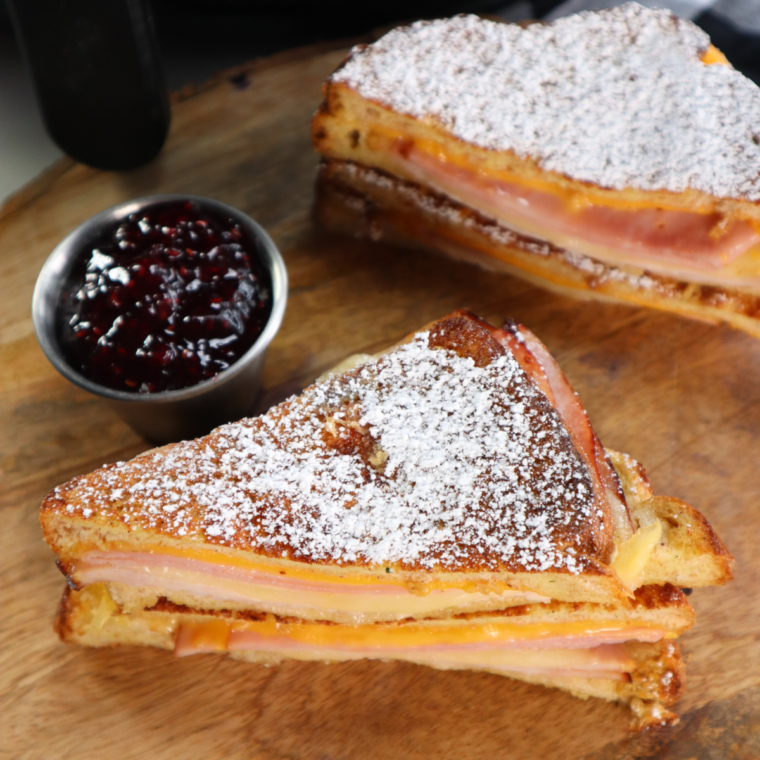
Assemble a sandwich, dip the whole thing, and pan-fry it in butter over medium-low for 3 to 4 minutes a side. Medium-low matters — high heat browns the coating before the cheese inside has any chance to melt. Ham and Swiss is the classic Monte Cristo, but peanut butter and jelly is quietly excellent.
Waffle Iron Hash Browns
Grate potatoes, then squeeze them dry in a clean kitchen towel — genuinely dry, because water is what makes hash browns steam instead of crisp. Toss each cup of grated potato with 2 to 3 tablespoons of batter, which is just enough to bind. Press into a greased waffle iron and cook 8 to 10 minutes until deep golden.
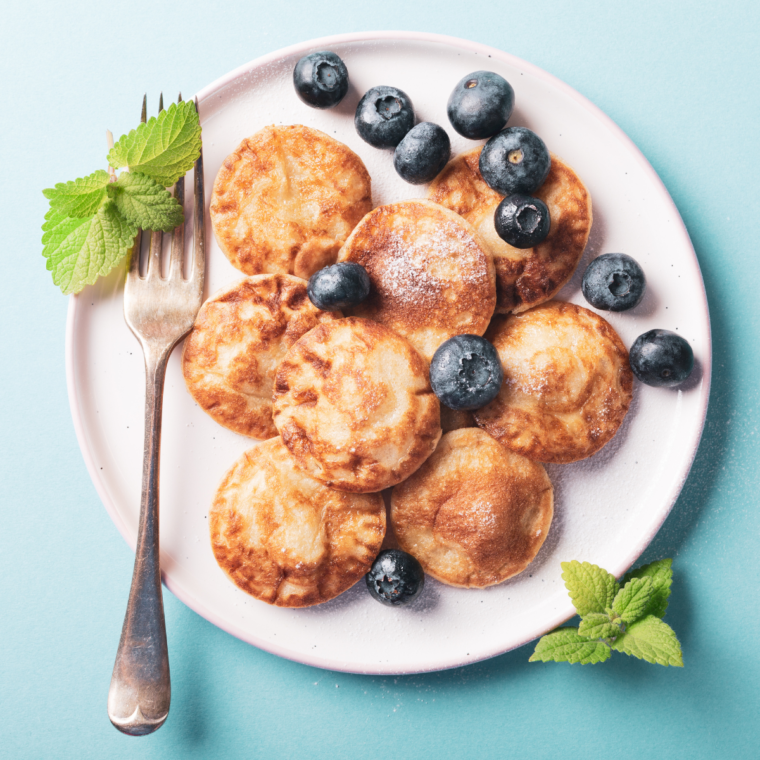
Mini Pancakes
Whisk 1 cup of flour and 1 teaspoon of baking powder into 1 cup of batter, then drop tablespoon-sized rounds onto a hot griddle. Flip when the surface bubbles hold their shape, about 90 seconds. They freeze well, and if you make too many, here’s how to reheat pancakes five ways.
Pro Tips for Reusing Stored Batter
- Always smell it first. A sour or sharp smell means discard, no matter what the date on the container says. This single check makes every other rule redundant.
- Thin refrigerated batter before dipping. Chilling thickens it noticeably. Add milk a tablespoon at a time until it coats the back of a spoon without gluing to it.
- Use clean utensils. The spatula that’s been flipping toast has been in and out of a hot pan and back into raw batter. Use a separate spoon for anything you plan to store.
- Never top up old batter with fresh. Adding Sunday’s batter to Saturday’s leftovers resets nothing — the whole batch is only as fresh as the oldest part of it.
- Don’t store batter with fruit mixed in. Fresh fruit adds sugar and moisture that ferment fast. Add it at cooking time.
Frequently Asked Questions
Can I make French toast batter the night before? Yes, and it’s one of the better weekday-breakfast shortcuts. Mix it, refrigerate it airtight, and whisk it in the morning. Overnight rest actually helps — the cinnamon and vanilla distribute more evenly than in freshly mixed batter.
Can you freeze French toast batter? Yes, for up to 1 month. Freeze it flat in a bag with the air pressed out, thaw overnight in the fridge, and whisk well. Expect a slightly grainier texture, which is why frozen batter is better suited to baked uses than to crepes.
Can French toast batter go bad? Yes. It’s raw egg and dairy, so it spoils on roughly the same timeline as either ingredient alone. Sour smell, thickened slimy texture, or any grey or greenish tint means throw it out.
Is it safe to use batter that sat out during breakfast? If it was at room temperature for under 2 hours, refrigerate it and use it within two days. Over 2 hours, discard it. Bacterial growth in raw egg mixtures isn’t something you can see or fix with cooking.
Does the type of milk change how long it keeps? Only slightly. Batter made with oat or almond milk tends to separate more dramatically but keeps about the same two days. Heavy cream and half-and-half batters hold together better in the fridge.
How much batter do I actually need per slice? Roughly 3 tablespoons for standard sandwich bread and closer to ¼ cup for thick-cut brioche or challah. Mixing to that number is the real fix for this whole problem — most leftover batter comes from doubling a recipe out of habit.
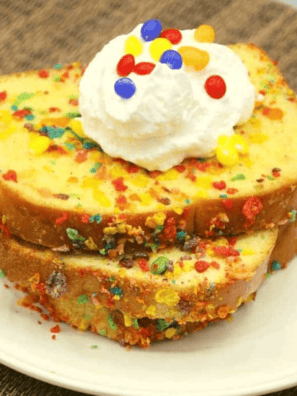
Once you’ve got the storage sorted, leftover batter stops being a waste problem and becomes a head start. Browse all my French toast recipes for more ways to use it, including jam-stuffed French toast, pumpkin French toast, beignet French toast, Fruity Pebbles French toast, and a single-serving air fryer French toast mug for when there’s only one of you.