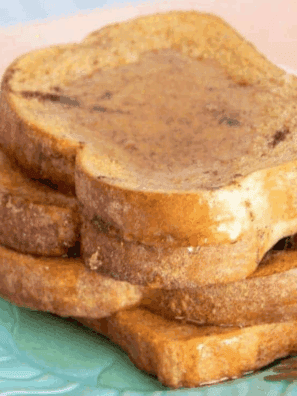
You made a big batch on Sunday, ate two slices, and now there’s a covered plate in the fridge you’re eyeing on Wednesday morning. French toast is one of those leftovers people hesitate over — it’s bread, so it feels like it should keep, but it’s also soaked in egg and milk, which changes the math entirely. Here’s exactly how long you’ve got.

Cooked French toast lasts 3–4 days in the refrigerator when it’s cooled completely and stored in an airtight container. After that it’s still often safe, but the texture turns rubbery and the flavor flattens — so if you want to keep it longer than four days, freeze it instead.
Here’s the short version, then everything you need to store it properly.
| Where you store it | How long it lasts |
|---|---|
| Room temperature | 2 hours maximum (1 hour above 90°F) |
| Refrigerator (cooked) | 3–4 days |
| Refrigerator (uncooked batter) | 1–2 days |
| Freezer (cooked) | 2–3 months |
These timeframes follow USDA guidance for cooked egg dishes and leftovers. French toast is bread soaked in an egg-and-milk custard, so it’s treated as a perishable egg dish — not as bread.
Why French Toast Doesn’t Last as Long as Regular Bread
A slice of sandwich bread sits on the counter for days. French toast can’t, and the reason is the custard.
Once bread absorbs raw egg and milk, you’re storing a cooked egg dish. Eggs and dairy support bacterial growth in a way that plain bread doesn’t, which is why the 2-hour room-temperature limit matters here even though it feels overly cautious for something that looks like toast.
That same custard is also why refrigerated French toast goes soggy so easily. The bread is already saturated with moisture, and any condensation trapped in a container gets absorbed straight into the slice. Most of the storage advice below is really about controlling that moisture.

How to Store French Toast in the Fridge
Cool it completely first. Move the slices to a wire rack in a single layer and let them come to room temperature — usually 20–30 minutes. Sealing warm French toast in a container traps steam, and that steam is what makes it soggy by morning. Don’t leave it out longer than two hours total, though.
Stack with parchment between slices. A square of parchment or wax paper between each slice keeps them from fusing into a single block and lets you pull out one or two at a time.
Use an airtight container, not foil. Foil and plastic wrap let the slices absorb refrigerator odors and don’t seal out moisture well. A rigid airtight container works best; a zip-top bag with the air pressed out is a reasonable second choice.
Store toppings separately. Syrup, butter, whipped cream, and fresh fruit all shorten shelf life and accelerate sogginess. Store the toast plain and add toppings after reheating — our guide to what to serve with French toast has plenty of options for when you’re ready to eat.
Label with the date. Obvious, but it’s the difference between confidently eating day-three French toast and throwing out perfectly good breakfast because you can’t remember when you made it.
How Long Does French Toast Batter Last in the Fridge?
Uncooked batter is a different question with a shorter answer: 1–2 days, refrigerated in an airtight container.
Raw egg and milk sitting together don’t keep as well as the cooked version, so this isn’t a make-it-Sunday-use-it-Thursday situation. Stir it before using, since the ingredients separate as they sit, and discard it immediately if it smells sour. If you’ve got extra batter and no plan for it, here’s what to do with leftover French toast batter.

Freezing French Toast for Longer Storage
If you’re not going to eat it within four days, freeze it — French toast freezes far better than most cooked breakfasts.
Cool the slices completely, arrange them in a single layer on a baking sheet, and freeze until solid (about an hour). Then transfer them to a freezer bag or airtight container with parchment between the layers. Flash-freezing first is what keeps them from welding together.
Frozen French toast holds its quality for 2–3 months. It stays safe indefinitely below 0°F, but past three months you’ll notice freezer burn and a dulled flavor. You don’t need to thaw it — reheat straight from frozen. For the full walkthrough, see can you freeze French toast.
How to Reheat French Toast Without Making It Soggy
Dry heat is the goal. Anything that reheats with steam will give you a limp slice.
- Air fryer (best): 350°F for 3–4 minutes from the fridge, 5–7 minutes from frozen. Restores the crisp edges better than anything else.
- Oven or toaster oven: 350°F for 8–10 minutes on a rack or sheet pan, uncovered.
- Toaster: Works surprisingly well for thinner slices. Use a low setting so the custard center warms before the outside darkens.
- Skillet: Medium-low with a little butter, 2–3 minutes per side.
- Microwave: Fast, but it steams the bread. If it’s your only option, use 50% power in 20-second bursts and eat it immediately.
If you’re starting from scratch rather than reheating, our air fryer French toast is the recipe most people in this house make, and the copycat Cracker Barrel French toast is worth a look if you like a thicker, more cinnamon-forward slice.

How to Tell If French Toast Has Gone Bad
Check for these before reheating anything that’s been in the fridge a few days:
- Sour or off smell — the clearest signal, and the one to trust most. Fresh French toast smells faintly of vanilla and egg.
- Visible mold — any fuzzy spots, green, white, or black. Discard the whole batch, not just the affected slice; mold spreads through soft, moist bread invisibly.
- Slimy or tacky surface — a texture change from moisture and bacterial growth.
- Very hard and dried out — not unsafe, but past the point of being good. Cube it and use it in bread pudding instead.
When you’re not sure, throw it out. Egg-based leftovers aren’t worth the gamble.
Does Stuffed or Topped French Toast Last as Long?
No — plan on 2–3 days instead of 3–4.
Cream cheese fillings, fruit compotes, custard-heavy stuffed versions, and anything with meat or cheese all bring their own shorter shelf life and add moisture that speeds up sogginess. Same rule as always: store it plain when you can, and add the good stuff after reheating.

Frequently Asked Questions
How long can French toast sit out at room temperature?
Two hours maximum, or one hour if the room is above 90°F. Because it’s an egg-and-dairy dish, it enters the bacterial danger zone (40°F–140°F) at the same rate as scrambled eggs, not at the rate of bread.
Can I make French toast the night before?
Yes, and it works well. Cook it, cool it completely, refrigerate it in an airtight container, and reheat in the air fryer or oven in the morning. It’s one of the better breakfasts to batch-cook ahead.
Can I refrigerate French toast that’s still warm?
Wait until it’s cooled. Sealing warm French toast traps steam that condenses inside the container and soaks into the bread. Cool it on a wire rack first, staying within the two-hour window.
Why did my refrigerated French toast turn soggy?
Almost always condensation — either it was stored warm, or the container wasn’t properly airtight. Toppings left on the slices are the other common culprit. Reheating in an air fryer or oven will recover most of the texture.
Can I refreeze French toast that’s already been thawed?
It’s not recommended. Refreezing degrades the texture noticeably, and if the slices sat above 40°F for more than two hours while thawing, it’s a food safety concern as well. Freeze in portions you’ll actually finish.
Is French toast still safe after 5 days in the fridge?
It may be, but 4 days is the recommended limit for cooked egg dishes and the point where quality drops off sharply. If it’s been longer than that, use your senses — and when in doubt, discard it.
How long does store-bought frozen French toast last?
Follow the date on the package, which is typically 6–12 months in the freezer. Once you’ve cooked it, treat it like homemade: 3–4 days in the fridge.
Want more? Browse all our French toast recipes.