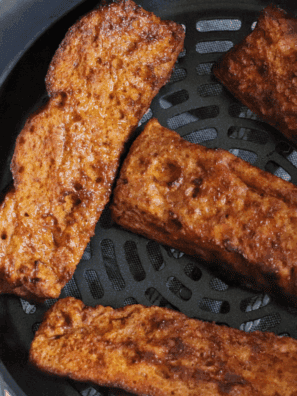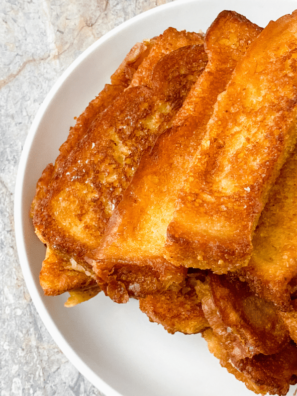
Yes, you can freeze French toast. Cook it, cool it completely, then flash freeze the slices in a single layer before wrapping and bagging them. Frozen French toast keeps its texture for up to 3 months, and it reheats straight from frozen in an air fryer, oven, or toaster — no thawing required.
I get asked this one constantly, and it usually comes down to the same three situations: you doubled the batch, you’re prepping breakfast for a camping trip, or you want something homemade waiting in the freezer on a Tuesday morning when there’s no time to cook.
The short version is that French toast is one of the better breakfast foods to freeze. The custard soaks into the bread and protects it, so it doesn’t dry out the way plain toast does. But there’s a right way and a wrong way, and the wrong way gives you a solid brick of slices fused together.
Here’s everything, including what to do with the batter and a make-ahead casserole.
How Long Does French Toast Last In The Freezer?
| What you’re freezing | Refrigerator | Freezer |
|---|---|---|
| Cooked French toast slices | 3–4 days | Up to 3 months |
| French toast sticks | 3–4 days | Up to 3 months |
| French toast batter (uncooked) | 1–2 days | Up to 1 month |
| Assembled but uncooked French toast | Not recommended | Not recommended |
| Unbaked French toast casserole | 1 day | Up to 1 month |
| Baked French toast casserole | 3–4 days | Up to 2 months |
Everything stays safe indefinitely at 0°F — freezing halts bacterial growth rather than killing it. Those timelines are about quality, not safety. Past them you’ll start losing texture and picking up freezer burn.
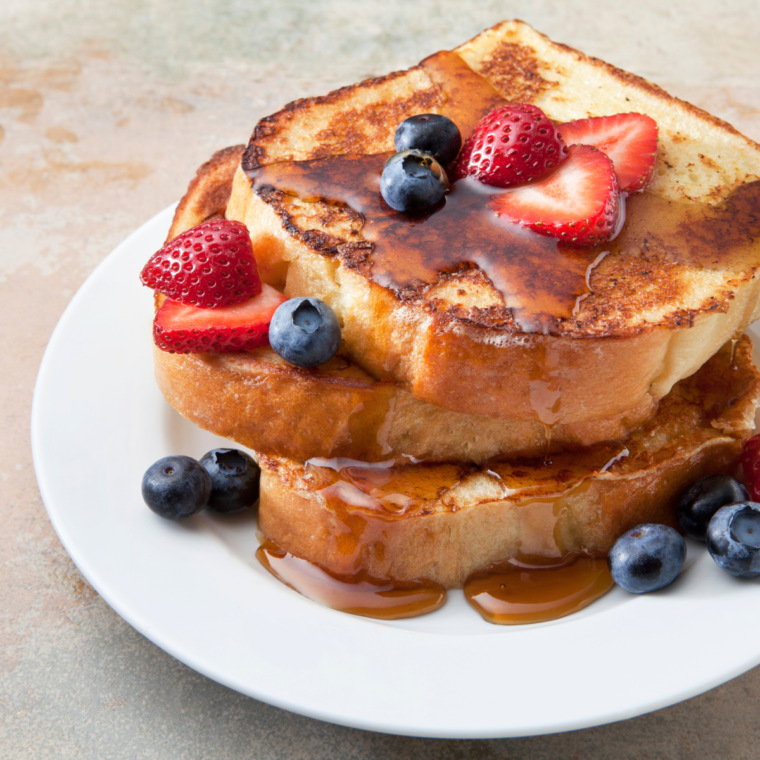
How To Freeze French Toast
This is the method that actually works. The flash freezing step is the one people skip, and it’s the one that matters most.
- Cool the slices completely. Spread the cooked French toast on a wire rack and let it come down to room temperature. Warm slices release steam inside the packaging, that steam turns into ice crystals, and those ice crystals turn into soggy French toast when you reheat it. Give it 20 to 30 minutes.
- Flash freeze in a single layer. Line a baking sheet with parchment paper and lay the slices out so none of them touch. Freeze for 1 to 2 hours, until they’re firm to the touch. This is the step that keeps them from welding into one block.
- Wrap each slice. Once they’re firm, wrap the slices individually in plastic wrap or aluminum foil. It feels fussy, but this second layer is what stands between your breakfast and freezer burn.
- Bag them. Move the wrapped slices into a freezer bag or airtight container. Press out as much air as you can before sealing — air is what dries food out in the freezer. If you’re using a bag, laying it flat saves a surprising amount of space.
- Label with the date. Write the date and what’s inside. Three months from now you will not remember, and unlabeled freezer bags have a way of becoming permanent residents.
You can also skip the individual wrapping and just stack the flash-frozen slices with a square of parchment between each one. It’s faster, and it works fine if you’ll get through them inside of a month.
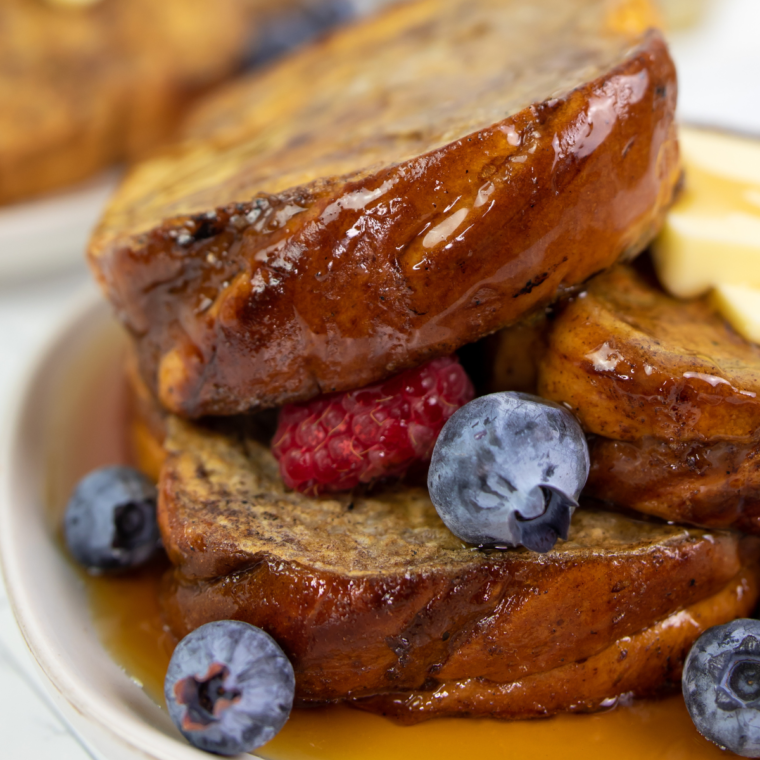
Best Bread For Freezing French Toast
Not all bread survives the freezer equally. Thick, sturdy, slightly enriched breads hold up best:
- Brioche and challah — the gold standard. They’re rich enough to stay tender and dense enough not to fall apart.
- Texas toast — thick-cut, cheap, and reliable. My default for big freezer batches.
- Day-old French bread or sourdough — slightly stale bread actually freezes better, because it absorbs the custard without turning to mush.
What to avoid: thin sandwich bread. It soaks through, goes limp, and comes out of the freezer with a texture somewhere between a sponge and a pancake.
One trick if you know in advance you’re freezing: use slightly less milk in your batter. A thicker custard clings rather than saturating, and the finished slices come out denser and freezer-friendlier.
Can You Freeze French Toast Batter?
Yes, and this is worth knowing if you always end up with a bowl of leftover egg mixture.
Pour the batter into a freezer-safe bag or airtight container, squeeze out the air, and freeze it flat for up to 1 month. Thaw it overnight in the refrigerator — never on the counter, since it’s raw egg and dairy — and give it a hard whisk before using. It will separate in the freezer, and it will look alarming. Whisk it back together and it’s fine.
A few things to know:
- Freezing thickens the batter slightly. Thin it with a splash of milk until it coats the back of a spoon again.
- Don’t freeze batter that already has bread soaking in it. The bread disintegrates.
- Skip fresh fruit in batter you plan to freeze.
- If batter sat out at room temperature for more than 2 hours, throw it out rather than freeze it. Freezing doesn’t undo bacterial growth that already happened.
Honestly, freezing batter is usually my second choice. If you’ve got extra, there are better uses for it — I’ve written up a whole list of what to do with leftover French toast batter, including turning it into air fryer bread pudding or a batch of French toast sticks.
Can You Freeze French Toast Casserole?
Yes, and casserole is arguably the best form of French toast to freeze, because there are no individual slices to keep apart.
Unbaked (my preference): Assemble the casserole in a freezer-safe, oven-safe dish. Cover it tightly with plastic wrap, then foil. Freeze for up to 1 month. Thaw overnight in the refrigerator before baking, and add 10 to 15 minutes to your usual bake time. My air fryer cinnamon baked French toast works well this way.
Baked: Let it cool completely, then either freeze the whole dish wrapped tightly, or cut it into portions and wrap them individually. Portions are far more useful — you can pull out one square on a weekday instead of committing to the whole pan. Keeps 2 months. Reheat covered at 350°F until warmed through.
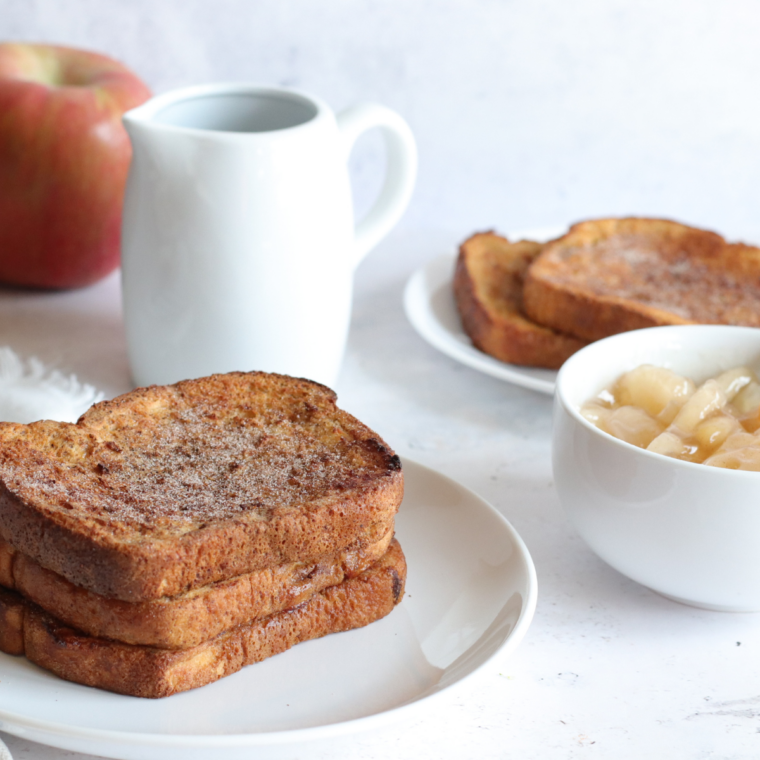
Can You Freeze Uncooked French Toast?
This is the one I’d steer you away from. Bread that’s been dipped in custard and then frozen raw comes out waterlogged — the bread cells rupture, the custard doesn’t set properly, and you end up with something soggy in the middle and rubbery at the edges.
Cook it first, then freeze. It takes an extra fifteen minutes now and saves you a disappointing breakfast later.
The one exception is a casserole, where the bread is cubed and the whole thing bakes as a unit. That structure holds up. Individual dipped slices don’t.
Can You Freeze French Toast Sticks?
Yes, and sticks are the easiest thing in this whole article to freeze. They’re small, they cook evenly, and they reheat in about four minutes.
Cook them, cool them, flash freeze on a sheet pan, and bag them. Because they’re already portioned, you can grab a handful at a time. My air fryer light and fluffy French toast sticks and air fryer bacon maple French toast sticks both freeze and reheat beautifully — the maple ones are what my kids actually request.
The same goes for air fryer French toast and sausage roll-ups, which are basically purpose-built for the freezer.

How To Reheat Frozen French Toast
Do not thaw first. Reheating straight from frozen is what keeps the outside crisp. Thawed French toast goes limp before it ever hits the heat.
Air fryer (best method): 350°F for 4 to 6 minutes, flipping halfway. This is the closest you’ll get to fresh — the circulating air drives off surface moisture and re-crisps the exterior while the inside warms through. Sticks need about 4 minutes; thick brioche slices closer to 6.
Oven: 350°F for 10 to 15 minutes on a wire rack set over a sheet pan. The rack matters — slices sitting directly on metal steam on the bottom. Best method for reheating a big batch at once.
Toaster: One to two cycles on a medium setting. Fastest option, and it works well for thinner slices. Thick-cut brioche tends to burn on the outside before the middle warms, so keep an eye on it.
Skillet: Medium-low heat with a small pat of butter, 2 to 3 minutes per side. Great flavor, requires attention.
Microwave: I’d skip it. It’s fast, but it steams the bread and you get uniformly soft, slightly rubbery French toast. If it’s your only option, 30 to 45 seconds and accept the tradeoff.
If a slice comes out drier than you’d like, flick a few drops of water on it before reheating. The bit of steam rehydrates the interior without soaking the crust. Same principle I use for reheating pancakes.
Pro Tips For Freezing French Toast
- Freeze in the portions you actually eat. If your household goes through four slices on a weekday, freeze in fours. Pulling apart a twelve-slice block at 6 a.m. is nobody’s idea of a good time.
- Freeze toppings separately. Berry compote, fruit sauce, and whipped butter all freeze fine on their own. Frozen on the French toast, they turn the surface to mush.
- Never freeze it syruped. Syrup doesn’t really freeze — it stays tacky and it will make everything it touches soggy. Add it after reheating.
- Lay bags flat. Flat-frozen bags stack, thaw faster, and take up half the space of a lumpy one.
- Don’t refreeze. Once you’ve reheated a slice, that’s it.
- Keep it away from the door. The freezer door is the warmest, most temperature-volatile spot. Back of the freezer, always.
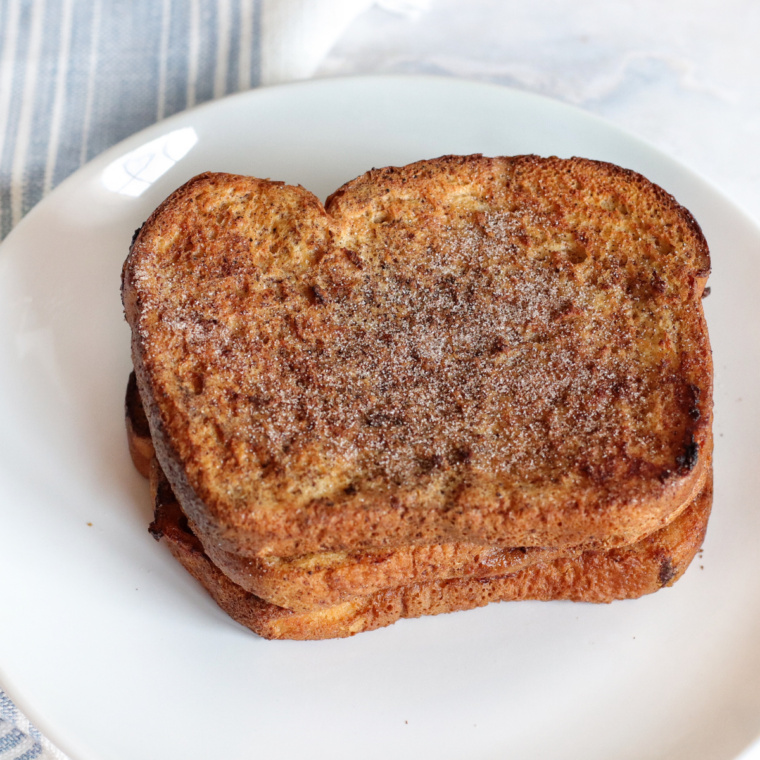
How To Tell If Frozen French Toast Has Gone Bad
Look for these:
- Freezer burn — dry, grayish-white or leathery patches, or a thick crust of ice crystals on the surface. It’s safe to eat, but the texture is gone. Trim it off or toss the slice.
- Off smell after reheating — anything sour or eggy-in-a-bad-way means discard.
- Ice crystals inside the packaging — a sign it partially thawed and refroze, which usually means the texture won’t recover.
- Discoloration — dark or oddly dry spots.
When you’re genuinely unsure, throw it out. It’s a slice of bread.
French Toast Freezing FAQs
Can you freeze French toast batter?
Yes. Store it in a freezer-safe bag or airtight container with the air pressed out for up to 1 month. Thaw overnight in the refrigerator and whisk thoroughly before using, since it separates as it freezes.
Do you need to thaw French toast before reheating?
No, and you shouldn’t. Reheating from frozen in an air fryer, oven, or toaster gives you a crisp exterior. Thawing first makes it limp.
How long can you freeze French toast?
Up to 3 months for the best texture and flavor. It stays safe longer than that at 0°F, but it will start to dry out and pick up freezer burn.
Why does my frozen French toast come out soggy?
Almost always one of three things: it wasn’t cooled completely before freezing, it was thawed before reheating, or it was reheated in the microwave. Cool fully, reheat from frozen, and use dry heat.
Can you freeze French toast made with eggs and milk?
Yes, it’s perfectly safe. Freezing stops bacterial growth, and reheating to a hot temperature throughout handles food safety. This is standard for any cooked egg dish.
Can you freeze French toast casserole?
Yes. Freeze it unbaked for up to 1 month and thaw overnight before baking, or freeze it baked in individual portions for up to 2 months.
Can you use frozen bread to make French toast?
Yes, though it’s better to thaw the slices first. Frozen bread won’t absorb the custard evenly, and you’ll get dry pockets. Let the slices sit out for 15 minutes, then dip as usual — slightly stale or partly dried bread actually makes better French toast than fresh.
What’s the best bread for freezing French toast?
Brioche, challah, and Texas toast. Thick, sturdy slices hold their structure through freezing and reheating. Thin sandwich bread doesn’t.
Can you freeze stuffed French toast?
Yes, with one caveat: cream cheese and fruit fillings release water when thawed. Freeze stuffed slices flat and reheat from frozen in the oven or air fryer rather than the toaster, which won’t heat the filling through. My air fryer jam stuffed French toast freezes well this way.
Can you refreeze French toast?
No. Once it’s been reheated, eat it or toss it. Refreezing degrades the texture badly and isn’t worth the risk.