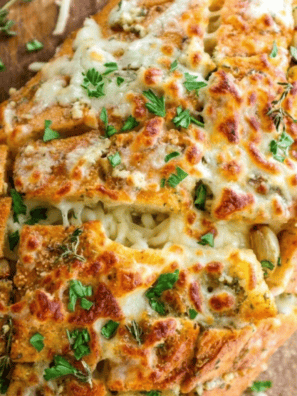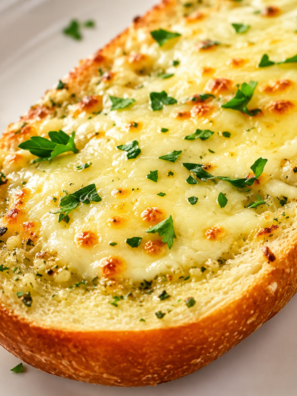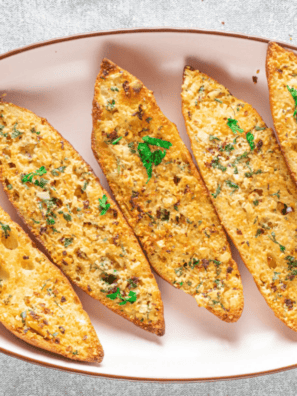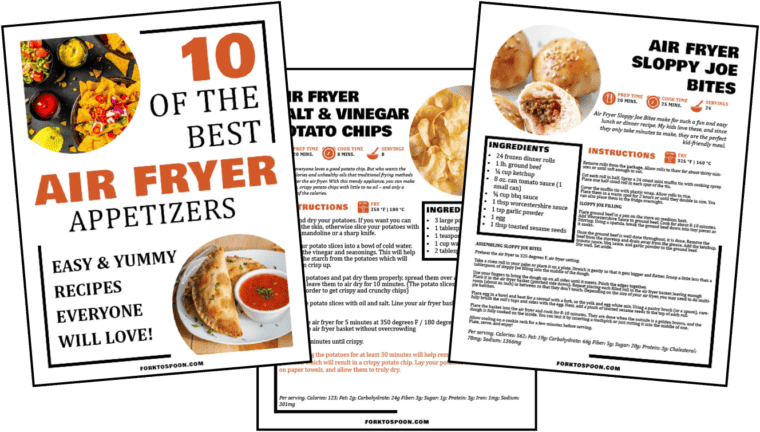
Most homemade garlic bread fails in the same place, and it isn’t the garlic. It’s melted butter.
Melted butter runs straight into the crumb. The inside turns greasy, the top dries out, and the garlic and cheese sink somewhere they’ll never brown. Softened butter stays on the surface where the heat can reach it — the edges go gold, the Parmesan crisps into a thin savory crust, and the raw bite cooks out of the garlic.
That one swap is most of what separates a good garlic bread spread from a forgettable one. The rest is ratio and a couple of small habits.
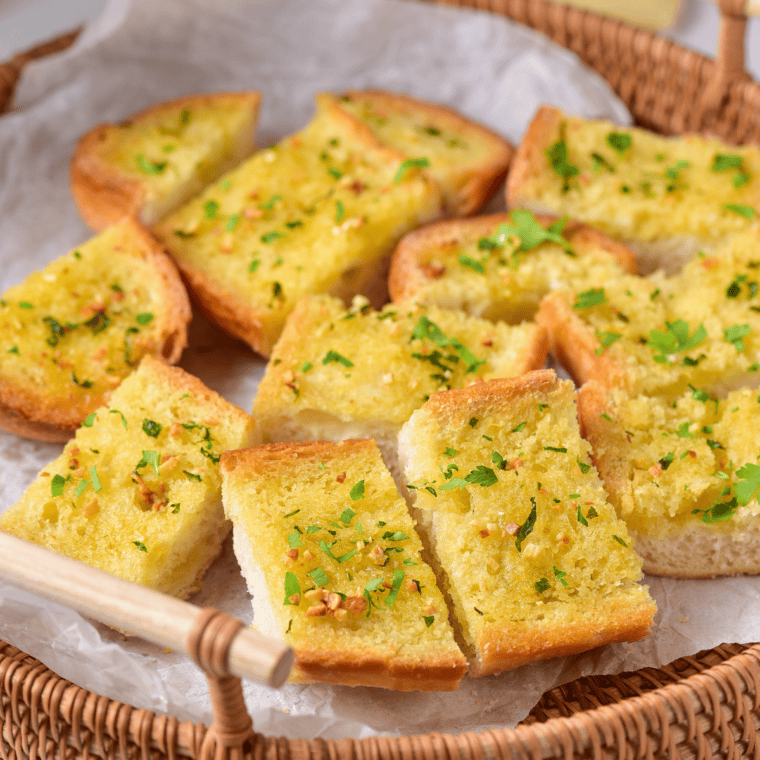
What Makes This the Best Garlic Bread Spread
Softened butter, around 65°F. Cool to the touch, but your finger sinks in without effort. Cold butter shreds the bread as you spread it. Melted butter disappears into it.
Garlic in two forms. Fresh minced garlic carries the sharp aromatic top note. A half teaspoon of garlic powder dissolves into the butter and lays down an even savory base across the whole loaf. Fresh alone gives you intense spots and bare stretches.
Finely grated Parmesan, not shredded. The powdery kind melts into the butter, pulls surface moisture off the bread, and browns. Shreds sit up on top and scorch before the loaf is heated through.
Parsley added twice. Half goes in the spread, half over the bread after it comes out. Fresh parsley blackens under a broiler, so the green you actually want to see has to go on at the end.
Ingredients
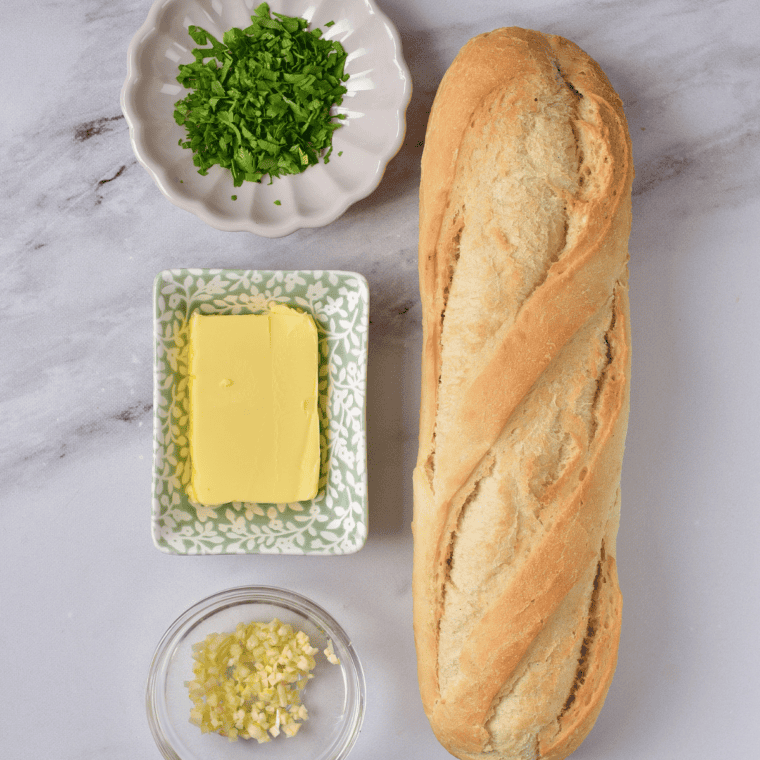
- Butter, softened: The whole recipe hinges on this. Softened butter sits on the bread and browns; melted butter soaks in and turns it greasy. Sub: salted butter (cut the added salt), or a plant butter — see my vegan garlic butter.
- Parmesan, finely grated: Melts into the butter and crisps into a thin savory crust. Sub: Pecorino Romano, sharper and saltier. Skip bagged shreds — they scorch.
- Fresh garlic: The sharp aromatic top note. Grate it fine; coarse pieces sit above the butter and burn. Sub: ¼ teaspoon garlic powder per clove.
- Garlic powder: Dissolves into the butter for even flavor across the whole loaf, so there are no bare stretches. Sub: granulated garlic.
- Fresh parsley: Brightness and color. Half in the spread, half over the top after baking, since it blackens under a broiler. Sub: 1 tablespoon dried, or chives.
- Oregano, basil, and marjoram: Oregano for the bold note, basil for sweetness, marjoram to soften the oregano’s edge. Rub them between your palms to release the oils. Sub: ¾ teaspoon Italian seasoning, or copycat Kinder’s garlic and herb seasoning.
- Salt: Ties it together. Small amount — the Parmesan is already salty.
- French or Italian bread: A dry, open crumb and real crust hold this much butter without going limp. Sub: baguette or ciabatta, or homemade air fryer sourdough.
How Much Spread Per Loaf
Half a cup of butter covers one 16-ounce loaf split lengthwise, both cut sides, edge to edge, generously. Scale from there:
| Bread | Butter |
|---|---|
| One 16-oz loaf, split lengthwise | ½ cup |
| Two loaves | 1 cup |
| A sandwich loaf’s worth of single slices | ¼ cup |
Single slices need less because you’re only buttering one side — that’s the amount to use for air fryer garlic toast.
How to Make Garlic Bread Spread
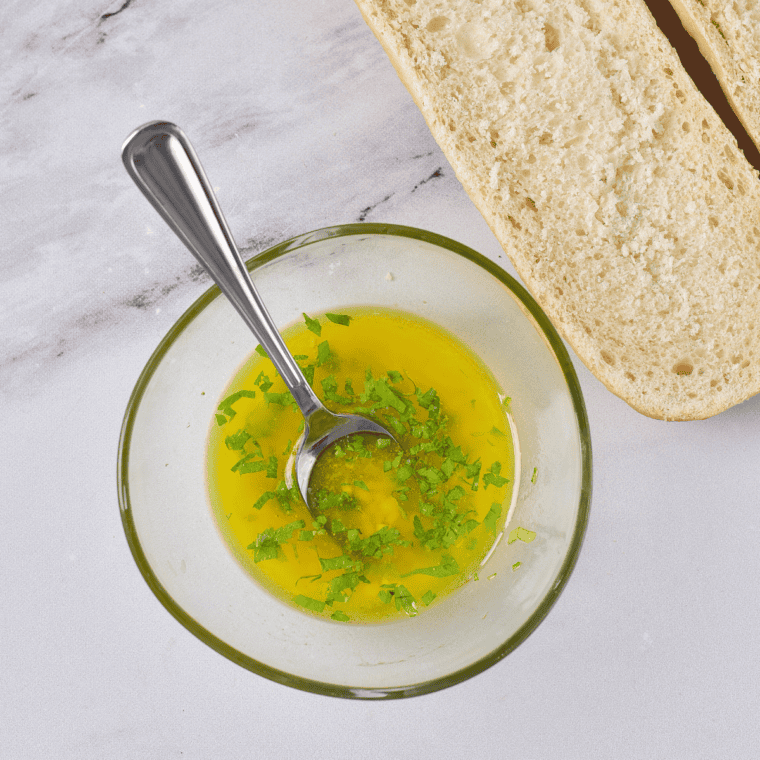
Step One. Rub the oregano, basil, and marjoram between your palms as you drop them into the bowl. Crushing dried herbs releases their oils; added whole, they stay flat.
Step Two. Add the softened butter, Parmesan, fresh garlic, garlic powder, half the parsley, and the salt. Work it together with a fork or rubber spatula until it’s a smooth pale-green paste with no streaks of plain butter left. Skip the whisk — butter just packs into the wires.
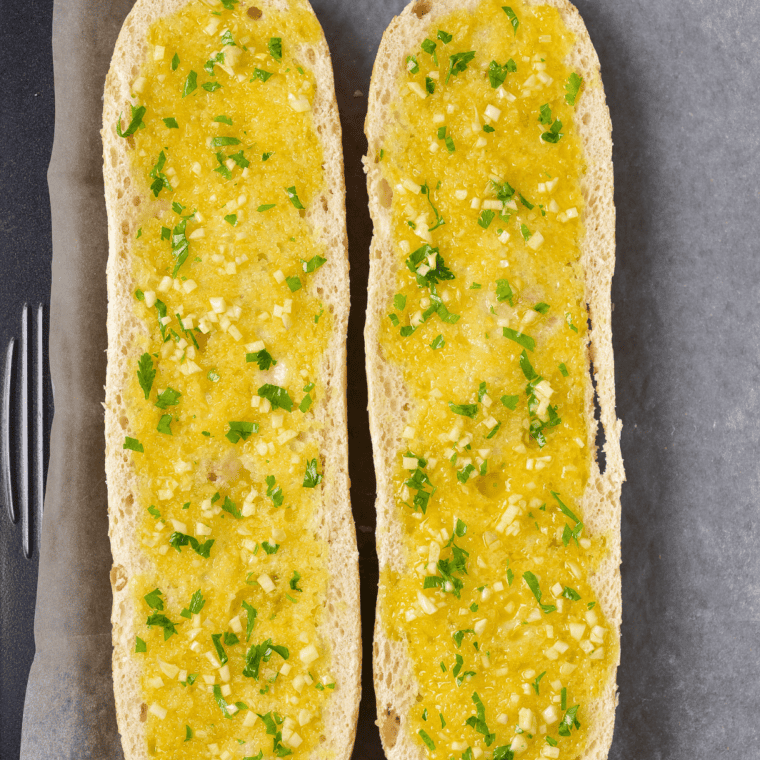
Step Three. Split the loaf lengthwise and spread all the way to the crust on both cut sides. Bare edges are where garlic bread burns; covered edges are where it tastes best.
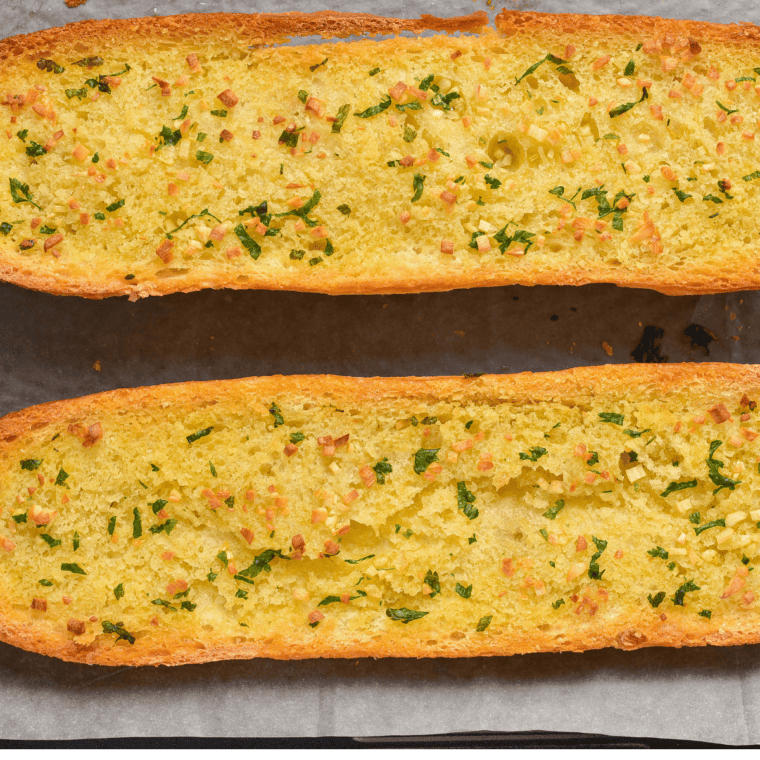
Step Four. Bake cut side up on a sheet pan at 375°F for 10 to 12 minutes, uncovered.
Step Five. Broil 60 to 90 seconds if you want a browned top. Stand at the oven for this. It turns from golden to ruined in about fifteen seconds.
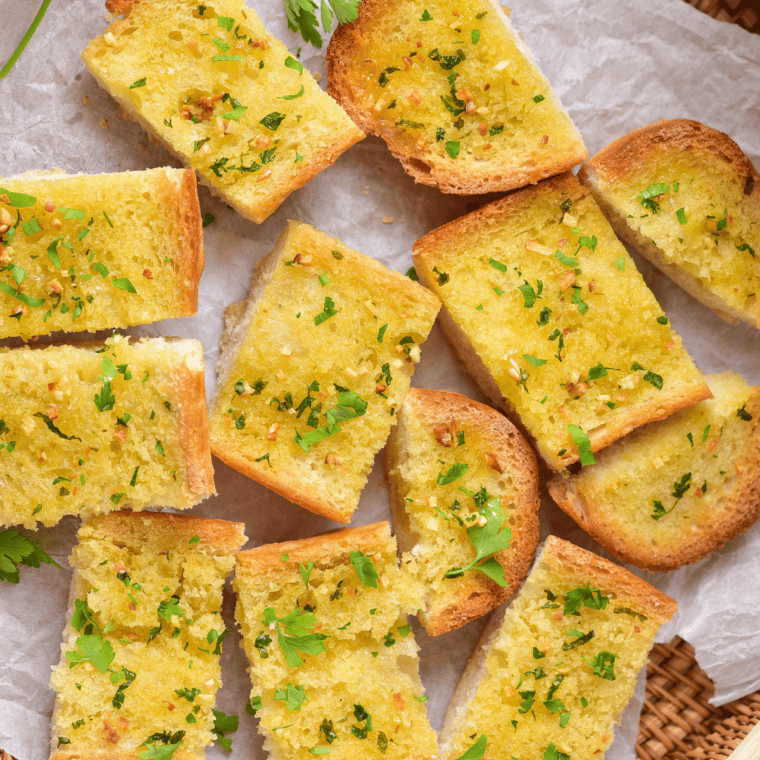
Step Six. Scatter the remaining parsley over the hot bread, slice, and serve.
For a softer middle, wrap the loaf in foil for the first 15 minutes, then open it up for 5 more. The foil steams the crumb tender before the surface crisps.
Troubleshooting
Greasy or soggy. Melted butter, nine times out of ten. Otherwise, too much spread on a soft-crumbed loaf. French and Italian breads take it well because the crumb is dry and open enough to absorb fat without collapsing.
Bitter, scorched garlic. The mince was too coarse. Large pieces sit above the butter line and burn at 375°F. Grate it fine, or shift the balance toward garlic powder.
Still pale at 12 minutes. Cold loaf, or an oven running low. Broil briefly rather than adding oven time — extra minutes dry out the crumb.
Spread that tears the bread. It came straight from the fridge. Thirty minutes on the counter fixes it. Microwaving puts you right back to melted butter.
Storing and Making It Ahead
It’s butter, so it keeps like butter: 2 weeks refrigerated in an airtight container, 3 months frozen.
The version worth doing is rolling it into a log in parchment before freezing. Then you slice off coins — one per slice of bread, or straight onto something hot off the heat. Frozen coins soften in a couple of minutes at room temperature.
Pull refrigerated spread out half an hour before you plan to use it.
Variations
Extra garlicky. Six cloves instead of three, and let it sit 30 minutes before spreading. Raw garlic keeps getting stronger as it sits in fat.
Cheesy garlic bread. Add ½ cup shredded mozzarella over the spread before baking — the same approach that works in these air fryer cheesy garlic bread rolls.
Spicy. ¼ teaspoon red pepper flakes, crushed in with the dried herbs.
Dairy-free. Use a good plant-based butter. The full method is in my vegan garlic butter, which swaps nutritional yeast in for the Parmesan.
Shortcut. Stir 1½ teaspoons of copycat Kinder’s buttery garlic and herb seasoning into 4 tablespoons of softened butter and skip the herb measuring.
Olive oil. Substitute ½ cup olive oil for the butter. It’s a different thing — thinner, no browning, more Mediterranean. Brush it on and toast rather than bake.
What to Spread It On
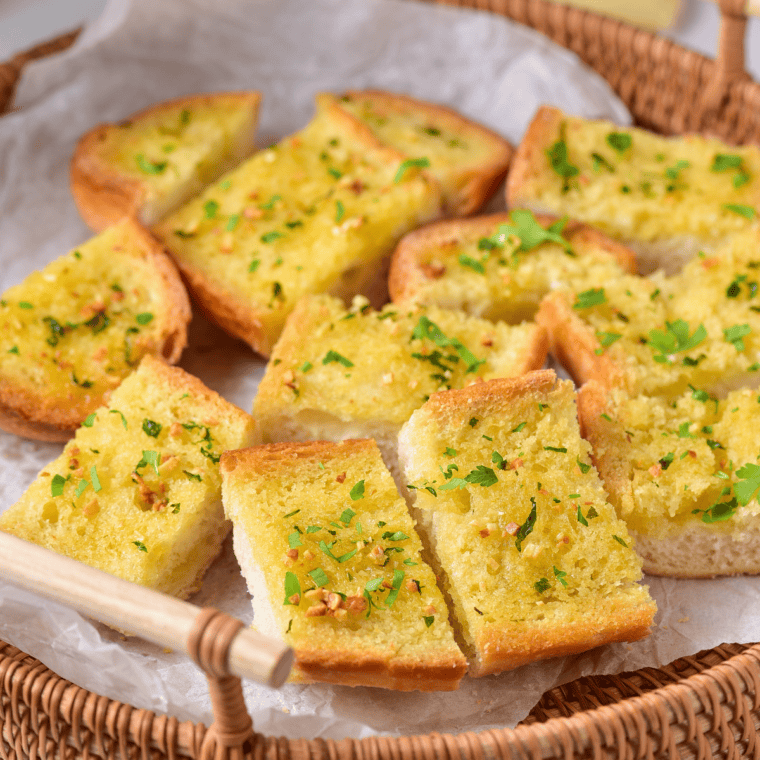
A crusty loaf is the obvious answer, and homemade is better. This spread was built for air fryer sourdough bread, and day-old Subway-style Italian herb and cheese bread is already seasoned with garlic and herbs, so it barely needs the help.
Past bread, it works on nearly anything hot: a coin melting over air fryer garlic butter steak bites, brushed across air fryer lobster tails, or into split air fryer buttermilk biscuits the second they come out.
It’s also the base underneath a few other things here — the scored-and-stuffed air fryer crack bread, garlic bread pizza toast, and my homemade herb garlic bread.
And garlic bread belongs next to anything with red sauce. Air fryer manicotti is the pairing I come back to.
Garlic Bread Spread FAQs
Softened or melted butter? Softened. Melted butter absorbs into the crumb, which is exactly why so much homemade garlic bread comes out greasy and somehow still bland on top. Recipes calling for melted butter are usually brushing it on, not spreading it.
Can I use garlic powder instead of fresh garlic? Yes — roughly ¼ teaspoon per clove, so 1 teaspoon total here. You lose the sharp aromatic edge and gain even distribution with no burn risk. A fair trade on a weeknight.
Why is my garlic bitter? Garlic minced too coarsely rides above the butter and burns. Grate it on a microplane.
Can I make garlic bread without an oven? Spread it on and toast cut side down in a dry skillet over medium heat, 3 to 4 minutes. For one or two slices, the air fryer is faster — about 5 minutes at 350°F.
Can I use margarine? It works, but margarine carries more water and less fat, so it browns poorly and tastes flat. A baking-grade plant butter is a much better dairy-free substitute.
Does it freeze well? Very well, up to 3 months. Roll it in parchment first so you can cut off what you need.
What bread is best for garlic bread? French or Italian loaves, or a baguette — firm, dry, open crumb with a real crust. Soft sandwich bread goes limp under this much butter.
Can I use this spread on other things? Yes. Anything you’d finish with butter: steak, seafood, roasted vegetables, warm biscuits, garlic knots. for garlic knots, pizza crusts, or even as a topping for roasted vegetables or grilled meats.
If you’re already tearing into a crusty loaf, Johnny Carino’s olive oil dip is the obvious next thing to make — same herb family, no butter. Cava’s roasted eggplant dip is smokier and works with warm bread just as well.
For something melted, there’s copycat Auntie Anne’s cheese dip, slow cooker beer cheese dip, and slow cooker queso with Velveeta, all of which hold on a table for hours.
On the cold side, homemade French onion dip, Ina Garten’s veggie dip, and deviled egg dip.
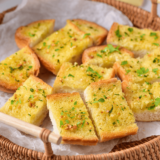
Best Garlic Bread Spread (Easy Garlic Butter Recipe)
Description
Ingredients
- ½ cup unsalted butter, softened
- ⅓ cup Parmesan cheese, finely grated
- 3 cloves garlic, grated or minced fine
- ½ teaspoon garlic powder
- ¼ cup fresh parsley, chopped, divided
- ¼ teaspoon dried oregano
- ¼ teaspoon dried basil
- ¼ teaspoon dried marjoram
- ⅛ teaspoon salt
- 1 loaf French or Italian bread, split lengthwise
Instructions
- Rub the dried oregano, basil, and marjoram between your palms as you add them to a medium bowl.
- Add the softened butter, Parmesan, garlic, garlic powder, half the parsley, and salt. Work together with a fork until smooth, with no streaks of plain butter.
- Spread evenly over both cut sides of the loaf, all the way to the edges.
- Bake cut side up at 375°F for 10–12 minutes, until the edges are golden.
- Broil 60–90 seconds for a browned top, watching the whole time.
- Scatter the remaining parsley over the hot bread, slice, and serve.
Equipment
- Mixing Bowl
- Whisk
Notes
Nutrition
Share this recipe
We can’t wait to see what you’ve made! Mention @forktospoon or tag #forktospoon!