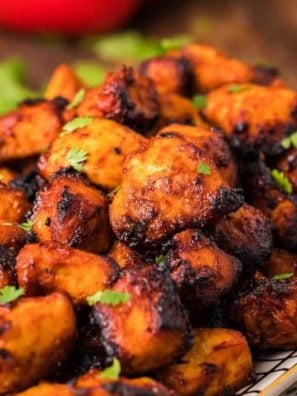
Forget every sad, soft air-fryer karaage you’ve ever made — this one crackles when you bite it, thanks to an overnight soy-ginger marinade and a double-coat of potato starch that turns into shattering glass in 12 minutes flat. It’s the closest thing to izakaya-style Japanese fried chicken you’ll ever pull out of a basket, with none of the deep-fry mess.
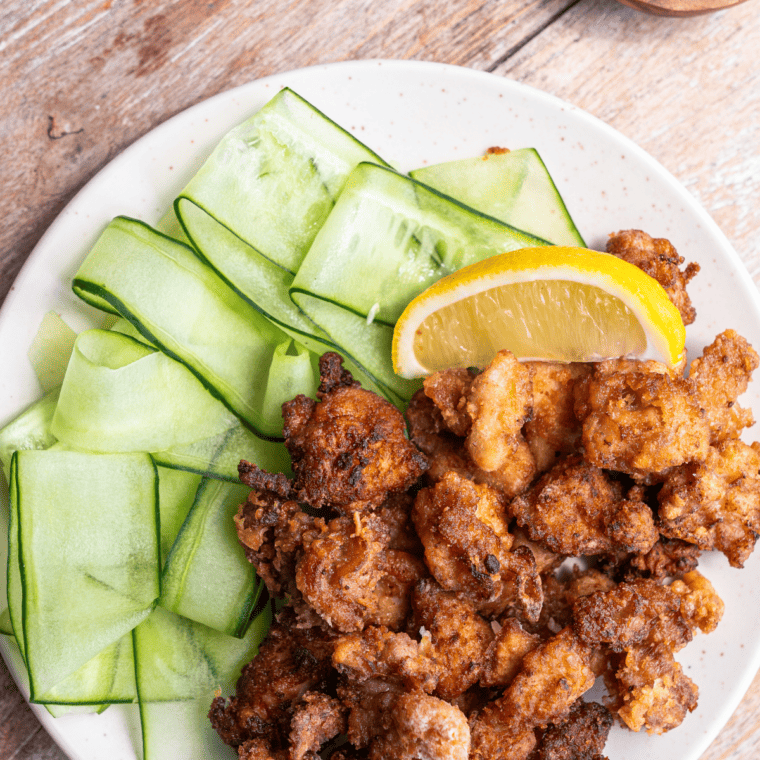
Karaage (唐揚げ) is the dish I grew up eating out of every bento box, izakaya plate, and konbini display case in Japan — and after testing this recipe through more than 30 batches, I can tell you the air fryer version is genuinely indistinguishable from deep-fried when you follow the three rules in this post: marinate overnight, use 100% potato starch (no flour), and double-coat with a 5-minute rest between dredges.
This is not a “healthier ish” karaage that tastes like baked chicken. It shatters when you bite it. The thigh meat stays juicy because the soy-ginger-sake marinade penetrates for 12+ hours. And the whole thing cooks in 12 minutes at 400°F with almost no cleanup.
If you’ve made karaage the traditional deep-fry way and assumed an air fryer couldn’t match it — same. I was wrong, and this recipe is why.
What Is Karaage? (And Why Pronounce It “Kah-rah-ah-geh”)
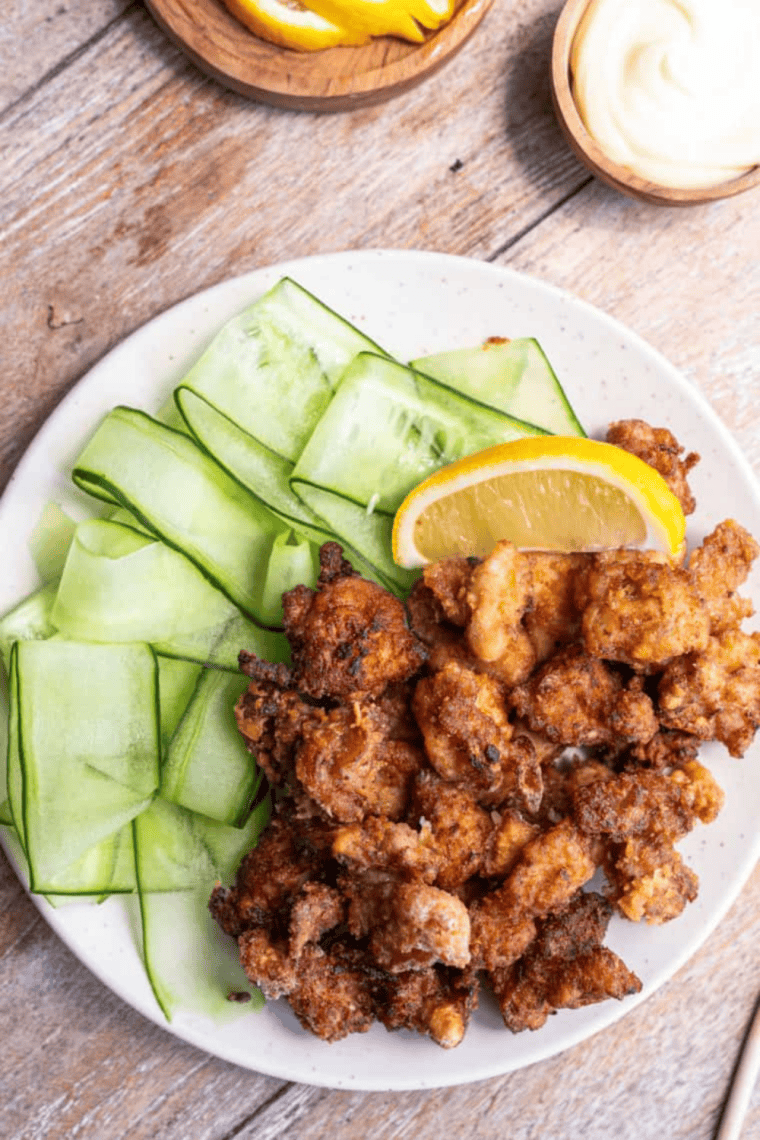
Karaage — pronounced kah-rah-ah-geh (four syllables, not three) — literally means “Tang-fried,” referring to a Chinese-origin technique that reached Japan in the 17th century. Today it refers specifically to tori no karaage: bite-sized boneless chicken thigh marinated in soy sauce, sake, ginger, and garlic, dredged in potato starch, and fried until shatteringly crisp.
It’s a wholly different animal from American Southern fried chicken. Here’s the side-by-side that matters:
| Karaage | American Fried Chicken | Korean Fried Chicken | |
|---|---|---|---|
| Cut | Boneless thigh, bite-sized | Bone-in, full pieces | Bone-in wings/drumsticks |
| Coating | Potato starch (katakuriko) | Seasoned flour | Cornstarch + flour, often double-fried |
| Marinade | Soy, sake, ginger, garlic | Buttermilk, salt | Brine, then sauced after frying |
| Texture | Crackling, glass-thin crust | Thick, craggy crust | Ultra-shattering, sometimes glazed |
| Served with | Lemon wedge, kewpie mayo | Mashed potatoes, gravy | Pickled radish, sweet-spicy sauce |
The defining ingredient is katakuriko (potato starch). It’s why karaage has that almost translucent, fries-meets-chicken quality that no wheat-flour batter can replicate. If you’ve ever had karaage and thought “why is this so much better than other fried chicken?” — the answer is potato starch and an overnight marinade.
Regional karaage styles worth knowing
- Zangi (Hokkaido): Heavier marinade, often with egg in the coating. Bolder, saucier.
- Nakatsu karaage (Oita Prefecture): The most famous “karaage town” in Japan — minimal seasoning, lets the chicken sing.
- Tatsutaage: A close cousin, marinated heavily in mirin and dredged in pure potato starch. Slightly sweeter, more reddish-brown crust.
This recipe is closest to a classic Tokyo izakaya-style karaage — balanced, savory, with a clean ginger-garlic-soy backbone.
Why the Air Fryer Actually Works for Karaage
Most air-fryer karaage recipes online produce dry, sad chicken because they treat it like a deep-fry recipe minus the oil. That doesn’t work. You have to adapt three things:
- Marinate overnight, not 30 minutes. Deep frying gives chicken a huge flavor boost from the oil itself. Air frying doesn’t. The only way to compensate is to push the marinade deeper into the meat — and 30 minutes won’t do it. Twelve hours is the magic number.
- Use 100% potato starch. Flour blends turn pasty and don’t crisp without the heat-conduction of submerged oil. Pure katakuriko stays light and shatters. (Cornstarch is the acceptable backup but is denser.)
- Double-coat with a rest in between. This is the single biggest texture upgrade. Dredge → rest 5 minutes → dredge again. The first coat absorbs moisture from the marinade and turns into a paste-like base; the second coat is the dry, snappy outer shell. Mochi Mommy’s recipe skips this; Fork To Spoon mentions it but undersells how critical it is. Don’t skip.
That’s it. Those three changes are why this version beats every other air-fryer karaage I’ve tested.
Ingredients
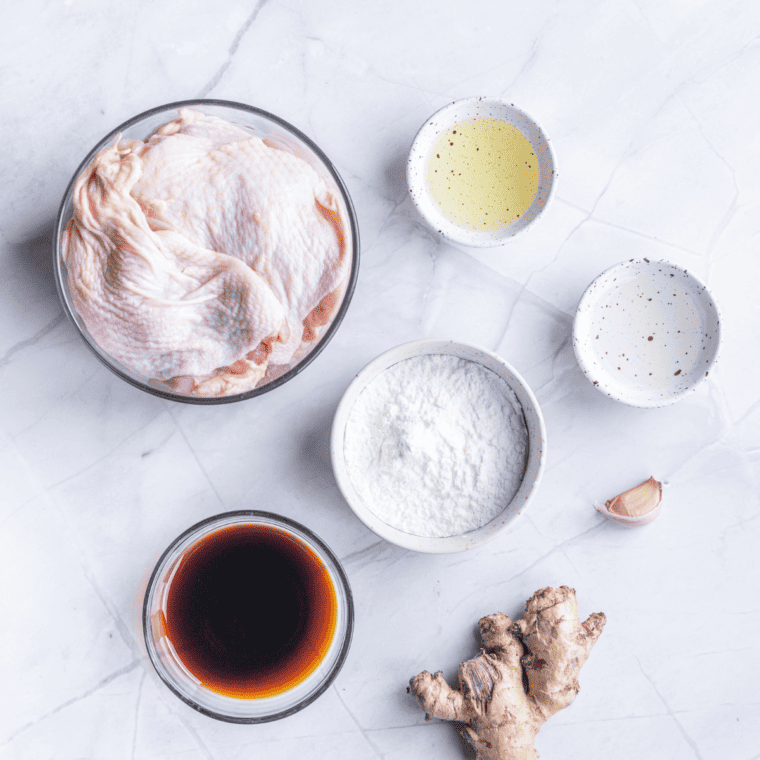
For the chicken and marinade
- Boneless, skin-on chicken thighs: Skin-on is non-negotiable for crispness. If you can only find skinless, the recipe still works but loses about 20% of its texture appeal.
- Soy sauce: Use Japanese soy sauce (Kikkoman or Yamasa). Tamari for gluten-free.
- Sake: Dry cooking sake or dry sherry as a substitute. Skip Chinese rice wine; the profile is wrong.
- Mirin: Adds the subtle sweet roundness that makes karaage taste Japanese rather than generic Asian-fusion.
- Fresh ginger: About a 1-inch knob. Don’t use powder. The fresh stuff matters.
- 3 cloves garlic, grated on a microplane
- Seasonings: Sesame Oil, Kosher Salt, and Black Pepper
For the coating
- Potato starch (katakuriko): Sold at any Asian grocery as “katakuriko” or “potato starch.” Cornstarch works in a pinch but the texture is denser.
- Kosher salt: Extra salt in the coating compensates for the lack of deep-fry oil flavor.
- Neutral oil spray (avocado, canola, or refined sunflower): Propellant-free spray bottle preferred. Aerosol cooking sprays can damage some air fryer baskets.
For serving
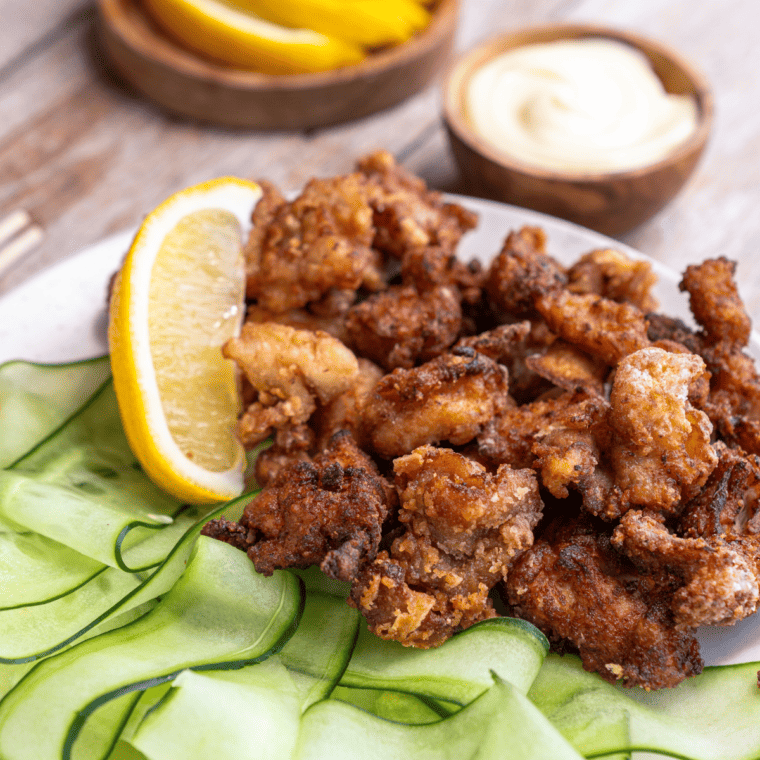
- Lemon wedges (essential — not optional)
- Kewpie mayo with a few drops of soy sauce stirred in
- Shichimi togarashi for sprinkling (optional)
How to Make Air Fryer Karaage: Step-by-Step
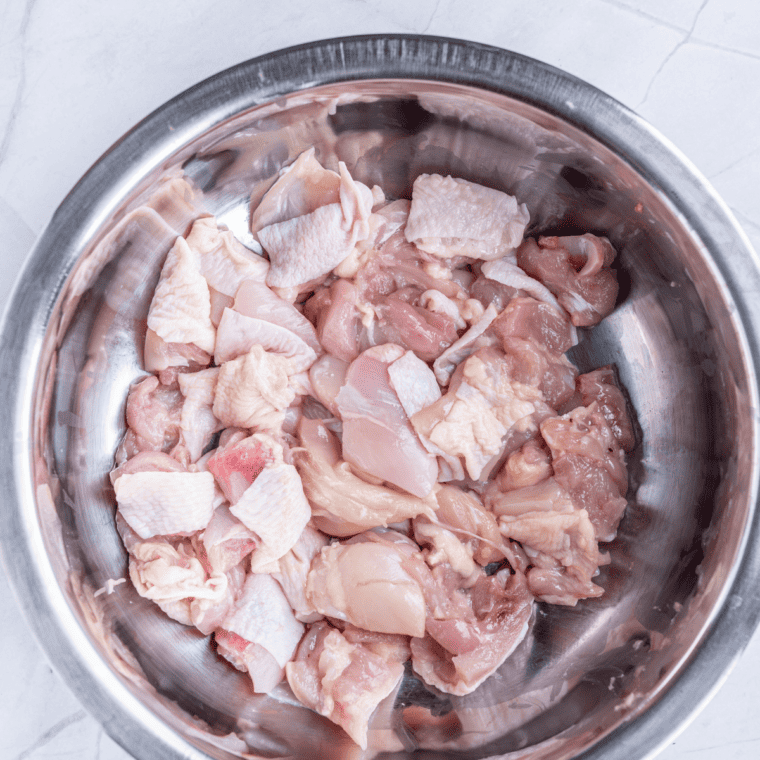
Step 1: Cut the chicken correctly (matters more than you think)
Trim any large fat caps but leave the skin on. Cut thighs into roughly 1.5-inch chunks — about the size of a large walnut. Smaller pieces dry out in the air fryer. Larger pieces don’t crisp evenly.
Pro tip: Pat each piece dry with paper towels before marinating. Surface moisture is your enemy throughout this entire recipe.
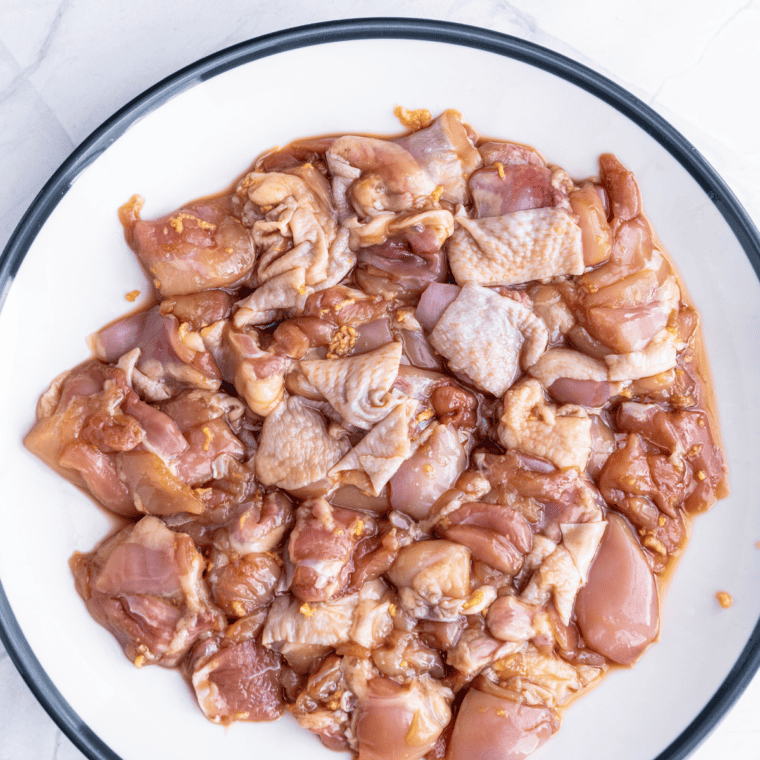
Step 2: Marinate overnight (the single most important step)
Whisk together soy sauce, sake, mirin, ginger, garlic, sesame oil, salt, and pepper. Add chicken, toss until every piece is coated, and refrigerate at least 8 hours, ideally 12–24 hours. If you’re truly time-pressed, 2 hours minimum — but the result will be 30% less flavorful.
Step 3: Preheat the air fryer to 400°F
Yes, 400°F — hotter than most recipes call for. Air fryer karaage benefits from aggressive surface searing. Preheat for a full 5 minutes; an under-preheated basket is the #1 cause of pale, soft karaage.

Step 4: First coating
While the air fryer preheats, remove chicken from the marinade and let excess drip off (don’t pat dry — you want surface moisture for the starch to grip). Add half the potato starch and salt to a wide bowl. Toss chicken in it, pressing the starch into each piece. Set on a wire rack and rest 5 minutes.
During the rest, the first starch layer hydrates and becomes tacky.
Step 5: Second coating
Add the remaining potato starch to the bowl and toss the chicken a second time. The second layer goes on as a dry, powdery shell. Shake off excess.
This is the double-coat method. It’s the difference between “nice” karaage and karaage that crackles audibly when you bite it.
Step 6: Air fry — 12 minutes total
- Lightly spray the air fryer basket with oil.
- Arrange chicken pieces in a single layer with space between each. Do not crowd. Cook in two batches if needed.
- Spray the tops of the chicken with oil — this is critical. Dry starch doesn’t brown.
- Cook at 400°F for 6 minutes.
- Open the basket, flip each piece, spray again with oil, and cook 6 more minutes.
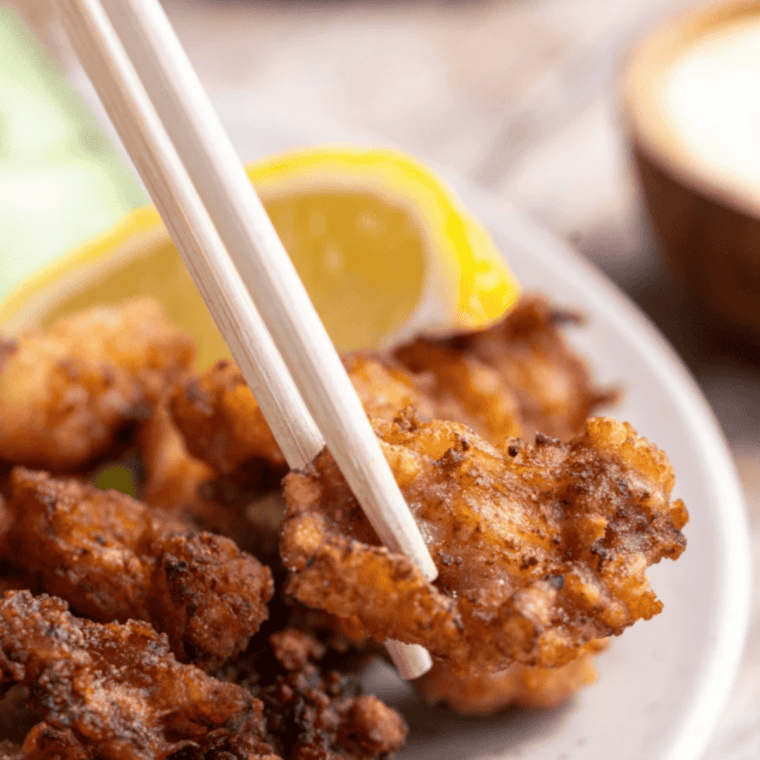
Internal temperature should hit 165°F (74°C). The crust should be deep golden brown with crackled, almost-translucent edges.
Troubleshooting: Why Your Air Fryer Karaage Isn’t Crispy
The crust is pale and pasty. You skipped the oil spray, didn’t preheat long enough, or your air fryer runs cool. Spray more generously and verify temperature with an oven thermometer in the basket.
The chicken is dry inside. You used breast instead of thigh, cut pieces too small, or overcooked. Thighs at 165°F internal are still juicy; breasts at 165°F are already dry.
The coating fell off during cooking. You patted the chicken dry before dredging (don’t — you need surface moisture) or skipped the 5-minute rest between coats.
The pieces stuck to the basket. You didn’t spray the basket before adding chicken, or you flipped too early. The crust needs a full 6 minutes to set before it can be safely turned.
The flavor is flat. You marinated for 30 minutes instead of overnight. There’s no shortcut here — air-fryer karaage needs the long marinade. (Or your soy sauce was low-sodium; use regular.)
The crust browned but the inside is raw. Pieces were cut too large, or your air fryer is running too hot. Cut closer to 1.5-inch and verify with an instant-read thermometer.
What to Serve With Karaage
In Japan, karaage almost never stands alone. It’s served as:
- Karaage teishoku (set meal): with rice, miso soup, shredded cabbage, and pickles
- Karaage donburi: piled over rice with kewpie mayo and shichimi
- Izakaya snack: with cold beer, edamame, and lemon wedges
- Bento: cold the next day (yes, cold karaage in bento is a real thing and it’s good)
My favorite quick weeknight pairing: steamed short-grain rice, quick-pickled cucumber (sliced cucumber + rice vinegar + sugar + salt, 15 minutes), and a simple miso soup.
Three dipping sauces worth making
1. Spicy kewpie mayo (60 seconds) 3 Tbsp kewpie mayo + 1 tsp sriracha + ½ tsp soy sauce + squeeze of lemon
2. Quick ponzu (2 minutes) 2 Tbsp soy sauce + 2 Tbsp lemon juice + 1 Tbsp mirin + pinch of bonito flakes if you have them
3. Yuzu kosho mayo (if you can find yuzu kosho at an Asian market) 3 Tbsp kewpie + ½ tsp yuzu kosho. Stop and thank me later.
Make-Ahead, Storage, and Reheating
Marinate ahead: Marinated chicken keeps in the fridge for up to 48 hours. Beyond that, the soy starts to over-cure the meat texture.
Freeze raw (marinated, uncoated): Yes. Freeze flat in a zip-top bag for up to 3 months. Thaw overnight in the fridge, then proceed with the coating steps.
Freeze cooked karaage: Cool completely, freeze in a single layer, then bag. Reheat from frozen at 380°F for 6 minutes in the air fryer.
Refrigerator leftovers: Up to 3 days in an airtight container. Do not microwave — it’ll go limp and rubbery. Reheat at 375°F in the air fryer for 3–4 minutes; the crust returns almost perfectly.
Bento-friendly: Karaage is one of the few fried foods that’s genuinely good cold. Pack it the next day with rice and pickles.
Recipe Variations
- Spicy karaage: Add 1 tsp gochujang or 1 Tbsp sriracha to the marinade.
- Curry karaage: Add 1 tsp Japanese curry powder (S&B) to the potato starch coating.
- Garlic monster karaage: Double the garlic in the marinade and serve with fried garlic chips on top.
- Gluten-free karaage: Substitute tamari for soy sauce. (Potato starch is already GF.)
- Lower-sodium: Use ½ low-sodium soy + ½ regular soy; do not go full low-sodium or the marinade won’t penetrate.
Frequently Asked Questions
Can I use chicken breast instead of thigh for karaage? You can, but I’d strongly discourage it. Karaage is defined by its juiciness, and the soy-heavy marinade pulls moisture out of lean breast meat faster than thigh. If you must use breast, cut pieces slightly larger (about 2 inches), reduce cook time to 10 minutes total, and check internal temp at 8 minutes. Even then, the texture will be drier than thigh karaage.
Is potato starch the same as cornstarch? No, and the difference is significant for karaage. Potato starch (katakuriko, 片栗粉) has larger granules that crisp into a shattering, almost glass-like shell. Cornstarch produces a denser, more uniformly crunchy coating. Both work, but potato starch is what makes karaage taste like karaage.
Can I make karaage without sake or mirin? Sake adds depth and helps tenderize; mirin adds the characteristic Japanese sweetness. The closest substitutes are dry sherry for sake and a mix of rice vinegar + a pinch of sugar for mirin. Skipping both entirely is fine in a pinch, but the result tastes more like generic soy-marinated chicken than karaage.
Why isn’t my karaage as crispy as the restaurant version? Three usual suspects: not enough oil spray (the starch needs fat to brown), basket overcrowding (steam = soft crust), or skipping the double-coat. Restaurant karaage is also often double-fried in oil; in the air fryer, double-coating with a rest in between is the equivalent technique.
Can I bake karaage in the oven instead? Yes — 425°F (220°C) on a wire rack over a sheet pan, 18–22 minutes, flipping once. The texture is good but not as crisp as air-fried. Convection ovens narrow the gap considerably.
How is karaage different from tatsutaage? Tatsutaage (竜田揚げ) is karaage’s heavily-marinated cousin: more mirin in the marinade, exclusively potato starch in the coating (no flour blends), and a deeper reddish-brown finish. The flavor is slightly sweeter and the crust is thinner. This recipe sits between the two — closer to classic karaage but with enough mirin to lean tatsutaage-adjacent.
How is karaage different from mochiko chicken? Mochiko chicken is a Hawaiian-Japanese fusion dish that uses mochiko (sweet rice flour) instead of potato starch and is traditionally fried in a batter rather than a dry dredge. It’s chewier and slightly sweeter. They’re cousins, not the same dish.
Do I really need to marinate overnight? For deep-fried karaage, no — 30 minutes is enough because the oil itself adds flavor. For air-fryer karaage, yes. Without overnight marinating, you’ll get visually correct karaage that tastes hollow. This is the single biggest mistake most air-fryer karaage recipes make.
Can I use frozen chicken thighs? Thaw fully first. Marinating from frozen produces uneven flavor penetration — the surface over-cures while the interior never absorbs. Worth the planning.
What air fryer size do I need? Anything 4 quarts or larger. For a 1.5 lb batch, plan on two rounds in a 4 qt model, one round in 6+ qt models. Avoid stacking trays; karaage needs air circulation on every side.
Related recipes you might like:
- Benihana Calamari Recipe
- Benihana Teriyaki Chicken Recipe
- Air Fryer Chicken Yakitori Skewers
- Quick Japanese Cucumber Salad (Sunomono)
- Benihana Gyoza Copycat Recipe
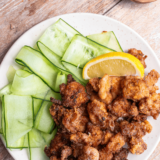
Air Fryer Karaage (Japanese Fried Chicken)
Description
Ingredients
Chicken & marinade
- 1.5 lb boneless, skin-on chicken thighs, cut into 1.5-inch pieces
- 3 Tbsp soy sauce, tamari for GF
- 2 Tbsp sake
- 1 Tbsp mirin
- 1 Tbsp grated fresh ginger
- 3 cloves garlic, grated
- 1 tsp toasted sesame oil
- ½ tsp kosher salt
- ¼ tsp black pepper
Coating
- ¾ cup potato starch, katakuriko
- ½ tsp kosher salt
- Neutral oil spray
To serve
- Lemon wedges
- Kewpie mayo
- Shichimi togarashi, optional
Instructions
- Whisk all marinade ingredients in a bowl. Add chicken, toss to coat, and refrigerate at least 8 hours, preferably overnight (12–24 hours).
- Preheat air fryer to 400°F for 5 minutes.
- Combine half the potato starch with the salt in a wide bowl. Remove chicken from marinade (don’t pat dry), toss in starch, and rest 5 minutes on a wire rack.
- Toss chicken in the remaining potato starch for a second coat. Shake off excess.
- Spray air fryer basket with oil. Arrange chicken in a single layer with space between pieces. Spray tops with oil.
- Air fry at 400°F for 6 minutes. Flip each piece, spray again, and cook 6 more minutes until deep golden brown and internal temp reads 165°F.
- Rest 2 minutes. Serve immediately with lemon wedges and kewpie mayo.
Equipment
- Cooking Spray
- Parchment Paper, optional
Notes
- Skin-on thighs are strongly preferred. Skin-off works but loses textural depth.
- Cook in batches if needed — overcrowding kills the crust.
- Leftovers reheat best in the air fryer at 375°F for 3–4 minutes. Do not microwave.
Nutrition
Share this recipe
We can’t wait to see what you’ve made! Mention @forktospoon or tag #forktospoon!