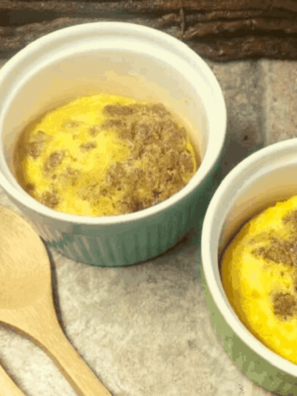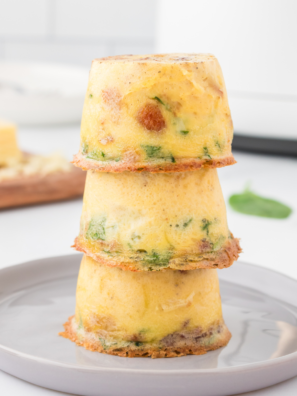
Fluffy, cheesy, vegetable-packed egg bites that cook in nine minutes flat and come in at under 2 grams of net carbs each. No sous-vide machine, no boiling water bath, and no heating up the oven for a handful of breakfast bites.
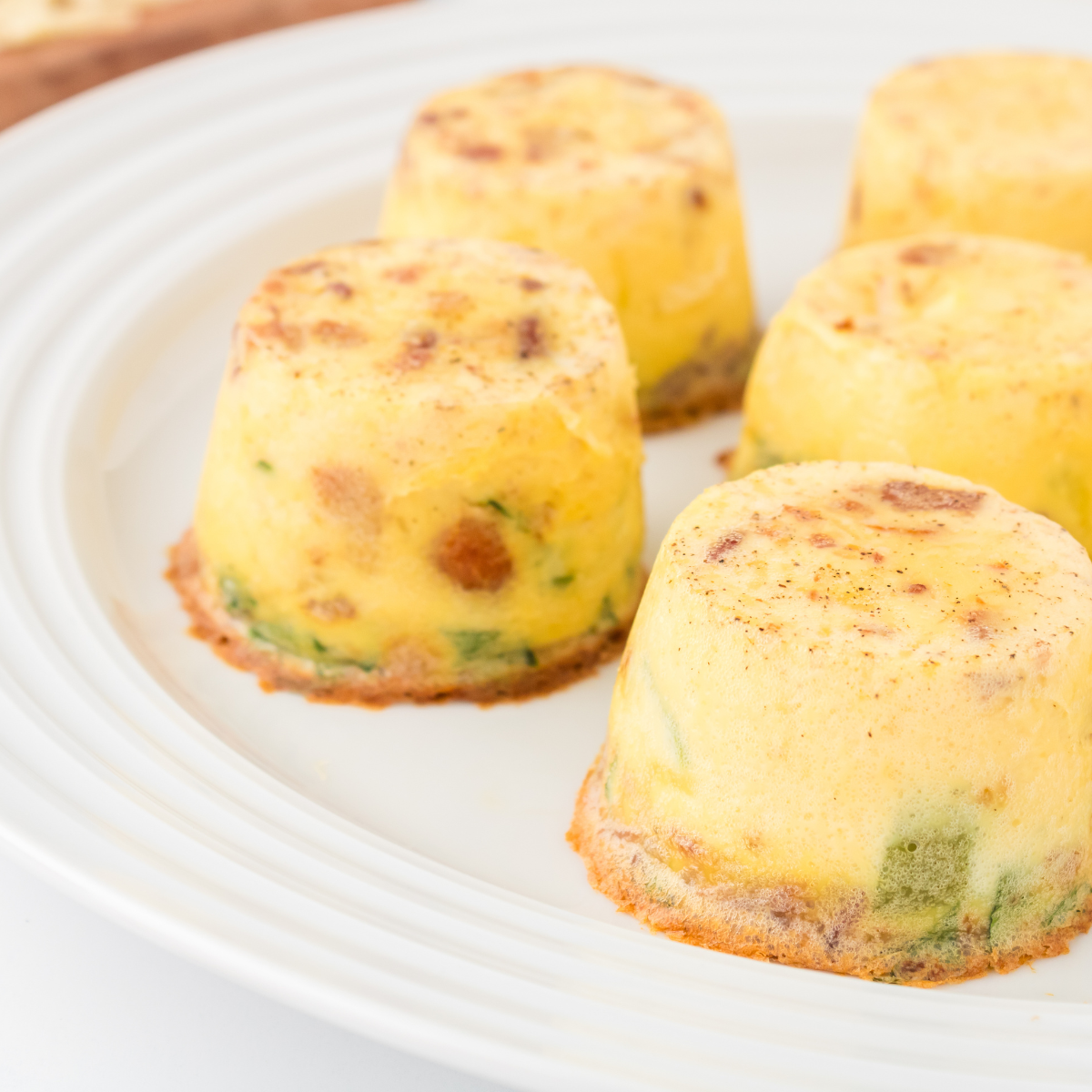
I’ve been making these since 2021, and after testing them across four different machines I’ve landed on a temperature and technique that produces a genuinely custardy interior instead of the rubbery pucks most air fryer egg recipes turn out. The details are below.
Why You’ll Love This Recipe
- Ready in 19 minutes total — 10 minutes of prep and 9 minutes of cook time, start to finish.
- 9 grams of protein per bite for 126 calories, which makes them far more filling than they look.
- Genuinely keto-friendly at under 2 grams of net carbs, unlike most “low carb” breakfast recipes that quietly hide a tortilla or a slice of bread.
- Endlessly customizable — swap the vegetables, change the cheese, add a protein, or go dairy-free.
- Built for meal prep — a batch on Sunday covers breakfast through Thursday.
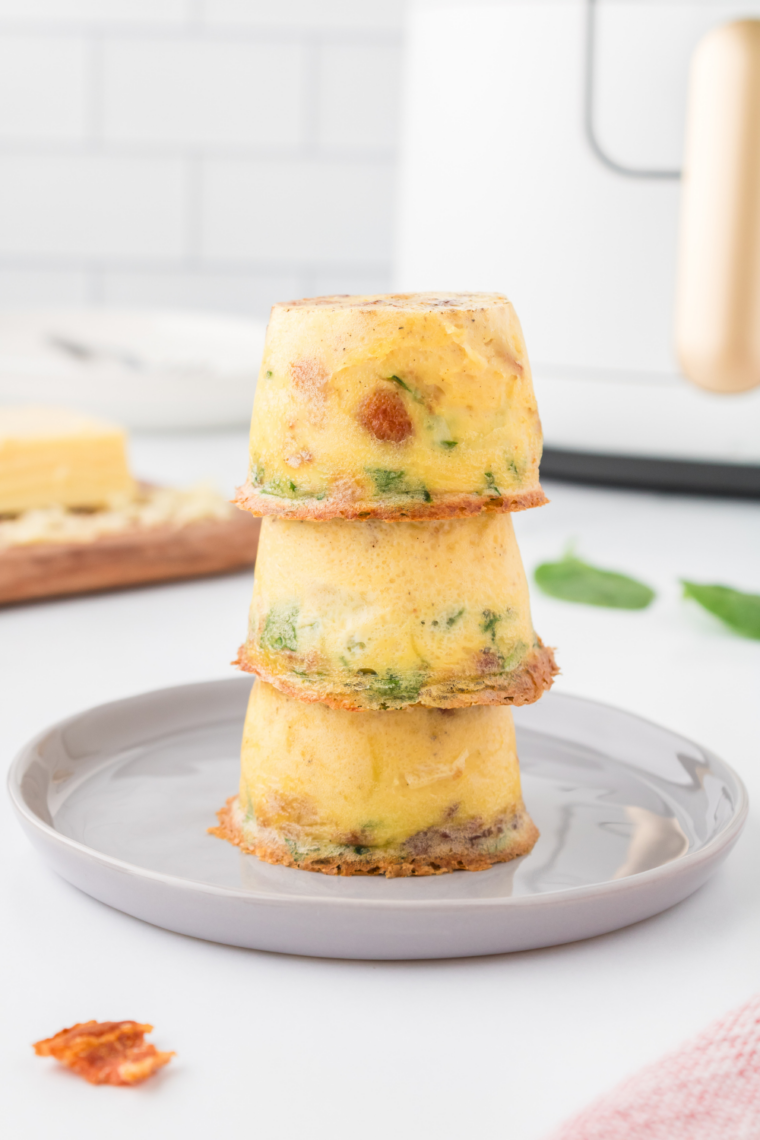
Are Air Fryer Veggie Egg Bites Keto?
Yes, and not marginally so. Each bite contains 2 grams of total carbohydrates and 0.3 grams of fiber, putting them at roughly 1.7 grams of net carbs. With 9 grams of fat and 9 grams of protein, the macros land squarely in ketogenic territory.
The carbs that are here come almost entirely from the bell pepper and onion. If you’re in a strict induction phase and want to trim further, swap the bell pepper for spinach or mushrooms — both are lower in carbohydrates and behave the same way in the mold.
Heavy cream is doing real work here beyond flavor. It adds fat without adding sugar, which is why I use it instead of milk. A quarter cup of milk would add several grams of lactose across the batch; two tablespoons of heavy cream adds almost none.
If you want the same macro profile with a meatier bite, my air fryer sausage and egg bite cups use the same base and the same temperature.
Ingredients Needed
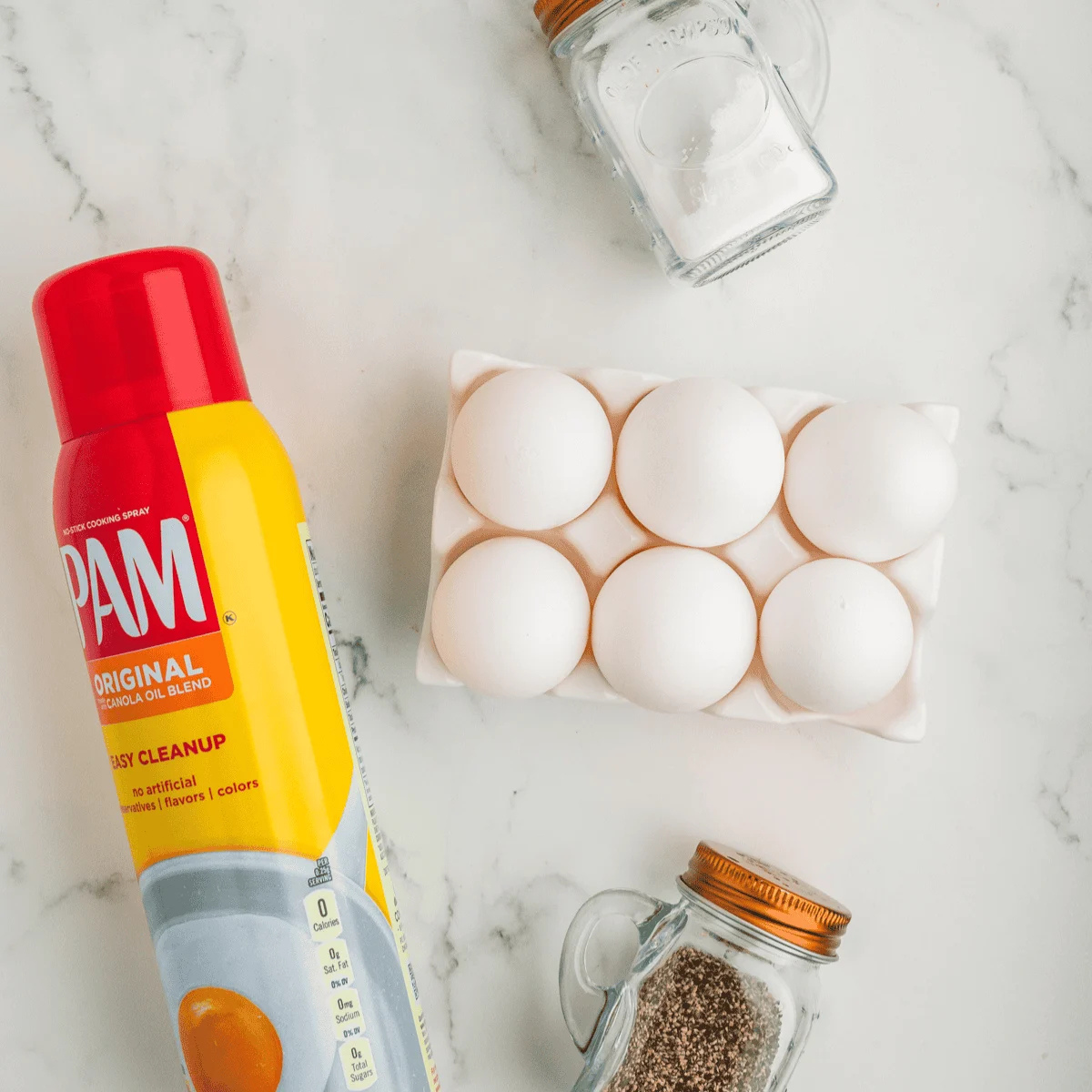
- Large eggs — the structure of the whole recipe. Six eggs makes six bites in standard ramekins.
- Heavy cream — two tablespoons is the difference between custardy and rubbery. Do not skip it.
- Kosher salt — coarse grain distributes more evenly through the egg mixture than table salt.
- Black pepper — freshly ground if you have it.
- Bell peppers — diced small. Any color; red is sweetest.
- White onion — finely diced. Yellow works too.
- Cheddar cheese — shredded sharp cheddar carries the flavor.
- Mozzarella cheese — shredded, for the melt and pull that cheddar alone won’t give you.
A note on shredded cheese: pre-shredded bags are coated in potato starch or cellulose to prevent clumping, which adds a small amount of carbohydrate and can make the bites slightly grainy. Shredding from a block takes ninety seconds and noticeably improves texture.
Ingredient Swaps and Variations
Cottage cheese version. Replace the heavy cream with 1/4 cup of blended cottage cheese for a higher-protein, lower-fat bite. Blend it completely smooth first or you’ll get a curdled texture. This is the swap that gets you closest to the sous-vide texture people are chasing.
The Starbucks copycat question. People ask constantly whether these taste like Starbucks egg bites. Honestly — close, but not identical, and the difference is method. Starbucks cooks theirs sous-vide in a sealed water bath, which is why they’re so uniformly silky. An air fryer uses dry circulating heat, so you get a slightly firmer set and a faintly browned top. What you gain is nine minutes instead of an hour, and no special equipment. Blend cottage cheese into the base and cook at the lower end of the time range if silky texture is your priority.
Add a protein. Cooked crumbled bacon, diced ham, or breakfast sausage all work. Cook them first — raw meat won’t finish in nine minutes. If you’d rather start from a recipe built around it, the bacon and Gruyère frittata cups are a good place to look, and the air fryer ham and cheese bites go the savory-snack direction.
Other vegetables. Spinach, mushrooms, zucchini, cherry tomatoes, broccoli, and scallions all work. Dice everything small — anything larger than about 1/4 inch won’t cook through in the time the eggs need.
Dairy-free. Skip the cheese and use full-fat coconut cream in place of the heavy cream. The texture holds up better than you’d expect, though the flavor shifts noticeably.
How To Make Air Fryer Veggie Egg Bites
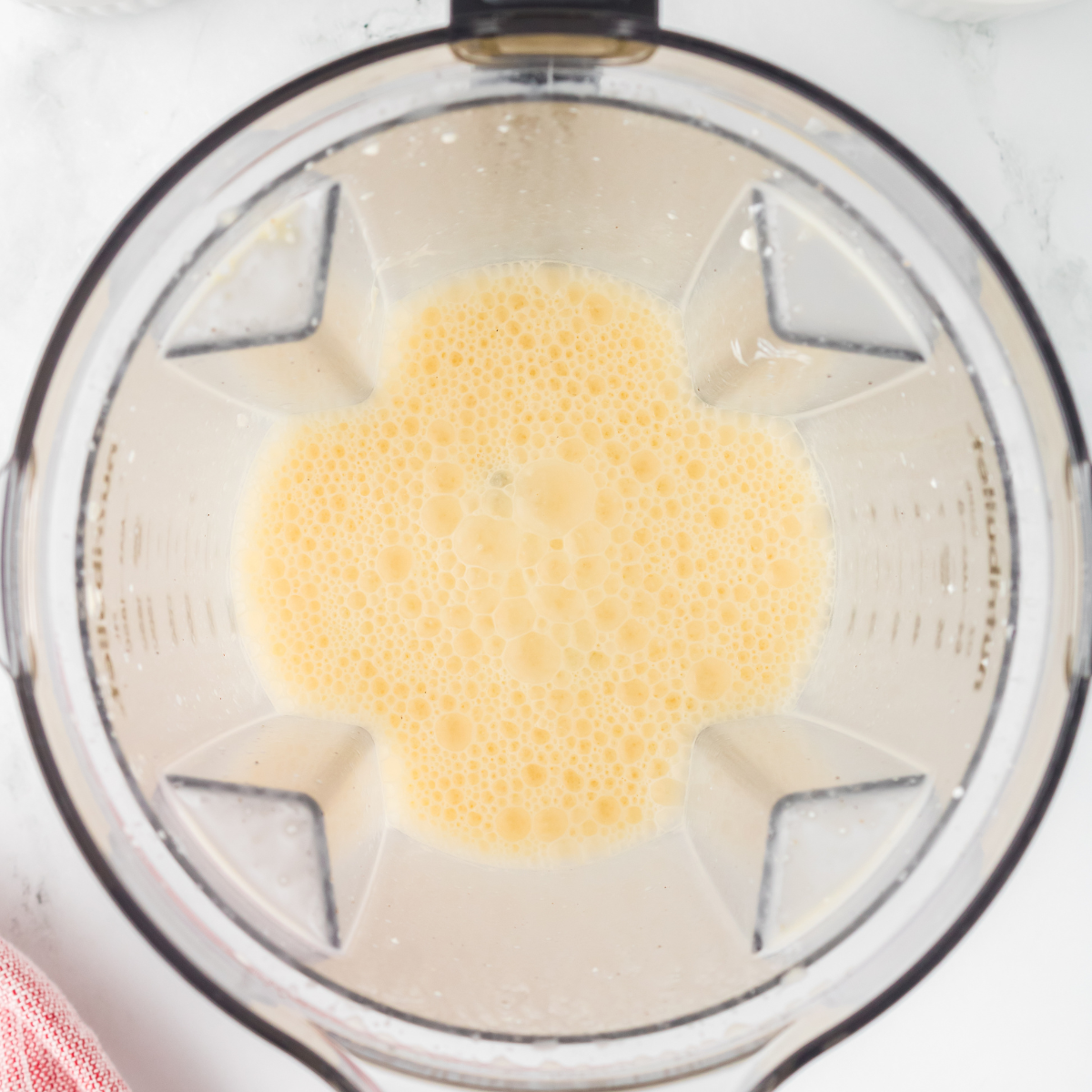
Step One: Dice the bell pepper and onion finely. In a small bowl, combine the shredded cheddar, shredded mozzarella, diced bell peppers, and diced onions.
Step Two: Add the eggs, heavy cream, kosher salt, and black pepper. Whisk gently — just until the yolks and whites are combined and the mixture is uniform. Over-whisking beats air into the batter, which causes the bites to puff dramatically in the air fryer and then collapse into a dense, sunken center as they cool.
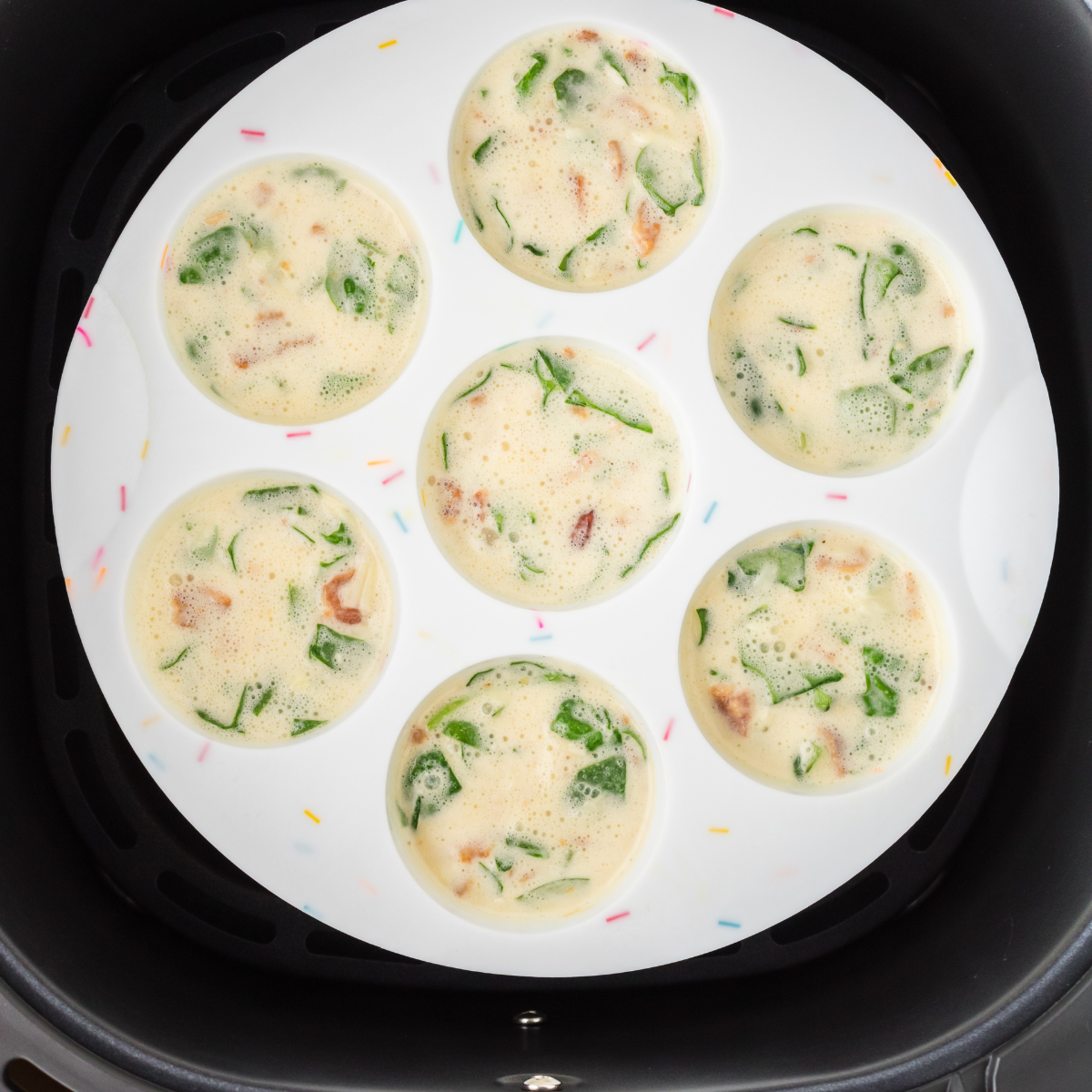
Step Three: Spray your ramekins, silicone egg bite molds, or muffin cups thoroughly with non-stick cooking spray. Get the sides, not just the bottom. Pour the egg mixture in, filling each about two-thirds full. They rise substantially, and overfilled molds will spill over the sides and weld themselves to the mold.
Step Four: Place the filled molds in the air fryer basket, leaving space between them for air circulation. Set the temperature to 320°F on the air fry setting and cook for 6 to 9 minutes.
Step Five: Start checking at the 6-minute mark. They’re done when the centers are just set and no longer jiggle when you gently shake the basket. Carryover heat will finish them.
Step Six: Let them rest in the molds for 3 to 5 minutes before releasing. This is the step everyone skips and then wonders why half the bite stayed behind. As they cool slightly, they firm up and contract away from the sides. Run a thin knife or small offset spatula around the edge if you’re using ramekins.
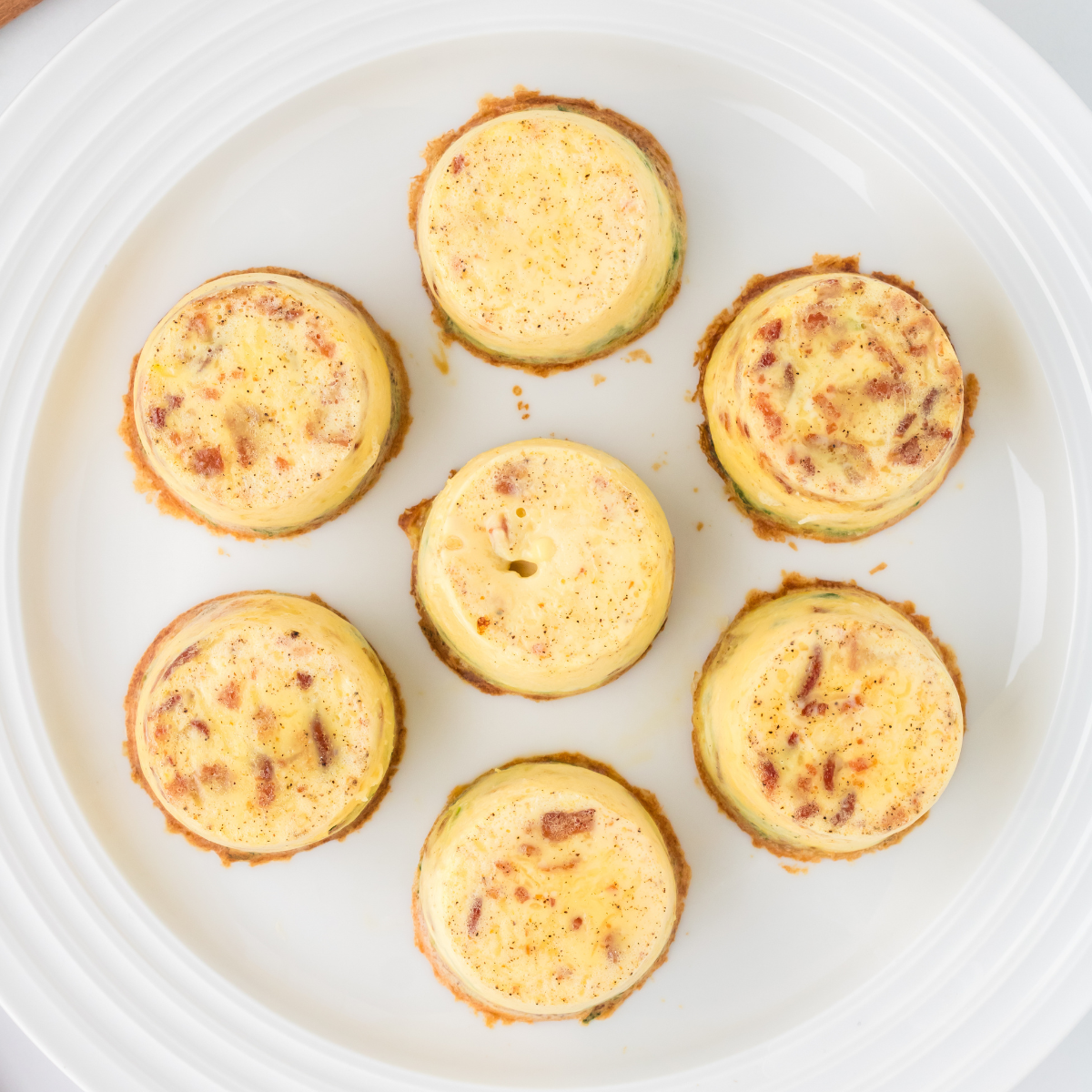
Why 320°F Is the Right Temperature
Most air fryer egg recipes call for 350°F or higher, and I tried that first. Here’s what I found across an Air Fryer Crisp lid, a Mealthy Lid, an Instant Vortex Plus, and a Power Air Fryer: at 350°F and above, the tops brown and set before the centers have finished cooking. You end up with a bite that looks done, has a slightly leathery brown cap, and is still loose in the middle. Pushing the time to compensate overcooks the outer ring.
At 320°F the heat penetrates more gradually. The center sets at roughly the same rate as the surface, the tops stay pale gold instead of browning, and the texture stays tender all the way through. It’s a slower ramp, and it’s worth the extra minute or two.
Two machine-specific notes from that testing: basket-style air fryers ran slightly hotter than lid-style attachments at the same dial setting, and every unit I tested benefited from not preheating. Starting from cold gives the centers a head start before the surface begins to set.
Recipe Tips
- Dice your vegetables small. Uniform 1/4-inch pieces cook through in the time the eggs need. Larger chunks stay raw in the center.
- Consider sautéing watery vegetables first. Bell pepper and onion release moisture as they cook, and in a nine-minute window that moisture ends up pooling at the bottom of the bite. A two-minute sauté drives it off. This matters more with mushrooms, zucchini, and tomatoes than with peppers.
- Whisk gently, not vigorously. Combined, not aerated.
- Don’t overcrowd the basket. Air needs to move around each mold. Cook in batches rather than cramming them in.
- Spray more than you think you need to. The sides are where sticking happens.
- Check early. Air fryers vary enormously. Your first batch is calibration; every batch after that you’ll know your machine’s number.
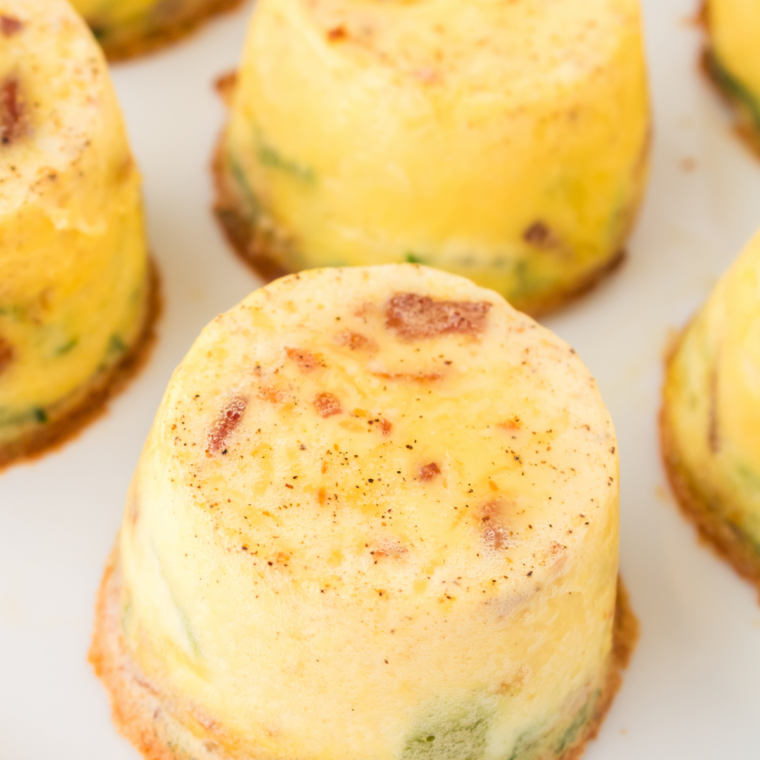
Troubleshooting
My egg bites are watery at the bottom. The vegetables released moisture during cooking. Sauté them for two minutes before adding them to the egg mixture, and pat them dry.
They’re rubbery. Overcooked, or made without enough fat. Pull them at 6 minutes and check, and don’t cut the heavy cream.
They puffed up and then collapsed. Over-whisked. Air incorporated into the batter expands in the heat and then deflates. Stir just until combined next time.
They stuck to the mold. Either not enough cooking spray on the sides, or you tried to release them while still hot. Spray thoroughly and let them rest 3 to 5 minutes.
The tops browned too fast. Your air fryer runs hot. Drop to 310°F and add a minute.
The centers are still loose but the outsides are done. Temperature is too high. This is exactly the problem 320°F solves.
Storing, Freezing, Make Ahead, and Reheating
Storing: Keep cooled egg bites in an airtight container in the refrigerator for up to 4 days. Let them cool completely before sealing, or condensation will make them soggy.
Freezing: Wrap each bite individually in plastic wrap, then place them in a freezer-safe bag or container. They keep for up to 2 months. Individual wrapping matters — a container of loose bites freezes into a single block.
Make Ahead: Mix the egg base and fill the molds up to 24 hours in advance, then cover and refrigerate. Cook straight from the fridge and add about a minute to the cook time.
Reheating: In the air fryer at 300°F for 3 to 5 minutes, which is the better method and gets you closest to fresh. In the microwave, 30 to 60 seconds — cover with a damp paper towel and stop as soon as they’re warm. Microwaving past that point makes them rubbery quickly.
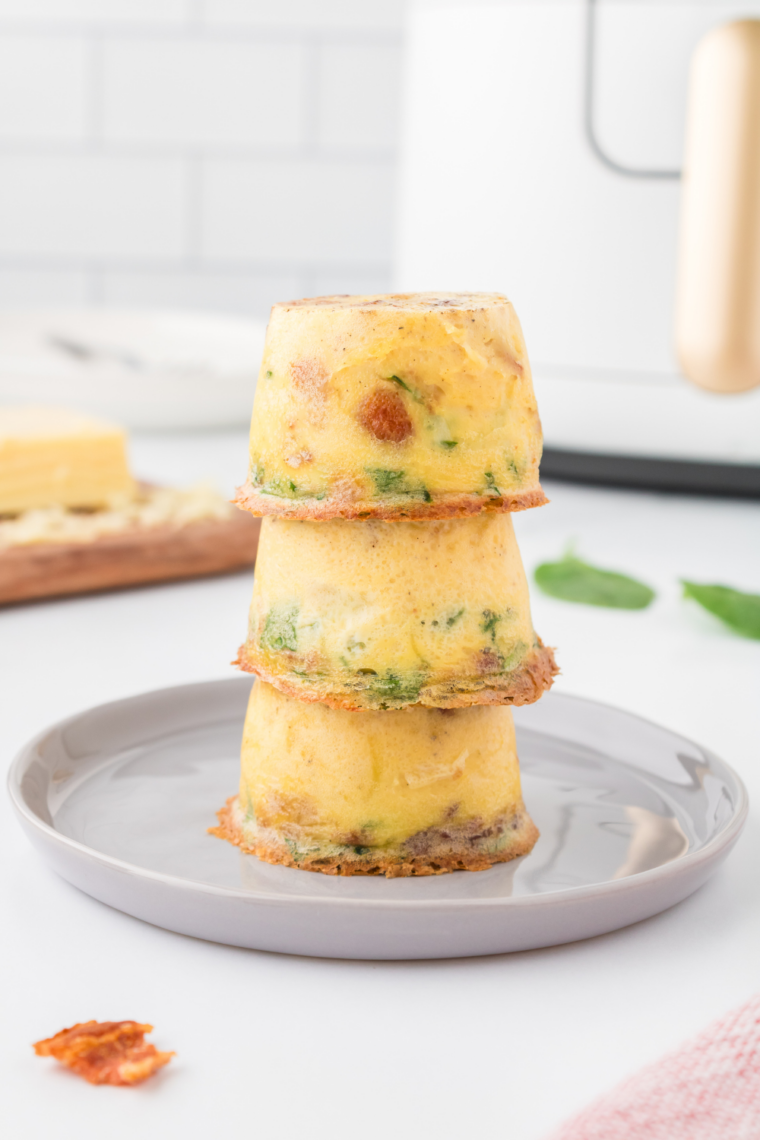
What To Serve With Air Fryer Veggie Egg Bites
Because these are low carb, they pair well with whatever you’d normally want alongside a breakfast plate. Sliced avocado, fresh berries, or a handful of greens keep the meal light. For something more substantial on a weekend, crispy air fryer hash brown patties cook at a similar temperature and can go in right after the egg bites come out.
If you’re feeding a table with mixed appetites, air fryer pancakes or air fryer French toast round things out for anyone who isn’t counting carbs. And air fryer ricotta toast with roasted garlic and tomatoes makes the whole thing feel like brunch rather than breakfast.
Frequently Asked Questions
Can I use different vegetables? Yes. Spinach, mushrooms, zucchini, cherry tomatoes, broccoli, and scallions all work well. Dice everything to about 1/4 inch so it cooks in the same window as the eggs.
Can I make these without cheese? Yes. The bites will be softer and milder, and you’ll lose some of the structure the cheese provides. Increase the heavy cream slightly to compensate for the lost fat.
Can I use egg whites only? You can. Use 12 egg whites in place of 6 whole eggs. The result is lighter and lower in fat, but noticeably less creamy — the yolks are where the richness comes from. Keeping two whole eggs in the mix is a reasonable compromise.
How do I keep them from sticking? Spray the molds generously, including the sides, and let the bites rest 3 to 5 minutes before releasing. Silicone molds release more reliably than ceramic ramekins.
Can I double the recipe? Yes, but cook in batches. Overcrowding the basket blocks airflow and produces unevenly cooked bites.
Can I bake these in the oven instead? Yes. Bake at 325°F for 12 to 15 minutes, until the centers are set. The air fryer is faster and gives a slightly firmer exterior.
Do I need to preheat the air fryer? No, and I’d recommend against it. Starting from a cold basket helps the centers set at the same pace as the surface.
What size molds should I use? Standard 3-inch silicone egg bite molds, ramekins, or silicone muffin cups all work. Six eggs fills six molds to the two-thirds line.
How long do they last in the fridge? Up to 4 days in an airtight container, cooled completely before sealing.
Can I freeze them? Yes, up to 2 months, wrapped individually. Reheat in the air fryer at 300°F for 3 to 5 minutes.
More Egg Recipes to Try
If egg bites are your thing, the air fryer Western omelet egg bites use the same technique with ham, peppers, and onion. For something you slice and serve rather than portion into molds, the loaded air fryer frittata scales up to feed a group.
You can browse everything in the egg recipes collection, and if you’re new to cooking eggs in an air fryer, my air fryer cooking charts and tips cover times and temperatures for most common foods.
Planning the week ahead? These egg bites appear regularly in my weekly meal plan.

Air Fryer Veggie Egg Bites
Description
Ingredients
- 6 large eggs
- 2 tablespoons heavy cream
- 1 teaspoon kosher salt
- 1/2 teaspoon black pepper
- 1/4 cup bell peppers, finely diced
- 1/4 cup white onion, finely diced
- 1/4 cup cheddar cheese, shredded
- 1/4 cup mozzarella cheese, shredded
Instructions
- In a small mixing bowl, combine the shredded cheddar cheese, shredded mozzarella cheese, diced bell peppers, and diced white onion.
- Add the eggs, heavy cream, kosher salt, and black pepper. Whisk gently until just combined — do not over-whisk.
- Spray ramekins, silicone egg bite molds, or muffin cups thoroughly with non-stick cooking spray, coating the sides as well as the bottoms.
- Pour the egg mixture into the molds, filling each about two-thirds full.
- Place the molds in the air fryer basket with space between them. Set the temperature to 320°F and cook for 6 to 9 minutes, checking at the 6-minute mark.
- The bites are done when the centers are just set and no longer jiggle. Let rest 3 to 5 minutes before releasing from the molds.
Equipment
- Cooking Spray
- Ramekins, or Muffin Cups
Notes
Nutrition
Share this recipe
We can’t wait to see what you’ve made! Mention @forktospoon or tag #forktospoon!