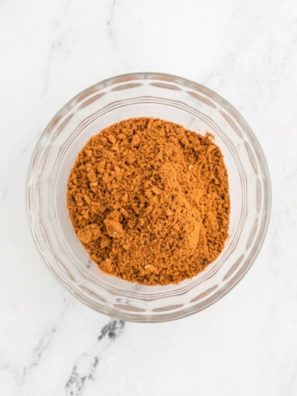
Eight spices, one bowl, five minutes — and you’ll never buy a fiesta seasoning packet again. This homemade fiesta rub is the all-purpose Tex-Mex blend I keep in a jar next to the stove: chili-forward, warm with cumin, just enough cayenne to notice. It goes on chicken, steak, shrimp, ground beef, roasted vegetables, rice, and beans without any adjusting.
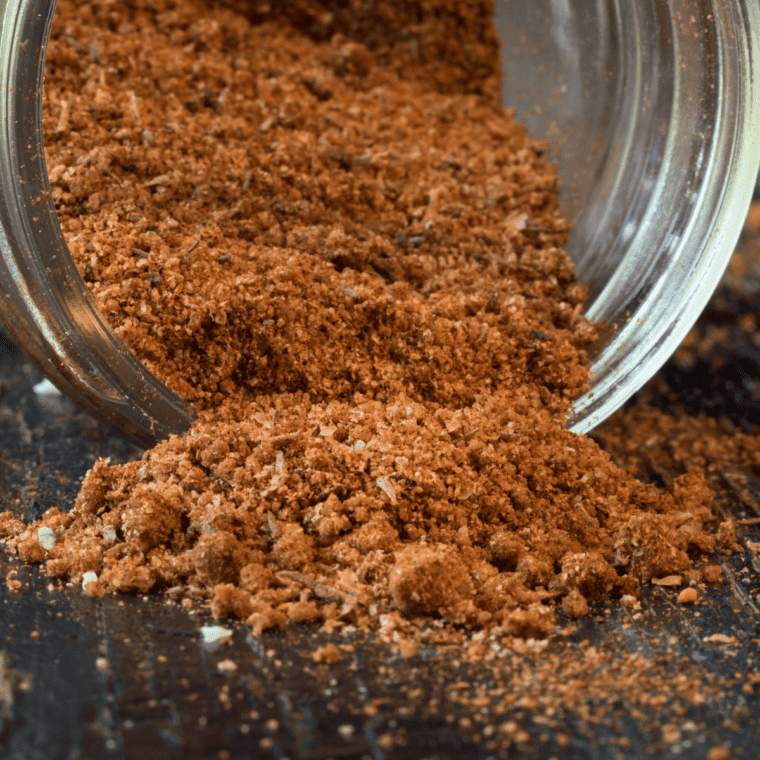
One batch makes just over ⅔ cup — about 11 tablespoons — which seasons roughly 10 pounds of meat. That’s about eight store packets’ worth for the cost of spices you already own.
Below you’ll find the exact ratios, how much to use per pound, how fiesta seasoning actually differs from taco and fajita blends, and the variations worth making.
What Is Fiesta Seasoning?
“Fiesta seasoning” gets used for three different things, so it’s worth sorting out before you start measuring.
A homemade Tex-Mex all-purpose blend — that’s this recipe. Chili powder, paprika, cumin, garlic, onion, oregano, cayenne, and salt. No cornstarch, no sugar, no anti-caking agents. It’s the most versatile of the three because there’s no thickener in it, so it works as a dry rub and as a stir-in.
Bolner’s Fiesta Brand — a San Antonio spice company that sells dozens of individual seasonings under the Fiesta name. If you’re looking for their Southwest-style fajita seasoning specifically, my homemade fajita seasoning is the closer match, since fajita blends lean on citrus in a way this one doesn’t.
Hidden Valley Fiesta Ranch — a buttermilk-based dip packet, not a rub. Different animal entirely.
This recipe is the first one: a workhorse Mexican-inspired blend you scoop from a jar.
Ingredients Needed For Homemade Fiesta Seasoning
Eight spices, all of them probably already in your cabinet. Here’s what each one is actually doing in the blend — and what to reach for if you’re short.
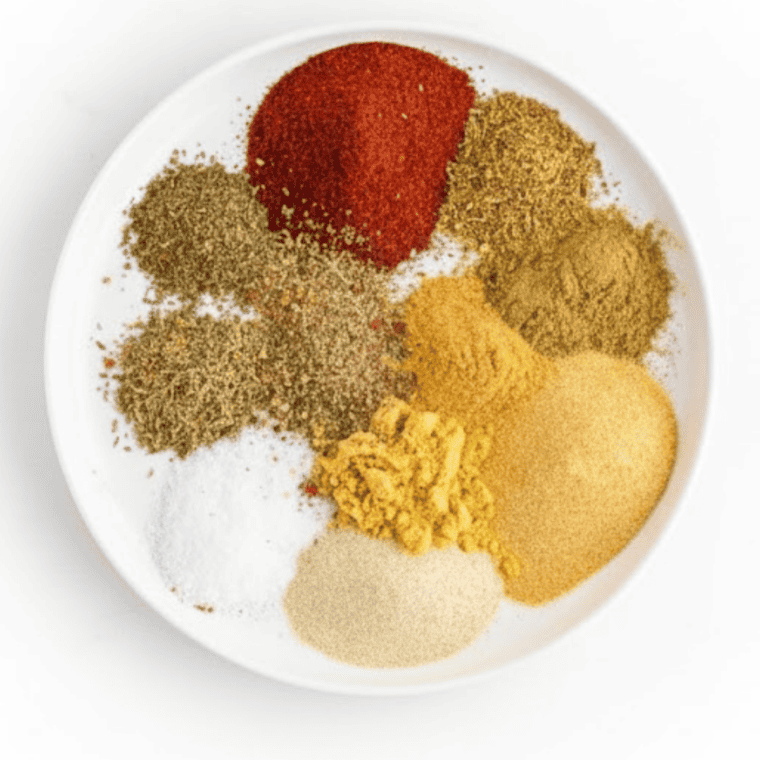
- Chili Powder: The base of the blend — most of the color and the smoky, earthy foundation. Use a fresh jar; it fades faster than any other ground spice.
Swap: Ancho chile powder for 1 of the 3 tablespoons adds depth. - Paprika: Sweetness and the rich red color. Without it the rub tastes sharp and reads brown. Swap: Smoked paprika for anything going on a grill or griddle.
- Ground Cumin: The most recognizable note here — warm, nutty, faintly citrusy. It’s what makes this taste Tex-Mex instead of just spicy. Swap: Toast whole seeds and grind them for a brighter version.
- Garlic Powder: The savory backbone. Powder, not granulated — it disperses evenly and dissolves clean in a pan sauce. Swap: Granulated garlic, whisked longer. Never garlic salt.
- Onion Powder: Sweetness under the garlic. You only notice it when it’s missing and the blend tastes flat. Swap: Dried minced onion, ground fine first.
- Dried Oregano: Herbal lift that keeps the blend from tasting one-note. Crush the leaves between your palms as you add them. Swap: Mexican oregano is better — more citrusy, less minty. Use 25% less if substituting Mediterranean.
- Cayenne Pepper: The heat, and the one amount you should decide rather than just measure. A teaspoon is warmth, not burn. Swap: Chipotle powder for heat plus smoke.
- Salt: Makes every other spice taste like itself, and draws moisture to the surface so a crust forms. Fine sea salt, never kosher — coarse flakes give you salty bites. Swap: Leave it out and salt separately, like my salt-free Mrs. Dash copycat.
Variations
- Smoky: All smoked paprika instead of regular.
- Ancho: Swap 1 tablespoon of the chili powder for ground ancho — deeper, less sharp, great on pork.
- Citrus: Add 1 teaspoon citric acid and you’re close to my homemade fajita seasoning.
- Sweet and spicy: Add 1 tablespoon brown sugar. Watch it under high heat.
- Extra spicy: Double the cayenne.
How To Make Fiesta Seasoning
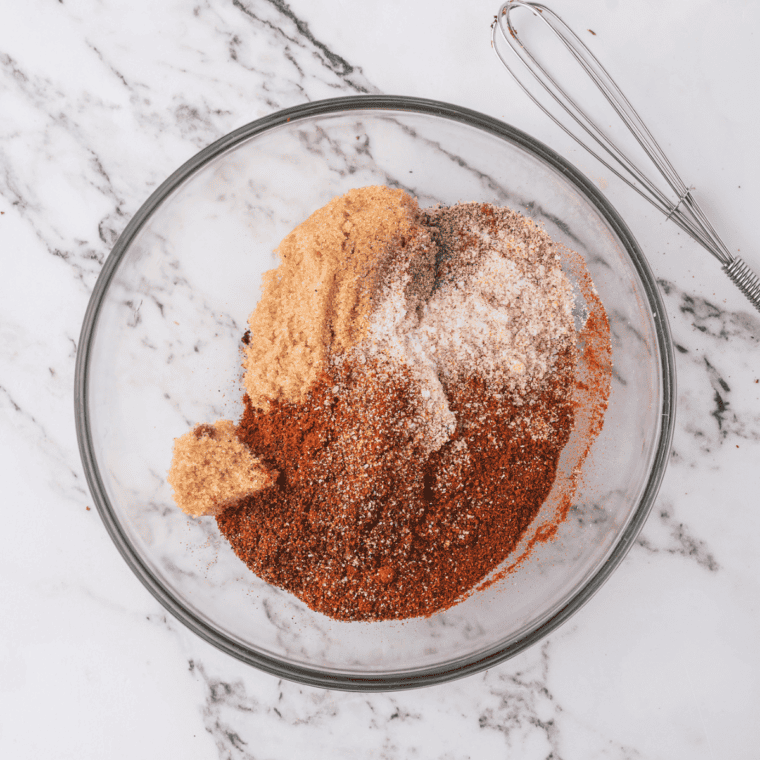
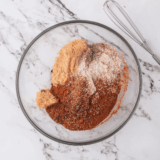
Step 1: Measure everything into one bowl. A small mixing bowl is plenty. Add the salt last so you can see how much you’re putting in.
Step 2: Whisk for a full 30 seconds. A small whisk works better than a spoon — you’re breaking up clumps in the garlic and onion powder, which are the two most likely to hide.
Step 3: Crush the oregano as you go. Rub the dried leaves between your palms over the bowl. It releases the oils and gives you a finer, more even texture.
Step 4: Taste a pinch. Adjust salt and cayenne now, while it’s dry. It’s much harder to fix once it’s on the meat.
That’s the whole recipe. There’s no toasting step and no resting time — it’s ready the moment it’s mixed.
How Much To Use
This is the part most seasoning recipes skip. One batch of fiesta rub is about 11 tablespoons, and it goes further than you’d think.
| What you’re cooking | How much |
|---|---|
| Chicken breasts or thighs | 1 tablespoon per pound |
| Steak, pork chops, or brisket (dry rub) | 1 to 1½ tablespoons per pound |
| Ground beef or turkey, taco-style | 1½ tablespoons per pound, plus ¼ cup water |
| Shrimp | 2 teaspoons per pound |
| Roasted vegetables or potatoes | 1 teaspoon per pound, tossed with oil first |
| Rice, beans, or soup | 1 to 2 teaspoons per cup |
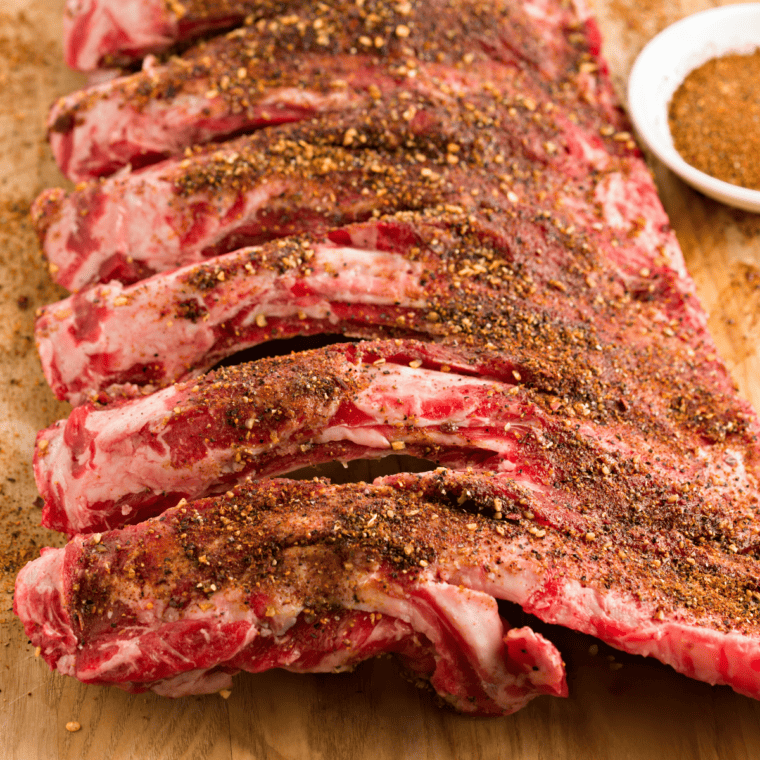
For a dry rub on meat, coat generously and let it sit 15 to 30 minutes at room temperature before cooking. That rest is what lets the salt start working into the surface — skip it and the seasoning mostly sits on top.
Fiesta Seasoning vs. Taco vs. Fajita vs. Chili Seasoning
They share a spice rack, but they aren’t interchangeable in every recipe.
| Blend | What sets it apart | Reach for it when |
|---|---|---|
| Fiesta seasoning | Balanced chili and cumin, no thickener or sugar | You want one jar that works on everything |
| Taco seasoning | Chili-forward, usually includes cornstarch and a little sugar | You want a glossy pan sauce that clings to ground beef |
| Fajita seasoning | More cumin, plus a citrus tang from lime or citric acid | You’re searing strips of chicken or steak with peppers |
| Chili seasoning | Heavier on oregano, built to hold up over a long simmer | You’re making an actual pot of chili |
The practical version: fiesta seasoning subs in for taco seasoning fine — just add a teaspoon of cornstarch to the pan if you want the sauce to thicken. Going the other direction, taco seasoning as a dry rub can scorch, because the sugar burns.
Using It As A Fiesta Chicken Rub
Chicken is where this blend earns its place. The salt-to-spice ratio is tuned for lean meat, which needs more seasoning than beef to taste fully seasoned.
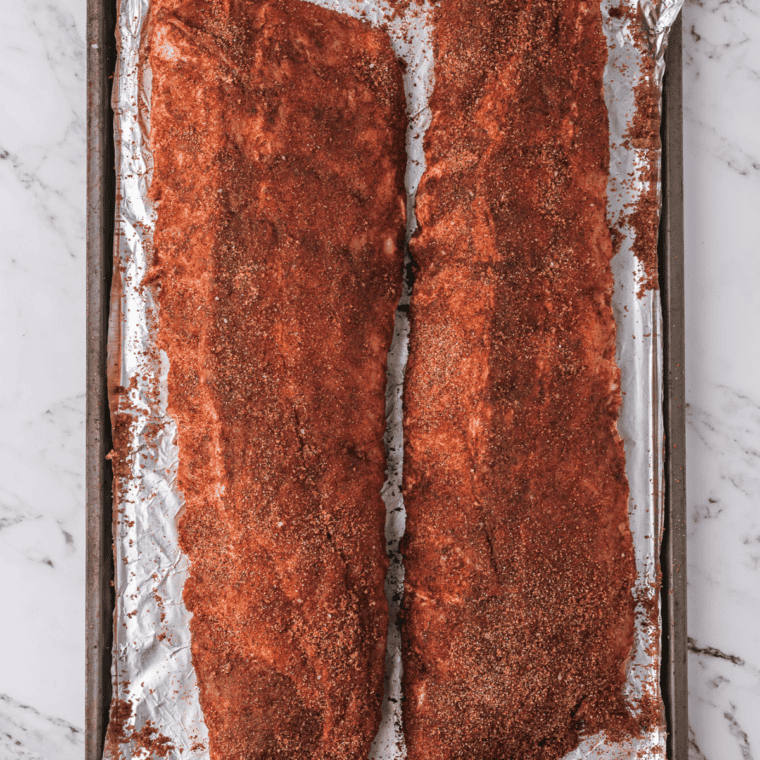
Pat the chicken completely dry, rub it with a thin coat of oil, then use 1 tablespoon of fiesta rub per pound. Let it sit 20 minutes. Cook it however you like:
- Air fryer — 380°F for 18 to 22 minutes, flipping once. My air fryer butterflied chicken breast method works perfectly with this rub swapped in.
- Griddle — this is the blend I use on Blackstone chicken fajitas, where the flat-top char plays off the smoked paprika.
- Ninja Foodi — same idea as these Ninja Foodi chicken fajitas, with the rub replacing the packet.
For a marinade instead of a rub, whisk 2 tablespoons of fiesta seasoning with 3 tablespoons olive oil and the juice of a lime. Marinate 2 hours or overnight. That version is close in spirit to a copycat Lawry’s Baja chipotle marinade, just simpler.
Ways To Use Fiesta Seasoning
- Ground beef for tacos — 1½ tablespoons per pound with a splash of water, the way I season air fryer ground beef taco bowls
- Shredded chicken — stir it into the pot for easy shredded chicken tacos
- Rice bowls — season both the chicken and the rice, like this air fryer chicken fajita rice bowl
- Nachos — season the meat before it goes on the sheet pan for crockpot chicken nachos
- Shrimp — 2 teaspoons per pound, tossed with oil, in air fryer shrimp foil packets
- Pasta — a tablespoon stirred into Instant Pot chicken fajita pasta in place of the individual spices
- Popcorn, eggs, roasted potatoes, black beans, corn on the cob, sour cream dip — a teaspoon at a time
Leftovers reheat well; if you’re working with fajitas specifically, here’s how to reheat fajitas without drying them out.
Variations
- Smoky — swap all the paprika for smoked paprika. Best version for grilling and for anything going on a griddle.
- Extra spicy — double the cayenne to 2 teaspoons, or add 1 teaspoon crushed red pepper flakes for texture as well as heat.
- Ancho chili fiesta rub — replace 1 tablespoon of the chili powder with ground ancho. Deeper, raisiny, less sharp. This is my favorite version for pork and brisket.
- Citrus — add 1 teaspoon citric acid or 2 teaspoons dried lime zest. Now you’re most of the way to a fajita blend.
- Sweet and spicy — add 1 tablespoon brown sugar. Excellent on pork, but watch it under high heat because sugar scorches.
- Salt-free — leave the salt out entirely and salt your food separately. Useful if you’re watching sodium; my copycat Mrs. Dash salt-free seasoning is built the same way.
- Herb-forward — add 1 teaspoon dried thyme and 1 teaspoon dried cilantro. Good on poultry and roasted vegetables.
Storage
Keep it in an airtight jar in a cool, dark cabinet — not the shelf above the stove, where steam and heat will dull it within weeks.
It stays genuinely flavorful for about 6 months and remains safe well beyond that; it just fades. Ground spices lose their volatile oils, not their edibility. If you open the jar and can’t smell cumin from arm’s length, it’s time for a fresh batch.
Don’t refrigerate it. Every time you take a cold jar out into a warm kitchen, condensation forms inside and the blend cakes.
Frequently Asked Questions
How much fiesta seasoning equals one taco packet? About 3½ tablespoons, which is what a standard 1-ounce packet holds. Add ¼ cup of water and a teaspoon of cornstarch if you want the same thickened pan sauce.
Is fiesta seasoning spicy? Mild to medium as written — 1 teaspoon of cayenne across ⅔ cup of blend is noticeable warmth, not heat. Cut it to ½ teaspoon for kids, double it if you want it to bite.
Is it gluten-free? The ingredients are naturally gluten-free, but check your chili powder label. A few brands use wheat-based anti-caking agents.
Can I use fiesta seasoning instead of taco seasoning? Yes. Use the same amount and add a teaspoon of cornstarch to the skillet if you want the sauce to thicken around the meat.
Why does my seasoning clump? Moisture, almost always. A damp jar, a wet measuring spoon dipped back into the container, or storage near the stove. Adding a few grains of rice to the jar helps in humid kitchens.
Can I make a big batch? It scales cleanly. Triple it for a full pint jar. Just write the per-pound ratio on the label so you’re not re-measuring every time.
Is this the same as Bolner’s Fiesta Brand seasoning? No — Bolner’s is a Texas spice company with a whole line of products under the Fiesta name. This is a homemade all-purpose Tex-Mex blend, not a copycat of any single one of theirs.
More Homemade Seasonings and Rubs
- Homemade Fajita Seasoning (McCormick Copycat)
- Chicken Taco Seasoning
- Homemade Street Corn Seasoning
- Kinder’s Buttery Steakhouse Rub
- Copycat Jack Daniel’s Pork Rub
- Copycat Lawry’s Taco Seasoning
- Homemade Old El Paso Taco Seasoning
- The Best Meatloaf Seasoning
- Homemade Sloppy Joe Mix
And if you’re building a homemade condiment shelf: Whiskey Peach BBQ Sauce, Fireball BBQ Sauce, and Copycat Heinz 57 Steak Sauce.
Homemade Fiesta Seasoning (Fiesta Rub)
Description
Ingredients
- 3 tablespoons chili powder
- 2 tablespoons paprika
- 2 tablespoons ground cumin
- 1 tablespoon garlic powder
- 1 tablespoon onion powder
- 1 tablespoon dried oregano
- 1 tablespoon fine sea salt
- 1 teaspoon cayenne pepper
Instructions
- Add all ingredients to a small bowl, adding the salt last.
- Whisk for 30 seconds, crushing the oregano between your fingers as you go, until no clumps of garlic or onion powder remain.
- Taste and adjust the salt and cayenne while the blend is still dry.
- Transfer to a completely dry airtight jar. Label with the date and “1 tablespoon per pound.”
Equipment
- Large Mixing Bowl
- Whisk
Notes
Nutrition
Share this recipe
We can’t wait to see what you’ve made! Mention @forktospoon or tag #forktospoon!