Tri tip has a reputation as a grilling cut, and that reputation makes people nervous about the slow cooker. It’s a fair worry. Tri tip is lean, and lean beef punished for eight hours turns gray and stringy.
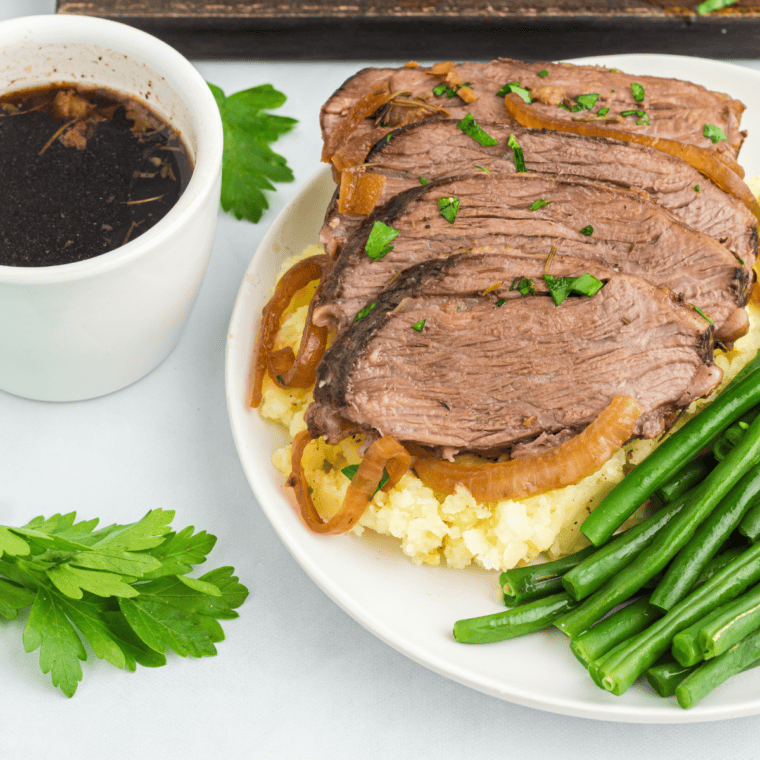
But cooked with a proper sear and a real target temperature, slow cooker tri tip becomes something worth planning dinner around: deeply beefy, sliceable or shreddable depending on what you want, and swimming in an onion-garlic gravy made entirely from the drippings.
Fifteen minutes of work up front. The crock pot handles the rest.
What Is Tri Tip?
Tri tip is a triangular muscle from the bottom sirloin, usually 1.5 to 3 pounds, with a fat cap along one side. It’s the star of Santa Maria–style barbecue in central California, where it’s traditionally grilled over red oak — the same cut behind that Trader Joe’s Santa Maria tri tip roast you’ve probably walked past in the meat case.
Two things about it matter enormously here:
- It’s lean. Far less marbling than chuck. It won’t forgive careless cooking the way a pot roast will.
- The grain changes direction. A tri tip has two distinct grain patterns that meet near the center of the roast. Slice it wrong and half of it is chewy no matter how perfectly you cooked it.
Why This Slow Cooker Tri Tip Recipe Works
- You sear it first. This is not optional. The browning reaction that happens in a hot skillet builds roasted, savory flavor that a slow cooker cannot produce at braising temperatures. Skipping the sear is the single most common reason crock pot beef tastes flat — it’s the same principle behind the slow cooker beef sirloin tip roast with gravy, where searing before the roast ever hits the crock is what makes the finished gravy taste like something.
- You braise it, not steam it. A cup and a half of seasoned liquid keeps the lean muscle moist and turns into gravy at the end.
- You cook to a temperature, not a clock. Tri tip has two good stopping points, and the stretch between them is genuinely unpleasant. More on that in a moment.
Ingredients
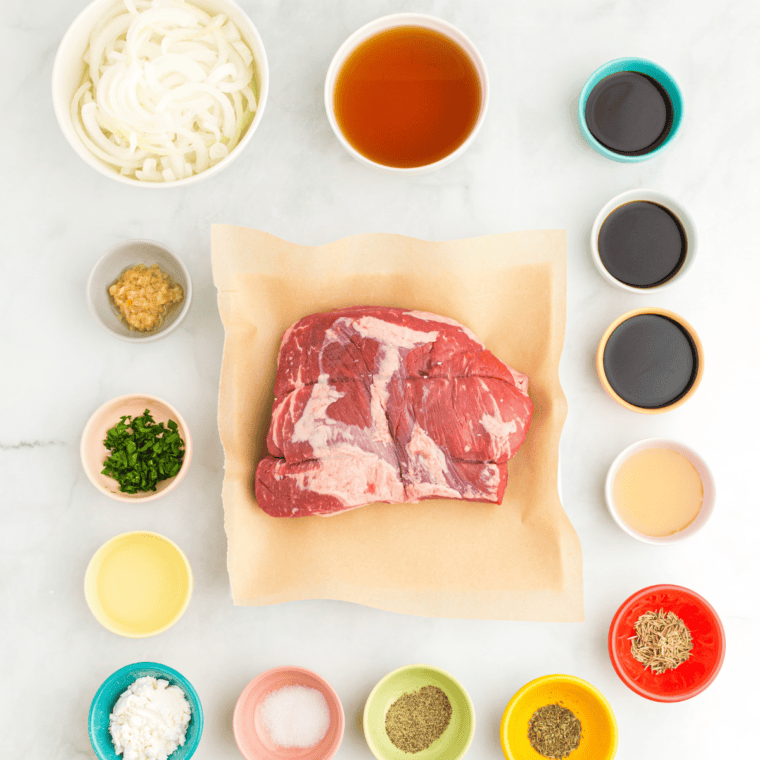
- Tri tip roast: The whole point. Trim the fat cap to about ¼ inch — enough to render and baste the meat, not so much that the gravy turns greasy.
- Kosher salt: Draws moisture to the surface, then reabsorbs it as seasoned brine. Coarse grains distribute more evenly on a large roast than table salt.
- Coarse black pepper: Coarse grind survives the long cook. Fine pepper goes bitter and muddy over several hours.
- Garlic powder: Sticks to the surface and browns during the sear. Fresh garlic burns in a hot skillet, which is why it goes in the braise instead.
- Onion powder: Adds savory depth to the crust without the moisture that fresh onion would introduce.
- Smoked paprika: Replaces the oak smoke you’d get from a Santa Maria grill. Also deepens the color of the finished crust.
- Avocado or canola oil: High smoke point. Olive oil breaks down at the temperature you need for a proper sear.
- Yellow onion: Does double duty — sliced thick, it acts as a rack holding the roast out of the liquid, and it collapses into the gravy for body and sweetness.
- Garlic cloves: Smashed rather than minced so they perfume the braise without dissolving or turning bitter.
- Low-sodium beef broth: Keeps the lean meat moist and becomes your gravy base. Low-sodium matters because the liquid reduces and concentrates — regular broth plus soy sauce plus a salted rub lands aggressively salty.
- Worcestershire sauce: Anchovy-based umami and a hit of acid that keeps the gravy from tasting flat.
- Soy sauce: Layered savory depth plus color. Tri tip braises to a pale beige on its own.
- Tomato paste: Glutamates for savoriness and a touch of acid. It also thickens the gravy slightly on its own.
- Fresh or dried rosemary: Resinous herb that holds up to hours of cooking where softer herbs like basil disappear entirely.
- Bay leaves: Background bitterness that keeps the braise from reading one-note. Remove before making the gravy.
- Cornstarch and cold water: The slurry that turns cooking liquid into gravy. Cold water is required — cornstarch seizes into lumps in hot liquid.
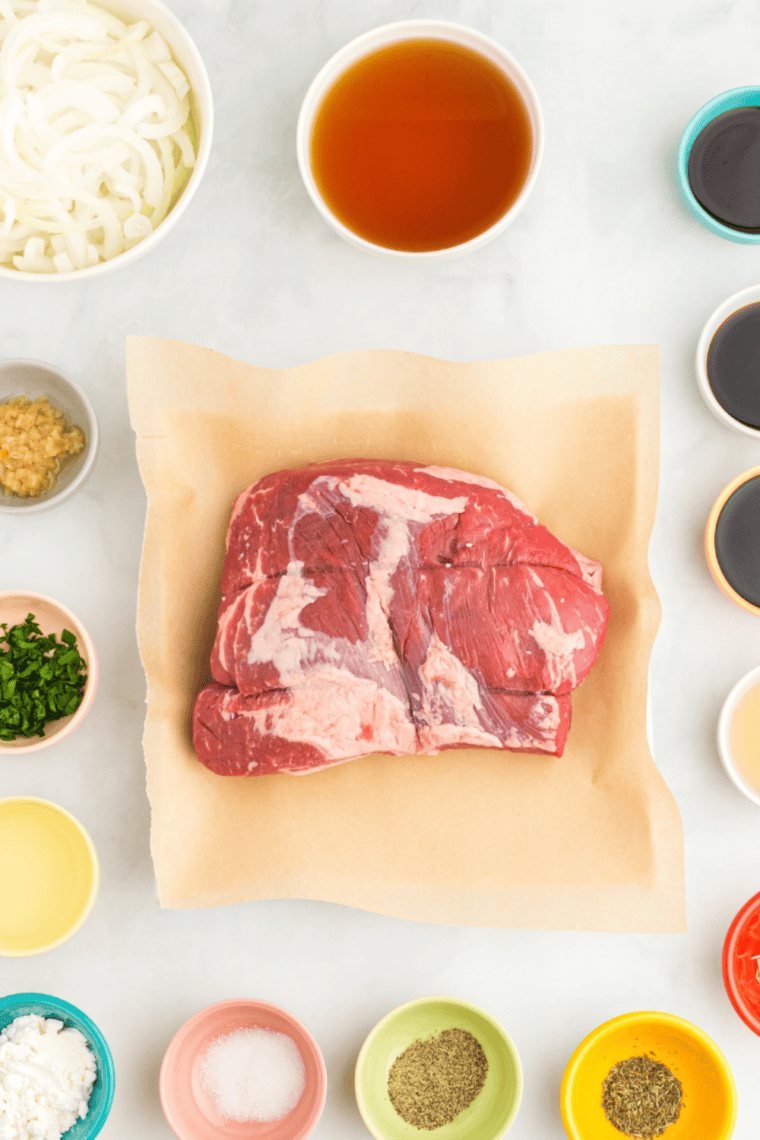
Substitutions and Variations
- Tri tip → other cuts: Sirloin tip or bottom round work with the same method and timing. Chuck roast also works but needs the full 8 hours; it will not produce a good sliceable result at 4 hours.
- Seasoning rub → a premade blend: Swap all five dry spices for 2½ tablespoons of a steak blend. Copycat Montreal steak seasoning leans peppery, Outback steak seasoning is smokier with a little cayenne, and copycat Kinder’s The Steak Blend adds mustard powder and thyme. If you’re using a blend that already contains salt, cut the added kosher salt to 1 teaspoon.
- Beef broth → bouillon or stock: Better Than Bouillon at 1 teaspoon per cup works well. Beef stock is richer and fine here. Water alone is not — you’ll get thin, weak gravy.
- Worcestershire → coconut aminos or fish sauce: Coconut aminos for a fish-free version (use 3 tablespoons, it’s milder). Fish sauce at 2 teaspoons if that’s what’s open.
- Soy sauce → tamari: Direct one-to-one swap for gluten-free.
- Cornstarch → flour: Use 3 tablespoons flour whisked into 3 tablespoons cold water. Simmer 5 minutes rather than 2 to cook out the raw taste.
- Fresh rosemary → thyme: Equally sturdy, slightly less piney. Two sprigs, same timing.
- Add heat: 1 teaspoon chipotle powder or ½ teaspoon cayenne in the rub.
- Add mushrooms: ½ pound sliced cremini in the last 2 hours. They release liquid, so cut the broth to 1¼ cups.
- Add vegetables: Quartered potatoes and thick-cut carrots in the last 2 to 3 hours. Earlier and they disintegrate. If you want a seasoned vegetable version, 2 tablespoons of homemade beef stew seasoning mix stirred into the braising liquid covers both the beef and the vegetables.
How to Make Slow Cooker Tri Tip
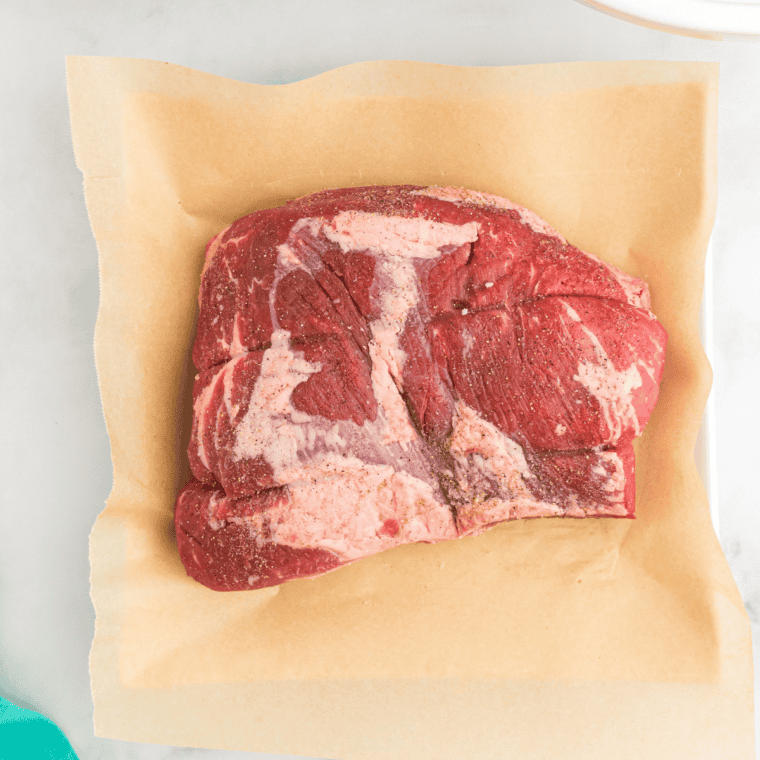
Step 1: Pat the tri tip bone dry with paper towels — wet meat steams instead of browning. Mix the salt, pepper, garlic powder, onion powder, and paprika, then work it into every surface, including the thin ends. If you have the time, season it and leave it uncovered on a rack in the fridge for 4 to 24 hours. This dry-brine seasons the meat more deeply and dries the surface for a much better crust.
Step 2: Heat the oil in a cast iron skillet over medium-high until it shimmers. Lay the roast in fat-cap-down and leave it alone for 3 to 4 minutes. Flip, repeat, then hold the thin edges against the pan with tongs for about a minute each. You want deep brown, not light tan. Push it further than feels comfortable — this is the same aggressive-sear logic behind Blackstone steak bites, where the crust does most of the flavor work.
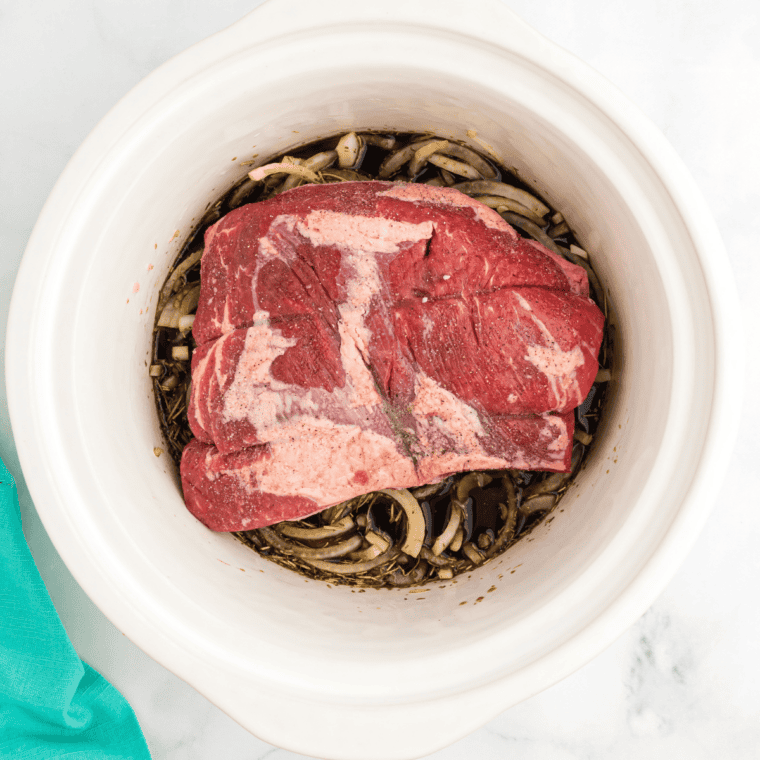
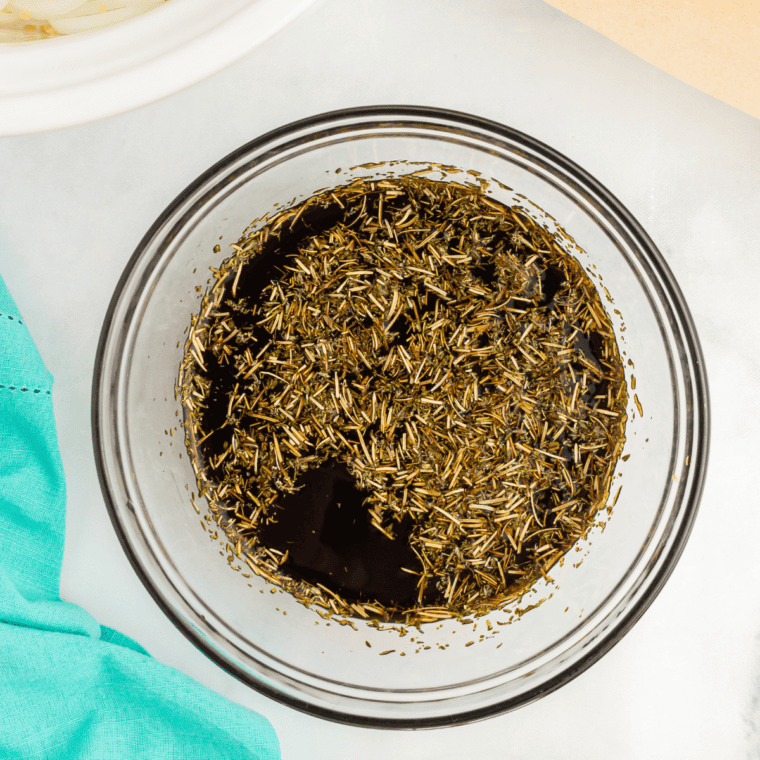
Step 3: Spread the sliced onion and smashed garlic across the bottom of the slow cooker. They act as a rack, holding the roast slightly out of the liquid. Set the seared tri tip on top. Put the skillet back on the heat, pour in the beef broth, and scrape up every browned bit welded to the pan. That fond is pure concentrated flavor and it belongs in your gravy. Whisk in the Worcestershire, soy sauce, and tomato paste, then pour the mixture around the roast rather than over it — you don’t want to wash off the crust you just built. Tuck in the rosemary and bay leaves.
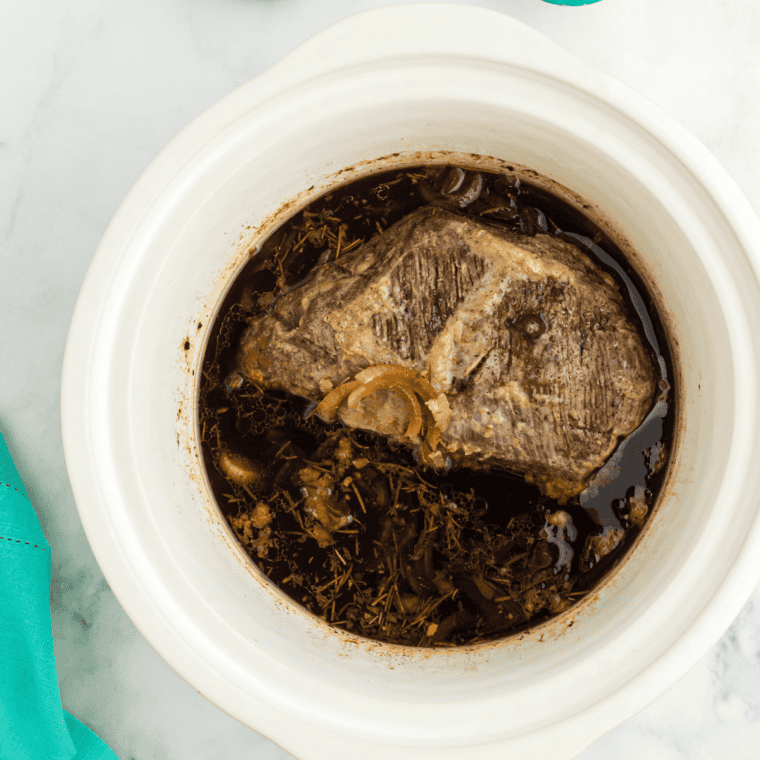
Step 4: Cook to your target
- For sliceable tri tip: LOW for 4 to 5 hours, until the center reads 145–155°F. Still pink, holds together, slices cleanly.
- For shreddable tri tip: LOW for 7 to 8 hours, until it reads 200–205°F. The collagen has fully broken down and it pulls apart with two forks.
- Don’t stop in between. Somewhere around 160°F to 190°F, tri tip is past juicy but not yet past tough. That window is where every disappointing crock pot tri tip on the internet was born.
An instant-read thermometer is the best fifteen dollars you’ll spend on this recipe. Slow cookers run wildly different temperatures by brand and age, and “6 hours on low” means something different in a ten-year-old crock than in a new one.
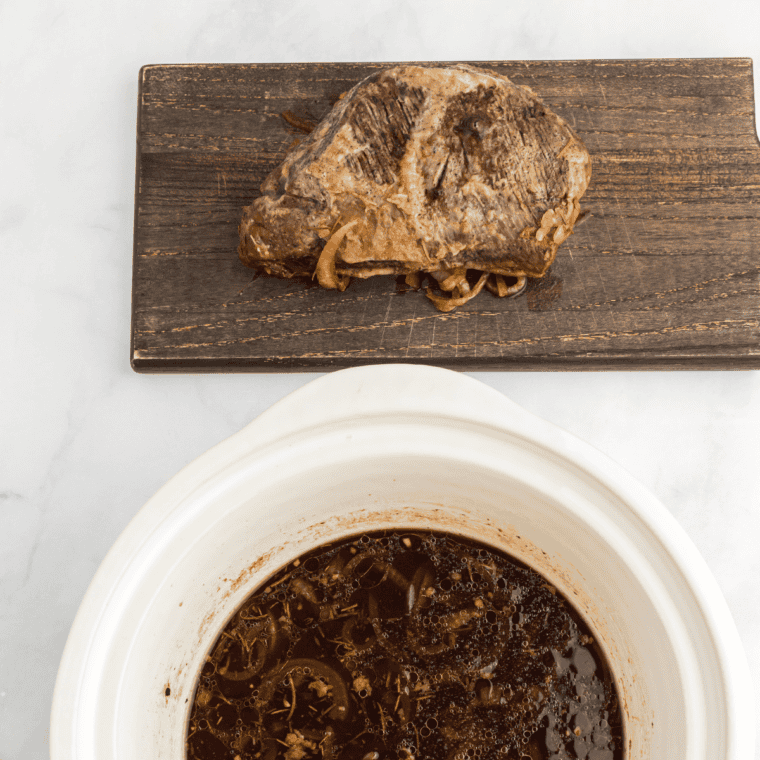
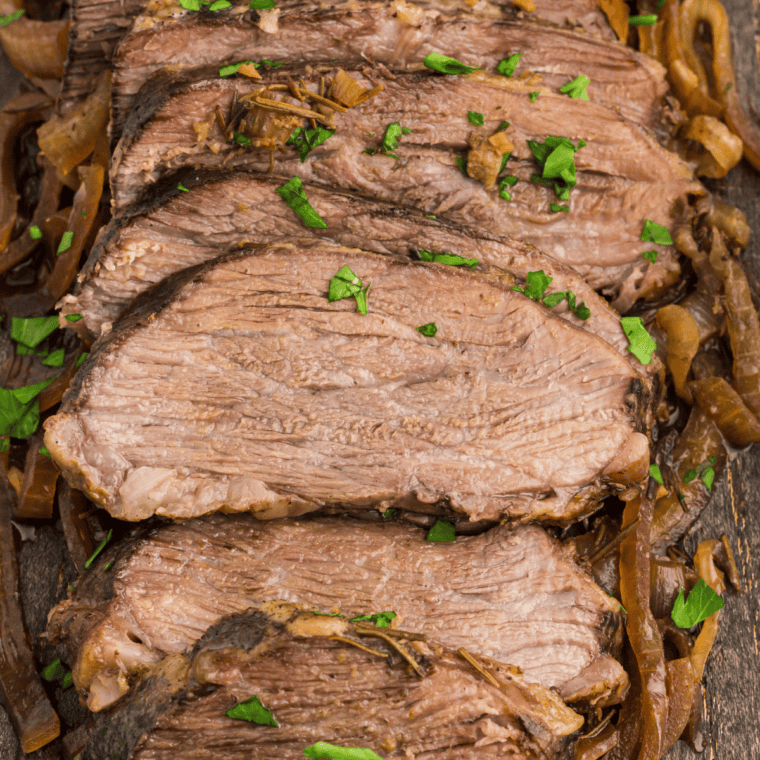
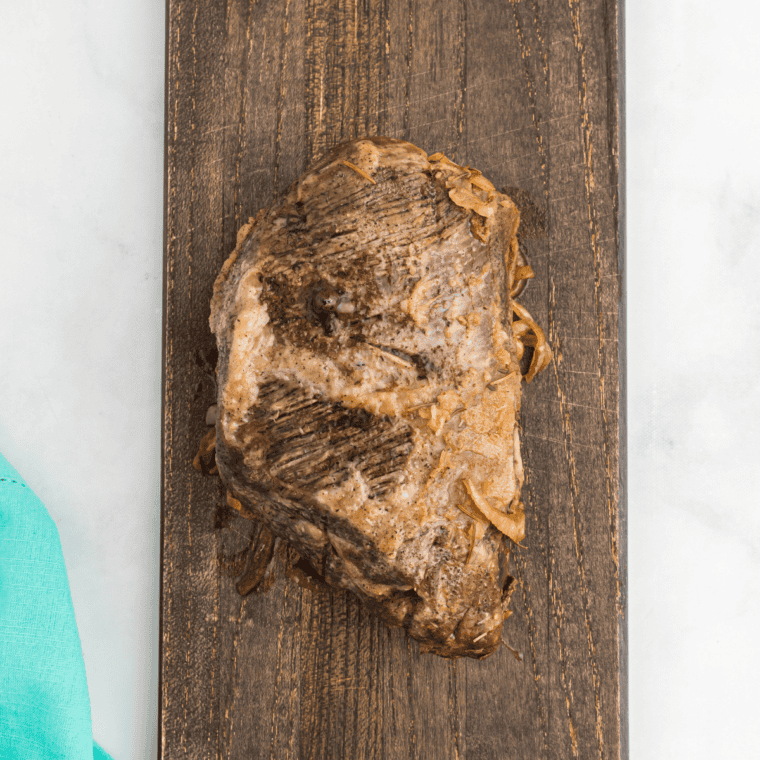
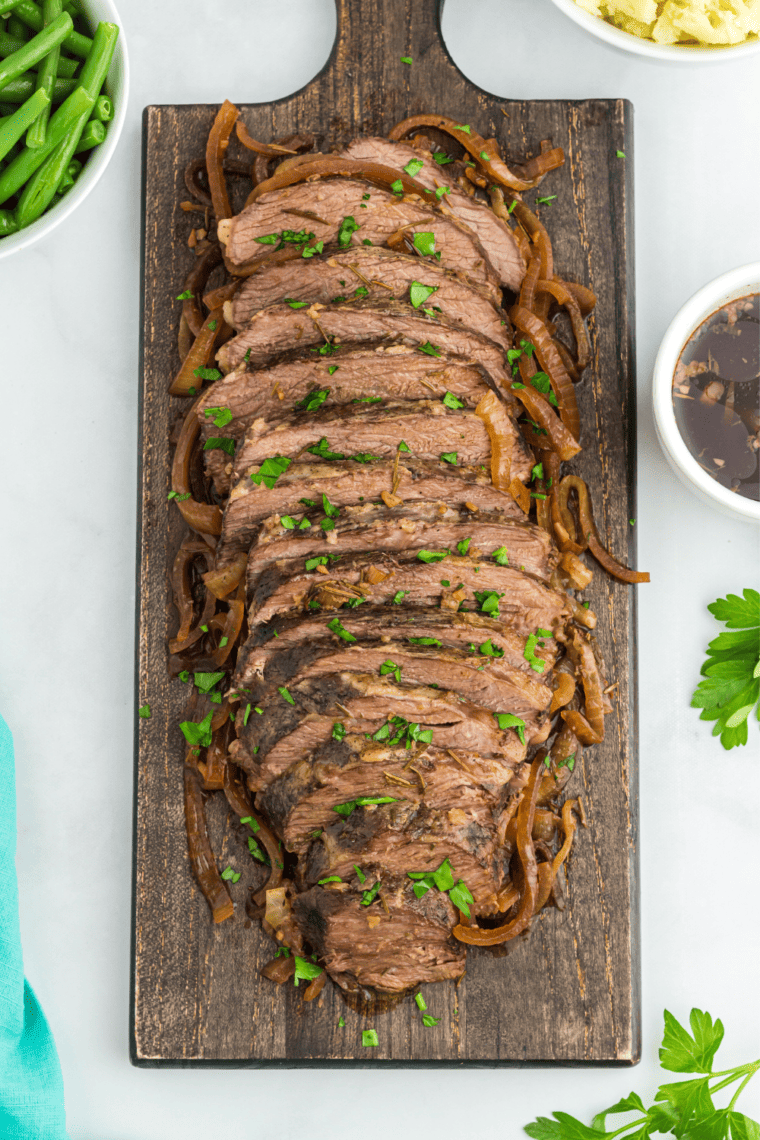
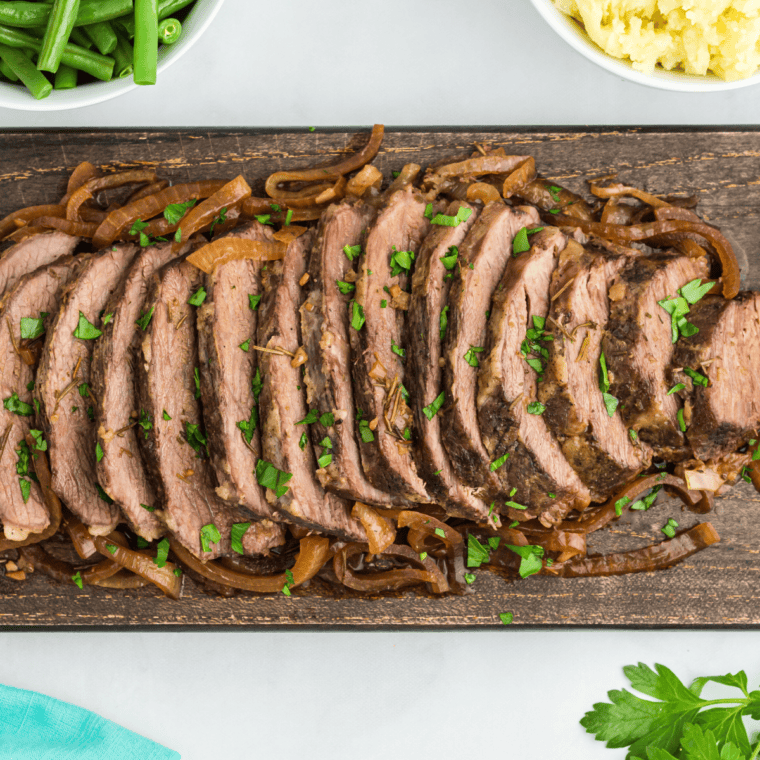
Step 5: Move the roast to a cutting board, tent loosely with foil, and rest 15 minutes. Cutting into it immediately dumps the juice onto your board instead of leaving it in the beef. Now the part that separates good tri tip from tough tri tip. Find the point where the two grain directions meet, usually near the widest part of the triangle. Cut the roast in half at that junction, then slice each half against its own grain, about ¼ inch thick. A single continuous cutting direction guarantees half the roast comes out chewy.
Step 6: Strain the cooking liquid into a saucepan, discarding the bay leaves and rosemary stems but keeping the onions — they’re excellent. Bring to a simmer. Whisk the cornstarch into the cold water until completely smooth, then stream it in while whisking. Simmer 2 to 3 minutes until it coats the back of a spoon. Taste and adjust the salt. Spoon it generously over the sliced beef.
Tips for the Best Crock Pot Tri Tip
- Resist adding more liquid. The roast releases far more than people expect. Too much and your gravy tastes like watery broth.
- Trim, don’t strip. Leave about ¼ inch of fat cap to render and baste the lean meat.
- Skip HIGH. High heat tightens lean muscle fibers before the connective tissue has any chance to soften. LOW is worth the wait.
- Add vegetables late. Potatoes and carrots go in for the last 2 to 3 hours or they turn to mush.
- Save the drippings. Even without making gravy, freeze the strained liquid in an ice cube tray. It’s outstanding in soups and pan sauces.
What to Serve With Slow Cooker Tri Tip
Mashed potatoes exist to hold gravy, and this gravy deserves them. Take your pick depending on how much stovetop space you have free: Cracker Barrel–style mashed potatoes for the classic buttery version, Instant Pot mashed potatoes when the range is already crowded, or air fryer mashed potatoes if you want to skip boiling entirely.
On the vegetable side, air fryer garlic roasted carrots cook in about the time the roast rests, and a mixed tray of air fryer roasted vegetables works if you’d rather use what’s already in the crisper drawer.
If you took the roast to shreddable, pile it onto toasted buns with pickled red onion and horseradish cream, or into tacos with cotija and cilantro, or over rice with the gravy poured on top.
Storage and Reheating
Refrigerator: Store the beef submerged in its cooking liquid in an airtight container, up to 4 days. The liquid is what keeps it from drying out.
Freezer: Freeze meat and liquid together up to 3 months. Thaw overnight in the fridge.
Reheating: Warm gently in a covered skillet with a splash of broth over low heat. The microwave works in a pinch at 50% power, covered, checked often. High heat will undo everything you did right.
Frequently Asked Questions
Can you overcook tri tip in a slow cooker? Yes. Because it’s lean, tri tip dries out faster than chuck or brisket. Stop at 145–155°F for sliceable or 200–205°F for shreddable. Hours past 205°F will eventually leave it dry and mealy.
Do I have to sear tri tip before slow cooking? Technically no, but the result is noticeably flatter. Eight minutes in a hot skillet builds flavor the slow cooker can’t create on its own. It’s the highest-return step in the recipe.
How long does tri tip take in a crock pot? About 4 to 5 hours on LOW for a sliceable roast, or 7 to 8 hours on LOW for shredding, based on a 2½ to 3 lb roast. Add roughly an hour for anything larger.
Can I cook tri tip from frozen in a slow cooker? Not recommended. Frozen meat lingers too long in the 40–140°F range where bacteria multiply, and you can’t sear it properly. Thaw in the refrigerator for 24 hours first.
Should I use LOW or HIGH? LOW, every time. HIGH overcooks the exterior of a lean cut before the center is anywhere near ready.
What’s the difference between cooking tri tip and brisket in a slow cooker? Brisket is fattier and much more forgiving — it simply wants a long cook. Tri tip is leaner, faster, and has a narrower window. Don’t apply brisket timing to a tri tip.
Can I make tri tip in a pressure cooker or multi-cooker instead? Yes. Sear first, then pressure cook on HIGH for 25 minutes with a 15-minute natural release for sliceable, or 50 minutes with a full natural release for shreddable. If you’re working with a multi-cooker, the method mirrors this Ninja Foodi Possible Cooker Pro roast beef — sear on the appliance itself, then switch to the slow cook setting.
Is the air fryer better than the slow cooker for tri tip? Different results, both good. The air fryer gives you medium-rare with a crust in under 30 minutes, which is what air fryer tri tip is built for. The slow cooker trades that pink center for fork-tenderness and a pan gravy. Pick based on which you want that night.
More Slow Cooker Recipes
If the crock pot is already out, these are worth putting on the calendar.
For beef, the slow cooker beef sirloin tip roast with gravy is the closest relative to this recipe — same searing step, same gravy method, slightly more forgiving cut. Slow cooker beef stroganoff goes the opposite direction with cubed beef and a sour cream sauce over egg noodles.
For pork, the easiest crockpot pulled pork needs no sear at all, which makes it the true dump-and-go option. Slow cooker pulled pork chili uses cocoa powder and Mexican oregano for a smokier, deeper chili than the standard ground beef version.
For soup, slow cooker chicken and wild rice soup is the creamy weeknight one, slow cooker Italian wedding soup uses chicken meatballs and a heavy hand with dill, and slow cooker matzo ball soup builds the broth and cooks the chicken in one pot.
Slow Cooker Tri Tip
Description
Ingredients
Roast
- 2½ pounds tri tip roast, fat cap trimmed to ¼ inch
- 2 tsp kosher salt
- 1½ tsp coarse black pepper
- 1½ tsp garlic powder
- 1 tsp onion powder
- 1 tsp smoked paprika
- 2 tbsp avocado oil
Braise
- 1 large yellow onion, thick-sliced
- 6 cloves garlic, smashed
- 1½ cups low-sodium beef broth
- 2 tbsp Worcestershire sauce
- 1 tbsp soy sauce
- 1 tbsp tomato paste
- 2 sprigs fresh rosemary
- 2 bay leaves
Gravy
- 2 tbsp cornstarch
- 2 tbsp cold water
Instructions
- Pat the tri tip dry with paper towels. Combine the salt, pepper, garlic powder, onion powder, and smoked paprika, then rub over all surfaces including the thin ends.
- Heat the oil in a cast iron skillet over medium-high until shimmering. Sear the roast fat-cap-down for 3–4 minutes without moving it. Flip and sear the second side 3–4 minutes, then sear each thin edge about 1 minute using tongs.
- Spread the sliced onion and smashed garlic across the bottom of the slow cooker. Set the seared roast on top.
- Return the skillet to the heat, add the beef broth, and scrape up all browned bits. Whisk in the Worcestershire, soy sauce, and tomato paste, then pour around the roast rather than over it. Add the rosemary and bay leaves.
- Cover and cook on LOW 4–5 hours for sliceable tri tip (145–155°F internal), or 7–8 hours for shreddable tri tip (200–205°F internal).
- Transfer the roast to a cutting board, tent with foil, and rest 15 minutes.
- Cut the roast in half where the two grain directions meet, then slice each half against its own grain about ¼ inch thick.
- Strain the cooking liquid into a saucepan, discarding the bay leaves and rosemary stems. Bring to a simmer. Whisk the cornstarch into the cold water until smooth, stream into the liquid while whisking, and simmer 2–3 minutes until it coats a spoon. Season to taste and serve over the beef.
Equipment
- 6-quart slow cooker
- Cast Iron Skillet
- Instant-read thermometer
- Fine mesh strainer
Notes
- Use a thermometer rather than the clock. Slow cookers vary significantly by brand and age.
- Avoid stopping between 160°F and 190°F — past juicy, not yet tender.
- For a deeper crust, season the roast and refrigerate uncovered on a rack 4–24 hours before cooking.
- Add potatoes and carrots during the last 2–3 hours only.
- Store the beef submerged in its cooking liquid up to 4 days refrigerated or 3 months frozen.
Nutrition
Share this recipe
We can’t wait to see what you’ve made! Mention @forktospoon or tag #forktospoon!