No dehydrator needed — just one ingredient and your air fryer!
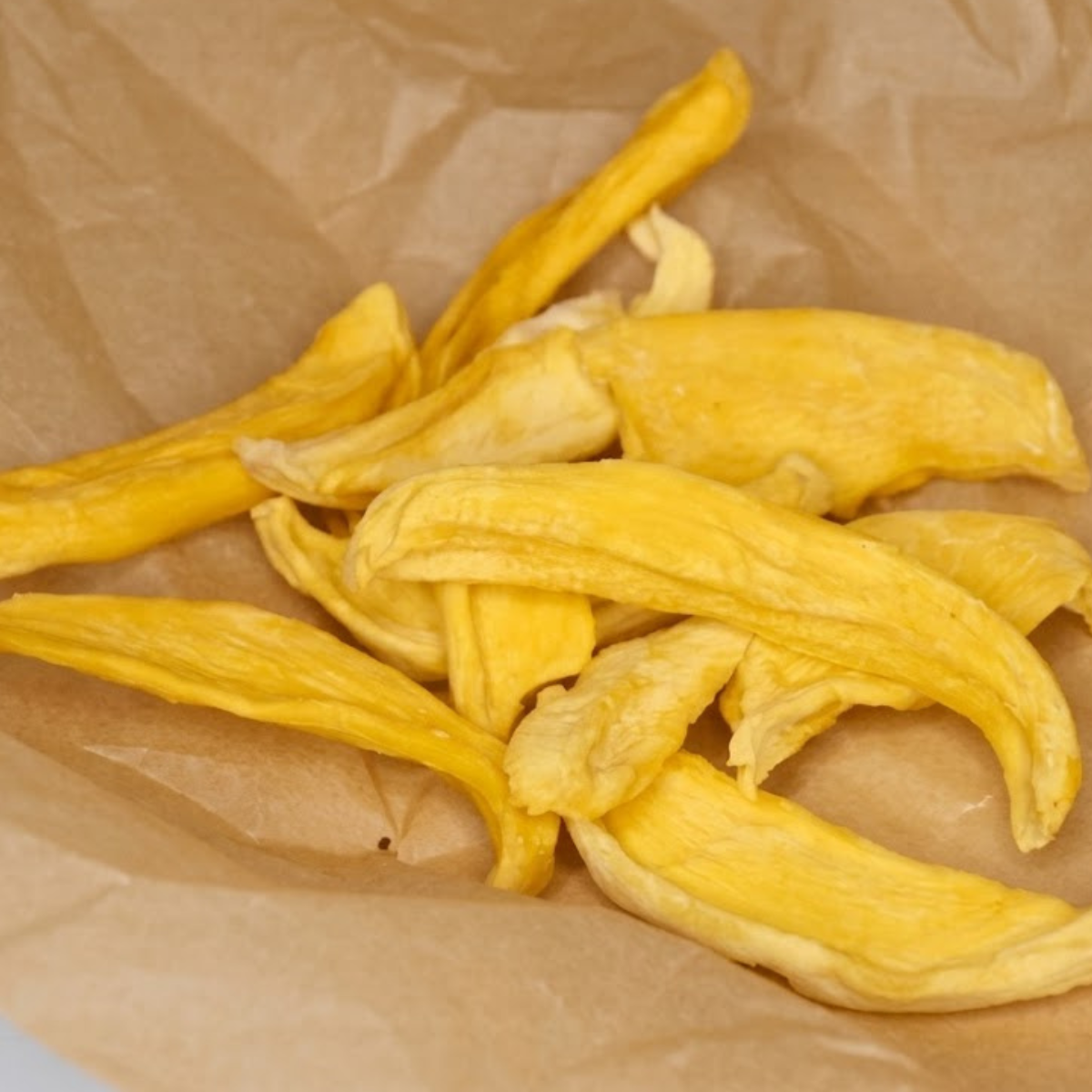
If you’ve never tried making dehydrated mangoes in the air fryer, you are seriously missing out. I made my first batch on a whim when I had two overripe mangoes sitting on my counter, and I haven’t stopped making them since. They come out perfectly chewy, intensely sweet, and absolutely addictive — and the best part is you only need one ingredient and your air fryer.
No dehydrator required. No fancy equipment. Just fresh mango, your air fryer, and about 3 hours of hands-off time. Today, I’ll show you exactly how to dehydrate mango in the air fryer — including the right temperature, slice thickness, how to tell when it’s done, flavor variations, and storage tips.
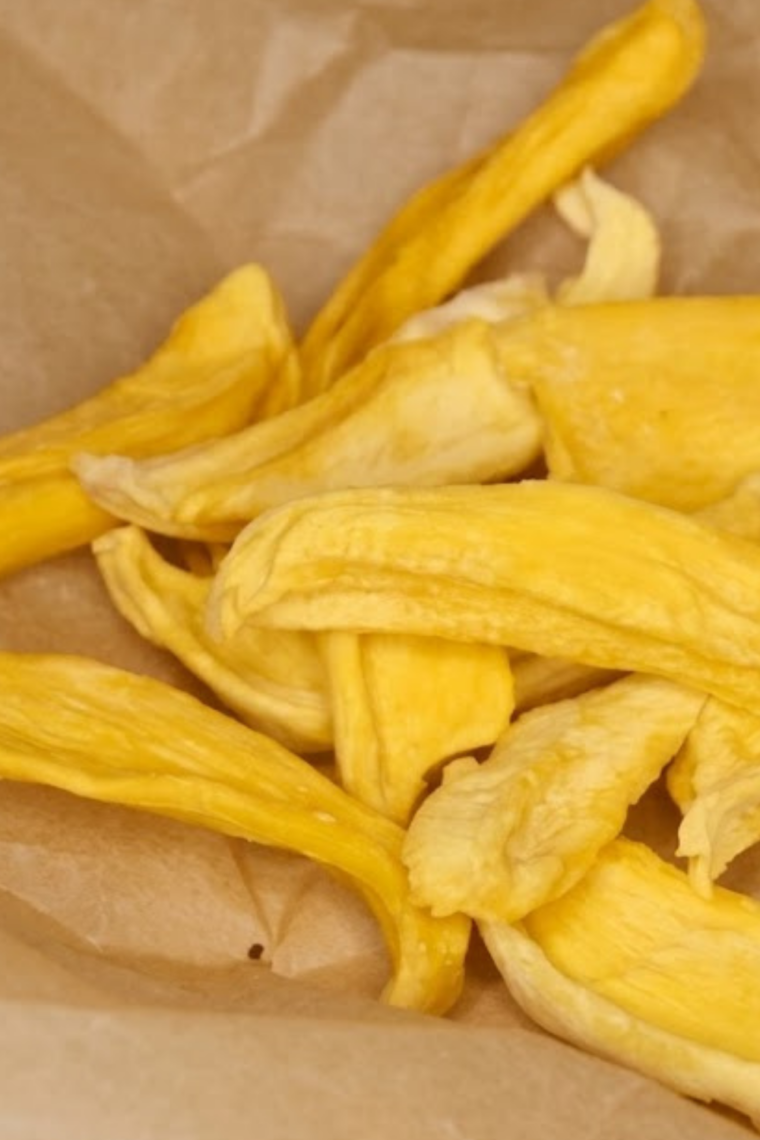
Why you’ll love this recipe
- Only 1 ingredient — just fresh mango (seasonings are optional)
- No dehydrator needed — your air fryer does all the work
- Naturally sweet with zero added sugar
- Healthy, portable snack that lasts for months
- Saves money — store-bought dried mango is expensive
- Completely customizable with fun flavor variations
- Kids love it — great lunchbox snack
What is dehydrated mango?
Dehydrated mango is simply fresh mango that has had most of its moisture removed through low-heat drying. The result is a concentrated, chewy or crispy piece of fruit that keeps its nutritional value but has a much longer shelf life than fresh mango.
When you dehydrate mango, its natural sugars become more concentrated, which is why dried mango tastes even sweeter and more intensely tropical than fresh mango. Traditionally, a food dehydrator is used — but an air fryer works beautifully because it circulates hot air in exactly the same way.
Is dehydrated mango good for you?
Yes — homemade dehydrated mango is genuinely good for you, especially when you make it yourself without any added sugar. A serving provides:
- Vitamin C — supports immune function and skin health
- Vitamin A — important for eye health and immunity
- Fiber — supports digestion and helps you feel full
- Antioxidants — help protect cells from damage
- Natural sugars — for quick, sustained energy
The key difference between homemade and store-bought is added sugar. Most commercial dried mango brands coat their fruit in extra sugar or preservatives. When you make it at home, what you put in is exactly what you get out — pure mango.
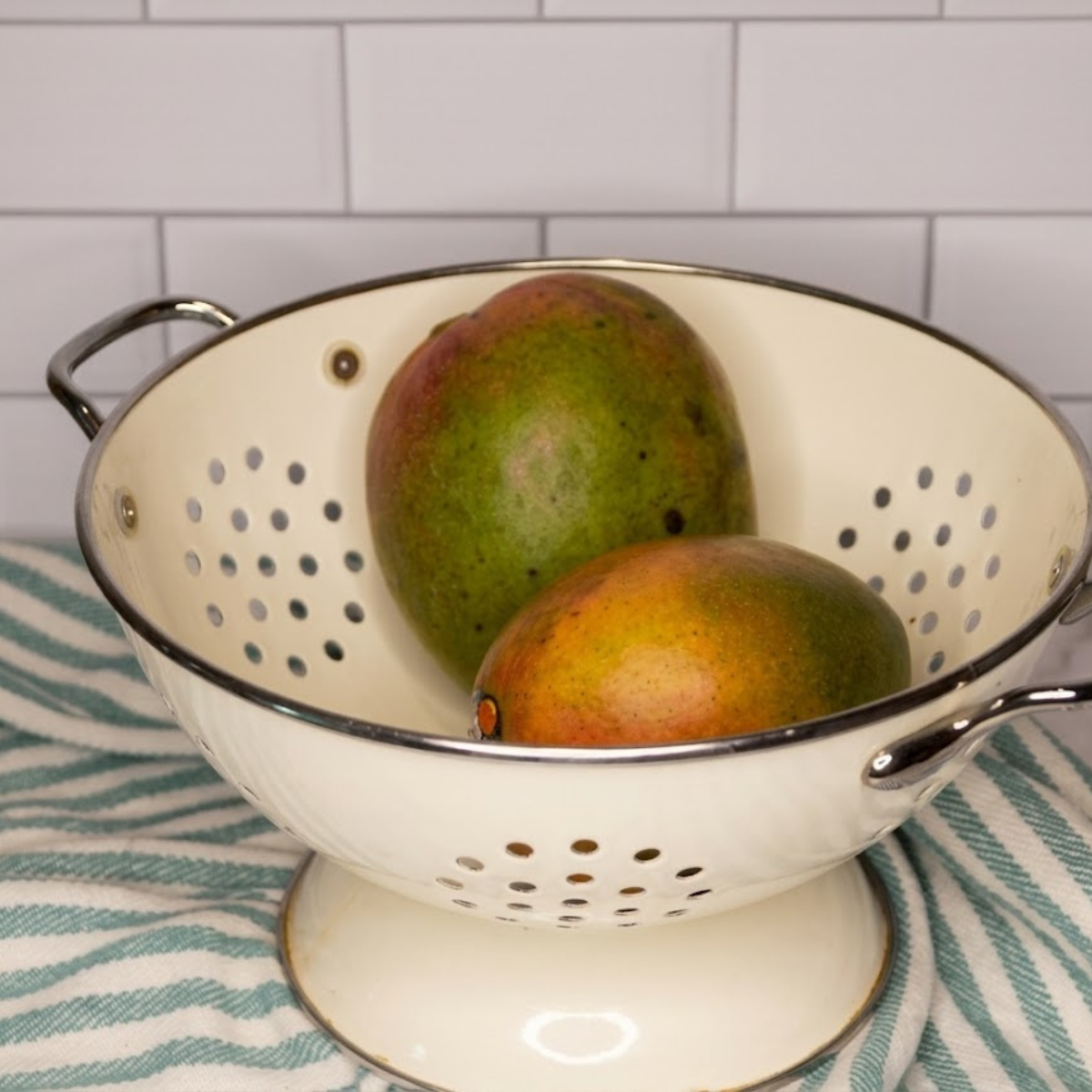
How to choose the best mangoes for dehydrating
Mango selection guide
- Best choice: Ripe but firm mangoes. They should give slightly when pressed but not feel mushy. Firm fruit holds its shape during slicing and dries more evenly.
- Best varieties: Ataulfo (Honey) mangoes are the top pick — less fibrous and sweeter. Tommy Atkins and Kent also work well.
- Avoid: Overripe or very soft mangoes — difficult to slice cleanly and can turn mushy during dehydration.
- Color: Look for deep yellow-orange. A fully yellow Ataulfo is perfect.
Ingredients
- Ripe mangoes: Sweet tropical fruit base for dehydration process
- Fresh lime juice: Optional acid prevents browning and adds brightness
- Tajin or chili-lime powder: Adds spicy tangy kick to mango
- Cinnamon and honey: Sweet warm flavor combo for dessert-style mango
- Cayenne and sea salt: Spicy savory blend with subtle heat contrast
How to peel and cut mango for dehydrating
Getting your mango sliced correctly is the single most important prep step. Uniform thickness = even drying.
- Stand the mango upright. Locate the flat pit running through the center.
- Slice down on either side of the pit, as close to it as possible.
- Peel the skin from each cheek using a sharp knife or vegetable peeler.
- Slice each cheek into ¼-inch thick pieces — this is the magic number for chewy dried mango. Thinner = crispier chips. Thicker = chewier and takes longer.
- Pat slices dry with paper towels to remove excess surface moisture.
Pro tip: use a mandoline
A mandoline slicer makes it easy to get perfectly uniform ¼-inch slices every time. Uniform slices = all pieces finish at the same time = no babysitting required.
How to dehydrate mango in the air fryer — step by step
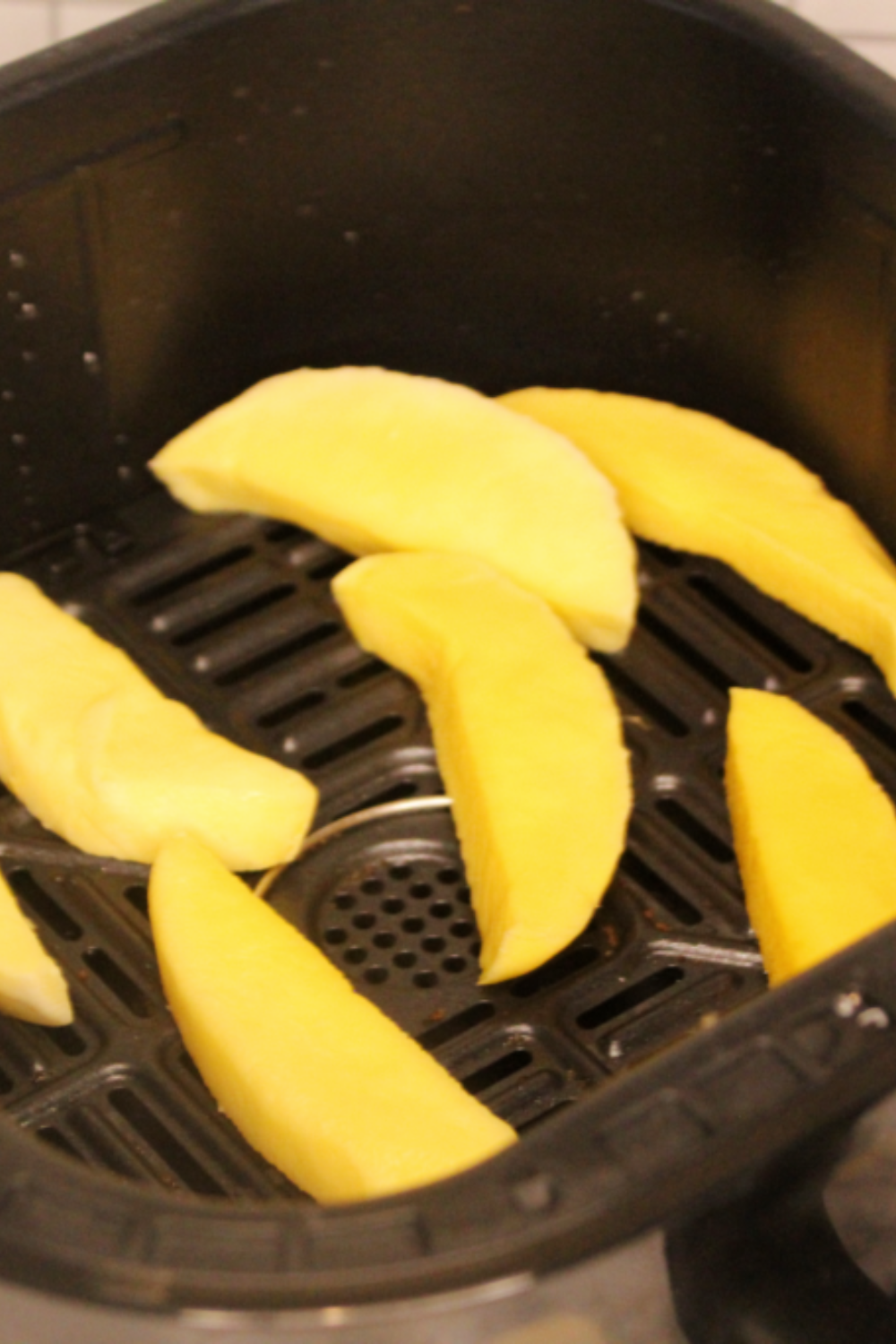
Step 1: Preheat your air fryer to 160°F (71°C). If it has a dedicated Dehydrate setting, use it. No dehydrate mode? Set to its lowest temperature.
Step 2: Peel and slice into uniform ¼-inch pieces. Pat dry with paper towels. Add lime juice or seasonings now if using.
Step 3: Place slices in a single layer. Do not overlap — overlapping slices will steam instead of dry. Work in batches if needed.
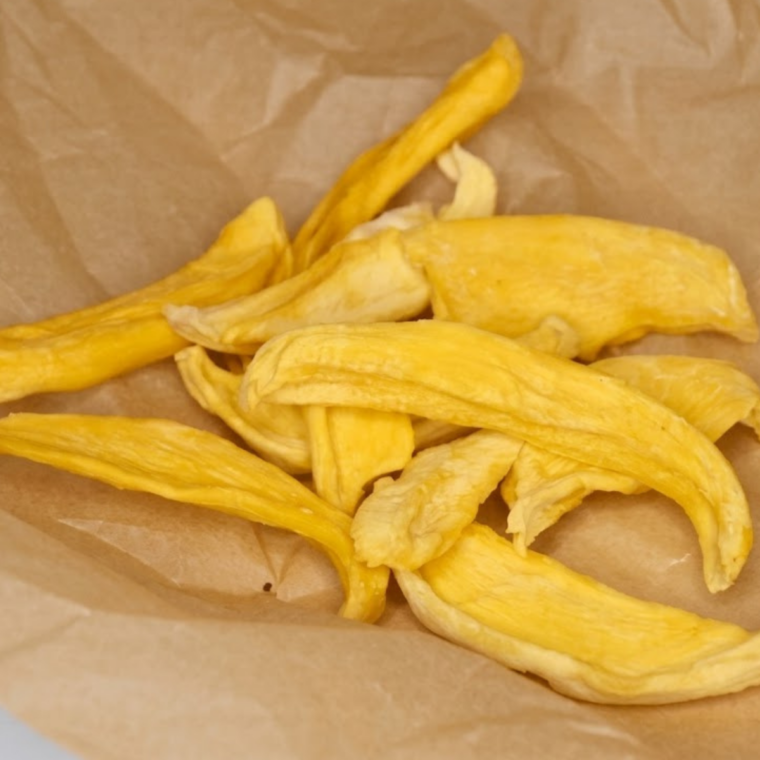
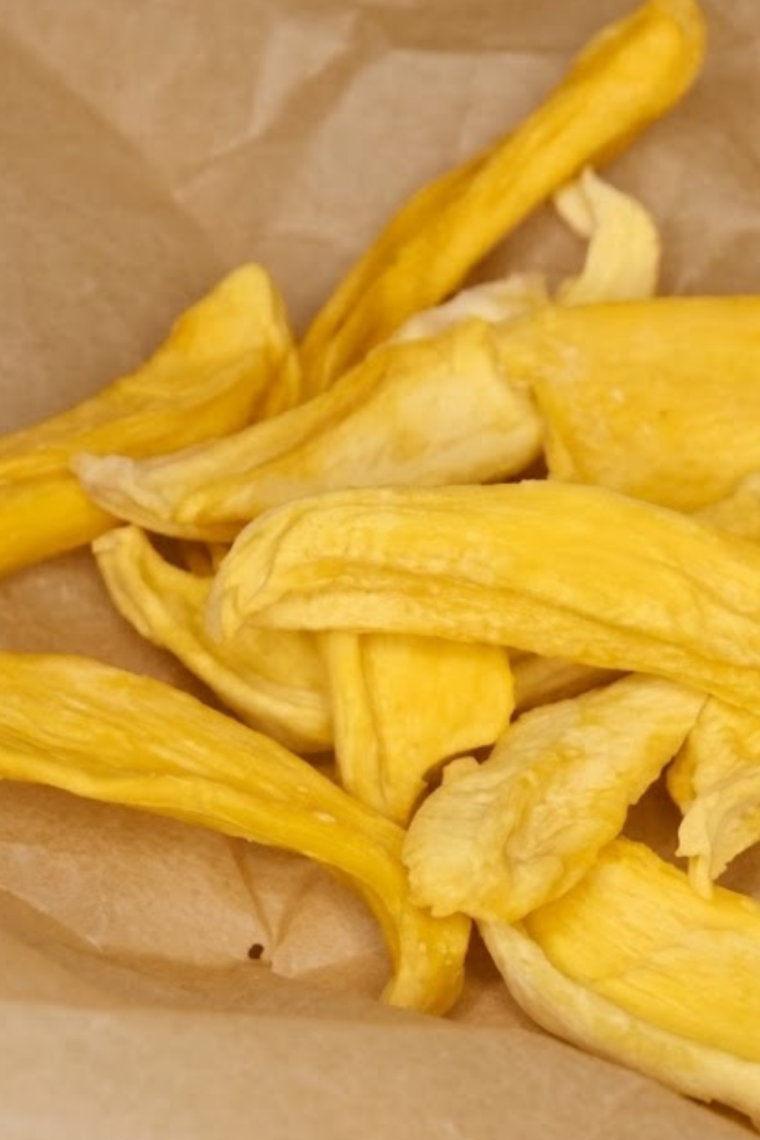
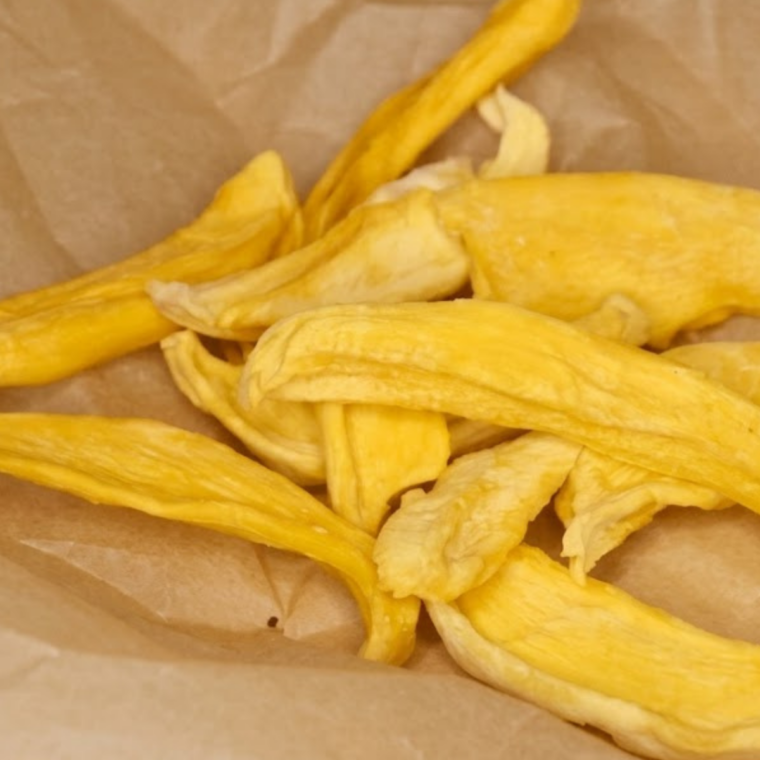
Step 4: Cook at 160°F for 2.5–3 hours total. Flip the slices every 45–60 minutes for even drying on both sides. Mango is done when it feels completely leathery and dry. It should bend without moisture releasing. If still soft or tacky, add 30 more minutes and check again.
Step 5: Spread slices on a rack or plate and let cool for 15–20 minutes before storing. Storing warm mango traps steam and shortens shelf life. Transfer to an airtight container in a cool, dark place for up to 6 months.
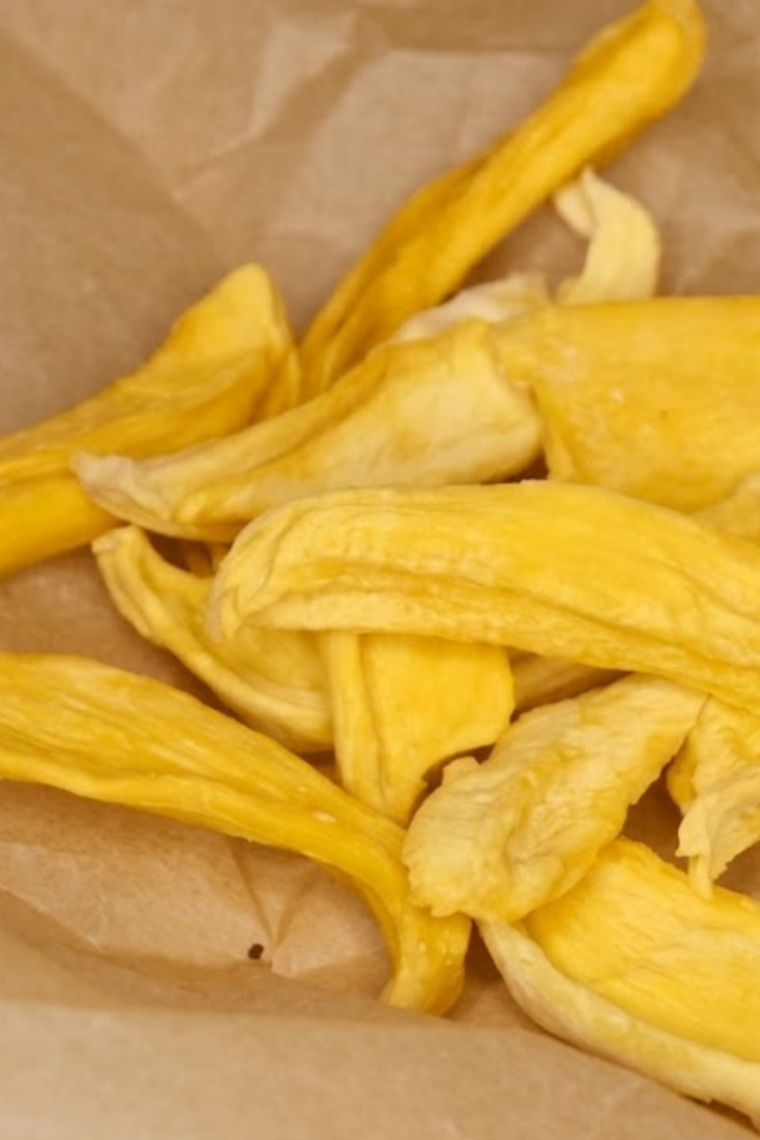
How to tell when dehydrated mango is done
The doneness test
- The bend test: Pick up a slice and bend it. It should be flexible and leathery, like a fruit leather.
- The touch test: Touch the surface — should feel dry and slightly tacky, not wet or moist. If your finger feels damp, it needs more time.
- The snap test (crispy chips): If you’re going for mango chips, it should snap cleanly when bent.
When in doubt, always add more time. Under-dehydrated mango won’t store well and can develop mold. Over-dehydrated mango is still delicious — just crunchier.
How long does it take? — timing guide
| Slice thickness | Approx. time | Resulting texture |
|---|---|---|
| ⅛ inch (very thin) | 1.5 – 2 hours | Crispy mango chips |
| ¼ inch (recommended) | 2.5 – 3 hours | Chewy, leathery — classic dried mango |
| ½ inch (thick) | 3.5 – 4.5 hours | Very chewy, dense |
Oven-style air fryers may take slightly longer due to the larger interior. Always judge by texture, not just the clock.
What temperature to use
- 135°F (57°C): Slowest, produces the chewiest result closest to store-bought dried mango.
- 160°F (71°C): The sweet spot — great balance of speed and texture. Recommended for most air fryers.
- 165°F (74°C): Faster, slightly firmer and drier texture.
Never go above 175°F — the mango will cook and caramelize rather than dehydrate.
Flavor variations
- ajin chili-lime: Sprinkle generously with Tajin or chili-lime blend before dehydrating. The heat plays beautifully against sweet mango — like a street-food classic.
- Honey glazed: Mix 1 tsp honey with 1 tsp warm water, brush lightly over slices. Results in a slightly caramelized, sticky chip. Slightly shorter shelf life due to honey.
- Cinnamon sugar: Combine ½ tsp cinnamon with 1 tsp sugar and sprinkle over slices. Perfect for kids and great in oatmeal or yogurt parfaits.
- Smoky cayenne: Pinch of cayenne + pinch of sea salt before dehydrating. Incredible on charcuterie boards and in trail mix for a surprise heat element.
How to store dehydrated mango
- Room temperature: Airtight container in a cool, dark pantry — lasts 3–6 months.
- Refrigerator: Up to 6–8 months. Best for warm or humid climates.
- Vacuum sealed: Up to 12 months at room temperature — great for large batches.
- Freezer: Up to 2 years in a freezer-safe bag. Thaw at room temperature.
- Critical tip: Always let mango cool completely before storing. Warm fruit releases steam inside the container, which creates moisture and dramatically shortens shelf life.
Ways to use dehydrated mango
- Straight from the bag as a snack — honestly the best use
- Trail mix — combine with almonds, cashews, coconut flakes, dark chocolate
- Yogurt topping — chop and stir into Greek yogurt with granola
- Oatmeal — adds natural sweetness without any sugar
- Charcuterie boards — pairs beautifully with brie, prosciutto, and walnuts
- Smoothies and smoothie bowls — blend or use as a topping
- Baking — chop into muffins, granola bars, or cookies
- Gifting — package in kraft bags for a beautiful homemade food gift
Troubleshooting
| Problem | Solution |
|---|---|
| Mango still soft after 3 hours | Slices too thick. Continue in 30-minute increments until leathery. Reduce slice thickness next time. |
| Slices dried unevenly | Flip more frequently (every 30 min). Ensure uniform thickness. Rotate basket halfway through. |
| Mango turned brown | Normal oxidation — still perfectly safe to eat. Add lime juice before dehydrating next time to keep the golden color. |
| Slices stuck to the basket | Lightly mist basket with cooking spray next time, or line with parchment with holes poked in it. |
| Air fryer won’t go below 200°F | Use your oven at its lowest setting (usually 170°F) with the door slightly cracked to allow moisture to escape. |
| Mango tastes bland | Use riper, more flavorful mangoes. Dehydration concentrates what’s already there — start with great fruit. |
Frequently asked questions
Can I dehydrate mango in an air fryer without a dehydrator setting? Yes, absolutely. Any air fryer works as long as it can be set to a low temperature (135–165°F). Simply use the lowest temperature setting available. The dedicated Dehydrate mode is convenient but not required.
How do I know when my dehydrated mango is done? It’s done when it feels completely dry and leathery — it should bend without releasing any moisture. If still soft, tacky, or moist, add 30 more minutes. When in doubt, a little extra time is always better than under-dehydrating.
How long does homemade dehydrated mango last? Stored in an airtight container in a cool, dark place: 3–6 months at room temperature, up to 8 months in the fridge, up to 12 months vacuum-sealed, and up to 2 years in the freezer.
Does homemade dehydrated mango have added sugar? No — when you make it yourself there is zero added sugar. The sweetness comes entirely from the fruit. Dehydration concentrates the natural sugars, which is why it tastes so intensely sweet.
Can I use frozen mango? Yes, but thaw it completely first and pat it very dry — frozen mango releases a lot of liquid when thawed, significantly extending dehydration time. Fresh ripe mango always produces the best flavor and texture.
Can I do a large batch? Batch size depends on your air fryer. Basket-style does one layer at a time. Oven-style air fryers with multiple racks can dehydrate larger batches simultaneously. Never overlap slices — they’ll steam instead of dry.
More Air Fryer Fruit Recipes
- Air Fryer Cinnamon Apple Rings
- Air Fryer Baked Apples
- Air Fryer Mandarin Orange Slices
- Air Fryer Caramelized Bananas
Don’t Forget To Pin!
Dehydrated Mango In Air Fryer
Description
Ingredients
Ingredients
- 2 large mangoes, ripe
- 1 tbsp lime juice, optional
Optional Seasonings
- 1 tsp Tajin — chili-lime
- ½ tsp cinnamon + 1 tsp honey
- ¼ tsp cayenne + pinch salt
Instructions
- Preheat air fryer to 160°F or use Dehydrate setting.
- Peel & slice mangoes into uniform ¼-inch thick pieces.
- Pat dry with paper towels. Add lime juice or seasonings if using.
- Arrange in a single layer in basket. No overlapping. Batch if needed.
- Dehydrate at 160°F for 2.5–3 hours, flipping every 45–60 min.
- Check doneness — leathery and dry, bends without releasing moisture. If soft or tacky, add 30 more minutes.
- Cool completely (15–20 min) before storing in an airtight container.
Equipment
- Parchment Paper
- Cooking Spray
Nutrition
Share this recipe
We can’t wait to see what you’ve made! Mention @forktospoon or tag #forktospoon!