
Steak is the hardest thing to cook in a Ninja Crispi, and almost nobody tells you why.
The Crispi heats from the top down. The PowerPod sits directly above your food and blasts superheated air straight at whatever surface is facing up. That’s fantastic for wings and fries. For a steak it means the top browns hard while the underside sits there doing very little — unless you know when to flip and what mode to use. Add a fatty ribeye dripping onto hot glass inside a sealed pod and you get the other thing nobody warns you about: smoke, and a lot of it.
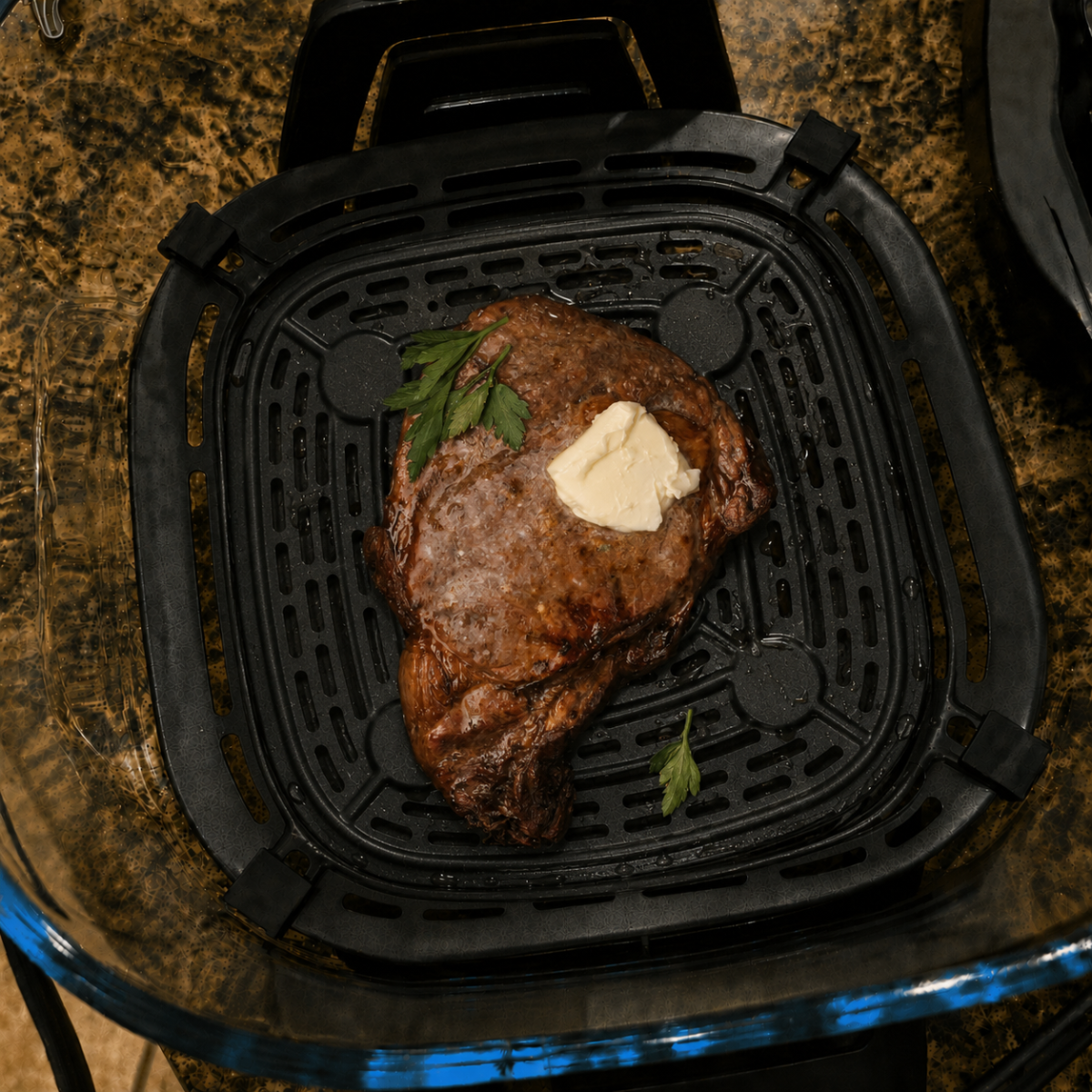
This guide fixes both. You’ll get a proper crust, an edge-to-edge pink center, and a kitchen that doesn’t smell like a grease fire. There’s a full time chart by thickness, pull temperatures that account for carryover, a cut-by-cut breakdown, and an optional two-level version that cooks potatoes and green beans under the steak while it cooks.
Which Crispi do you have? This changes everything
Most Ninja Crispi recipes online quote a specific temperature — “air fry at 400°F.” If you own the standard Crispi, you’ll go looking for that setting and it isn’t there. The base models have no temperature dial. You choose a cooking mode, and each mode runs its own preset range.
Here’s what your model actually gives you:
| Model | Functions | Temperature control |
|---|---|---|
| FN090 (3-in-1) | Max Crisp, Air Fry, Recrisp | Preset ranges only |
| FN100 / FN101 (4-in-1) | Max Crisp, Air Fry, Bake, Recrisp | Preset ranges only |
| FN103 (5-in-1) | Adds Keep Warm; includes a 2.5-qt container | Preset ranges only |
| Crispi Pro (AS101, 6-in-1) | Adds Roast and Dehydrate; 1800W, 6-qt | Fully adjustable |
And the preset ranges on the standard Crispi:
| Mode | Temperature range | Use it for |
|---|---|---|
| Max Crisp | 425–450°F | Steak, frozen foods, anything needing a hard exterior |
| Air Fry | 400–425°F | Fresh vegetables, chicken, general cooking |
| Bake | 375–400°F | Baked goods (not on the FN090) |
| Recrisp | 380–400°F | Reviving leftovers |
For steak, use Max Crisp. You want the hottest, fastest air you can get, because the only way an air fryer builds a crust is by driving moisture off the surface before the interior overcooks. Air Fry at 400°F will cook your steak through before it browns properly — that’s how you end up with grey, roast-beefy meat.
On the Crispi Pro, Max Crisp is fixed at 450°F and Air Fry can be dialed anywhere from 300–450°F. Set Air Fry to 450°F and you’ve got the same thing with more control, plus 1800W behind it, so shave 1–2 minutes off the times below.
One more thing worth knowing: the PowerPod senses which TempWare container you’ve attached and adjusts accordingly, so a steak in the 6-cup behaves slightly differently from the same steak in the 4-qt. The times below assume the 4-qt with the adapter, which is what most people use for a full-size steak.
Best cuts for the Ninja Crispi
The Crispi has a small, enclosed cooking chamber and top-down heat. That rewards some cuts and punishes others.
| Cut | Verdict | Notes |
|---|---|---|
| Ribeye | Best flavor, most smoke | Heavy marbling means heavy dripping. Trim the fat cap to ¼ inch and read the smoke section below. |
| New York strip | Best all-around choice | Even thickness, moderate fat, fits the container geometry perfectly. Start here if you’re new to this. |
| Filet mignon | Easiest, cleanest | Almost no fat cap, so almost no smoke. It’s tall and narrow, so add 2–3 minutes. |
| Top sirloin | Best value | Lean — do not take it past medium-rare or it turns to leather. |
| Flat iron | Underrated | Tender, cheap, cooks fast. Slice thin against the grain. |
| Skirt / flank | Skip it | Too thin. The Crispi overcooks them before any crust forms. Use a skillet. |
| Bone-in anything | 4-qt only | Won’t clear the 6-cup. Add 3–4 minutes; bone insulates the meat next to it. |
Thickness matters more than the cut. Aim for 1 to 1½ inches. Under ¾ inch, the steak is fully cooked before it browns and there’s nothing you can do about it. If your grocery store only sells thin steaks, buy one thick one and split it between two people rather than two thin ones.
Ingredients
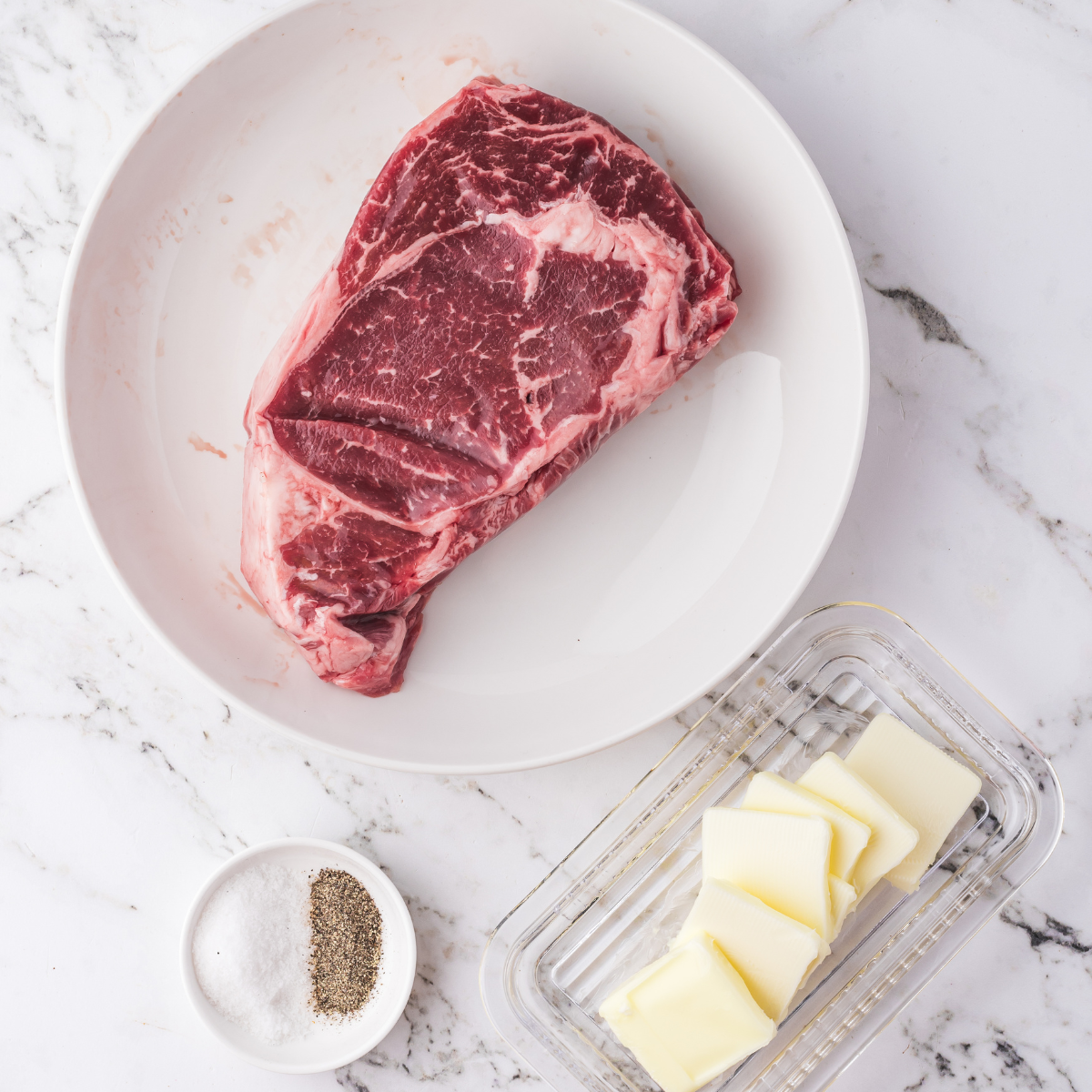
- 1–2 steaks, 1 to 1½ inches thick (12–16 oz each) — ribeye, NY strip, or top sirloin
- Kosher salt — about ¾ teaspoon per pound, for dry brining
- Freshly cracked black pepper
- 1–2 teaspoons high-smoke-point oil — avocado or refined olive. Not butter, not extra virgin olive oil; both scorch and smoke at 450°F.
- Garlic granules and onion granules (optional) — granules, not fresh garlic, which burns at these temperatures
For the compound butter (optional but do it):
- 3 tablespoons unsalted butter, softened
- 1 garlic clove, minced fine
- 1 tablespoon fresh parsley or chives, minced
- 1 teaspoon Worcestershire sauce
- Pinch of flaky salt
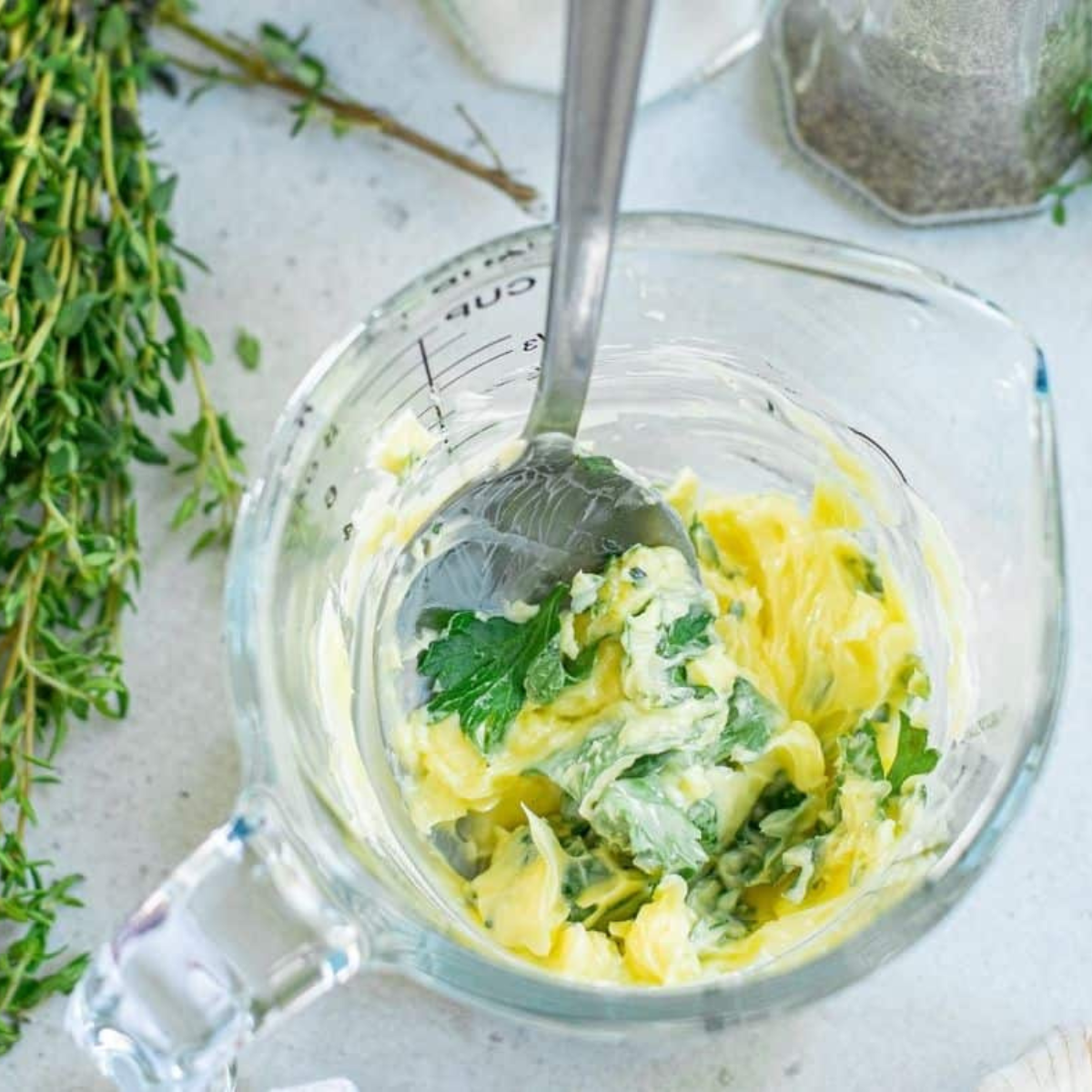
Mash everything together with a fork. It keeps in the fridge for two weeks and freezes for three months, so make a double batch.
How to cook steak in the Ninja Crispi
Step 1: Dry brine (45 minutes to 24 hours ahead)
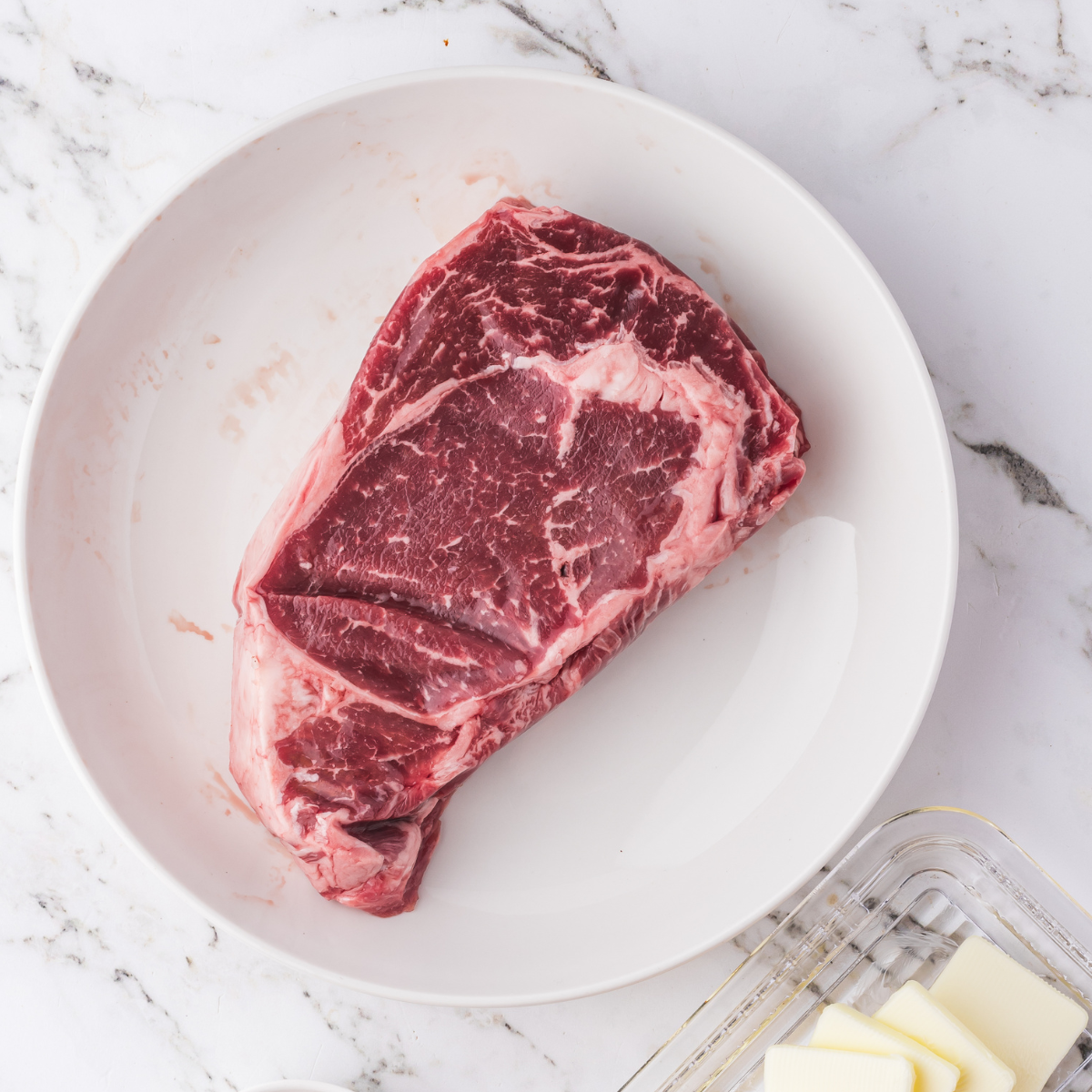
Salt both sides generously and set the steak on a rack, uncovered, in the fridge. Even 45 minutes helps; overnight is better.
This is the single highest-leverage step, and it does two things. The salt draws moisture out, dissolves, and gets reabsorbed as seasoned brine — so the steak is salted through, not just on top. And the uncovered fridge time dries the surface. A dry surface is the whole ballgame in an air fryer. Wet meat spends its first several minutes steaming instead of browning, which is exactly the time you don’t have.
If you’re short on time: salt it, leave it on the counter 45 minutes, then pat it aggressively dry with paper towels right before it goes in.
Step 2: Bring it to room temperature
Thirty minutes on the counter. A refrigerator-cold center means the outside has to overcook to get the inside anywhere near done — that’s the grey band you see in bad steak photos.
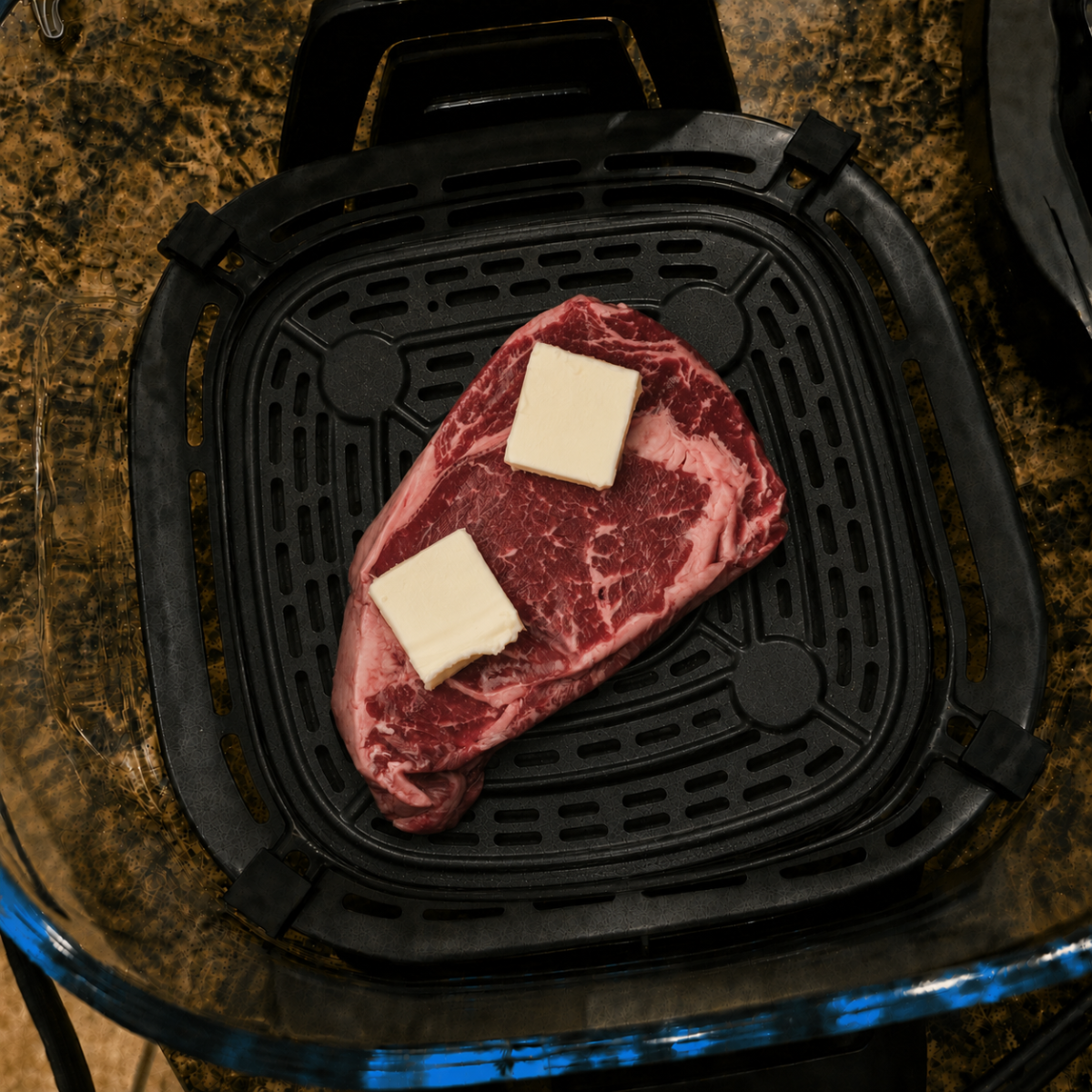
Step 3: Oil and season
Pat the surface completely dry one more time. Rub on a thin film of avocado oil — thin, not a drizzle. Excess oil pools on the hot glass and smokes. Add pepper and any granulated seasonings now. Hold off on additional salt if you dry brined.
Step 4: Set up the container
Insert the crisper plate into the glass container. This is non-negotiable — it lifts the steak so air circulates underneath, and it keeps the meat out of its own rendering fat.
One steak fits the 6-cup. Two fit the 4-qt with the adapter, laid flat with a visible gap between them. They cannot touch or overlap. Where two steaks meet, no air moves, and you get a pale steamed stripe.
Step 5: Preheat (2–3 minutes, optional but worth it)
The Crispi doesn’t require preheating. But running Max Crisp empty for 2–3 minutes before the steak goes in gets you a noticeably better initial sizzle and shaves a bit off the total cook. Skip it if you’re in a hurry; add 1–2 minutes to the times below if you do.
Step 6: Max Crisp, flip at the halfway mark
Set Max Crisp and run it per the chart below. Flip once at the midpoint. In a basket air fryer flipping is optional. In the Crispi it isn’t — heat comes from directly above, so the up-facing side browns dramatically faster. Flipping is how you get crust on both sides instead of one.
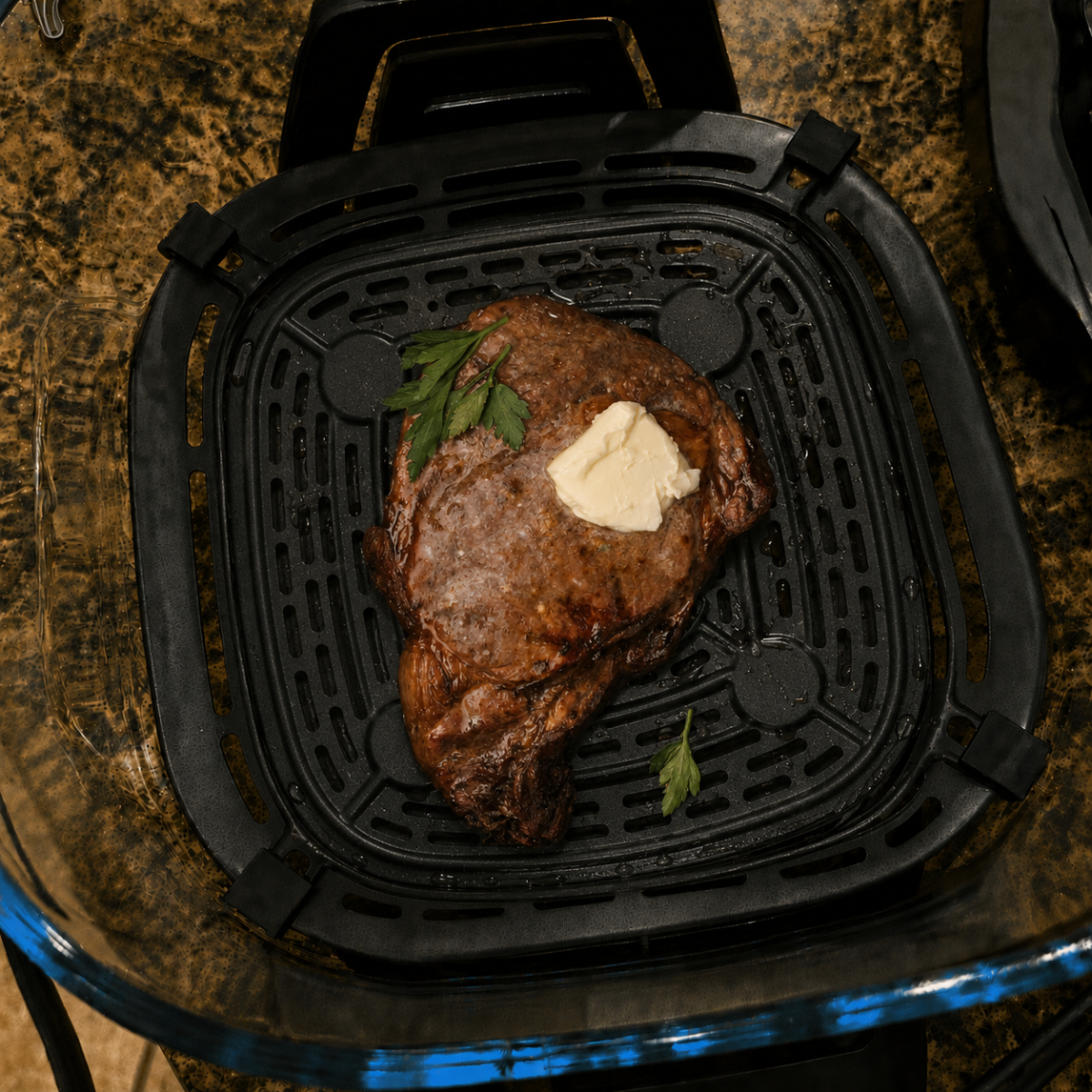
Step 7: Check with a thermometer, early
Start checking 2 minutes before the low end of the range. Steak thickness, starting temperature, and fat content vary enough that time alone will fail you eventually. Probe the thickest part, angling in from the side.
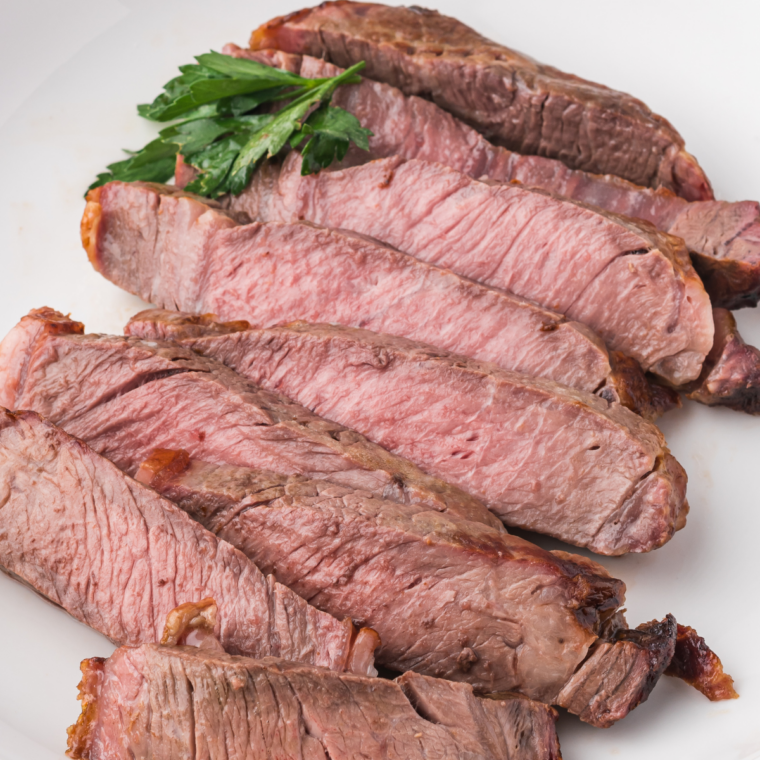
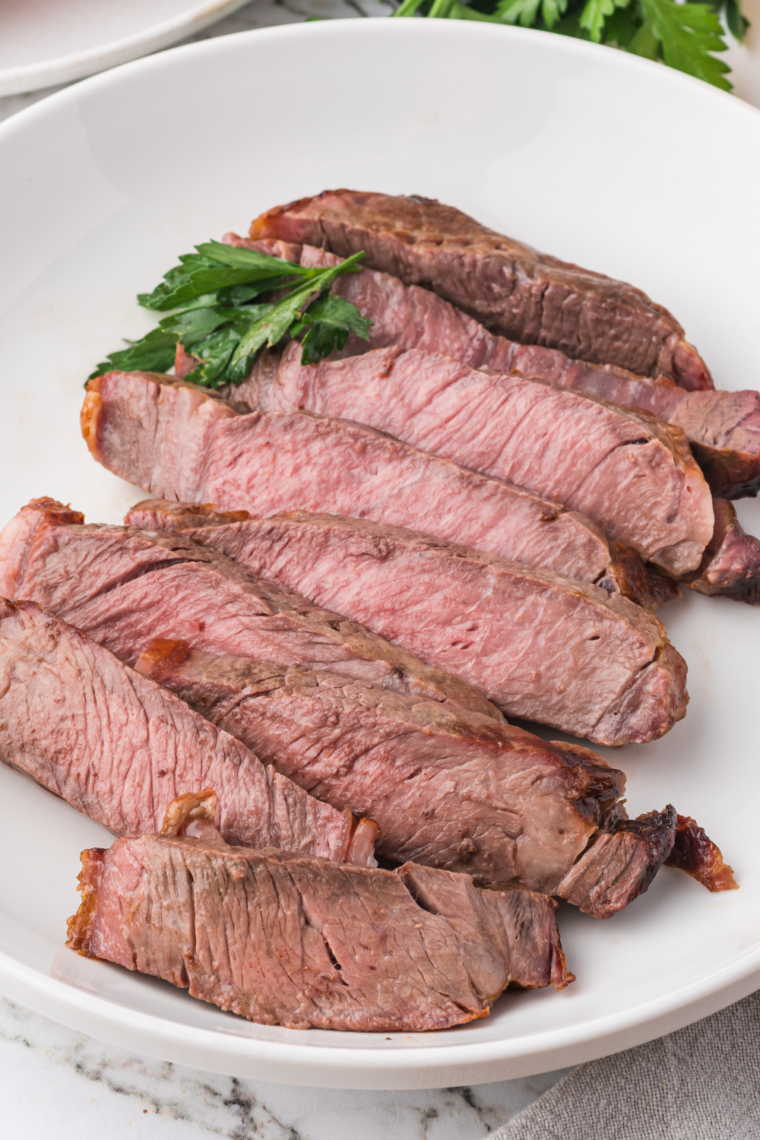
Step 8: Butter, then rest
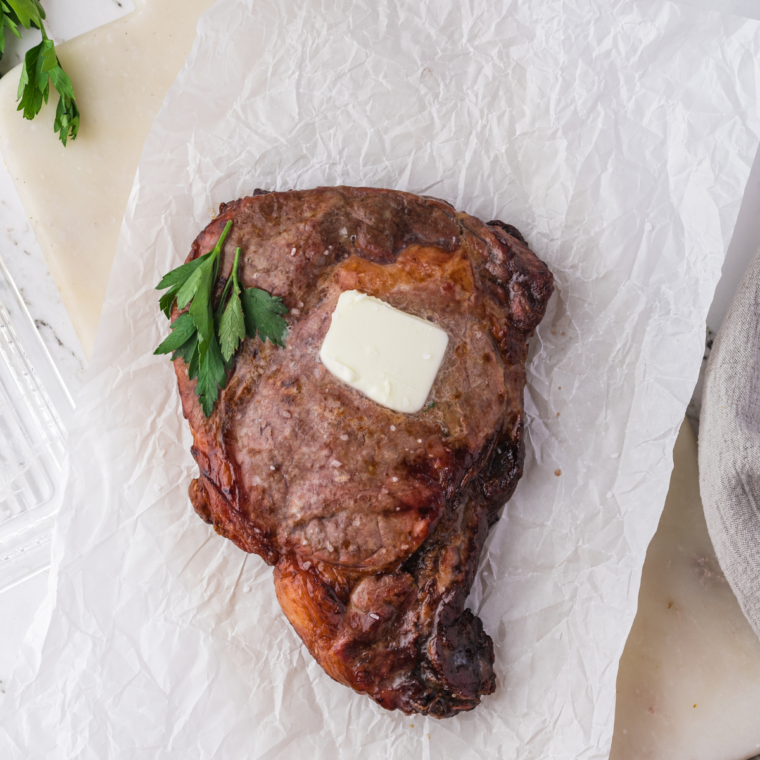
Drop a spoonful of compound butter on top and set the PowerPod back on for 45 seconds to melt it. Then move the steak to a warm plate or board and rest it 5–8 minutes.
Resting is not optional and it is not a suggestion. Cutting immediately dumps the juices onto your cutting board. Five minutes puts them back in the meat.
Step 9: Slice against the grain
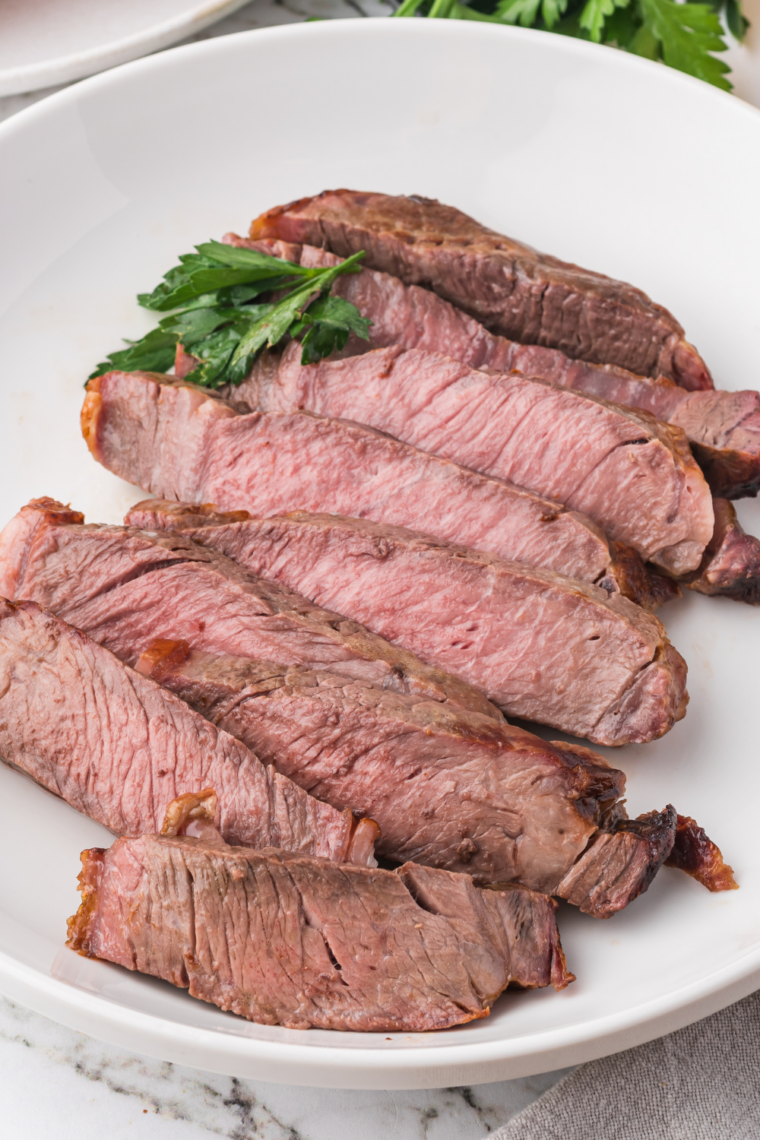
Find the direction the muscle fibers run and cut perpendicular to them. This does more for perceived tenderness than anything you did to the steak while cooking it.
Ninja Crispi steak time chart
Max Crisp (425–450°F), steak at room temperature, flipped at the halfway point, on the crisper plate.
| Thickness | Medium-rare | Medium | Medium-well |
|---|---|---|---|
| ¾ inch | 6–8 min | 8–10 min | 10–12 min |
| 1 inch | 9–11 min | 11–13 min | 13–15 min |
| 1¼ inch | 12–14 min | 14–16 min | 16–18 min |
| 1½ inch | 15–17 min | 17–19 min | 19–21 min |
Adjustments:
- Two steaks at once: add 1–2 minutes
- Straight from the fridge: add 2–3 minutes
- Bone-in: add 3–4 minutes
- Filet mignon: add 2–3 minutes (tall and narrow)
- Crispi Pro (1800W): subtract 1–2 minutes
- Frozen steak: see below
Cooking from frozen: the TempWare glass is rated for thermal swings from 22°F to 450°F, so a frozen steak can go straight in. Run Max Crisp 6 minutes to thaw the exterior, pull it out, pat dry, oil and season, then follow the chart and add roughly 5–7 minutes total. It won’t match a properly thawed steak — the center runs cool while the outside gets ahead — but it works on a weeknight.
Pull temperatures and carryover
This is where most air fryer steaks die. A steak keeps cooking after it comes out — carryover typically pushes it another 5–8°F while resting. If you pull at your target, you’ll eat one doneness level past it.
| Doneness | Pull at | Final after rest |
|---|---|---|
| Rare | 118–120°F | 125°F |
| Medium-rare | 125–128°F | 130–135°F |
| Medium | 132–135°F | 140–145°F |
| Medium-well | 140–145°F | 150–155°F |
| Well done | 150°F | 160°F+ |
For food safety, the USDA recommends whole cuts of beef reach 145°F followed by a 3-minute rest. Cooking to medium-rare is a widely accepted practice and a personal call; the numbers above are for people who want to make it deliberately.
An instant-read digital thermometer costs about fifteen dollars and is the difference between guessing and knowing. If you cook steak more than three times a year, buy one.
How to stop your Ninja Crispi from smoking
This is the complaint nobody addresses, and with a ribeye at 450°F in an enclosed glass container it’s practically guaranteed. Fat renders, drips onto glass sitting well above its smoke point, and burns.
Five things that fix it, in order of effectiveness:
- Put 2 tablespoons of water in the bottom of the container, under the crisper plate. Drippings land in water instead of on scorching glass. Costs you nothing and solves 80% of the problem. The trade-off: you can’t crisp vegetables down there at the same time.
- Trim the fat cap to about ¼ inch. Less fat to render. Save the trimmings — see the tip below.
- Use less oil. A thin rubbed film, not a pour. Excess oil is often the actual culprit, not the meat.
- Use a high-smoke-point oil. Avocado oil runs around 500°F. Extra virgin olive oil starts breaking down near 375°F, which is below your cooking temperature before the steak even goes in.
- Line the base with vegetables if you’re doing the full-dinner version. They soak up the drippings, which is the whole point of cooking them underneath.
Worth knowing: those trimmed fat scraps, scattered on the crisper plate around the steak, render into beef tallow and crisp into little cracklings. It’s a genuinely good use for them — just accept that you’re trading some smoke for it, and skip it if your kitchen ventilation is poor.
The two-level version: a full steak dinner in one container
The Crispi’s real advantage is that you can cook the whole plate at once. The steak goes on the crisper plate, the sides go underneath, and the drippings season them on the way down.
The one rule: sides go in first. Nearly every vegetable takes longer than a steak, so they need a head start.
| Side | Head start on Air Fry | Then finish under the steak |
|---|---|---|
| Baby potatoes, halved | 12–14 min | Full steak time |
| Broccoli or cauliflower florets | 4 min | Full steak time |
| Green beans, trimmed | 3 min | Full steak time |
| Asparagus, thin spears | 0 min | Add for last 6–8 min only |
| Asparagus, thick spears | 3 min | Full steak time |
| Mushrooms, sliced | 3 min | Full steak time |
| Brussels sprouts, halved | 8 min | Full steak time |
How it runs:
- Toss your longest-cooking vegetable with oil, salt, and pepper. Spread it in the base of the 4-qt container — no crisper plate yet.
- Air Fry for the head-start time in the table.
- Add any quicker vegetables. Set the crisper plate on top of everything.
- Lay the seasoned steak on the crisper plate. Switch to Max Crisp and run the time chart, flipping halfway.
- Pull the steak at your target pull temp, butter it, rest it.
- Taste the vegetables. If they need more, put the PowerPod back on for 2–3 minutes on Air Fry while the steak rests — perfect timing, since the steak needs that rest anyway.
Note that you’re skipping the water trick here. That’s the trade: crispy drippings-basted vegetables, or a smoke-free kitchen. Pick one.
Troubleshooting
No crust, greyish exterior. The surface was wet going in, there was too much oil, or you used Air Fry instead of Max Crisp. Dry brine, pat dry, thin oil, Max Crisp.
Thick grey overcooked band under the surface. The steak went in cold, or it’s too thin for the method. Room-temp it for 30 minutes and buy thicker steaks.
Browned beautifully on one side, pale on the other. You didn’t flip, or you flipped too late. The Crispi’s heat is top-down; the midpoint flip is mandatory.
Cooked unevenly across the steak. It was hanging over the crisper plate edge, or two steaks were touching. Everything needs air on all sides.
Tough despite hitting the right temperature. You either sliced with the grain instead of against it, or you took a lean cut (sirloin, round) past medium-rare. Find the fiber direction and cut perpendicular.
Smoking heavily. See the section above — start with the water in the base.
Cloudy white film on the glass. Normal. Baked-on rendered fat. Soak in hot soapy water, or run it through the dishwasher; the TempWare glass is dishwasher safe.
Storage and reheating
Store sliced or whole steak in the same TempWare container with the snap-lock lid — one of the nicer things about this system — for up to 3 days in the fridge.
Reheat carefully. Recrisp runs 380–400°F, which is plenty hot enough to take medium-rare leftovers to well done in a hurry. Use 3–4 minutes on Recrisp, maximum, and check it. If you’re just warming slices, 2 minutes is often enough.
Better idea: eat leftover steak cold, sliced thin over a salad, or in a sandwich with horseradish. It’s excellent that way and you’re not fighting physics.
Freezing cooked steak works for up to 2 months, but the texture takes a real hit. Freeze raw steak instead.

FAQ
Can you cook steak in the Ninja Crispi? Yes, and it does it well — provided the steak is at least 1 inch thick, you use Max Crisp rather than Air Fry, and you flip at the halfway mark. Thin steaks cook through before they brown.
What setting do you use for steak in the Ninja Crispi? Max Crisp, which runs 425–450°F on standard models. Standard Crispis don’t have an adjustable temperature dial; you select the mode and it runs its preset range. On the Crispi Pro you can set Air Fry to 450°F for the same result.
How long does a 1-inch steak take in the Ninja Crispi? About 9–11 minutes on Max Crisp for medium-rare, or 11–13 minutes for medium, flipping halfway. Start checking with a thermometer 2 minutes early.
Do you flip steak in the Ninja Crispi? Yes. The PowerPod heats from above, so the up-facing side browns considerably faster. Flip once at the midpoint or you’ll get crust on one side only.
Do you need to preheat the Ninja Crispi? No, but 2–3 minutes of empty Max Crisp gives a better initial sear. If you skip it, add 1–2 minutes to the cook time.
What’s the best cut of steak for the Ninja Crispi? New York strip is the best all-around choice — even thickness, moderate fat, fits the container well. Ribeye tastes the best but smokes the most. Filet is the cleanest and easiest.
Can you cook two steaks at once? Yes, in the 4-qt container with the adapter, laid flat with space between them. They can’t touch or overlap. Add 1–2 minutes.
Can you cook a frozen steak in the Ninja Crispi? Yes — the TempWare glass handles 22°F to 450°F. Run 6 minutes on Max Crisp to thaw the surface, then dry, season, and cook, adding about 5–7 minutes total. Results are noticeably better from thawed.
Why is my Ninja Crispi smoking when I cook steak? Rendered fat is hitting hot glass and burning. Put 2 tablespoons of water in the base under the crisper plate, trim the fat cap to ¼ inch, use less oil, and switch to a high-smoke-point oil like avocado.
Can I cook the vegetables and steak together? Yes, and it’s the best reason to own this thing. Sides go in the base first for a head start, then the crisper plate goes on top with the steak. See the two-level timing table above.
Will the glass container crack? It’s thermal-shock-resistant borosilicate rated to 450°F. Don’t set a screaming-hot container on a wet or cold surface, and don’t fill it with cold water while it’s hot.
More Ninja Crispi recipes
Once you’ve got steak dialed in, these are the ones worth having in rotation:
Beef and other mains
- Ninja Crispi Steak Bites — the cubed version, faster and more forgiving when you want steak on a weeknight
- Ninja Crispi Burger — juicy patties in about 12 minutes
- Ninja Crispi Pork Tenderloin — same thermometer-first approach as this steak, pulled at 145°F
- Air Fryer Steak Bites and Potatoes — a full 20-minute dinner in one container
Sides to serve with your steak
- Ninja Crispi Asparagus — tender-crisp in about 12 minutes, and it slots right under the crisper plate
- Ninja Crispi Sweet Potato Fries — crispy outside, tender inside, an easy partner for steak night
Bigger roundups
- 50 Best Ninja Crispi Recipes — breakfast through dessert in one place
- 50 Easy Ninja Crispi Chicken Recipes
- 77 Ninja Crispi Seafood Recipes
- 91+ Easy Ninja Crispi Breakfast Recipes
Ninja Crispi Steak
Description
Ingredients
Ingredients
- 1 New York strip or ribeye steak, 1 inch thick (12–16 oz)
- ¾ tsp kosher salt
- ½ tsp freshly cracked black pepper
- 1 tsp avocado oil
- ½ tsp garlic granules, optional
- ½ tsp onion granules, optional
Compound butter:
- 3 tbsp unsalted butter, softened
- 1 garlic clove, minced
- 1 tbsp fresh parsley, minced
- 1 tsp Worcestershire sauce
Instructions
- Salt the steak on both sides and rest uncovered on a rack in the fridge for 45 minutes to 24 hours. Then bring to room temperature for 30 minutes.
- Mash the compound butter ingredients together in a small bowl. Set aside.
- Pat the steak completely dry. Rub with a thin film of avocado oil and season with pepper and granules.
- Insert the crisper plate into the glass container. Optional: add 2 tbsp water to the base beneath the plate to reduce smoke.
- Optional: run Max Crisp empty for 2–3 minutes to preheat.
- Place the steak on the crisper plate. Set Max Crisp for 9–11 minutes for medium-rare, flipping at the halfway point.
- Check with an instant-read thermometer starting at 7 minutes. Pull at 125–128°F for medium-rare — it will rise another 5–8°F while resting.
- Top with a spoonful of compound butter, replace the PowerPod for 45 seconds to melt it, then transfer to a warm plate.
- Rest 5–8 minutes. Slice against the grain and serve.
Equipment
- Ninja Crispi Air Fryer
- Tongs
Notes
- Max Crisp runs 425–450°F on standard Crispi models; there’s no manual temperature setting.
- Times are for a 1-inch steak at room temperature. See the full chart above for other thicknesses.
- Steak thickness varies more than you’d expect between packages. The thermometer is the real instruction; the clock is a guideline.
Nutrition
Share this recipe
We can’t wait to see what you’ve made! Mention @forktospoon or tag #forktospoon!
Marlene McCullough
I was looking for an easy yet delicious steak recipe and this one worked out great. I have a new air fryer and tried it. However, I learned do not put the parchment paper in the air fryer without something on top of it. The darn thing blew around and started burning. Also, most recipes mention a basket to put the food in, when mine is more like an oven. I figured things out on it and over all it turned out great. My son who was over for the day really liked it as well. Was tender and a nice crisp top. Liked the Garlic Butter and Herb mix, though I used a blend I had already but liked the butter idea (DF butter used). Thank you.
Donna Rice
We received four 1 1/2 to 2″ Omaha ribeye steaks from our daughter and decided to try the air fryer. They could not have turned out more perfectly. We cooked them 6 minutes and 4 minutes just like the recipe said. When I checked with the thermometer they were past the medium rare mark, but they were just fine! Because they were wrapped in bacon, we did not make the butter. They were FANTASTIC!!!
Becky Benish
I’m new to cooking steak,especially in an air fryer! But thanks to your recipe the hubby and my sons loved it. Now I’m looking forward to making it again.
Thank you so much!
Becky
Ryan
This seriously was the best air fryer steak I’ve eaten. So good that this is the second time in 8 days I’ve made it. Second time, cooked a 2” cowboy steak and seasoned well after coating in butter. The first time making (ribeye) I removed the steak at the 12 minute mark, after flipping at 6 minutes, I thought it would be too rare because it was oozing tons of juices. I’m an in-between rare-medium rare steak eater and this hit that level at the 12 minute cooked mark and worked perfectly for the 2” cowboy steak. Thank you for your recipe.