Cottage cheese ice cream earned its reputation twice — once for being unexpectedly good, and once for being unexpectedly terrible. Both are accurate. The gap between the two is about four decisions wide, and most recipes online explain none of them.
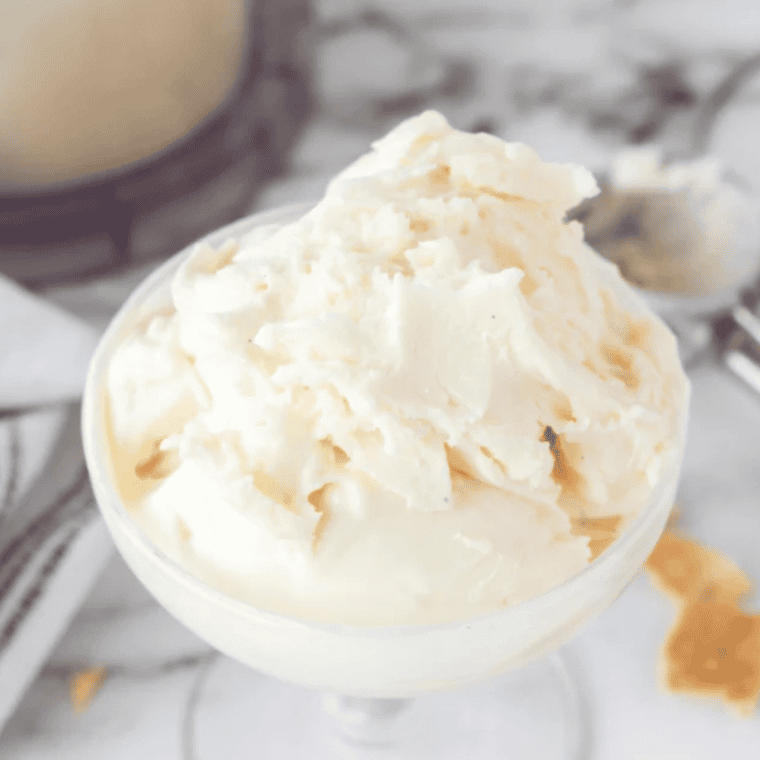
This guide covers those four decisions. It isn’t a recipe — it’s the reasoning underneath every cottage cheese recipe on this site, so that when a batch goes wrong you know why, and when you want to invent a flavor you aren’t guessing. Every recipe linked at the bottom is a variation on what’s explained here.
If you’re here because your last batch came out grainy or sour, skip to troubleshooting. The answer is almost certainly there.
What a cottage cheese base actually needs
Four components, each doing a specific job. Get all four right and the flavor barely matters — it’ll be good. Miss one and no amount of re-spinning saves it.
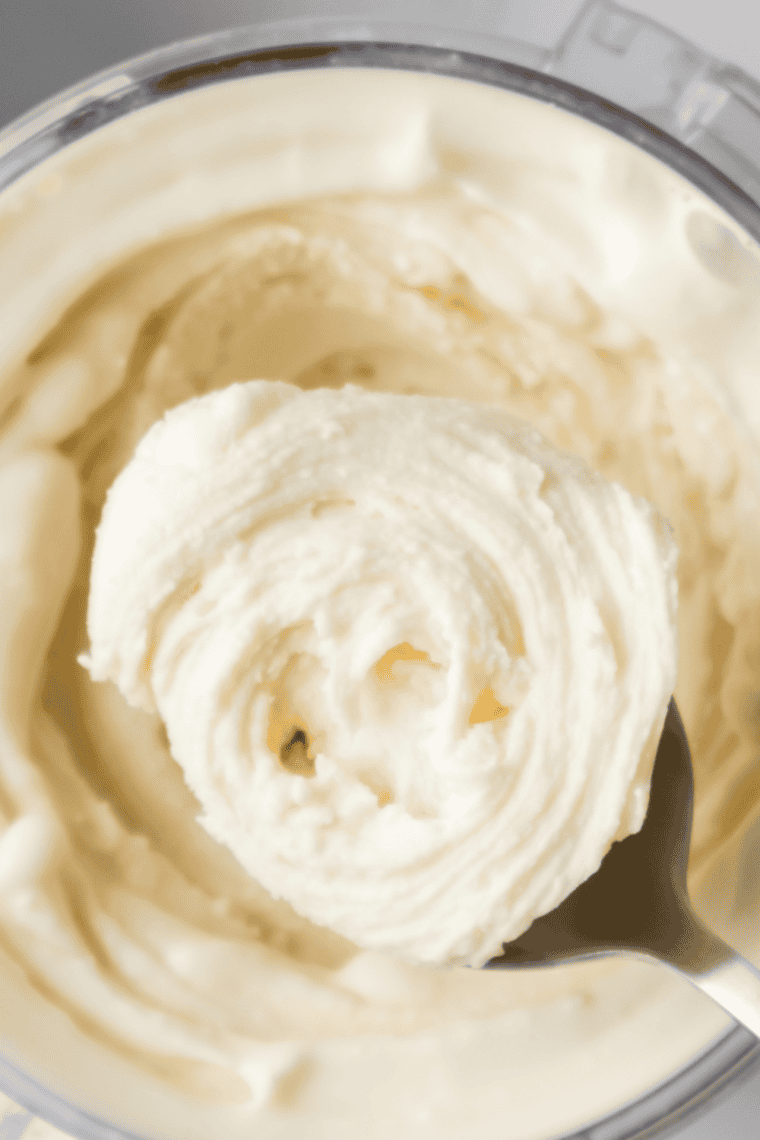
Body — the cottage cheese itself
Roughly four parts cottage cheese to three parts liquid by volume is the workable range for a standard pint. Push toward more cottage cheese and you get denser, tangier, higher-protein ice cream that resists melting. Push toward more milk and you get something lighter that spins more easily but tastes thinner.
Most people land near the middle and adjust from there. Fruit-forward flavors do better on the drier side, since the fruit brings its own water.
Fat — what makes it creamy
Fat coats ice crystals and stops them clumping into shards. This is the component people cut first and shouldn’t.
Full-fat (4%) cottage cheese carries enough on its own. 2% works with a spoonful of heavy cream added back. Fat-free produces something icy and hollow no matter what else you do to it.
Worth stating plainly, because a lot of people come to cottage cheese ice cream trying to minimize calories, and fat-free is the intuitive move. It’s also the move that produces the disappointing pint. If you need to cut, cut sugar and keep the fat.
Sweetener — which does double duty
Sugar doesn’t just sweeten. It lowers the freezing point, so the pint never freezes bone-hard.
This is why a sweetener swap can wreck an otherwise identical base. Allulose lowers the freezing point the way sugar does. Erythritol, stevia, and monk fruit don’t — they sweeten but leave the base freezing solid. If your ice cream comes out hard and icy and you’re using a sugar-free sweetener, that’s your cause.
Frozen desserts also read as less sweet than the same mixture at room temperature, so a base that tastes correctly sweet before freezing will taste underdone after. Sweeten slightly past what seems right.
Stabilizer — the one people skip
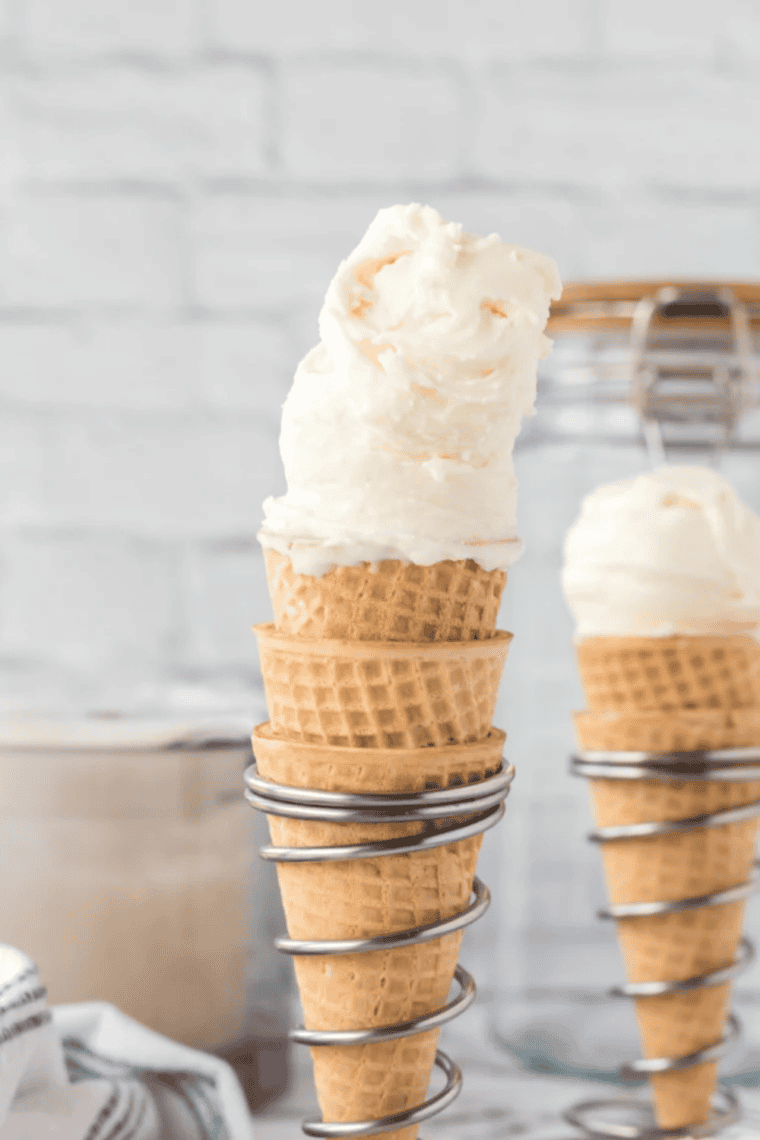
A tablespoon of instant pudding mix per pint is the cheapest home stabilizer available. The modified starch in it traps free water so it can’t form large crystals. It improves a cottage cheese base more than any other single addition, and it’s the reason some recipes come out smooth while nearly identical ones don’t.
Xanthan gum works too, at a scant 1/8 teaspoon per pint. Measure it carefully — past that, the texture turns slimy.
Choosing your cottage cheese
This matters more than any other ingredient decision, and it’s why two people following the same recipe get different results.
Fat percentage. Covered above: 4% is the target.
Tang. Brands vary dramatically in acidity. Freezing suppresses sweetness but does nothing to suppress sourness, so a tub that tastes only faintly tangy from the fridge can taste distinctly cheesy once frozen. This is the single most common reason cottage cheese ice cream tastes like cottage cheese.
Freshness. Cottage cheese gets tangier as it ages. The same brand bought fresh versus near its date will give you noticeably different pints.
Curd size. Small-curd blends smoother, but with adequate blending either is fine.
The short version: use the one you’d happily eat plain with fruit, not the cheapest tub on the shelf.
The five stages
1. Blending
This is the most important step in the process, and the one people rush.
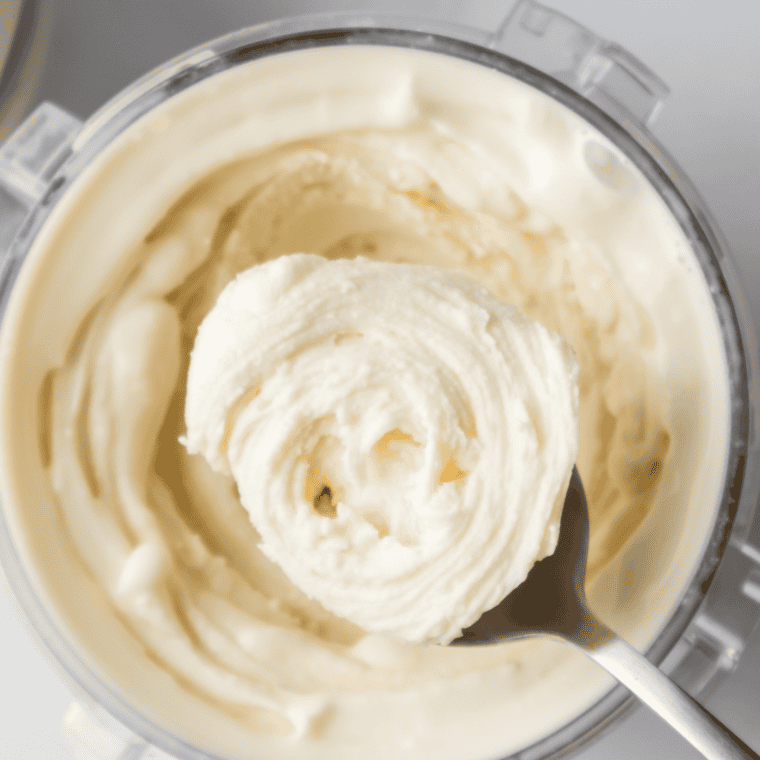
Cottage cheese is solid curds suspended in liquid. Freeze a base with intact curds and the Creami’s blade shaves through frozen protein pellets, handing you a pint of grit. No amount of re-spinning fixes this, because the graininess was built into the block before it ever entered the machine.
Blend until completely smooth — not mostly smooth, not a few small lumps left. Thirty seconds minimum in a blender, food processor, or with an immersion blender. If you change one thing about how you’ve been doing this, blend longer.
2. Freezing
Twenty-four hours, on a level surface. Both halves matter.
Twelve hours isn’t enough; an underfrozen base spins into liquid and can splash up into the paddle housing. And a slanted freezer shelf gives you a slanted frozen surface, which throws off the blade — if your pint domes or freezes at an angle, level the top with a hot spoon before spinning.
Fill below the max line, never to the top.
3. Spinning
All three Creami models handle this. The program names differ.
| Model | Program | Notes |
|---|---|---|
| Original (7-in-1) | Lite Ice Cream | Expect to re-spin once or twice |
| Deluxe (11-in-1) | Lite Ice Cream | Larger pint, same program |
| Swirl (13-in-1) | CreamiFit | Purpose-built for this kind of base; often needs no re-spin |
Why Lite Ice Cream rather than Ice Cream? The Ice Cream program is calibrated for high-fat, high-sugar bases. A cottage cheese base is comparatively lean, and the Lite profile suits it better. If yours is on the richer end — full-fat cottage cheese, whole milk, real sugar — the Ice Cream program works too, and some people prefer the result. Worth trying both once.
If you own the Swirl, CreamiFit is genuinely the right tool. It was designed for high-protein, lower-calorie bases, and cottage cheese sits about as squarely inside its intended use as anything does.
4. Re-spinning
A crumbly first spin is normal. It’s the expected midpoint, not a failure.
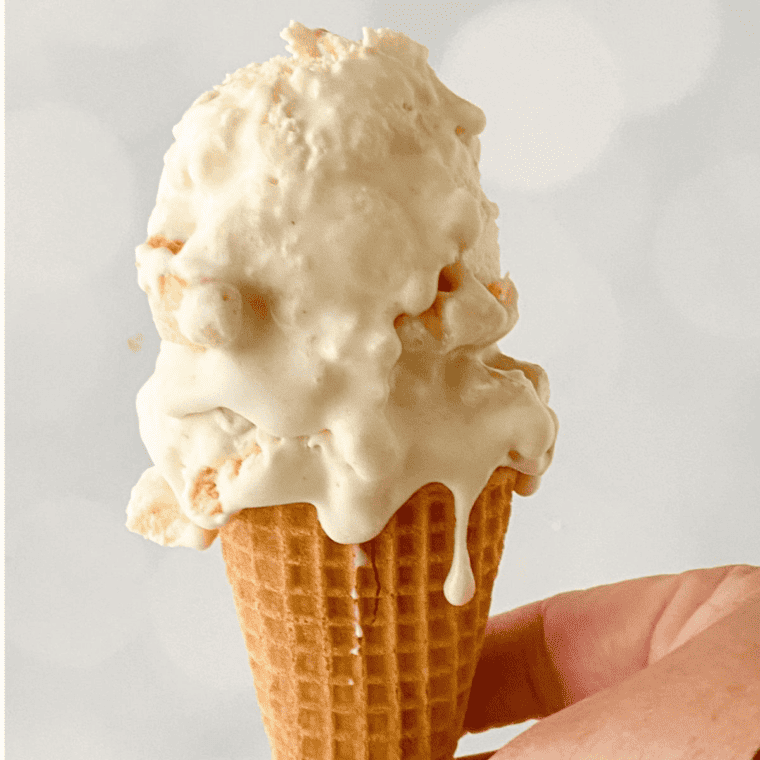
The Creami shaves the frozen block into powder. On a lean base, that powder needs liquid and a second pass to come together as ice cream. Add a tablespoon or two of milk, hit Re-spin, and repeat if needed. A third pass won’t hurt anything.
Almost every complaint about cottage cheese ice cream being “powdery” is really someone stopping after the first spin.
5. Mix-ins
Always last, on the Mix-In program, after the texture is already right. Anything folded in before freezing either sinks, freezes into a solid mass, or interferes with the spin.
Troubleshooting
| Symptom | Cause | Fix |
|---|---|---|
| Grainy or gritty | Curds weren’t fully blended | Blend 30+ seconds next time. The current pint won’t fully recover. |
| Powdery after first spin | Normal | Add liquid, Re-spin. Repeat once if needed. |
| Tastes sour or cheesy | Tangy or aging cottage cheese | Fresher tub, full-fat, more vanilla and salt. A spoonful of cream cheese also masks it. |
| Icy and hard | Non-freezing-point sweetener, or too little fat | Switch to allulose or sugar; move up in fat percentage. |
| Melts to soup quickly | Too much allulose | Pull the amount back. |
| Machine strains | Uneven or overfull pint | Stop, rest 5–10 minutes at room temperature, level the surface. |
| Soupy, won’t hold | Underfrozen | Needs the full 24 hours. No shortcut here. |
| Hard after storing | Re-froze after spinning | Level the top and re-spin with a splash of milk. |
Adapting the base for different flavors
Rather than following each recipe blindly, here’s how the ratio shifts by flavor type:
Fruit adds water, and water becomes ice. Reduce the liquid by roughly the volume of fruit going in, or use freeze-dried fruit, which brings flavor with no water at all.
Cocoa powder absorbs liquid, so these bases usually want more milk rather than less. Bloom the cocoa in warm liquid first or you’ll get dry pockets.
Nut butters bring their own fat, so you can pull back elsewhere. Powdered versions add flavor without loosening the base.
Coffee and espresso replace part of the liquid one-for-one. No other adjustment needed.
Cheesecake flavors lean into what cottage cheese already does — swap part of the cottage cheese for cream cheese and the tang becomes the point rather than a problem.
Scaling by pint size
The Original and Swirl use 16oz pints. The Deluxe uses 24oz — multiply everything by 1.5. Freeze time doesn’t change; a bigger pint doesn’t need longer, but it definitely doesn’t need less. Fill below the max line regardless of model.
Storing leftovers
The pint keeps for weeks frozen, but it re-freezes hard. Level the surface, and before serving again, re-spin with a splash of milk. It comes back almost perfectly.
Don’t leave a spun pint out to soften instead. Partial melting and re-freezing is what creates large ice crystals, and it’s the fastest way to ruin an otherwise good pint.
FAQ
Can you taste the cottage cheese? In a well-made batch it reads as a faint cheesecake tang, which most people like. If it tastes distinctly of cheese, the cause is nearly always a tangy or aging tub rather than the technique.
Do I have to blend it? Yes. This is the one non-negotiable step. Unblended curds mean grainy ice cream, and it can’t be fixed after freezing.
Can I use fat-free cottage cheese? You can, but it’ll be icy. Low-fat works if you add a little cream back.
Do I need protein powder? No. A cottage cheese base is already high-protein on its own. Adding a scoop pushes it higher but introduces chalkiness — reduce the liquid slightly if you do.
Can I make this without a Ninja Creami? Yes, with worse texture. Freeze the blended base in a shallow container and blend it again in a food processor once solid. The result is closer to soft-serve than to scoopable ice cream.
How long does it need to freeze? 24 hours.
Why is the first spin always crumbly? Because that’s how the machine works on lean bases. The re-spin with added liquid is what turns powder into ice cream.
Recipes built on this guide
Every recipe below starts from what’s explained above, with the ratio adjusted for that flavor. If you’ve read this far, skip the explanation on each one and go straight to the ingredients.
More High-Protein Ninja Creami Recipes
- GLP-1 Protein Ice Cream — about 30g protein per pint, portioned for smaller appetites
- Ninja Creami Chocolate Protein Ice Cream — the straightforward chocolate base
- Ninja Creami Peanut Butter Ice Cream — classic and high-protein versions in one post
- Reese’s Peanut Butter Protein Ice Cream — Greek yogurt base, no chalkiness
- Cookies and Cream Protein Ice Cream — Fairlife and pudding mix base
- Chocolate Covered Strawberry Protein Ice Cream — chocolate milk base with real strawberries
- Banana Pudding Protein Ice Cream — almond milk and banana pudding mix
- Protein Monster Cookie Ice Cream — oatmeal cookie flavors, spun on Lite Ice Cream
- Best Protein Powder for the Ninja Creami — which powders go icy and which don’t