If your sugar-free Ninja Creami pints keep coming out as a chalky snowbank instead of ice cream, you haven’t done anything wrong. You’ve hit a real wall in food science, and no amount of re-spinning fully fixes it.
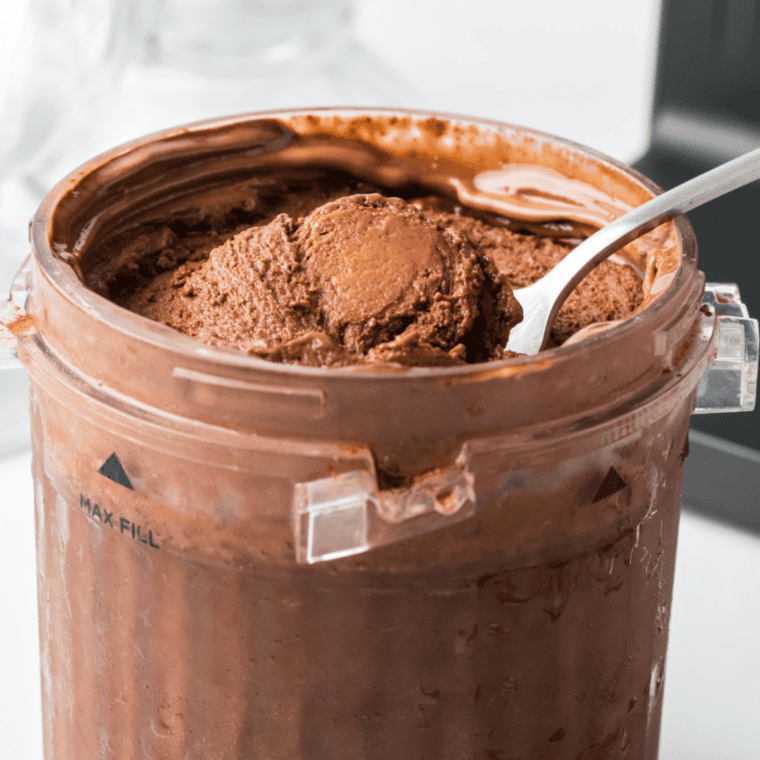
Here’s the short version: sugar isn’t just sweetness. It’s antifreeze. Pull it out and your pint freezes into a solid brick that the blade can only shave into powder. The fix isn’t a better recipe — it’s choosing a sweetener that does sugar’s physical job, not just its flavor job.
This guide covers which sweeteners actually work in the Creami, exactly how much to use per pint, and how to rescue a batch that’s already gone wrong.
The Short Answer
- Allulose is your base sweetener. It’s the only common sugar-free option that lowers the freezing point the way sugar does. About ½ cup (100 g) per 16 oz pint.
- Monk fruit and stevia are finishers, not bases. A few drops to top up sweetness — never your bulk sweetener.
- Skip pure erythritol in frozen desserts. It recrystallizes in the cold and turns your pint gritty.
- Add ⅛ tsp xanthan gum. Cheapest texture upgrade there is.
- Temper the pint before spinning. Hot water on the sides for 30–45 seconds. This matters more for sugar-free bases than any other kind.
Why Sugar-Free Ninja Creami Recipes Fail
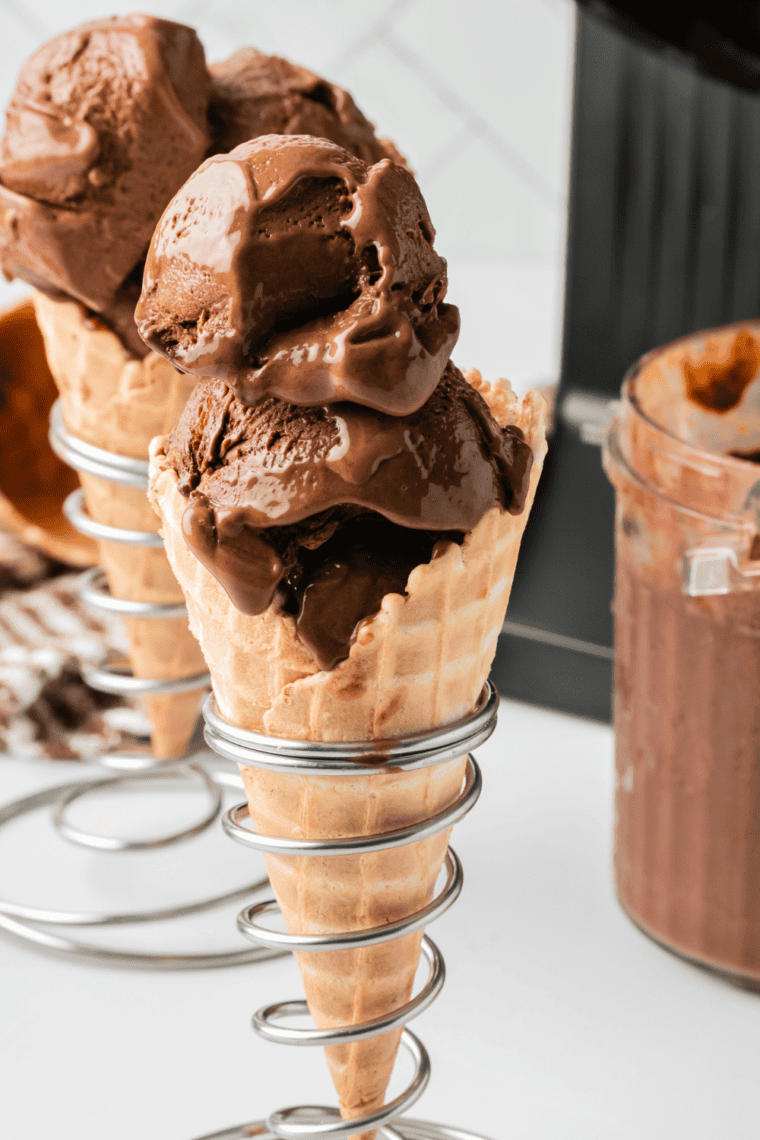
The Creami doesn’t work like a traditional churn machine. Instead of freezing a liquid while stirring air into it, it takes a rock-solid frozen puck and shaves it into microscopic particles at high speed. That means how hard your pint freezes determines your final texture. Too hard, and you get powder — the same reason a pistachio ice cream base needs no churning or tempering of eggs, but does need the right solids.
Sugar does three jobs in a frozen dessert:
- It depresses the freezing point. Dissolved sugar molecules physically block water molecules from locking into ice crystals. A sugared base stays partly unfrozen at freezer temperature — that’s why real ice cream is scoopable at 0°F.
- It adds dissolved solids. Solids give ice cream body instead of iciness. Good ice cream lands around 35–40% total solids.
- It tastes sweet.
Most sugar substitutes only do #3. Swap in monk fruit drops and you get sweetness with zero antifreeze effect — so your pint freezes as hard as an ice cube, and the machine hands you shaved ice.
That’s the entire game. Once it clicks, every recipe decision downstream makes sense.
weetener Comparison: What Each One Actually Does
| Sweetener | Sweetness vs. sugar | Adds bulk? | Lowers freezing point? | Creami verdict |
|---|---|---|---|---|
| Allulose | ~70% | Yes | Excellent — better than sugar per gram | Best choice. Use as your base. |
| Monk fruit (pure) | 150–250× | No | No | Flavor top-up only |
| Erythritol | ~70% | Yes | Some, but recrystallizes | Avoid — grit and cooling burn |
| Monk fruit/erythritol blends | ~1:1 with sugar | Yes (erythritol) | Poor in practice | Avoid for frozen desserts |
| Xylitol | ~100% | Yes | Good | Works, but see the dog warning |
| Stevia | 200–350× | No | No | Flavor top-up only |
| Liquid sucralose | ~600× | No | No | Flavor top-up only |
| Vegetable glycerin | ~60–75% | Yes | Very strong | Excellent booster in small amounts |
| Soluble corn fiber / inulin | Slight | Yes | Weak | Good for body; can cause gas |
Allulose: the one that actually works
Allulose is a rare sugar — chemically a sugar, structurally near-identical to fructose, but your body barely metabolizes it. It’s absorbed in the small intestine and then largely excreted rather than used for energy.
That gives it a combination almost nothing else has: it behaves like sugar in the freezer while contributing almost no calories or blood sugar impact. The FDA formalized this back in 2019 and the position still stands. The agency allows allulose to be excluded from the total sugars and added sugars lines on Nutrition Facts labels, noting it isn’t metabolized like table sugar and produces only negligible increases in blood glucose or insulin. It still counts under total carbohydrates, and it’s calculated at 0.4 calories per gram instead of sugar’s 4.
Why it wins in the Creami specifically: allulose is a single-molecule sugar with a molecular weight around 180, versus sucrose’s 342. Freezing-point depression depends on the number of dissolved particles, not their size. Gram for gram, allulose keeps your base softer than table sugar does.
The trade-offs:
- It’s only about 70% as sweet, so you need more by weight — or a few monk fruit drops to close the gap.
- Too much and the pint won’t freeze properly. Past roughly 120 g per 16 oz pint you’ll get a soupy spin. This is the most common allulose mistake.
- It can cause bloating or gas at higher doses. Many people are fine around 25–30 g in a sitting, but tolerance varies a lot. Start low.
- It browns, which is great in baking and irrelevant here.
- It’s pricey. A 3–5 lb bag drops the cost per pint dramatically versus a grocery-store shaker.
- Availability outside the US is limited — EU and Canadian approvals have lagged.
Monk fruit: right flavor, wrong job
Pure monk fruit extract gets its sweetness from mogrosides, 150–250 times sweeter than sugar. You use a tiny amount, and a tiny amount contributes essentially no dissolved particles. No bulk, no antifreeze.
There’s a second catch. Most “monk fruit sweetener” on the shelf isn’t really monk fruit — it’s erythritol with a whisper of monk fruit blended in, packaged to measure cup-for-cup like sugar. So when someone says monk fruit made their Creami gritty, they’re describing erythritol.
Use it correctly: buy pure monk fruit drops or extract powder and layer it on top of an allulose base. A few drops replaces 20–30 g of allulose worth of sweetness without pushing you into GI territory.
Erythritol: the texture killer
Erythritol is a sugar alcohol that dissolves poorly in cold liquid — roughly 37 g per 100 ml at room temperature, and far less as things chill. In a frozen base it falls out of solution and recrystallizes into sandy, crunchy specks. Add its pronounced cooling sensation and you have the reason so many keto pints taste like sweetened snow.
It’s also drawn scrutiny. Observational research published in 2023 linked higher circulating erythritol to cardiovascular events, with lab work suggesting an effect on platelet activity. Those findings are contested, the studies weren’t designed to prove cause and effect, and regulators still consider erythritol safe. But between the disputed research and the texture problem, there’s not much reason to make it your primary Creami sweetener.
Xylitol: works, with one serious caveat
Xylitol is about as sweet as sugar, dissolves well, and depresses the freezing point effectively. Texturally it performs fine.
But xylitol is extremely toxic to dogs, even in tiny amounts — a dropped scoop can cause a life-threatening insulin crash. If there’s a dog in your house, keep it out entirely and make them their own Ninja Creami dog ice cream instead. Xylitol also has a notable laxative effect at higher doses. For most people, allulose is the better bet with fewer strings.
Vegetable glycerin: the underrated hack
Food-grade vegetable glycerin is a small syrupy molecule that depresses freezing point dramatically. One to two teaspoons per pint makes a lean or high-protein base scoopable instead of brittle. Don’t overdo it — too much reads faintly soapy, and it carries about 4.3 calories per gram. Baking aisle or online.
How Much of What: Sugar-Free Ratios Per Pint
A 16 oz Creami pint of conventional ice cream uses roughly 65–100 g of sugar. Here’s the replacement framework:
Base sweetener — pick one:
- 90–110 g granulated allulose (about ½ cup, slightly heaped) — the default
- Or 70 g allulose + 10–15 drops liquid monk fruit, if you’re managing GI tolerance
Texture insurance:
- ⅛ to ¼ tsp xanthan gum, whisked into the dry ingredients before liquid so it doesn’t clump
- 1–2 tsp vegetable glycerin, optional, for lean or protein bases
- 1 tsp vodka, optional — alcohol is also a freezing-point depressant and you won’t taste it
Fat and solids — these matter as much as the sweetener:
- Heavy cream, half-and-half, cream cheese, full-fat Greek yogurt, or cottage cheese
- Ultra-filtered milk like Fairlife, which has less water and more protein than regular milk
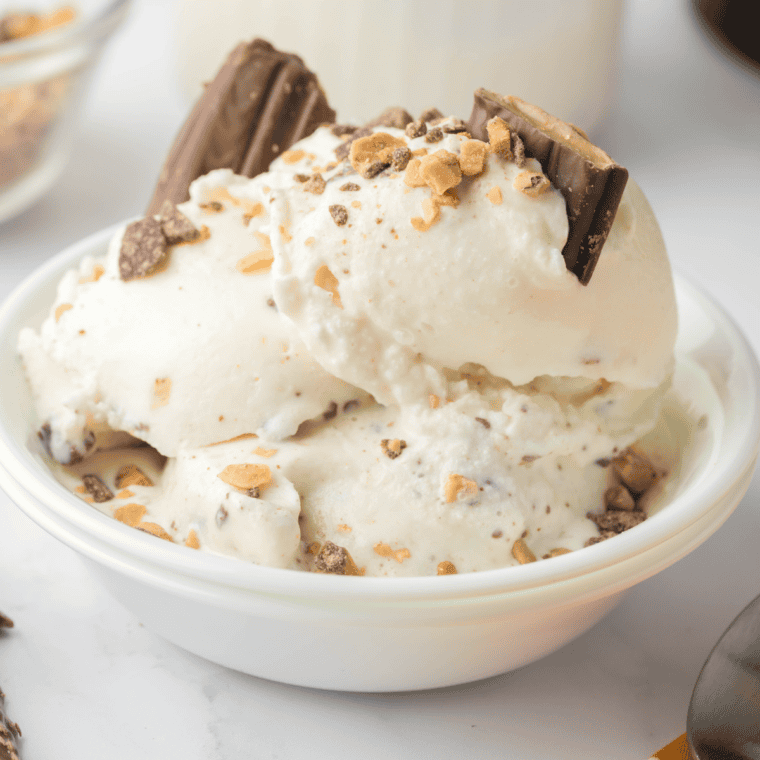
- 1 tbsp sugar-free instant pudding mix — the modified starch and gums genuinely work, which is why they anchor recipes like this chocolate protein ice cream
- A scoop of protein powder for body, as in this Oreo protein ice cream
On the Deluxe: the 24 oz pint needs about 1.5× everything. Scale the allulose to roughly 140–160 g and keep the ratios the same.
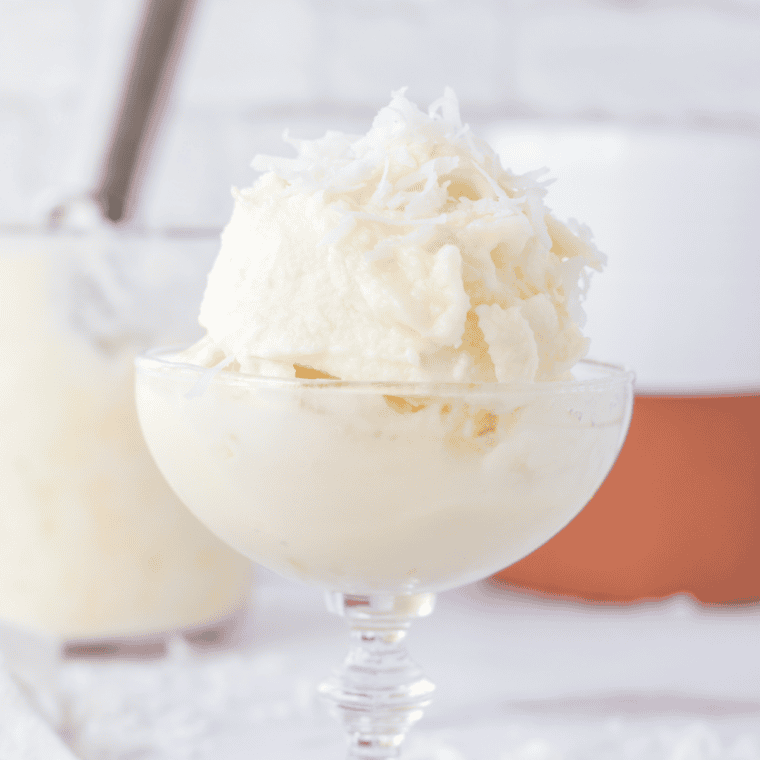
Sugar-Free Vanilla Base (1 pint)
- 1 cup heavy cream, or ¾ cup half-and-half + ¼ cup milk
- ½ cup unsweetened milk of choice
- ½ cup (about 100 g) granulated allulose
- 5–10 drops liquid monk fruit, to taste
- 2 tsp vanilla extract
- ⅛ tsp xanthan gum
- Pinch of salt
- 1 tsp vegetable glycerin (optional)
Blend on low for 20–30 seconds until the xanthan is fully dispersed — blending on high whips in air that freezes into a strange, bubbly texture. Pour into the pint, level the surface, and freeze flat for at least 24 hours. Run the sides under hot water for 30–45 seconds, then spin on Ice Cream. Re-spin with 1 tbsp of milk if it looks crumbly.
Taste the base before freezing and make it slightly sweeter than seems right. Cold blunts sweetness perception significantly.
Want a full-sugar version for comparison? The vanilla bean ice cream and vanilla soft serve recipes both use a cream cheese base, which is a great structure to convert once you understand the sweetener swap.
Troubleshooting Sugar-Free Pints
| Symptom | Cause | Fix |
|---|---|---|
| Powdery, crumbly, chalky | Base froze too hard | Add 1–2 tbsp liquid, re-spin. Next batch: more allulose or add glycerin. |
| Gritty or sandy | Erythritol recrystallizing | Switch to allulose. Re-spinning won’t fix this one. |
| Soupy after one spin | Too much allulose or glycerin | Refreeze and re-spin; drop to ~90 g allulose next time. |
| Icy with sharp crystals | Not enough fat or stabilizer | Add xanthan gum; increase cream or add cream cheese. |
| Tunnel bored down the middle | Pint wasn’t level when frozen | Level the surface, freeze on a flat shelf. |
| Weird menthol aftertaste | Erythritol | Switch sweeteners. |
| Bitter or licorice note | Too much stevia | Cut the stevia, lean on allulose. |
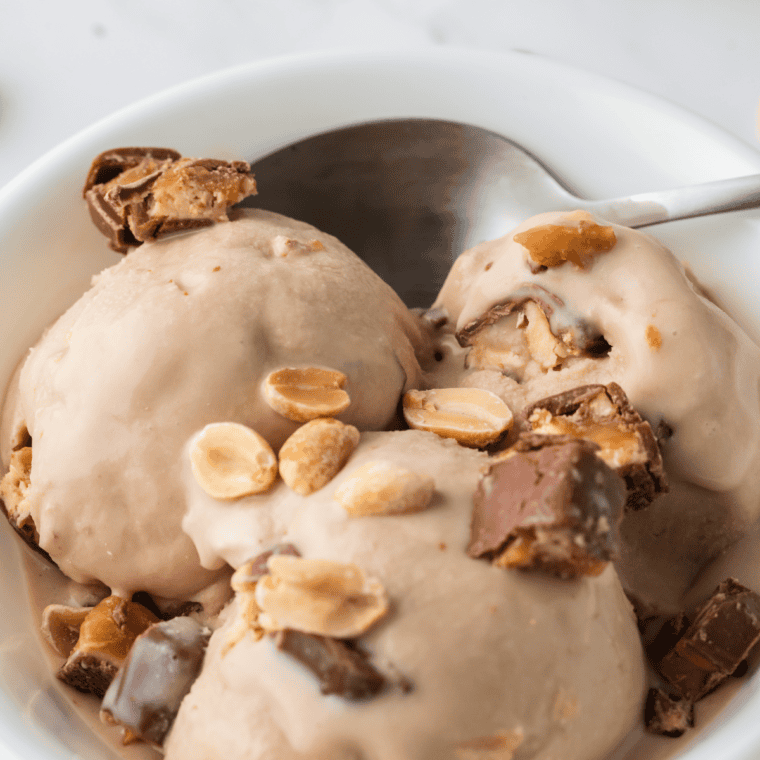
Three habits prevent most of these: freeze a full 24 hours on a genuinely level shelf, temper the pint under hot water before the first spin, and plan on a re-spin — a crumbly first cycle is normal, not a failure. For a deeper walkthrough of texture rescues, the peanut butter ice cream guide has a full troubleshooting section that applies to any base.
Frequently Asked Questions
What is the best sweetener for the Ninja Creami? Allulose. It’s the only widely available sugar-free sweetener that replicates sugar’s freezing-point depression and bulk, and those two properties are what determine Creami texture. Monk fruit and stevia deliver sweetness but no physical function.
Can I use monk fruit in a sugar-free Ninja Creami recipe? Pure monk fruit extract, yes — as a sweetness top-up in small amounts. Cup-for-cup monk fruit blends are mostly erythritol and will give you a gritty, icy pint.
Why is my sugar-free Ninja Creami ice cream icy? The base froze too hard because it lacks the dissolved solids that keep real ice cream partly unfrozen. Increase allulose, add xanthan gum, raise the fat, and temper the pint before spinning.
Is allulose keto-friendly? It’s widely used in keto cooking because it has minimal effect on blood glucose and insulin. It still appears under total carbohydrates on labels, though many people subtract it when tracking net carbs. If you manage diabetes or another condition, ask your doctor or dietitian how to count it.
How much allulose replaces one cup of sugar? About 1⅓ cups, since allulose is roughly 70% as sweet. In the Creami, though, cap it near 120 g per 16 oz pint or the base won’t freeze firmly enough to spin.
Does allulose upset your stomach? It can at higher doses — gas, bloating, or loose stools. Tolerance varies widely. Start smaller and build up, or blend allulose with a few monk fruit drops to hit your sweetness target with less total allulose.
Can I make sugar-free Creami ice cream without allulose? You can, but manage expectations. Your best options are xylitol (never with a dog in the house) or leaning hard on fat, protein, and stabilizers. A cream-cheese-and-heavy-cream base with xanthan gum and monk fruit drops beats a lean base every time.
Which Creami setting should I use for sugar-free bases? Ice Cream for a dense, scoopable pint. Lite Ice Cream spins softer and can help if your base is freezing very hard, but most sugar-free pints do better on Ice Cream plus a re-spin.
The Bottom Line
Sugar-free Ninja Creami success comes down to one principle: replace what sugar was doing, not just how it tasted. Allulose as your workhorse, monk fruit as your finisher, xanthan gum as insurance, and enough fat to carry it all. Skip the erythritol.
Get those four right and you’ll stop troubleshooting and start eating ice cream. Once your base is dialed in, it becomes the template for everything — browse more Ninja Creami recipes and convert your favorites using the ratios above.
This article covers food science and cooking technique, not medical or nutritional advice. If you’re managing diabetes, a GI condition, or another health issue, check with your healthcare provider about which sweeteners fit your situation.