
Most Subway tuna copycat recipes get one thing wrong: they add stuff.
Celery, relish, dill, bell pepper, mustard, onion. All fine in a tuna salad. None of it is in Subway’s. That’s why those versions never quite taste right — you’re eating a good deli tuna salad, not the thing you were craving.
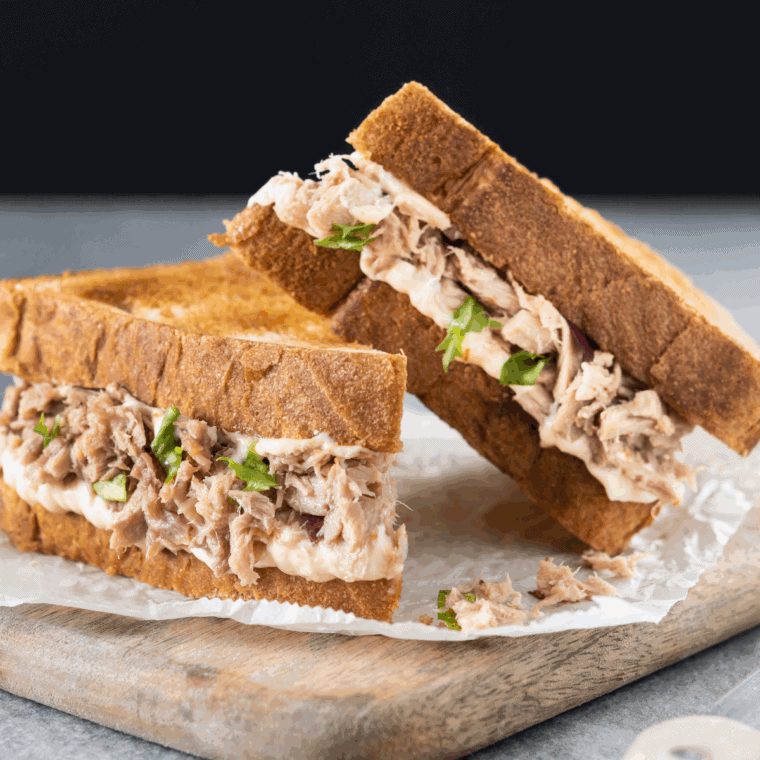
Subway’s tuna salad is two ingredients: flaked tuna and mayonnaise. That’s the whole recipe. The chain has said as much publicly — its restaurants receive tuna, mix it with mayo, and put it on bread. Everything else people add is an improvement on a sandwich nobody asked to have improved.
So this recipe is deliberately boring. Two ingredients, a pinch of salt, five minutes. It tastes like the sub because it is the sub.
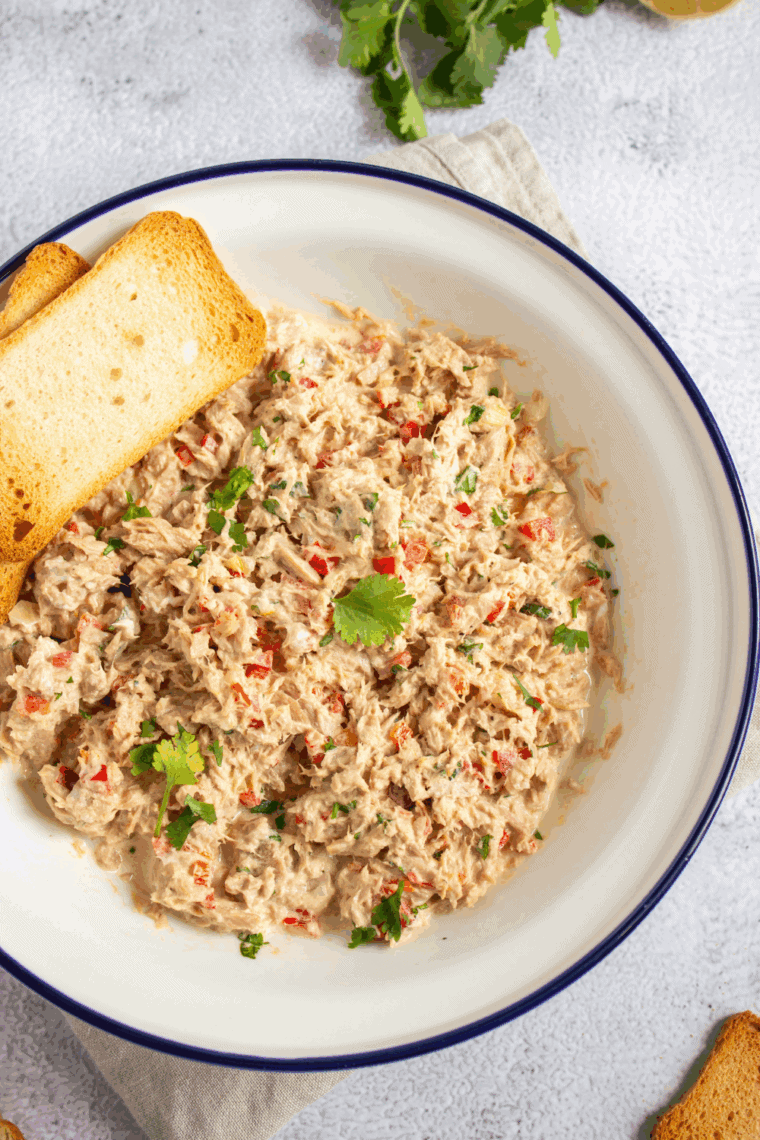
What’s Actually in Subway’s Tuna
The tuna that arrives at a Subway store is packed in water, and the label lists tuna, water, and salt. The store mixes it with mayonnaise. No seasoning blend, no vegetables, no acid.
Two details matter for getting the texture right:
It’s flaked tuna, not solid. Flaked tuna is broken into small pieces before canning, which is why Subway’s filling is uniformly fine rather than chunky. Buy chunk light — never solid white albacore, which stays in firm pieces no matter how hard you mash it.
It’s packed in water, not oil. Oil-packed tuna makes a richer, heavier salad. It’s arguably tastier. It’s also not what Subway uses, and it throws off the flavor in a way you’ll notice immediately. Water-packed, drained hard.
Ingredients
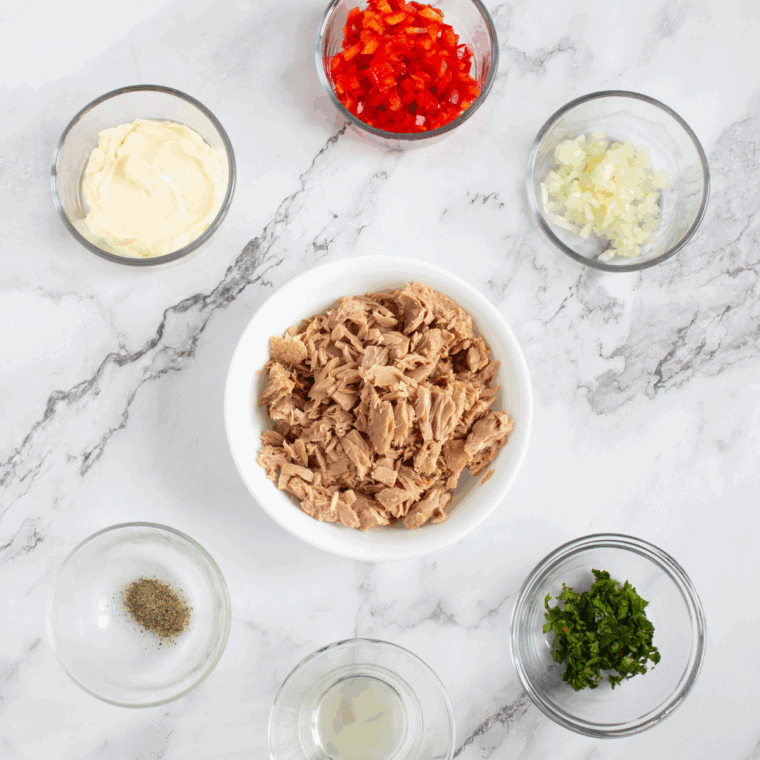
- 2 (5-ounce) cans chunk light tuna in water, drained very well
- ⅓ cup mayonnaise
- ¼ teaspoon salt
That’s it. Resist the urge.
On the mayo: use full-fat real mayonnaise. Light mayo and Miracle Whip both change the flavor noticeably — Miracle Whip especially, since it’s sweetened. Hellmann’s or Best Foods gets you closest.
On the ratio: ⅓ cup of mayo to 10 ounces of tuna reads like a lot. It is a lot. Subway’s tuna is famously mayo-forward, and cutting it back is the single most common reason a copycat tastes “off.” Make it as written the first time, then adjust.
How to Make Subway Tuna Salad
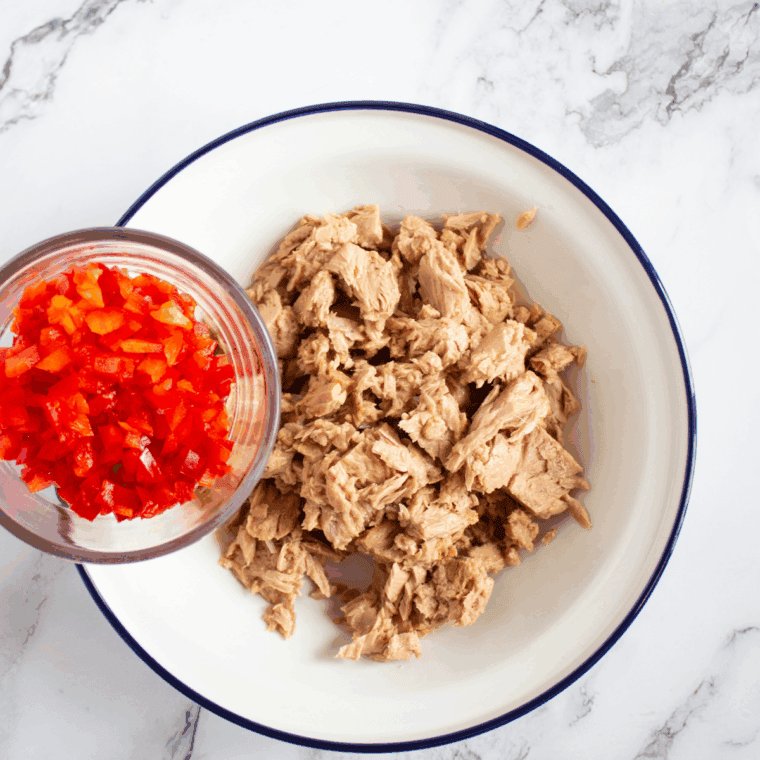
Step 1: Open both cans and drain them thoroughly. Press the lid down firmly against the tuna and hold it over the sink until the water stops running. Then press again. Wet tuna makes a loose, watery filling that soaks through bread.
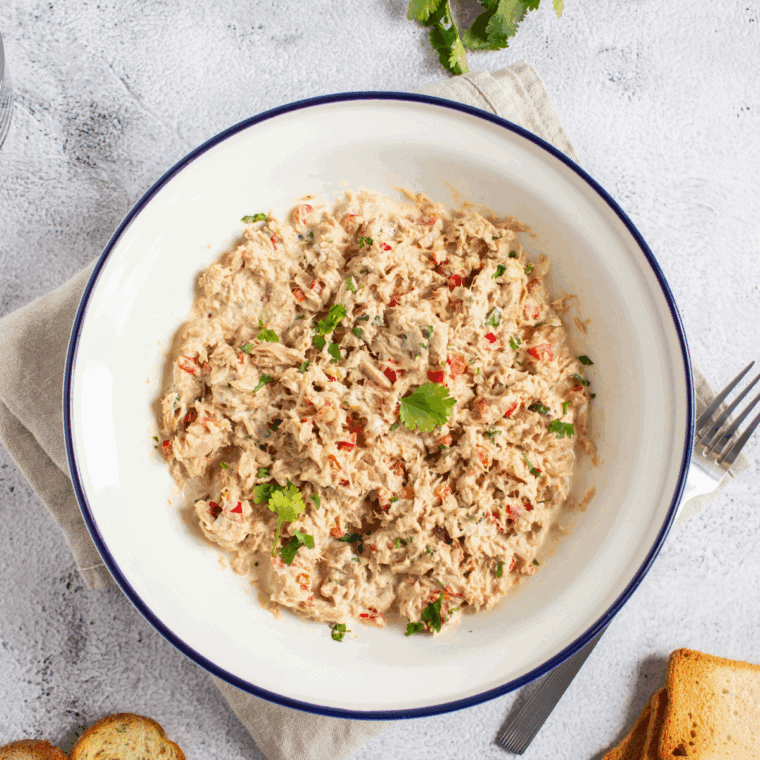
Step 2: Turn the drained tuna into a medium bowl and break it up with a fork until the pieces are fine and even. Keep going past the point where it looks done — Subway’s texture is finer than most people expect.
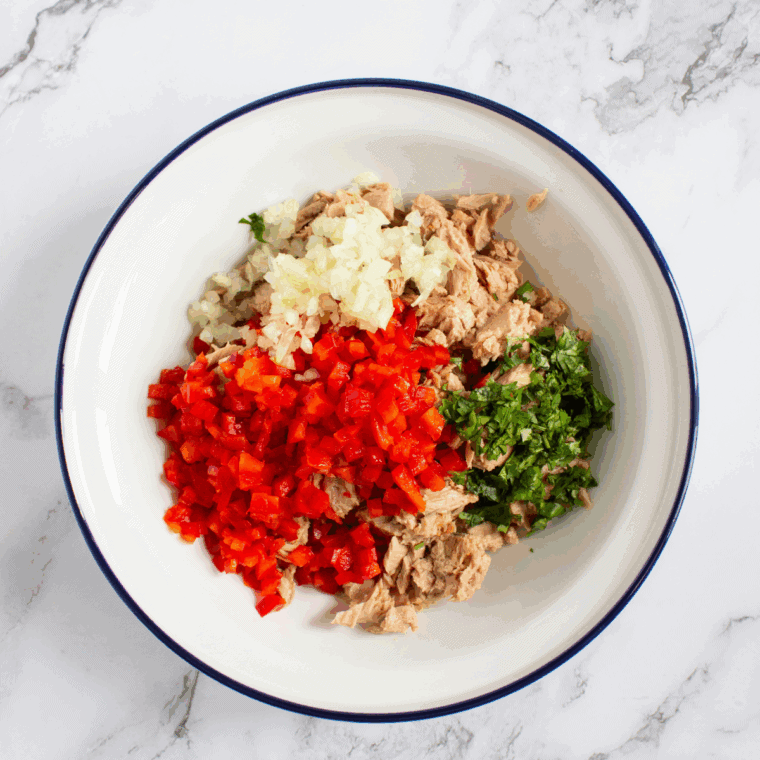
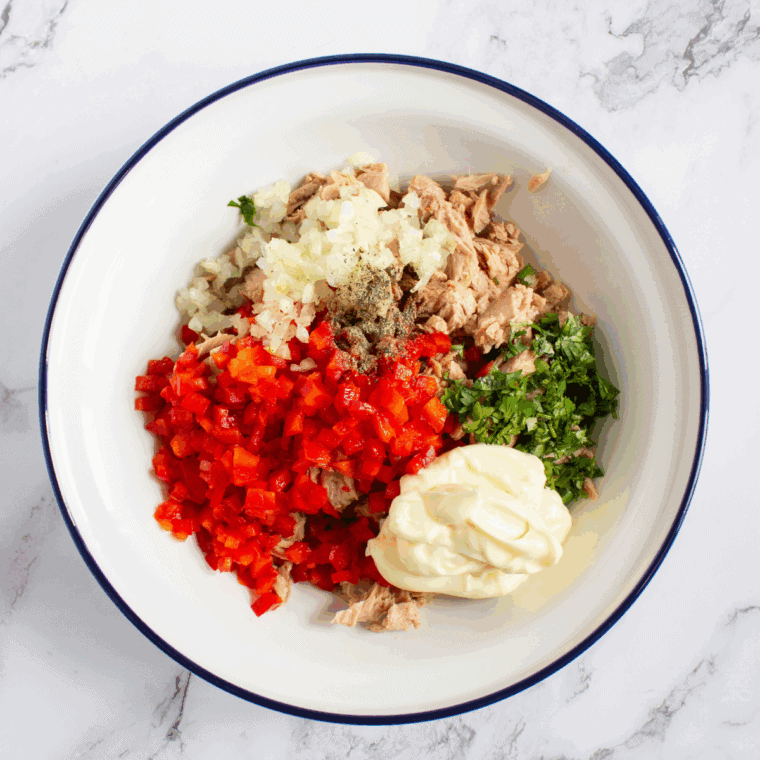
Step 3: Add the mayonnaise and salt. Stir until the mixture is completely uniform and creamy, with no dry pockets of tuna.
Step 4: Taste and add salt only if it needs it. Canned tuna is already salted, so go carefully.
Step 5: Use right away, or cover and refrigerate. The flavor doesn’t need time to develop — this isn’t a recipe that improves overnight.
Building the Sandwich Like They Do
The filling is only half of it. Subway assembles in a specific order, and the order genuinely affects how the sandwich eats.
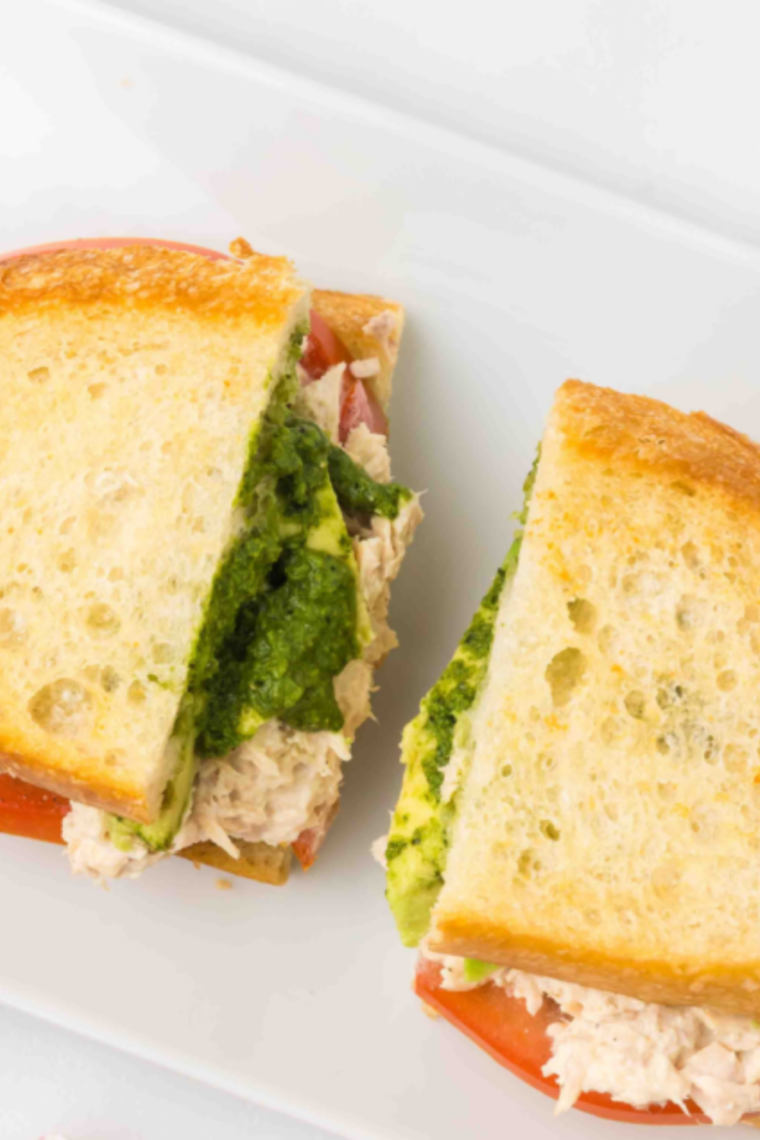
- Split the roll most of the way through, hinged rather than cut into two halves.
- Cheese first, directly on the bread — two triangles of American, laid point-to-point so they cover the whole length.
- Tuna next, spread evenly from end to end. A 6-inch gets roughly ½ cup; a footlong gets about a cup.
- Vegetables on top of the tuna: lettuce, tomato, cucumber, red onion, green pepper, black olives, pickles. Any combination.
- Salt and pepper last, plus oil and vinegar if you want it.
Putting the cheese under the tuna rather than on top is the small thing most home versions skip, and it’s why theirs holds together and yours slides apart.
For the full effect, make the bread too — this Subway Italian herb and cheese bread copycat is soft and cheesy in the right way, and it’s what turns this from “tuna sandwich” into “that sandwich.” A store-bought soft sub roll works fine on a weeknight. What doesn’t work is crusty artisan bread — it fights the filling.
Is Subway’s Tuna Even Real Tuna?
Worth addressing, because it’s the first thing people bring up.
In January 2021, two California customers sued Subway alleging its tuna contained no tuna at all — that lab testing showed a mixture of other ingredients blended to look like tuna. Subway denied it flatly and has maintained that it serves 100% wild-caught tuna mixed with mayonnaise.
A later round of testing reported by The New York Times couldn’t confirm tuna DNA in the samples. Subway’s response was that this is what you’d expect from a DNA test on cooked, processed fish — the proteins are denatured, so the test can’t read them either way. The case was dismissed once, refiled, and in 2022 a federal judge allowed an amended version to move forward.
Nothing has been proven. But it’s a fair reason to make it yourself: when you open the can, you know exactly what’s in it.
Homemade vs. Subway: The Numbers
A 6-inch Subway tuna sub lands somewhere between roughly 480 and 570 calories depending on bread, cheese, and toppings — third-party nutrition trackers disagree by a fair margin, and Subway’s own figures vary by market.
This recipe on a standard 6-inch roll with lettuce, tomato, and onion comes in around 400 calories, mostly because you control the mayo and can skip the cheese. Two cans of tuna and pantry mayo make four sandwiches, which is a meaningful gap from buying four subs.
Tips
- Drain harder than feels necessary. This is the whole ballgame. Watery tuna is the number one reason homemade versions fail.
- Break the tuna up before adding mayo, not after. Trying to flake it once it’s coated just makes lumps.
- Chill the salad, not the sandwich. Cold filling on room-temperature bread is the right combination.
- Don’t assemble ahead. The bread goes soft within an hour or two.
- Toast the roll if you want, but let it cool for a minute first — hot bread wilts the lettuce.
Variations Worth Making
The two-ingredient version is the copycat. These are departures, and they’re good on their own terms — just don’t expect them to taste like Subway.
Deli-style: add ¼ cup finely diced celery and 2 tablespoons minced red onion for crunch. This is the version most American delis serve.
Bright and herby: stir in 1 teaspoon lemon juice, a tablespoon of chopped dill or parsley, and a few cracks of black pepper. Lighter, fresher, good in warm weather.
Sweet and tangy: 2 tablespoons sweet pickle relish and ½ teaspoon Dijon. Closer to a classic picnic tuna salad.
Tuna salad bowl: skip the bread entirely, pile the tuna over chopped romaine with cucumber, tomato, and onion, and finish with homemade Subway vinaigrette. This is Subway’s own no-bread option and it’s genuinely good.
If you want to see how a different chain approaches it, this copycat Panera tuna salad is a useful contrast — noticeably chunkier, with more going on.
What to Do With Leftover Tuna Salad
You’ll almost certainly have some, and it’s better hot than most people realize.
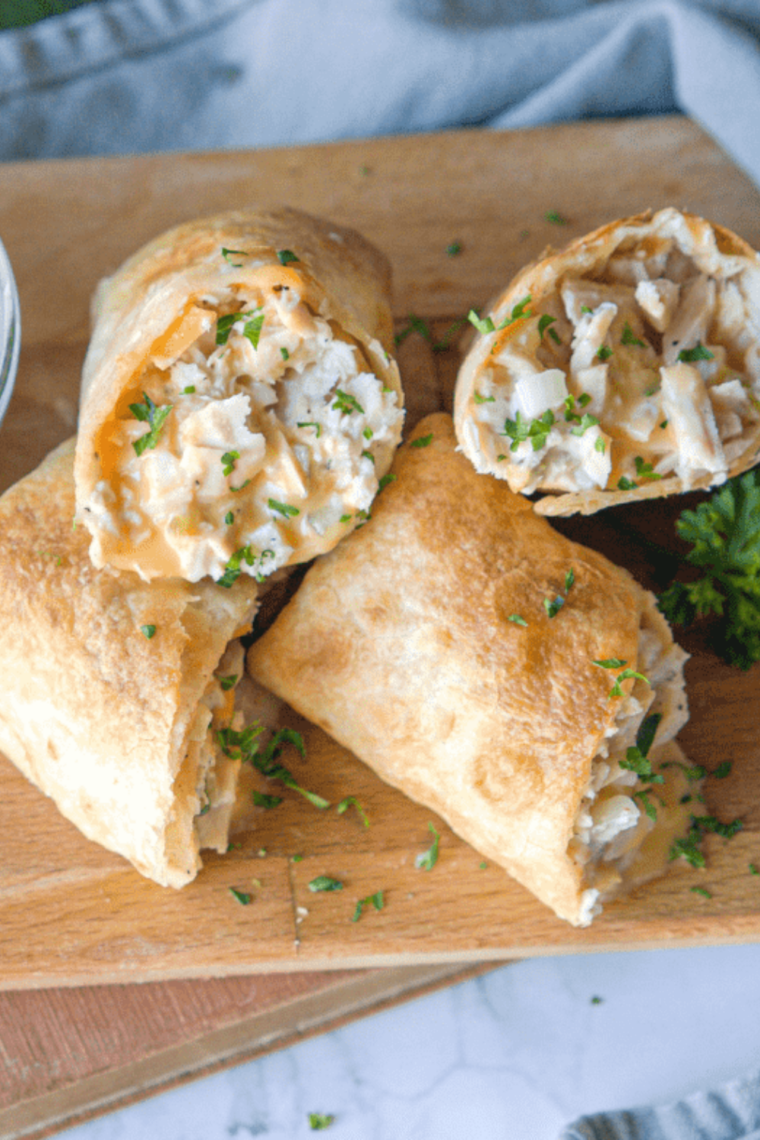
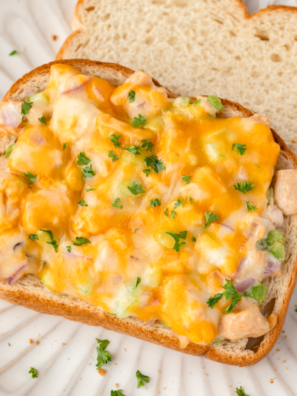
Turn it into an air fryer tuna melt — the air fryer crisps the outside while the cheese melts through, and it takes about eight minutes. If you want it buttery and griddled instead, the tuna melt grilled cheese version is richer. And when you’re out of bread, tuna melt wraps do the job in a tortilla.
Make It a Full Subway Meal
If you’re going all in: this sandwich, a bowl of copycat Subway broccoli cheddar soup, and a warm Subway-style oatmeal raisin cookie is the combo meal, reproduced at home for a fraction of the cost. Feeding a crowd with mixed opinions about fish? Add a copycat Subway meatball sub to the lineup.
Storage
Refrigerator: store the tuna salad in an airtight container for up to 3 days. Give it a stir before using — a little separation is normal.
Assembled sandwiches: eat within a few hours. Wrapped tightly, a made sandwich holds about 4 hours before the bread starts to go.
Freezer: don’t. Mayonnaise breaks when thawed and the texture is unrecoverable.
Meal prep: make the salad Sunday, portion it, and build sandwiches each morning. Three days is the realistic window.
FAQs
How long does the tuna salad keep? Three days in an airtight container in the fridge. That applies whether you make it today or three days from now — the countdown starts when you mix it.
Can I use tuna packed in oil? You can, but it won’t taste like Subway. Oil-packed tuna is richer and heavier. If it’s what you have, drain it extra well and cut the mayo to ¼ cup.
Why is my tuna salad watery? Underdrained tuna, almost every time. Press the lid down hard and give it longer than you think it needs. Some people press it in a clean dish towel, which works well.
Can I make it dairy-free or gluten-free? It’s already dairy-free if you skip the cheese — mayonnaise contains egg, not milk. For gluten-free, use a gluten-free roll or wrap, or serve it as a salad bowl.
How much tuna goes on a footlong? About a cup, or roughly double a 6-inch. This recipe makes enough for two footlongs or four 6-inch subs.
Should I add celery like other recipes do? Not if you want the copycat. Celery is the most common addition and the most noticeable departure — it adds crunch Subway’s version doesn’t have. Try it as written first.
Subway Tuna Recipe (2-Ingredient Copycat)
Description
Ingredients
Tuna Salad
- 10 ounces tuna, chunk light tuna in water, drained very well
- ⅓ cup mayonnaise
- ¼ teaspoon salt
For the Sandwiches
- 4 rolls, 6-inch sub rolls
- 8 slices American cheese, optional
- Lettuce, tomato, cucumber, red onion, green pepper, black olives — to taste
- Salt and black pepper, to taste
Instructions
- Drain the tuna thoroughly, pressing the lid firmly against it until no more water runs out.
- Turn the tuna into a medium bowl and flake it finely with a fork until the pieces are small and even.
- Add the mayonnaise and salt. Stir until completely smooth and creamy with no dry pockets.
- Taste and adjust salt if needed. Canned tuna is already salted, so add sparingly.
- Split each roll lengthwise without cutting all the way through. Lay 2 cheese triangles point-to-point on the bottom.
- Spread about ½ cup of tuna salad evenly over the cheese, end to end.
- Top with vegetables, season with salt and pepper, close, and press down gently. Serve immediately.
Equipment
- Medium mixing bowl
- Fork
Notes
- Chunk light in water only. Solid albacore stays too chunky and oil-packed tastes wrong.
- Full-fat mayonnaise. Light mayo and Miracle Whip both change the flavor.
- Salad keeps 3 days refrigerated in an airtight container. Assemble sandwiches just before eating.
- Don’t freeze — mayonnaise separates on thawing.
Nutrition
Share this recipe
We can’t wait to see what you’ve made! Mention @forktospoon or tag #forktospoon!
Barbara Larson
Yummy