Wendy’s fries are the only fast-food fries with the potato skin left on, and that one detail is what most copycat recipes get wrong. Leave the peel, use flaky sea salt instead of table salt, and cook them at two different temperatures — that’s the whole trick. Twenty minutes in the air fryer and you get the thick, fluffy-centered, brown-tipped fry you’ve been paying $3.29 for.
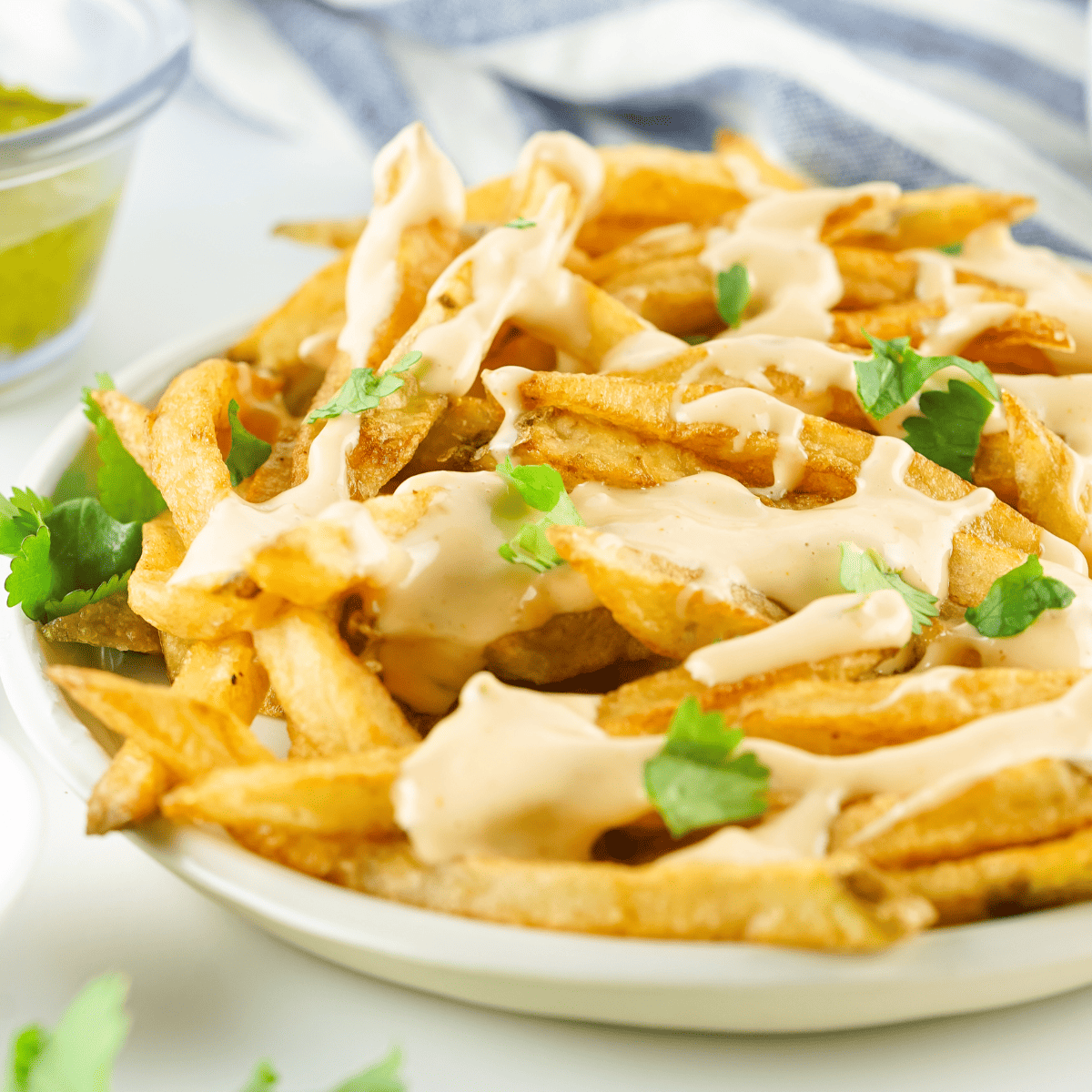
What Makes Wendy’s Fries Different
Wendy’s redesigned its fries in 2010 — the first full overhaul in the company’s history — and switched to a natural cut that leaves patches of skin on each fry, finished with a dusting of sea salt. They’re made from 100% russet potatoes, cut thicker than a shoestring fry, so the outside crisps while the inside stays soft.
That gives you three things to copy, and they’re the only three that matter:
- Skin on. Don’t peel. The brown-tipped edges are the visual signature, and the skin holds the fry together so it stays sturdy enough to dunk.
- Flaky sea salt, not table salt. Sea salt sits on the surface in visible flakes instead of dissolving in, which is why Wendy’s fries read as saltier than the competition.
- A thicker cut. Roughly 3/8-inch, not 1/4-inch. Too thin and you get a shoestring fry that tastes like a different restaurant entirely.
Skip any of those and you’ve made good air fryer fries — just not Wendy’s. If a thinner, unsalted-skin fry is closer to what you’re after, my air fryer copycat McDonald’s french fries go the opposite direction on all three points.
Ingredients
You need four things. Wendy’s fries are famously plain — there’s no garlic powder or paprika in the original, and adding it moves you away from the copycat, not toward it.
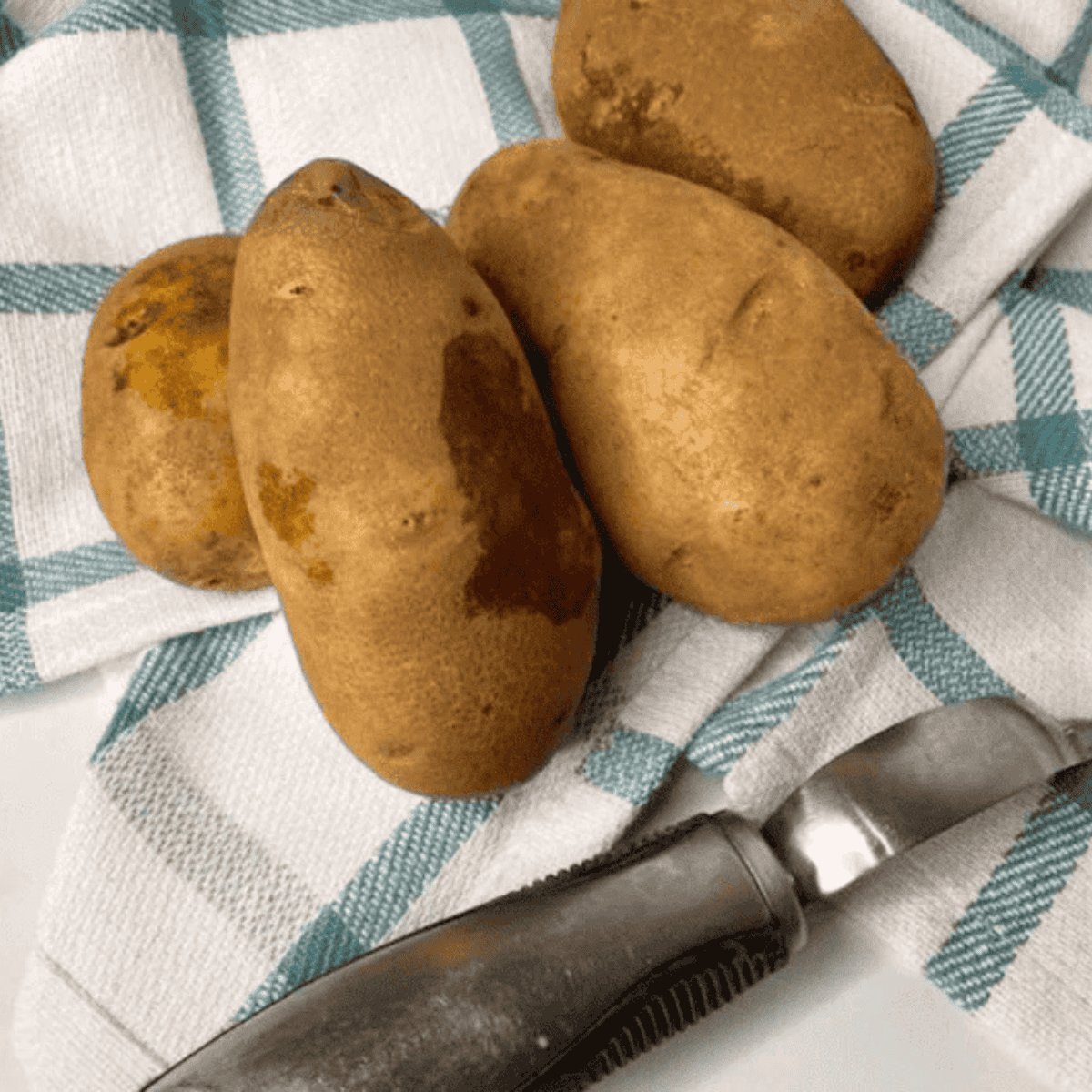
- Russet potatoes: Scrubbed but not peeled
- Vegetable oil: Or canola, avocado, or grapeseed. Any neutral oil with a high smoke point works; skip extra-virgin olive oil, which smokes at air fryer temperatures.
- Cornstarch: This is the air fryer workaround. Wendy’s par-fries their potatoes in oil at a factory before the second fry in-store. Cornstarch gives you a comparable crisp shell without the deep fryer.
- Flaky sea salt: Maldon or any flaky finishing salt
How To Make Copycat Wendy’s Fries In The Air Fryer
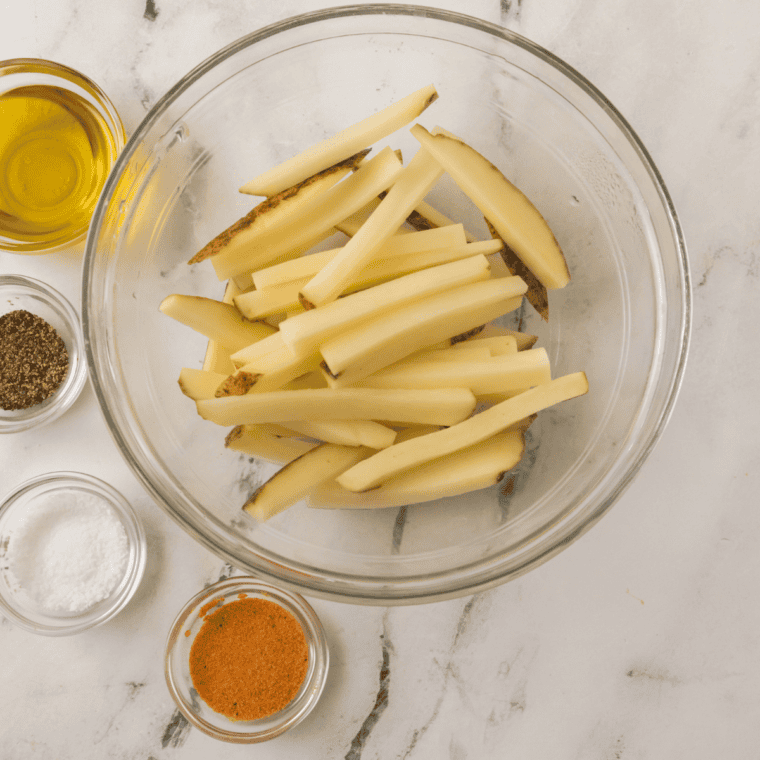
Step One: Scrub the russets well and leave the skin on. Slice each potato lengthwise into 3/8-inch planks, then cut the planks into 3/8-inch sticks. Even thickness matters more than exact size — mismatched fries cook at different rates and you’ll end up with burnt thin ones next to raw thick ones.
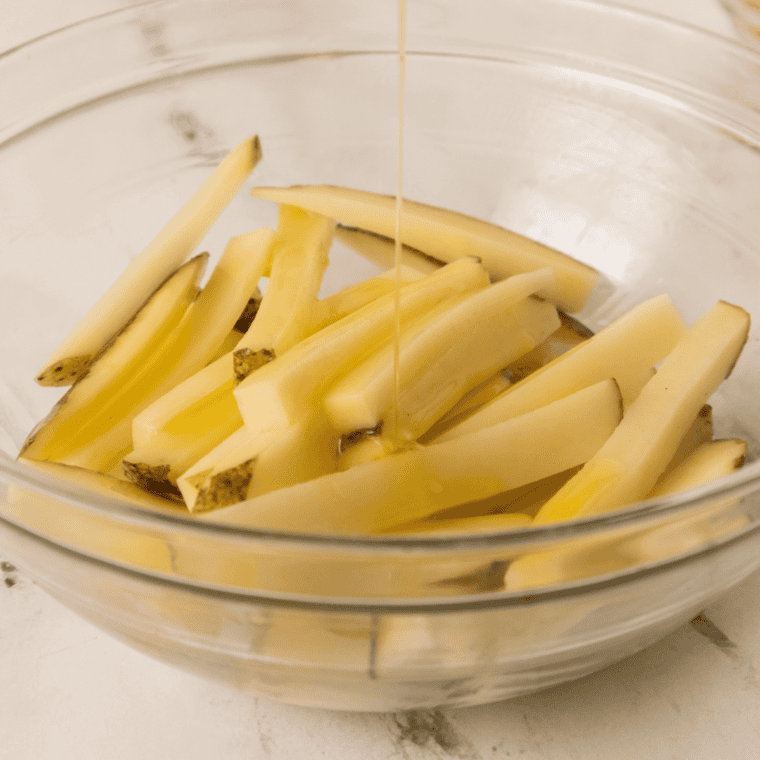
Step Two: Drop the cut fries into a bowl of cold water and let them sit for 30 minutes. This pulls out surface starch, which is what makes fries gummy and causes them to stick together in the basket. If you’re short on time, 15 minutes in hot tap water does most of the same work.
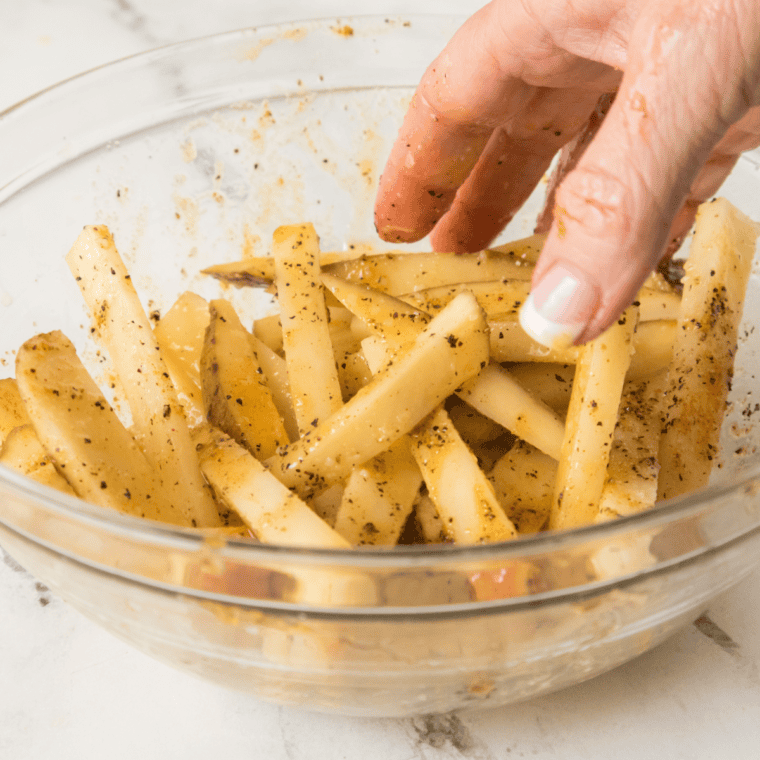
Step Three: Drain the fries and spread them on a clean kitchen towel. Pat until they’re genuinely dry — not damp, dry. Water on the surface turns to steam in the air fryer, and steamed fries don’t crisp. This is the single step most people rush, and it’s the difference between crisp and limp.
Step Four: Toss the dry fries with the oil until every piece is lightly slicked. Sprinkle the cornstarch over the top and toss again until the coating looks chalky and even, with no clumps. Hold the salt for now — salt draws out moisture, so it goes on after cooking.
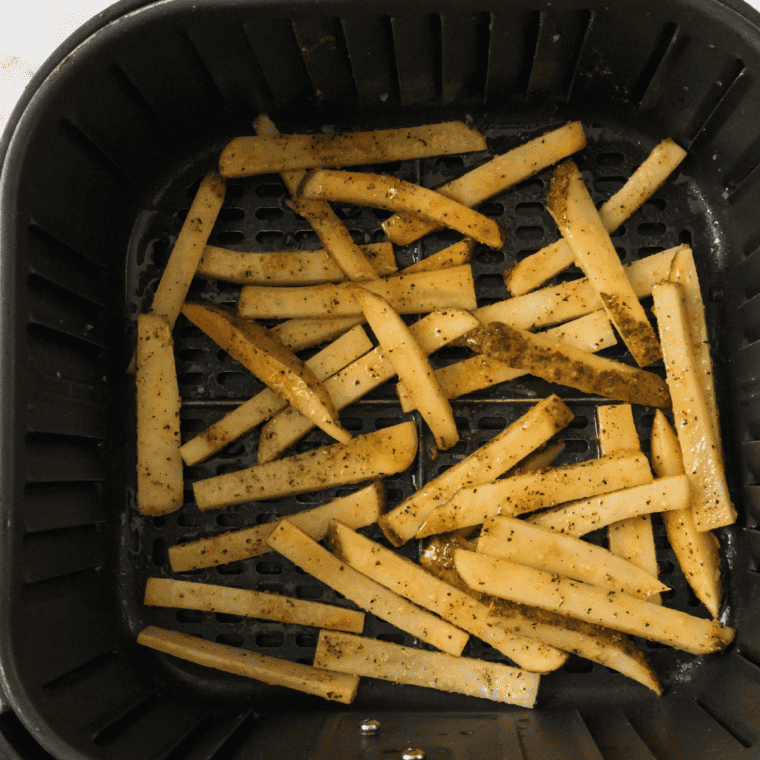
Step Five: Arrange the fries in a single layer in the basket. Crowding is the second most common mistake; cook in two or three batches if you need to.
- First: 350°F for 10 minutes, shaking the basket halfway. The fries will look pale and feel soft. That’s correct — this stage cooks the inside.
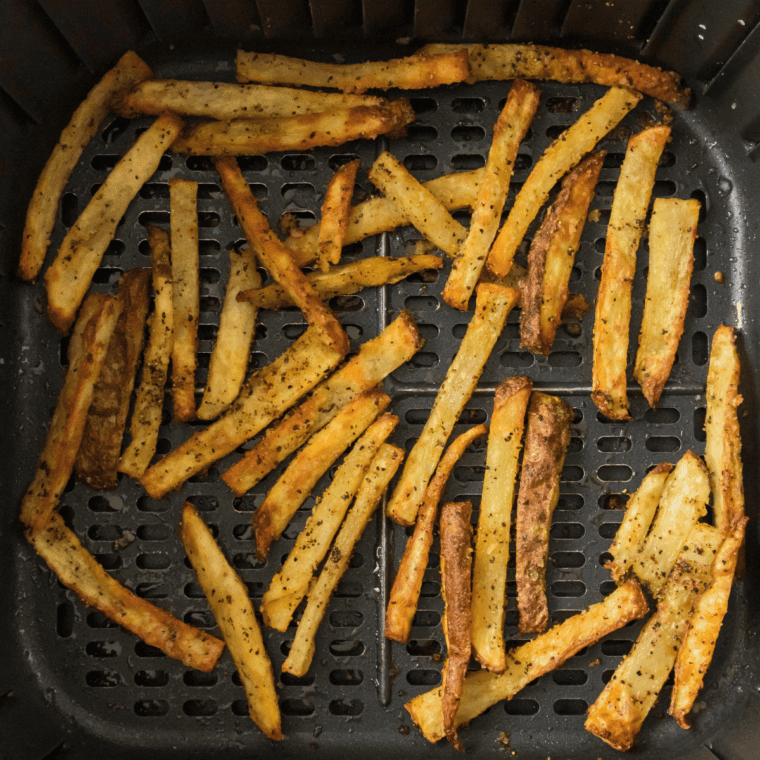
- Then: raise to 400°F for 8 to 10 minutes, shaking once, until the edges are golden and the skin patches have browned.
The two-stage cook is the home version of Wendy’s par-fry-then-fry process. A single 400°F run browns the outside before the middle is done, which is how you end up with a crisp shell around a raw center.
Step Six: Tip the hot fries into a bowl and sprinkle with the flaky sea salt while they’re still steaming — the residual oil is what makes the flakes stick. Toss, taste, add more if it needs it. Serve right away.
Tips For Crispier Fries
- Weigh your batches. About 3/4 pound of raw fries per basket load in a 5-quart air fryer. More than that and they steam instead of crisping.
- Don’t preheat with the fries inside. Preheat empty for 3 minutes so the basket surface is hot when the potatoes hit it.
- Cold water, not room temperature. Cold water firms the potato and slows enzymatic browning while it soaks.
- A wire rack beats a plate. Resting hot fries on a plate traps steam underneath and softens the bottoms within a minute.
- Skip the parchment liner. It blocks airflow underneath, which is exactly the airflow you need. A light spray of oil on the basket is enough.
Storing And Reheating
Fries are best in the first ten minutes and there’s no getting around it. But leftovers do come back:
- Refrigerate in an airtight container for up to 3 days.
- Reheat at 400°F for 3 to 4 minutes, straight from the fridge, no oil. They’ll get about 80% of the way back to fresh.
- Freeze uncooked fries after Step Three — soak, dry thoroughly, then freeze flat on a sheet pan before bagging. Cook from frozen, adding 4 to 5 minutes to the first stage. Don’t freeze them after coating with cornstarch; the coating turns pasty on thaw.
- Never microwave. You’ll get hot, floppy potato.
What To Serve With Them
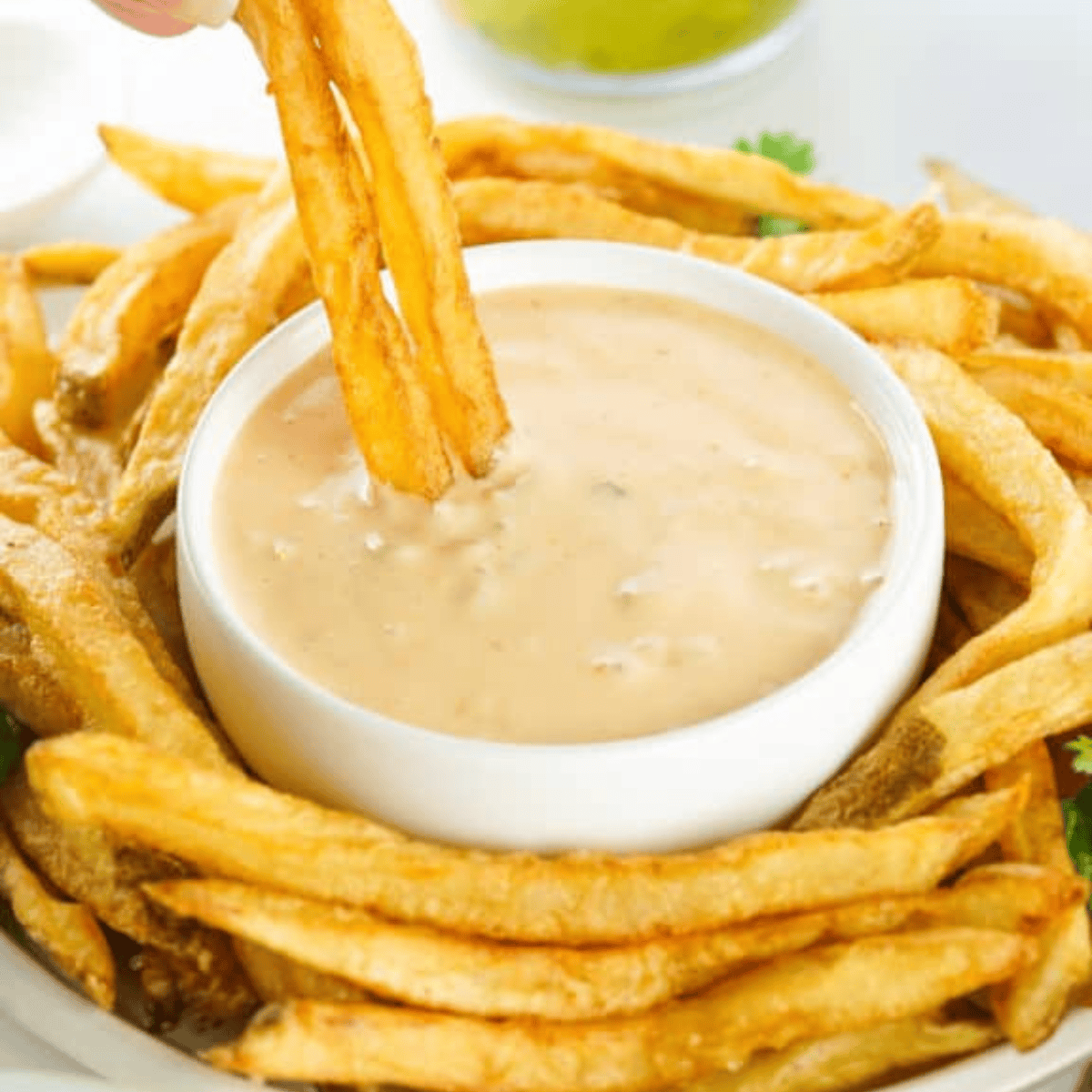
These are built for dunking, which is the point of a thicker cut. A few pairings from the site:
- Copycat Wendy’s Saucy Nuggs — the closest thing to a full drive-thru order at home
- Instant Pot Wendy’s Chili — ladle it over a basket of these with shredded cheddar for chili cheese fries
- Copycat Wendy’s Strawberry Frosty — if you’re a fry-in-the-Frosty person, this is the assignment
- Copycat Wendy’s Taco Salad — a lighter counterweight to a basket of fries
For a loaded version, my air fryer Taco Bell copycat nacho fries use the same base technique with a seasoned coating and cheese sauce.
Frequently Asked Questions
Do I really have to leave the skin on?
For a Wendy’s copycat, yes — the skin-on cut is the defining feature of the product. You can peel them if you prefer, but you’ll have made generic air fryer fries rather than a copycat.
Can I use Yukon Gold potatoes instead?
You can, and they’ll taste good, but they won’t taste like Wendy’s. Russets are higher in starch and lower in moisture, which is what produces the fluffy interior. Wendy’s uses 100% russet. Yukon Golds come out denser and creamier.
What if I don’t have cornstarch?
Skip it. The fries will be slightly less crisp but still good. Potato starch or arrowroot substitute one-for-one. Don’t use flour — it tastes raw and pasty without deep frying.
Why did my fries come out soggy?
Almost always one of three things: the fries weren’t dry enough before coating, the basket was overcrowded, or you skipped the 400°F finishing stage. Moisture and crowding are the usual culprits.
Can I make these in any air fryer?
Yes. Basket models, oven-style air fryers, and air fryer toaster ovens all work — timing shifts by a few minutes depending on wattage and basket size. Oven-style models with a larger tray can usually handle a bigger batch. Start checking at the low end of each stage. If you’re still figuring out your machine, my air fryer recipe collection has more to work from.
Are these gluten-free?
Yes, as written. Potatoes, oil, cornstarch, and salt are all naturally gluten-free — just confirm your cornstarch is certified if you’re cooking for celiac disease, since some brands are processed on shared equipment.
How do these compare to real Wendy’s fries?
Lower in fat, since you’re using about 2 tablespoons of oil across four servings instead of submerging them. You’re also skipping the dextrose and sodium acid pyrophosphate that Wendy’s uses for color retention. Check wendys.com for their current published nutrition if you want an exact side-by-side.
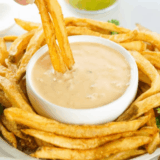
Air Fryer Wendy’s Copycat French Frie
Description
Ingredients
- 3 large russet potatoes, about 2 lbs, scrubbed, unpeeled
- 2 tablespoons vegetable oil
- 1 tablespoon cornstarch
- 1 1/2 teaspoons flaky sea salt, divided
Instructions
- Scrub the potatoes and leave the skin on. Cut lengthwise into 3/8-inch planks, then into 3/8-inch sticks.
- Soak the cut fries in a bowl of cold water for 30 minutes.
- Drain and spread on a clean kitchen towel. Pat completely dry.
- Toss the dry fries with the oil until evenly coated. Sprinkle over the cornstarch and toss again until evenly coated with no clumps.
- Preheat the air fryer at 350°F for 3 minutes.
- Arrange the fries in a single layer in the basket, working in batches. Cook at 350°F for 10 minutes, shaking halfway through.
- Increase to 400°F and cook 8 to 10 minutes more, shaking once, until golden with browned skin edges.
- Transfer to a bowl and toss immediately with the flaky sea salt while hot. Serve right away.
Equipment
- Cooking Spray
- Parchment Paper, optional
Notes
- Cook in batches rather than crowding the basket — overcrowded fries steam instead of crisping.
- Salt after cooking, not before. Salt draws out moisture and works against crisping.
- Store leftovers refrigerated up to 3 days; reheat at 400°F for 3 to 4 minutes.
Nutrition
Share this recipe
We can’t wait to see what you’ve made! Mention @forktospoon or tag #forktospoon!