The Ninja Slushi doesn’t work the way people expect, and that’s why the first few drinks disappoint.
There’s no ice and there are no blades. A compressor chills a metal cylinder to just below freezing, and an auger scrapes liquid around it, over and over, until the whole batch becomes slush. Nothing gets crushed and nothing gets diluted — which is why a Slushi margarita tastes the same at minute thirty as it did at minute one, and a blender margarita is cold limeade after four sips.
The catch is that the machine can only freeze what’s freezable. Pour in something with the wrong balance of sugar and alcohol and it will spin for two hours and hand you a cold drink. This guide covers the numbers that decide whether a drink works, which preset to use, and how to fix a batch that won’t freeze.
The Two Numbers That Decide Everything
Sugar: at least 4%. This is the requirement people trip over. Sugar lowers the freezing point of the liquid, which is what lets the auger scrape soft crystals off the cylinder instead of building a solid block. Below roughly 4% total sugar there isn’t enough depression and the machine can’t form slush.
This is why diet soda and zero-sugar drinks don’t work. Not “work less well” — don’t work. Same for plain water, unsweetened tea, black coffee, and most sugar-free mixers. If your machine starts beeping every minute with the temperature LEDs flashing downward, that’s the low-sugar alert, and it’s telling you the mix is out of range.
The fix is a tablespoon or two per serving of anything that carries sugar: simple syrup, flavored syrup, juice, honey, agave, maple syrup, or plain sugar.
Alcohol: 2.8% to 16% ABV in the finished mix. Alcohol lowers the freezing point too — much harder than sugar does — so past a certain point the batch simply cannot freeze. Under 2.8% and there’s not enough to matter; over 16% and you’ll be waiting forever.
This is the single most common reason a frozen cocktail fails. A margarita poured the way you’d pour it over ice lands well above the ceiling. Every good Slushi cocktail is built to a target ABV rather than to taste, which is exactly how the Ninja Slushi Margarita is written.
Rough guide: a batch that finishes somewhere around 8–12% ABV freezes reliably and still tastes like a real drink.
The Presets
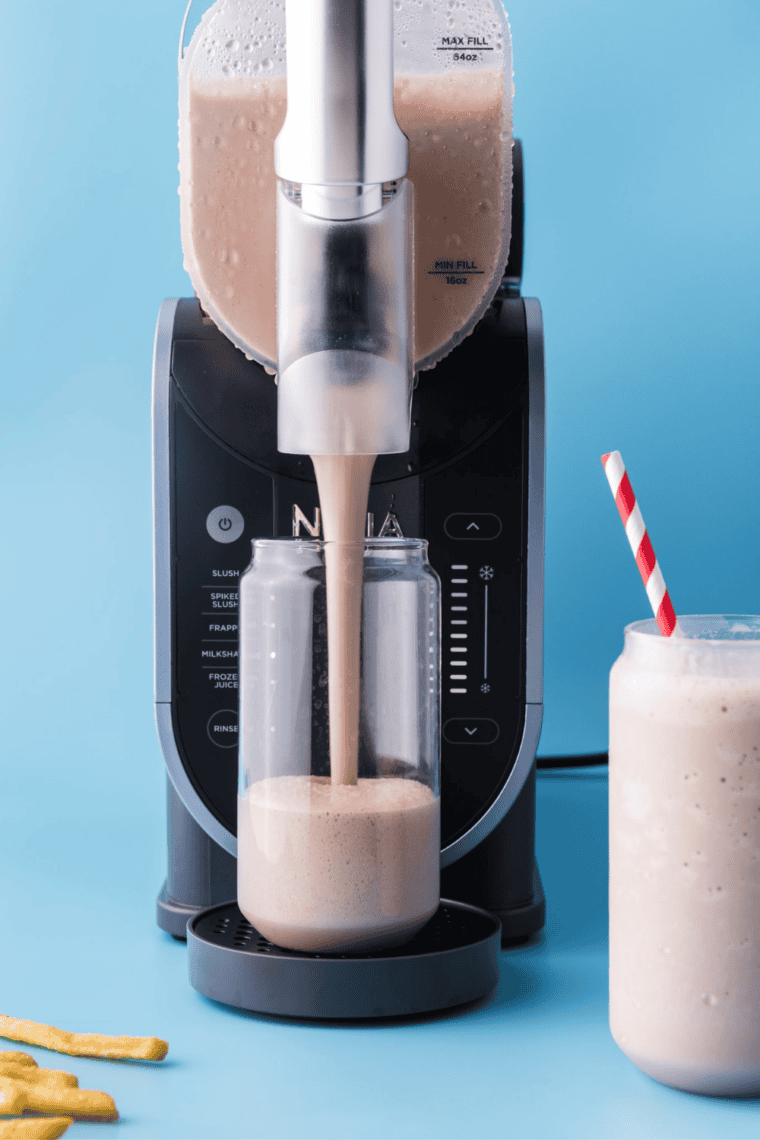
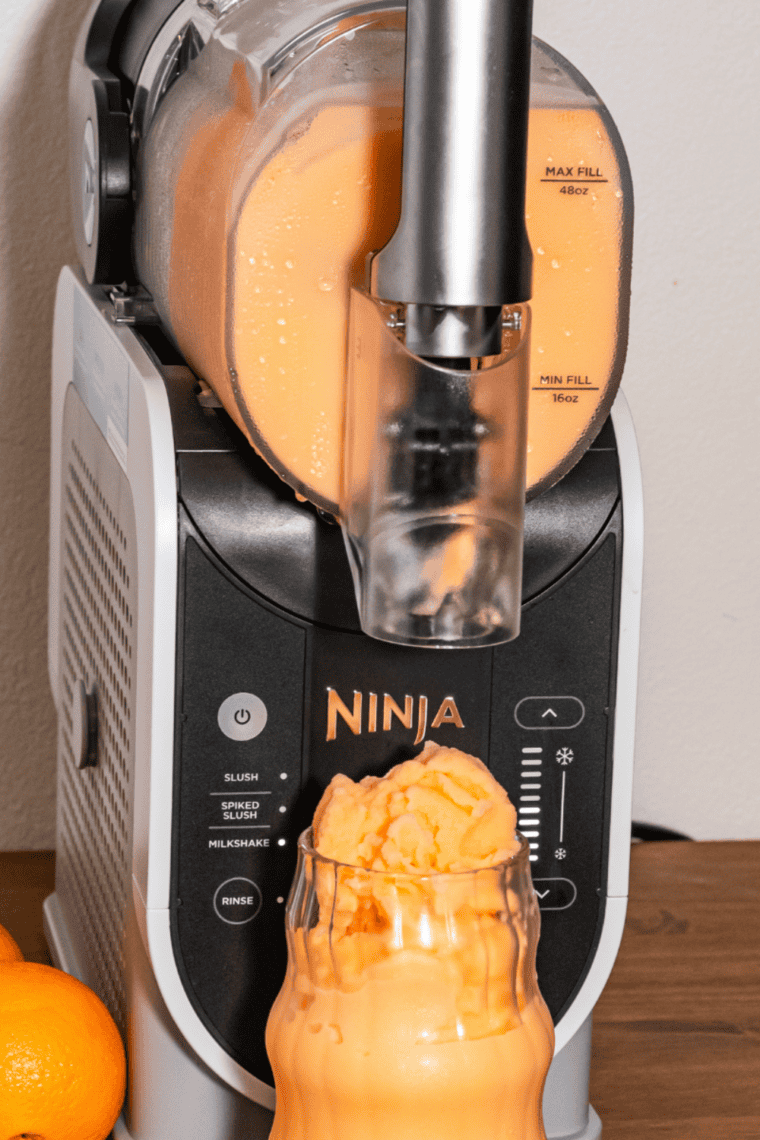
Which ones you have depends on your model — the three-preset machines have Slush, Spiked Slush, and Milkshake, while the five-preset models add Frappé and Frozen Juice. Full model comparison is in Ninja Creami vs Ninja Slushi.
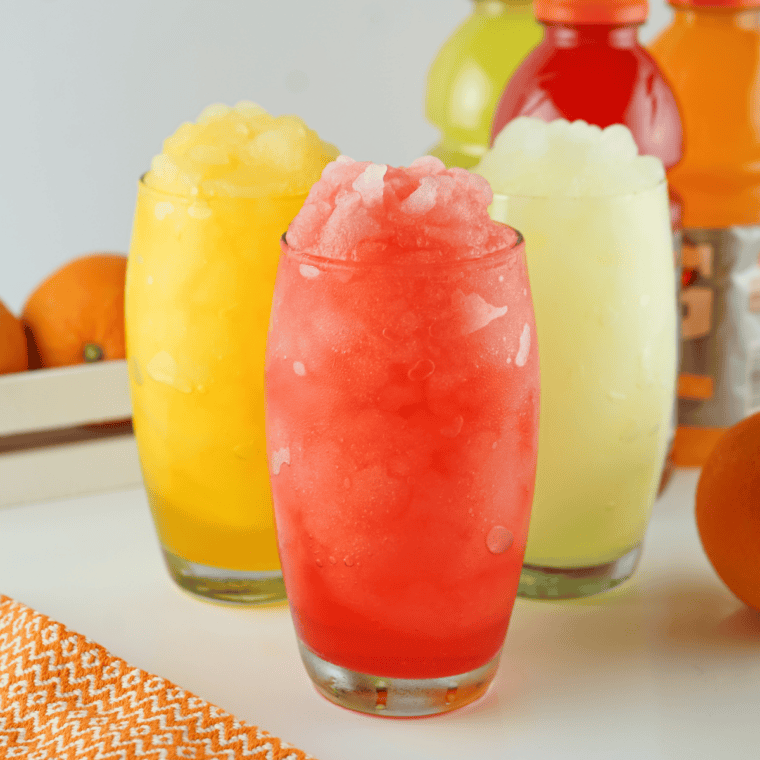
SLUSH — the default for non-alcoholic sweet drinks. Soda, lemonade, drink syrups, Kool-Aid. Anything that comfortably clears the sugar minimum on its own. Use it for the Blue Raspberry Slush and the Apple Cider Slush.
SPIKED SLUSH — anything with alcohol. Longer cycle and a harder target temperature, because alcohol resists freezing. This is the preset for the Sangria Wine Slushie, the Hard Lemonade, and the Blue Hawaiian.
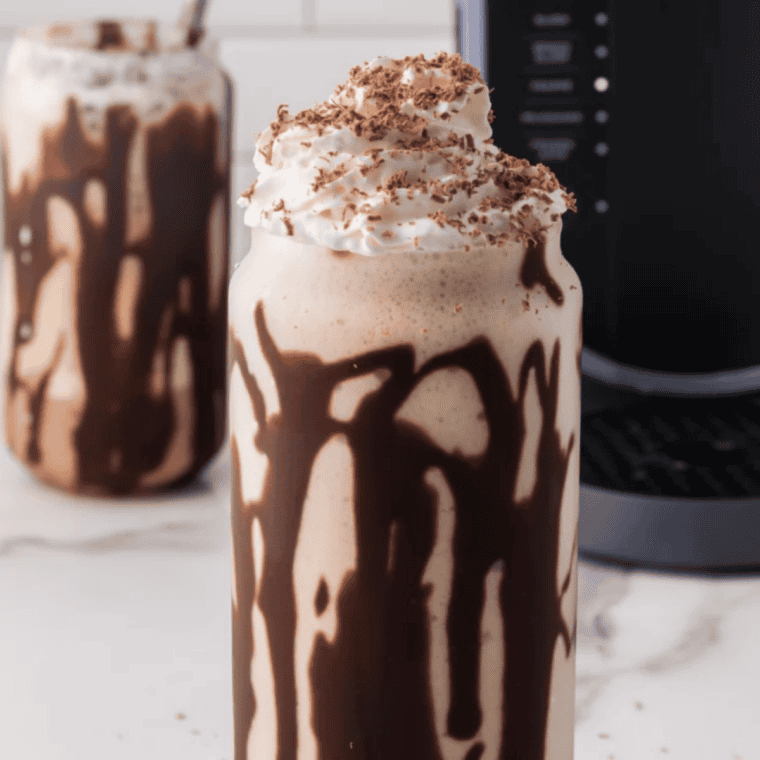
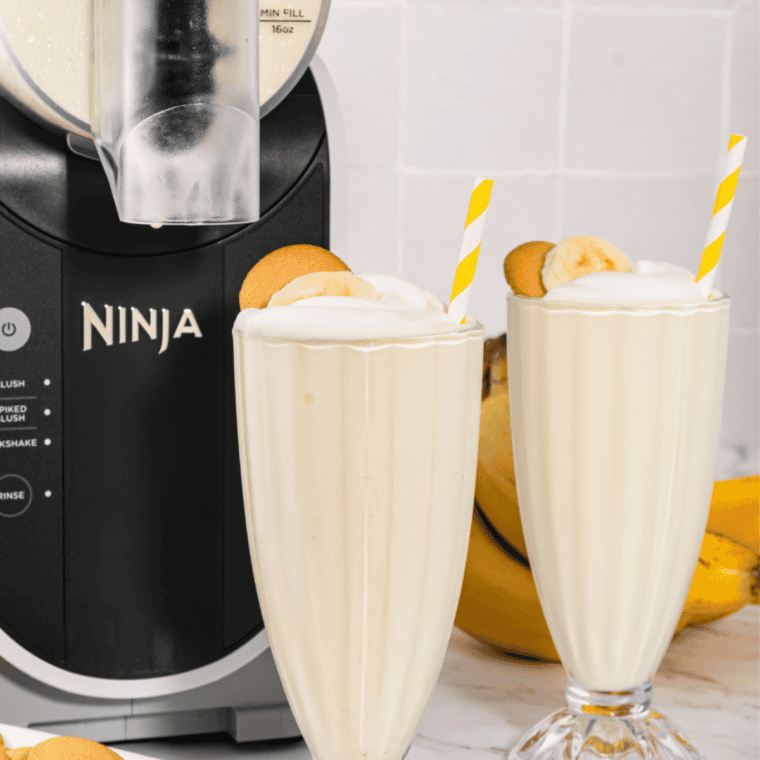
MILKSHAKE — dairy-heavy mixes. It aerates more, which is what gives you diner-style thickness rather than a grainy frozen milk. Used in the Banana Milkshake and the Chocolate Milkshake.
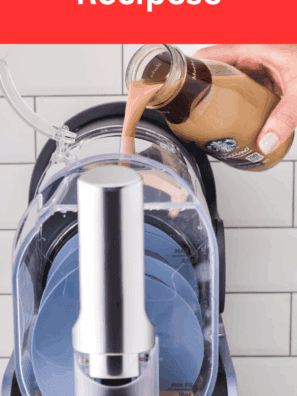
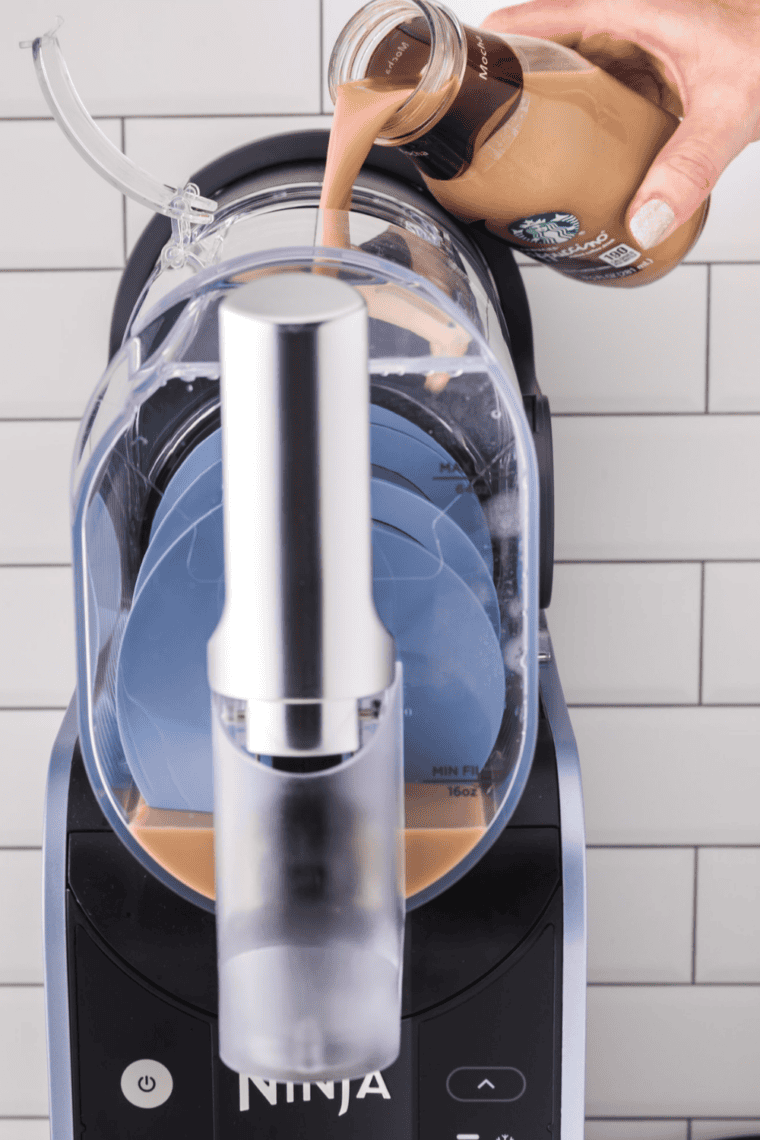
FRAPPÉ — coffee and creamy coffee-adjacent drinks. Runs the auger differently to keep the mix from foaming. See the Mocha Frappe.
FROZEN JUICE — juice-forward drinks that are sweet but thinner than a soda base.
The preset controls temperature behavior. It cannot rescue a mix that’s out of range on sugar or alcohol — if the numbers are wrong, no button fixes it.
The temperature arrows
Every preset starts at its default and you can nudge it. Up gives a thicker, colder result. Down gives something more sippable. If a drink is right on flavor but wrong on texture, this is the knob to turn before you change the recipe.
Filling and Running It
Chill everything first. This is the highest-value habit in the whole guide. Room-temperature liquid means the machine spends the first fifteen minutes just getting the batch cold. Twenty minutes in the fridge roughly halves the run time.
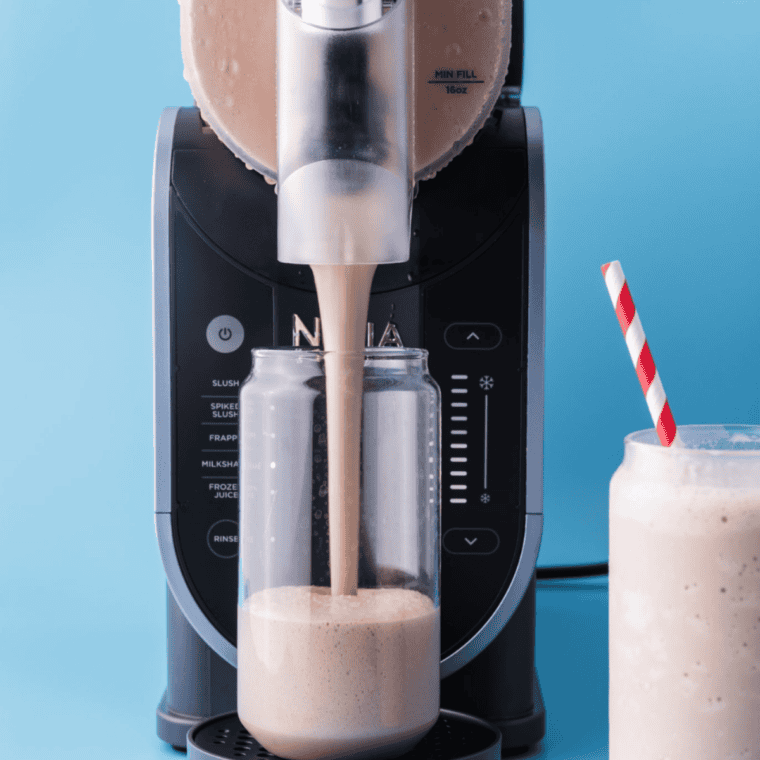
Respect the fill lines. There’s a minimum and a maximum on the vessel and both matter — too little and the auger can’t move the batch properly, too much and it has nowhere to expand. Capacities differ across the FS300, FS301, and the XL and MAX models, so go by the lines on your vessel rather than a number from a recipe.
Mix in a pitcher, not the machine. Sugar and pudding mix need to be fully dissolved before they go in. Undissolved solids settle and never incorporate.
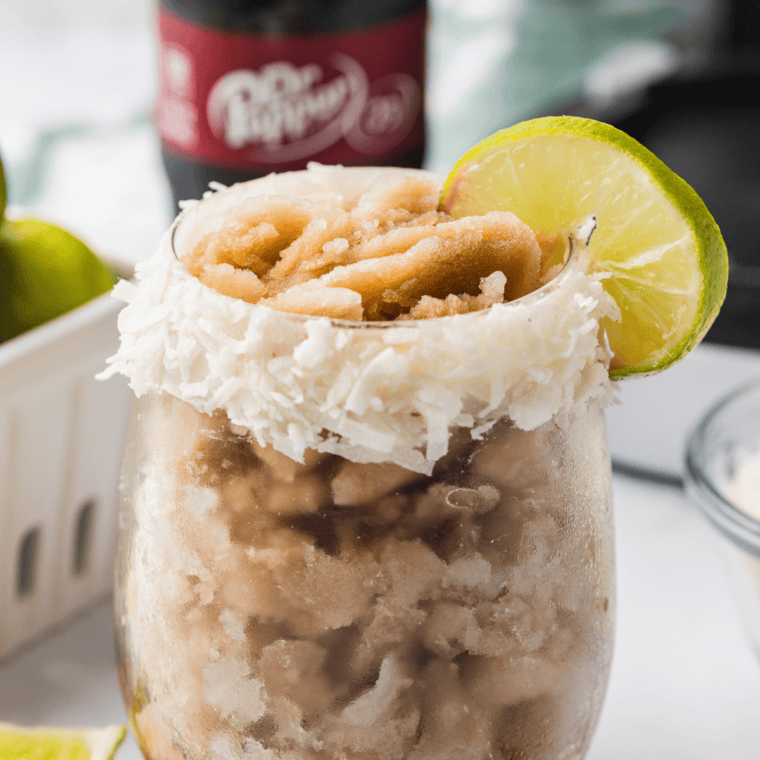
Let carbonation go flat. Soda works and works well, but pour it in fizzing and it foams badly. Let it sit until it’s semi-flat first.
Run time is 15 to 60 minutes, depending on the drink and how cold it started. Non-alcoholic slushes finish fastest; spiked batches take the longest. The unit beeps three times when it hits target.
After the Beep
Serve dairy drinks immediately. On MILKSHAKE and FRAPPÉ, dispense within about 30 minutes of the beep. Past that, continued aeration turns a dense, spoonable shake into something foamy and light. This is Ninja’s own guidance and it’s real — the Wendy’s Frosty Fusion recipe is built around it.
Non-alcoholic slush holds for hours. The machine keeps it at temperature for up to 12 hours without dilution, which is the actual party advantage — set it running before guests arrive and forget it.
Leave the preset running until the vessel is empty. Turning it off with frozen drink still inside makes cleaning considerably harder.
Rinse right away. Stop the preset, press RINSE, fill with hot water to the max line, and dispense it immediately. Then wash the parts properly. Sugar left to dry in the auger is the worst version of this job.
Troubleshooting
It’s been an hour and it’s still liquid. Alcohol above 16%, or sugar below 4%, or both. Add simple syrup for the sugar problem; add juice or a non-alcoholic mixer for the alcohol problem.
Beeping every minute, LEDs flashing downward. The low-sugar alert. Add 1–2 tablespoons of syrup, juice, or sugar per serving.
Thin and sippable when you wanted thick. Press the temperature arrow up.
Milkshake came out foamy. It sat too long after the beep. Dispense within 30 minutes next time.
Icy and coarse rather than smooth. Usually a mix that started warm. Chill the base first.
Foaming out of the spout. Carbonation. Let soda go flat before it goes in.
What Not to Put In It
- Diet or zero-sugar anything — below the sugar minimum, won’t freeze
- Straight spirits or high-proof mixes — above the alcohol ceiling
- Plain water, black coffee, unsweetened tea — no sugar to work with
- Whole fruit, ice, or anything chunky — there are no blades in this machine
- Thick smoothie bases — the auger can’t move them
Sugar-Free Options
Allulose is the one sugar substitute that behaves like sugar in a freezer, because it lowers the freezing point the way sucrose does. Erythritol and most monk fruit blends don’t, and they recrystallize besides.
Even with allulose, expect to work at it — this machine’s sugar minimum is a real engineering constraint, not a suggestion.
Frequently Asked Questions
Why won’t my Ninja Slushi freeze? Almost always alcohol above 16% ABV or sugar below 4%. Both lower the freezing point past what the machine can reach.
Can I use diet soda in the Ninja Slushi? No. There isn’t enough sugar to form slush. You’d need to add a sweetener that depresses the freezing point, which defeats the purpose for most people.
How long does the Ninja Slushi take? Fifteen to sixty minutes. Chilling your liquid first cuts it roughly in half.
Do I need to add ice? No. There’s no ice and no blade — the machine freezes the liquid itself, which is why nothing gets watered down.
What’s the difference between Slush and Spiked Slush? Spiked Slush runs longer and colder to compensate for alcohol resisting the freeze. Use it for anything with booze in it.
Can I leave a drink in the machine? Non-alcoholic slush holds up to 12 hours at temperature. Dairy drinks on Milkshake or Frappé should be dispensed within about 30 minutes or they go foamy.
How much alcohol can I put in? The finished mix should land between 2.8% and 16% ABV. Around 8–12% is the reliable sweet spot.
Ninja Slushi Recipes to Start With
- Ninja Slushi Dole Whip — two ingredients, and the easiest win on the list
- Ninja Slushi Margarita — built to a target ABV, which is the whole lesson
- Ninja Slushi Mocha Frappe
- Ninja Slushi Banana Milkshake
- Ninja Slushi Chocolate Milkshake
- Ninja Slushi Copycat Frosty
- Easy Ninja Slushi Blue Raspberry Slush
- Ninja Slushi Sangria Wine Slushie
- Ninja Slushi Hard Lemonade
- Easy Ninja Slushi Apple Cider Slush
- Ninja Slushi Blue Hawaiian
- Ninja Creami vs Ninja Slushi — which machine you actually want