
Learn exactly where to place your air fryer safely — clearance rules, surface guide, under-cabinet tips, and the 7 spots you should always avoid.
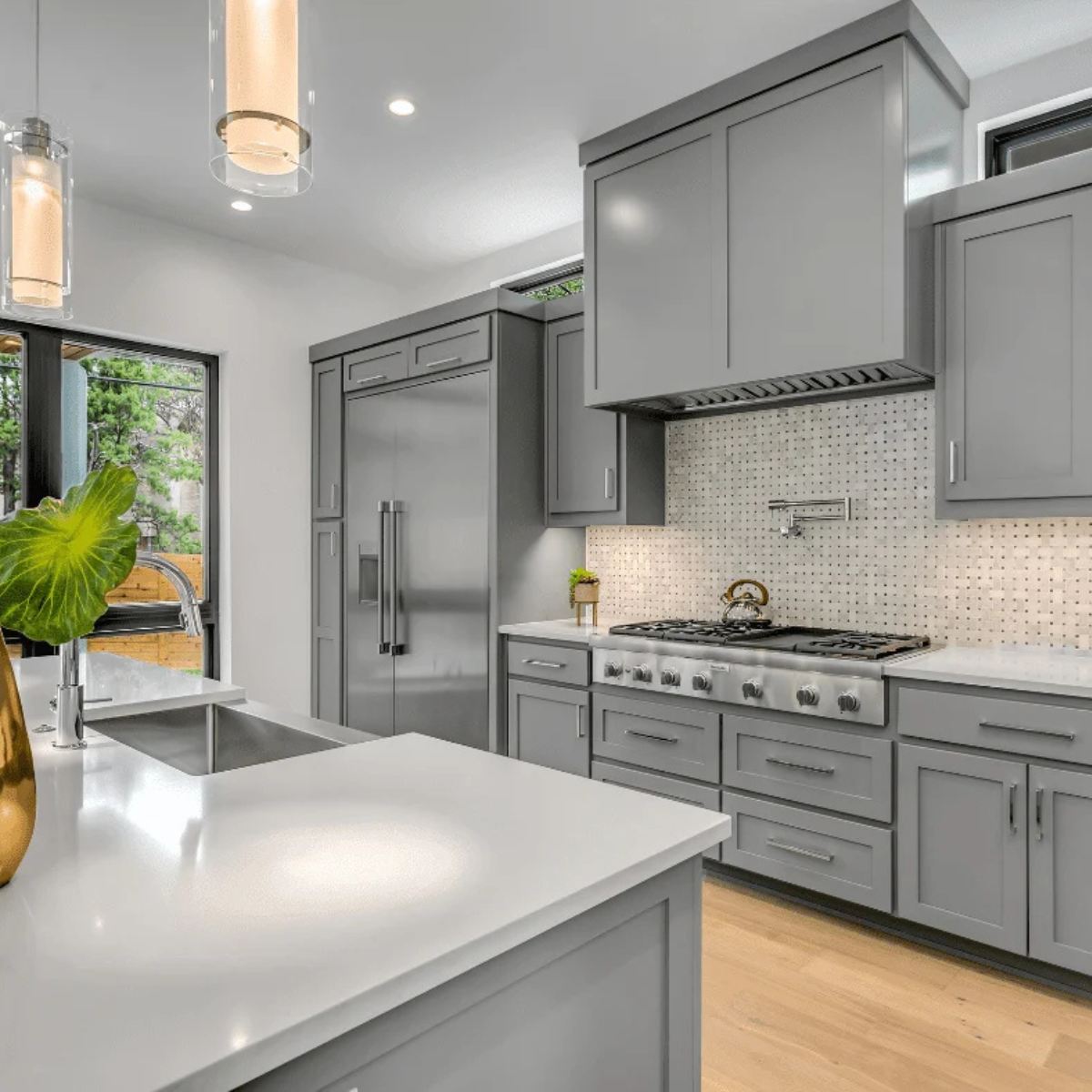
Quick Answer: The best place for an air fryer is on a flat, stable, heat-resistant countertop with at least 5 inches of clearance on all sides and at least 8 inches of clear space above. Keep it away from water sources, flammable materials, and direct sunlight. Use a silicone mat underneath to protect your counter. Never place it inside a closed cabinet while in use.
I have been cooking with air fryers since 2018 and have fielded hundreds of questions about placement — from “can I use it on my glass stovetop?” to “will it damage my Ikea cabinets?” This guide covers everything: the clearance rules manufacturers actually specify, which surfaces need protection, the under-cabinet question everyone asks, and the seven placement spots you should never use.
Air Fryer Clearance Requirements — The Numbers That Matter
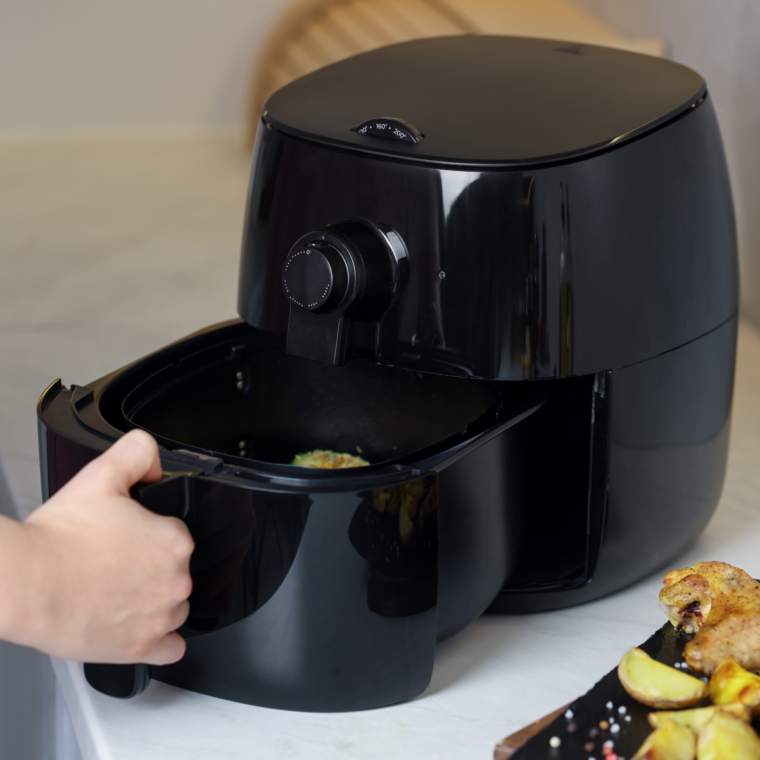
Every air fryer manufacturer publishes clearance requirements in their user manuals. The guidance from appliance safety experts and major manufacturers is consistent:
| Clearance Direction | Minimum Required | Why It Matters |
|---|---|---|
| Sides (left and right) | 5 inches (12 cm) | Hot air vents from sides on most basket models; restricted airflow causes overheating |
| Back (from wall) | 5 inches (12 cm) | Rear exhaust vent on many models; walls trap heat and can discolor or warp |
| Above (from cabinets) | 8 inches (20 cm) | Rising steam and heat can damage MDF, laminate, and painted cabinet surfaces |
| Front (basket clearance) | 6 inches (15 cm) | Basket or drawer must open fully without obstruction for safe food removal |
These are minimums — more clearance is always better. If you cannot give the air fryer at least these distances, find a different location or a smaller air fryer. Always check your specific model’s user manual, as larger oven-style air fryers may specify additional clearance.
The Best Places to Put Your Air Fryer
1. Open Countertop — Best for Daily Users
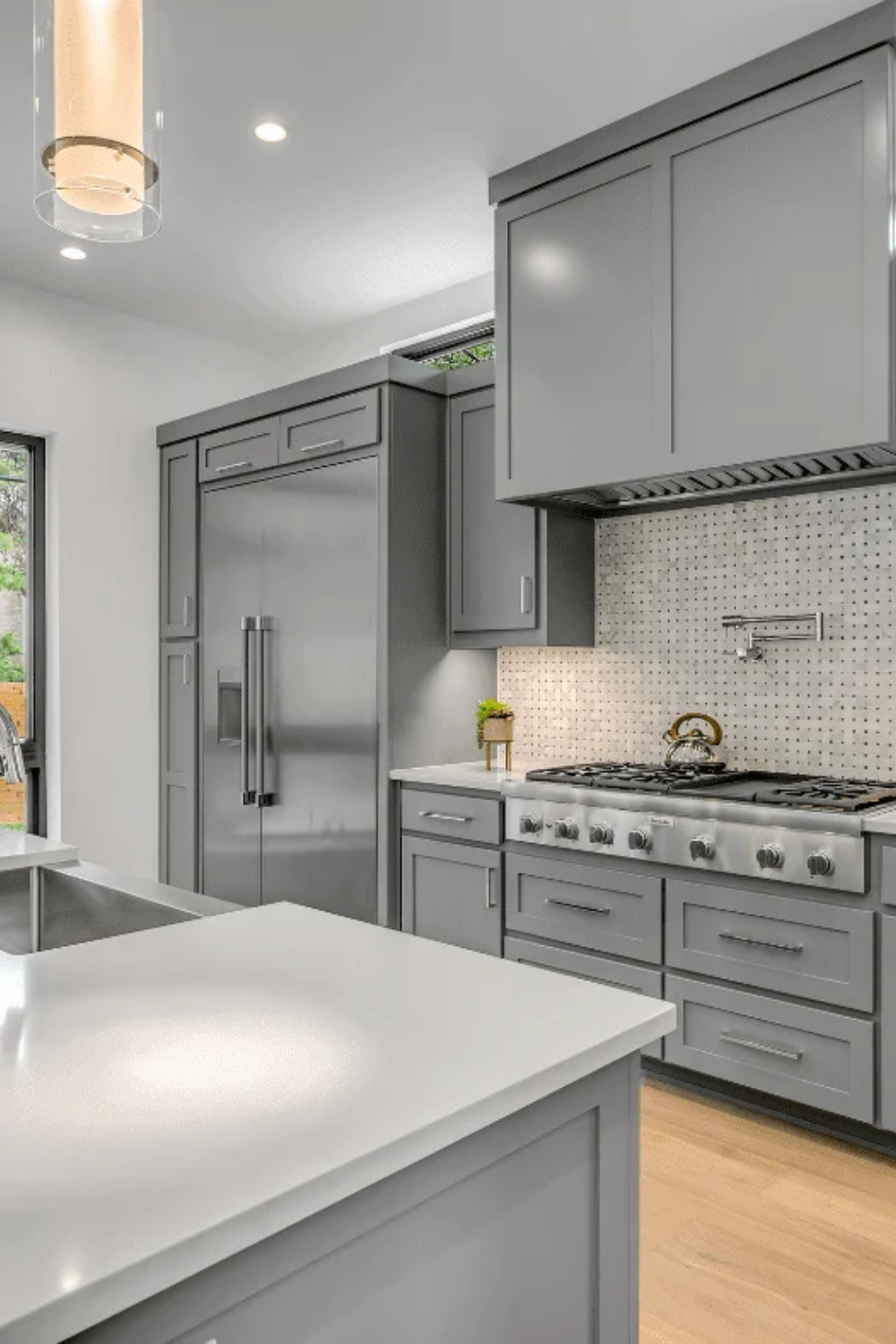
For anyone who uses their air fryer regularly, the kitchen counter is the best placement. Choose a section that is away from the sink, away from the stove, and away from the edge. When the air fryer is running, pull it at least 5 inches forward from the backsplash so the rear vent has clearance. Always use a heat-resistant silicone mat underneath — even granite and quartz can crack from repeated thermal stress.
2. Kitchen Island
If your island has a dedicated power outlet and good ventilation overhead, this can be an excellent spot. The open sides of an island provide natural clearance and the elevated work surface makes basket-pulling comfortable.
3. Rolling Cart or Microwave Cart
A rolling butcher block or stainless steel cart gives the air fryer its own dedicated station that can be moved as needed — especially good for small kitchens. The cart surface must be heat-resistant (not plastic), the cart must be stable enough not to wobble when you pull the basket, and you need a nearby outlet to avoid extension cords.
4. Dedicated Appliance Shelf
An open shelf with at least 8 inches of space above it works well. Never place the air fryer on a shelf inside a closed cabinet while it is operating — heat has nowhere to escape and creates a serious safety risk.
5. Counter Stand or Appliance Riser
Counter stands lift the air fryer several inches off the counter surface, creating additional clearance underneath and making the controls easier to see. Make sure the stand is rated for the weight of your specific air fryer.
Can You Put an Air Fryer Under Cabinets?
Yes — but only with enough overhead clearance.
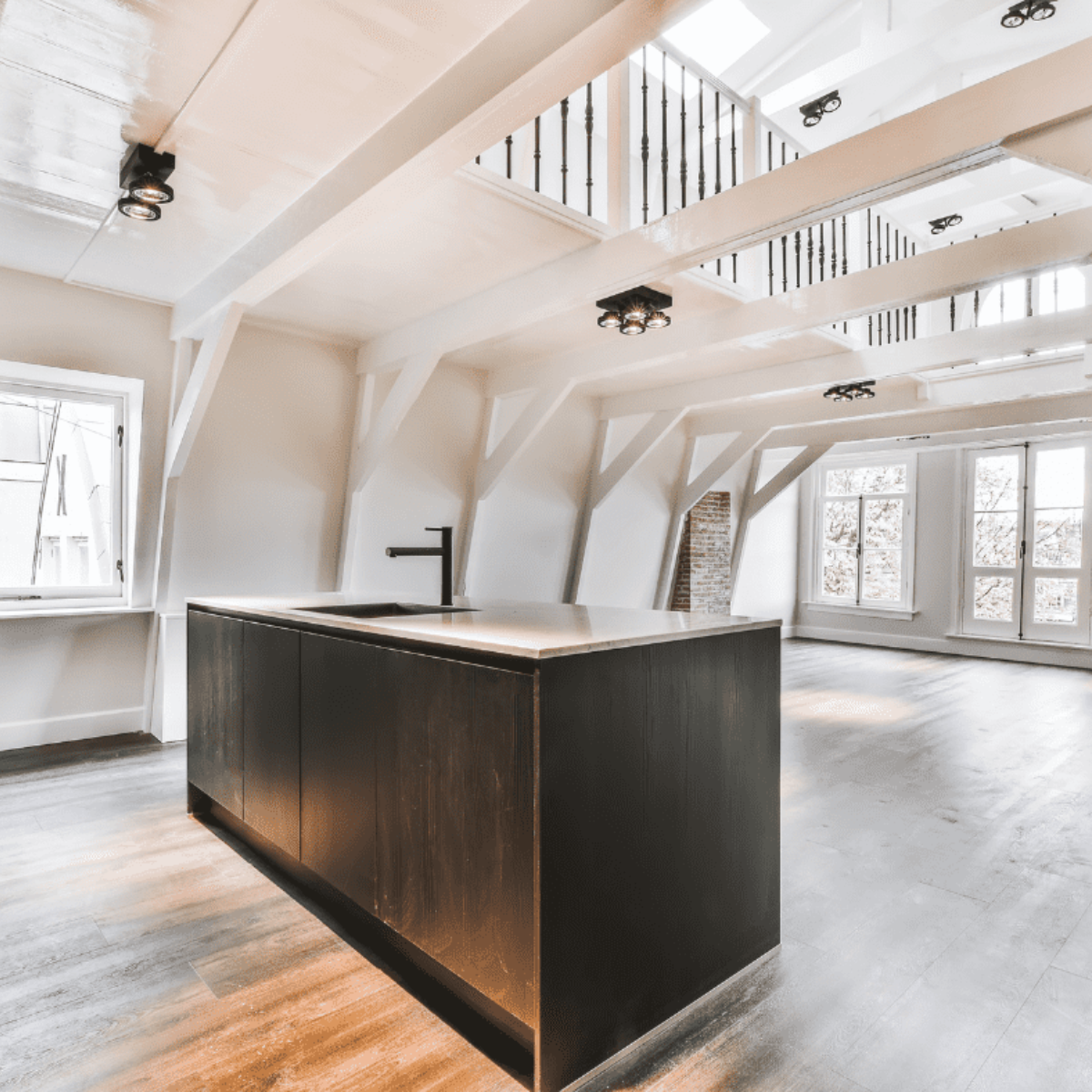
If there is at least 8 inches between the top of your air fryer and the underside of the cabinet, you can use it in that position. Less than 8 inches risks heat damage to the cabinet over time — particularly MDF, laminate, or painted wood surfaces, which can discolor, warp, or peel when repeatedly exposed to rising heat and steam.
- High-risk cabinet materials: MDF (common in Ikea kitchens), laminate wrap, painted finishes
- More resistant materials: Solid wood, thermofoil on quality substrate — still need 8 inches
- The storage vs. use distinction: You can store an air fryer pushed back under a low cabinet when it is off and unplugged. The 8-inch rule only applies when it is running. Many people store it pushed back and pull it forward to cook.
The 7 Worst Places to Put an Air Fryer
- Inside a closed cabinet while operating — the single most dangerous placement. Heat builds rapidly in an enclosed space, significantly increasing fire and overheating risk.
- Directly on a glass or ceramic stovetop — glass-top stoves are not designed for the weight or thermal stress of an air fryer and can crack. Many manufacturers void warranties if appliances are placed on top.
- On top of the microwave — microwaves are not designed as a base for other appliances and the surface is not heat-rated.
- Next to the sink or dishwasher — water and electrical appliances are a serious safety hazard. Keep at least 18 inches between the air fryer and any water source.
- Near curtains, paper towels, or dish towels — hot exhaust can ignite flammable materials that get too close.
- In direct sunlight near a window — prolonged direct sunlight can heat the casing, stress the electronics, and affect cooking performance.
- Pushed against the wall while operating — even technically sufficient front-to-back clearance is undermined if the rear vent is blocked by the backsplash. Always pull it forward when in use.
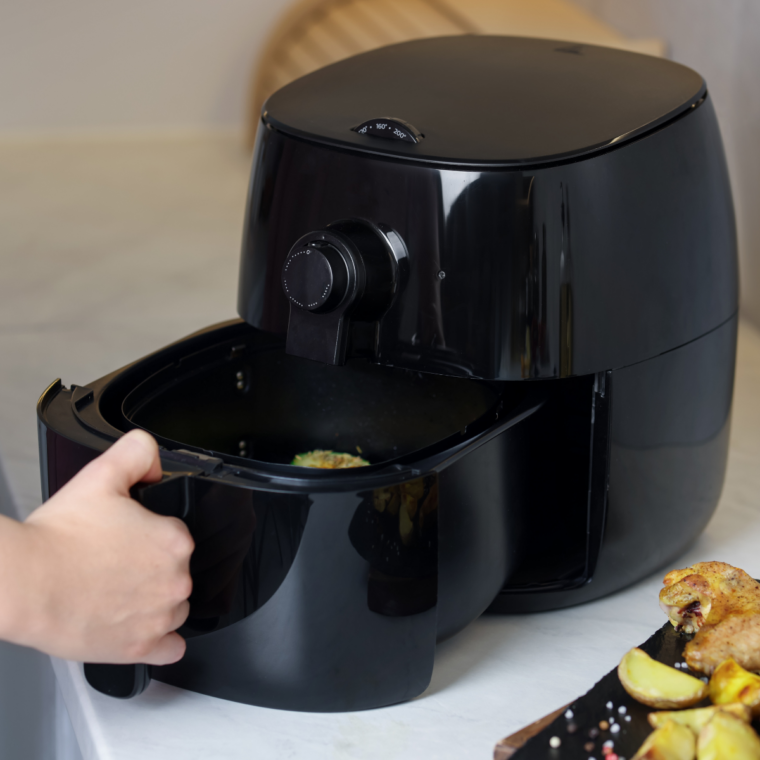
Best Surfaces for an Air Fryer
| Surface | Safe to Use? | Guidance |
|---|---|---|
| Granite | Yes — with mat | Heat-resistant but can crack from thermal shock. Always use a silicone mat. |
| Quartz | Yes — with mat | Less heat-resistant than natural stone. Use a mat. |
| Laminate | Caution | Can melt, bubble, or discolor. Always use a thick silicone mat. |
| Butcher block / wood | Caution | Can scorch from sustained heat. Always use a mat. |
| Tile | Generally fine | Heat-resistant. A mat keeps the fryer level and protects grout. |
| Marble | Yes — with mat | Can crack from thermal shock. Use a mat. |
| Glass stovetop | Never | Can crack. Stovetop manufacturers void warranties. |
| Plastic surfaces | Never | Melting risk. Any plastic surface is unsuitable. |
Where to Store an Air Fryer When Not in Use
Storage rules are much more relaxed than operating rules — when the air fryer is off and unplugged, it can be stored almost anywhere that fits:
- On the counter — most convenient for daily users
- In a lower cabinet — works well for occasional users; the main challenge is weight (5–25 lbs)
- In an appliance garage — ideal permanent home if your kitchen has one
- On a pantry shelf — fine for infrequent users; make sure the shelf is weight-rated
- On a rolling cart — keeps the appliance dedicated without taking permanent counter space
Storage tip: always store the air fryer with the basket fully inserted and closed. This prevents the basket from getting dirty on a shelf.
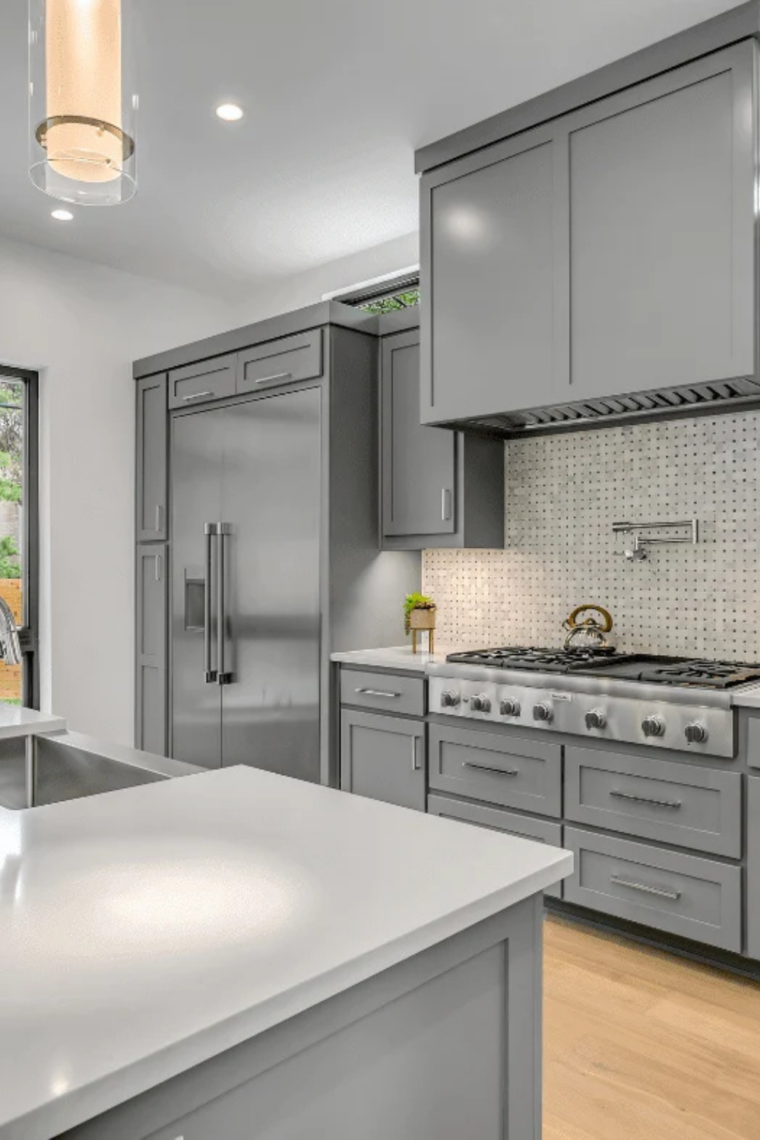
Air Fryer Placement for Small Kitchens
- Measure first: a 5-qt basket air fryer with required clearance needs about 15 × 15 inches of active counter space at minimum
- Rolling cart in an adjacent space: a small cart can live outside the kitchen and be rolled in when needed
- Consider a smaller model: a 2–3 qt compact air fryer (Ninja AF100, Cosori 2qt) has a much smaller footprint and works well for 1–2 people
- The noodle board method: a wooden cover over the stove burners creates extra surface — but only when the stove is completely off and cold, and only if the air fryer has full clearance above
What does not work in small kitchens: operating inside a closed corner cabinet, on a cluttered counter without clearance, or balanced on other appliances. These are fire hazards regardless of kitchen size.
Quick Safety Checklist Before Every Use
- Flat, stable surface — air fryer is level and will not tip when basket is pulled
- 5 inches clearance on sides and back — pull forward from backsplash if needed
- 8 inches clearance above — no cabinet or shelf within 8 inches of the top
- 6 inches clearance in front — space to open basket or door fully
- Away from water — at least 18 inches from sink, dishwasher, or running water
- No flammables nearby — curtains, paper towels, dish towels cleared from exhaust path
- Silicone mat in place — protecting counter surface from heat
- Cord secured — not dangling over edge or near water
Frequently Asked Questions
Where is the best place to put an air fryer? On a flat, heat-resistant countertop with at least 5 inches of clearance on all sides and 8 inches above, with a silicone mat underneath. If you use it daily, keeping it on the counter is the most convenient option.
Can you put an air fryer under kitchen cabinets? Yes, if there is at least 8 inches of clearance between the top of the air fryer and the cabinet base. Less than that risks heat and steam damage to cabinet finishes over time.
How much clearance does an air fryer need? Minimum 5 inches on the sides and back, 8 inches above, and 6 inches in front for the basket to open. These are minimums — more is always better.
Can I put my air fryer on a glass stovetop? No. Glass stovetops are not designed for the weight or thermal stress of an air fryer and can crack.
Do I need to put something under my air fryer? Yes — a silicone mat or heat-resistant trivet is strongly recommended for any surface. Even heat-resistant surfaces can crack from repeated thermal stress, and a mat prevents the air fryer from sliding.
Is it safe to use an air fryer on laminate countertops? Laminate is heat-sensitive and can melt or discolor. Always use a thick silicone mat and make sure the rear vent does not aim directly at the laminate backsplash.
Can I store an air fryer in a cabinet? Yes, when it is off and unplugged. Storage rules are much more relaxed. Never run an air fryer inside a closed cabinet.
Can I use my air fryer on a rolling cart? Yes — one of the best solutions for small kitchens. The cart surface must be heat-resistant (not plastic), stable, and you need a nearby outlet.
More Air Fryer Tips and Resources
- What to Put Under Your Air Fryer — counter protectors reviewed and compared
- Best Storage Solutions for Your Air Fryer — organizing your accessories
- Why You Need an Air Fryer in Your Life — the case for making it a kitchen staple
- Air Fryer Frozen Food Cooking Chart — the complete time and temp reference
- 25 Must-Have Air Fryer Recipes for Beginners — start cooking



Maria
Hello,
What exactly is a noodle board. Thank you
Carol Schorn
Hi, Laurie,
Thanks for your information! Could you answer a question for me? I have a small galley kitchen. I have the air fryer on a rolling cart outside the kitchen so as not to put it on the range and damage that, or under the kitchen cabinets. My question is that I have also seen that it’s very good or even necessary to have a range hood or other ventilation very near by, to handle the hot steam, oily vapors, etc. I have thought of trying a ductless range hood and suspending that over the air fryer to soak up any of the heat, vapors, etc. Have you tried that, or do you know anyone who has? The walls nearest to the air fryer and cart are plain painted sheetrock. I’d rather not have discolored or greasy marks on my walls. Please let me know what you think. I could send photos of the air fryer on its cart if that will help. Thanks!
Laurie
Can you roll the cart into the kitchen? Or can you add a noodle board to the stove/oven and place it on that?
Carol Schorn
Hi, Laurie,
Thanks for your reply! Yes, I can roll the cart into the kitchen, but that creates its own problems. The kitchen is very narrow, and the cart would fill most of its width, blocking me from the sink or the refrigerator. And then, the air fryer would still not be under the range hood — it would just be closer to it. But then the air fryer would be close enough to the front of the oven and the four cabinets on either side, both level with the oven and above it, that I’m afraid it might damage any of those.
And if I put the air fryer on the stove/oven, the rear vents would be right up within a very few inches of the controls for the stove/oven, which are on the vertical part that sticks up at the rear of the stove/oven. I think the controls would get cooked.
The cart was the only way I could think of to give the air fryer the several inches of free space recommended at its top, rear and sides.
Can I attach a photo or two to show the situation?
Thanks again!
Laurie
Yes, attach a photo.
Carol Schorn
Hi, Laurie,
Dumb question: I don’t actually see a link to attach the photo. Is there one I don’t see? Or is there an email address I could send the photo to?
Thanks!
Laurie
I’ll message you.