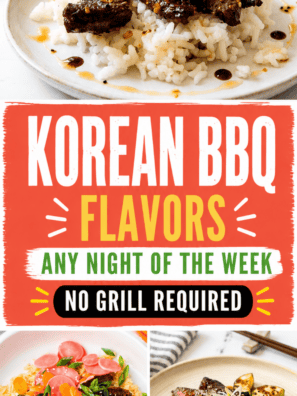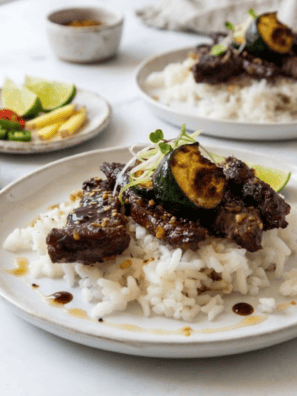
If you love the sweet-savory flavor of Korean BBQ but don’t want to drag out the grill, these air fryer bulgogi bowls are about to earn a permanent spot in your weeknight rotation. Thin slices of sirloin soak in a glossy soy-gochujang marinade, then hit the air fryer for six to eight minutes until the edges caramelize and crisp while the centers stay juicy and tender.
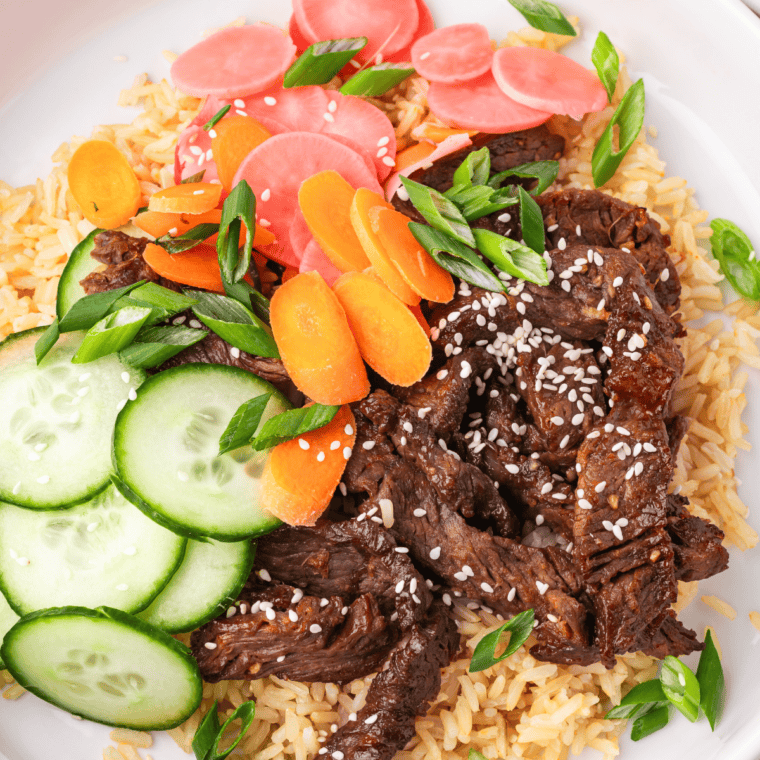
Piled over warm rice with scallions, toasted sesame seeds, and crunchy cucumber or pickled radish, this is Korean BBQ flavor with about ten minutes of hands-on work. No grill, no smoke alarm, no splattered stovetop.
If you’ve already made my Air Fryer Bulgogi with Zucchini, think of this as the rice-bowl version — same caramelized beef, built into a full meal with a base, a protein, and something crunchy on top.
Why You’ll Love These Bulgogi Bowls
- Fast. Six to eight minutes of cook time. Marinating is hands-off, and even 30 minutes builds serious flavor.
- Better texture than a skillet. Circulating hot air pulls surface moisture off the beef instead of trapping it, so it browns rather than steams.
- One appliance, minimal cleanup. No grill grates to scrub.
- Meal-prep friendly. The marinade doubles cleanly and the cooked beef reheats beautifully.
- Completely customizable. Swap the protein, the grain, or the heat level without changing the method.
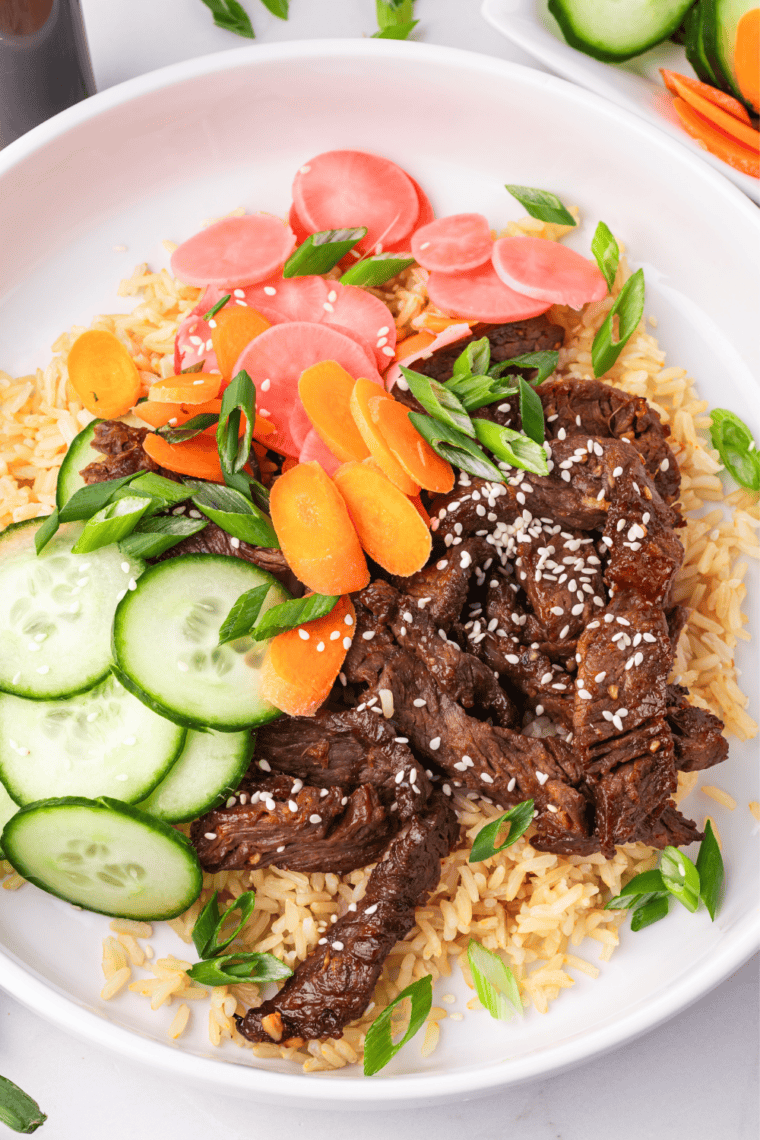
What Is Bulgogi?
Bulgogi (불고기) means “fire meat” — thinly sliced beef marinated in a soy-based sauce sweetened with sugar, pear, or onion, then cooked fast over high heat. It’s one of Korea’s most beloved dishes, traditionally grilled on a domed plate right at the table.
This version isn’t strictly traditional. The air fryer stands in for the grill, and gochujang adds a fermented chili depth that classic bulgogi usually skips. What it keeps is the essential balance — salty, sweet, nutty, garlicky — and those caramelized edges that make bulgogi so hard to stop eating.
If you’d rather skip the marinating step entirely, my Air Fryer Trader Joe’s Bool Kogi uses the pre-marinated version straight from the package.
Ingredients
Remember, the full ingredient list with measurements is in the printable recipe card at the bottom of this post, along with the nutritional information.
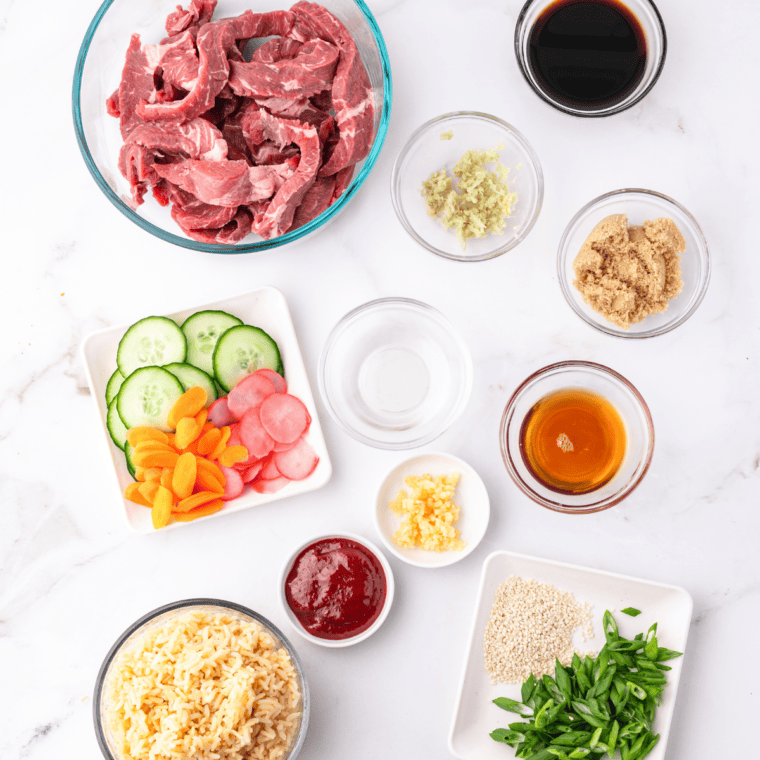
For the beef and marinade:
- Beef sirloin or flank steak: The one ingredient worth being picky about. Thin slices soak up marinade fast and cook in minutes. Sirloin is more tender, flank is cheaper and beefier.
- Soy sauce: The savory backbone — salt, umami, and the amino acids that help the beef brown deeply.
- Brown sugar: Does the caramelizing. Without it you’d have salty beef instead of bulgogi.
- Toasted sesame oil: The signature Korean aroma. Toasted, not plain — that’s where the nuttiness lives.
- Rice vinegar: Acid to cut all that soy and sugar, plus a little tenderizing.
- Gochujang: Korean fermented chili paste. Mild-to-medium heat with a savory funk you can’t fake with hot sauce.
- Garlic and fresh ginger: Bulgogi is garlic-forward, and ginger keeps the marinade from reading one-note sweet. Use both fresh.
For the bowls:
- Cooked rice: Soaks up every drop of marinade that runs off the beef. My Copycat Panda Express White Rice or Instant Pot Garlic Brown Rice both work.
- Scallions and sesame seeds: Sharp and nutty. Toast the seeds two minutes in a dry skillet — it makes a real difference.
- Cucumber, carrots, or pickled radish: The cold crunch that keeps a rich bowl from feeling heavy.
Substitutions and Variations:
- Beef: Ribeye for the splurge; flat iron or top round if you slice thin. Every cut broken down in Air Fryer Steak: The Ultimate Guide.
- Gluten-free: Tamari or coconut aminos. Aminos are sweeter, so drop the sugar to 1 tbsp.
- Brown sugar: Honey or maple (use less), or 1/4 cup grated Asian pear for the traditional version — it sweetens and tenderizes.
- No gochujang: 2 tsp sriracha + 1 tsp white miso. Or skip it for a milder, kid-friendly bowl.
- Low-carb: Cauliflower rice or shredded cabbage instead of grain.
- Other proteins: Chicken thighs, pork shoulder, extra-firm tofu, or portobello.
- Extra toppings: Fried egg, kimchi, or gochujang mayo (2 tbsp mayo + 1 tsp gochujang).
How to Slice Beef Thin (The Freezer Trick)
This is the single biggest factor in how good your bulgogi turns out.
Wrap the steak and freeze it 20 to 30 minutes until firm but not solid. Chilled meat resists the knife instead of squishing under it, so you get clean slices about 1/8 inch thick. Cut against the grain — find the direction the muscle fibers run and slice perpendicular. Shorter fibers mean a more tender bite, which matters even more with leaner cuts, as I explain in my Air Fryer Round Steak post.
Want to skip the knife work? Most Asian grocery stores sell pre-sliced beef labeled for bulgogi or shabu-shabu.
How to make air fryer bulgogi bowls
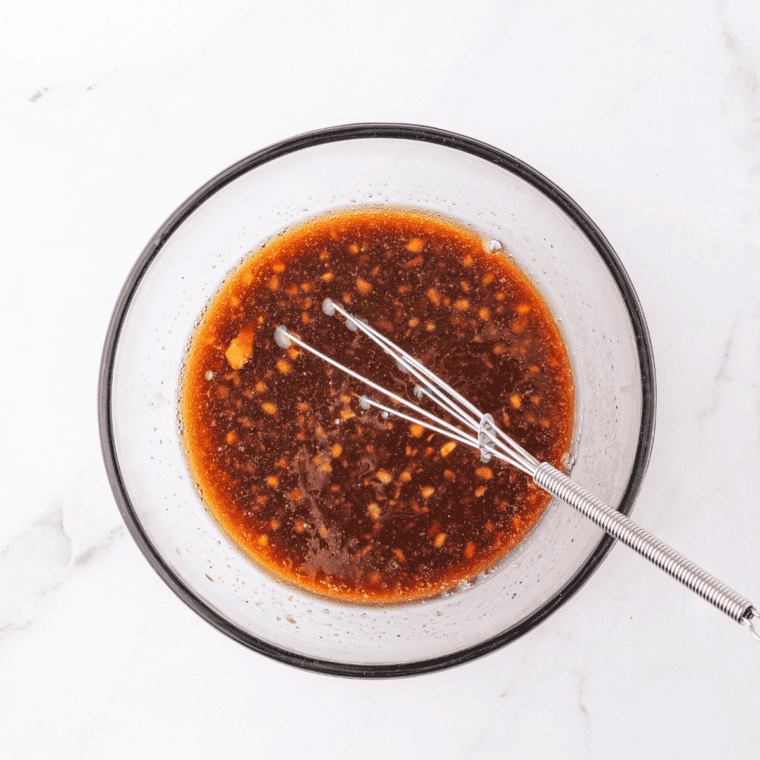
Step 1: Whisk the soy sauce, brown sugar, sesame oil, rice vinegar, gochujang, garlic, and ginger together until the sugar fully dissolves and the gochujang breaks up with no lumps. Undissolved sugar means uneven caramelization later.
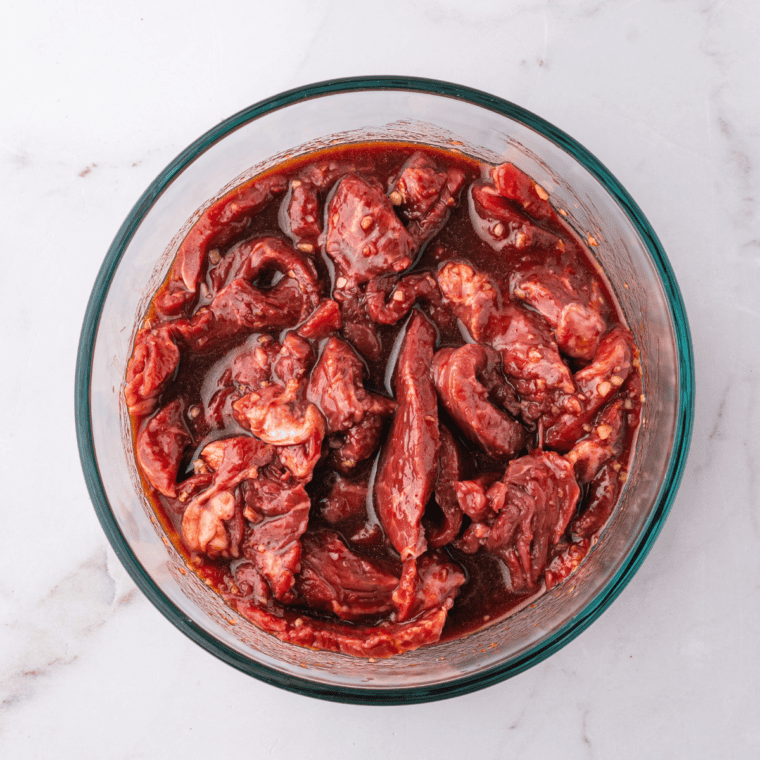
Step 2: Add the sliced beef and toss until every piece is coated. Cover and refrigerate at least 30 minutes, or up to 2 hours.
Don’t push past 2 hours. The vinegar and salt start breaking down the meat’s texture, and you’ll get mushy instead of tender. That’s a shorter window than my bourbon marinated steak tips because thin slices absorb acid much faster than chunks.
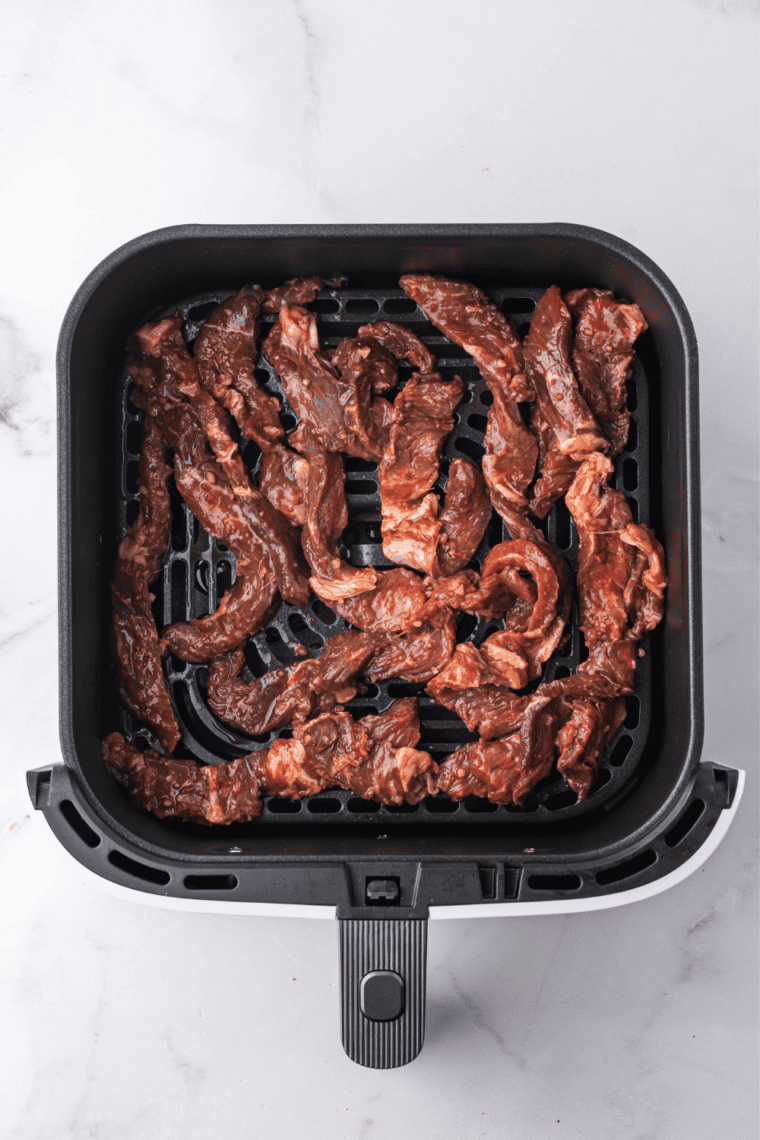
Step 3: Preheat the air fryer to 375°F. Lift the beef out of the marinade and let the excess drip off — dumping extra liquid into the basket steams the meat instead of searing it.
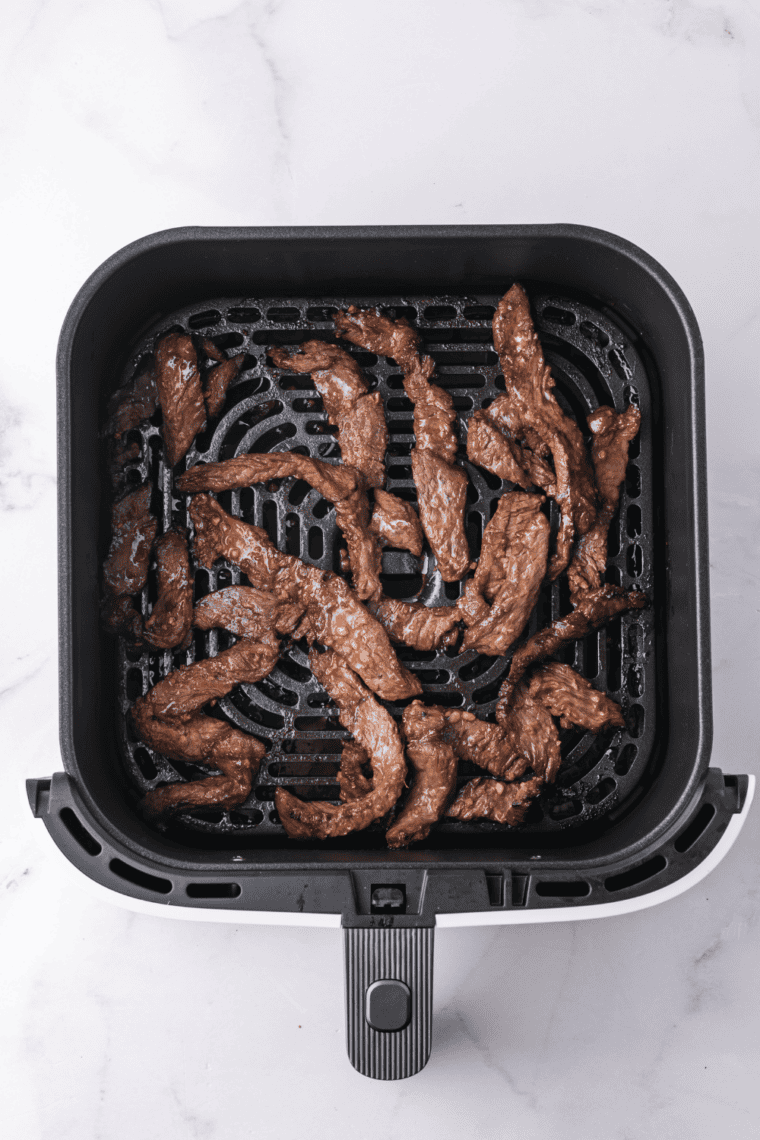
Arrange the slices in a single layer. With a full pound, that means two batches, and it’s worth it. A crowded basket blocks airflow and you get gray, steamed beef instead of caramelized edges. Air fry 6 to 8 minutes, shaking halfway through, until browned with slightly crisp edges.
New to air frying? My complete guide to using an air fryer covers the basics plus free printable cooking charts.
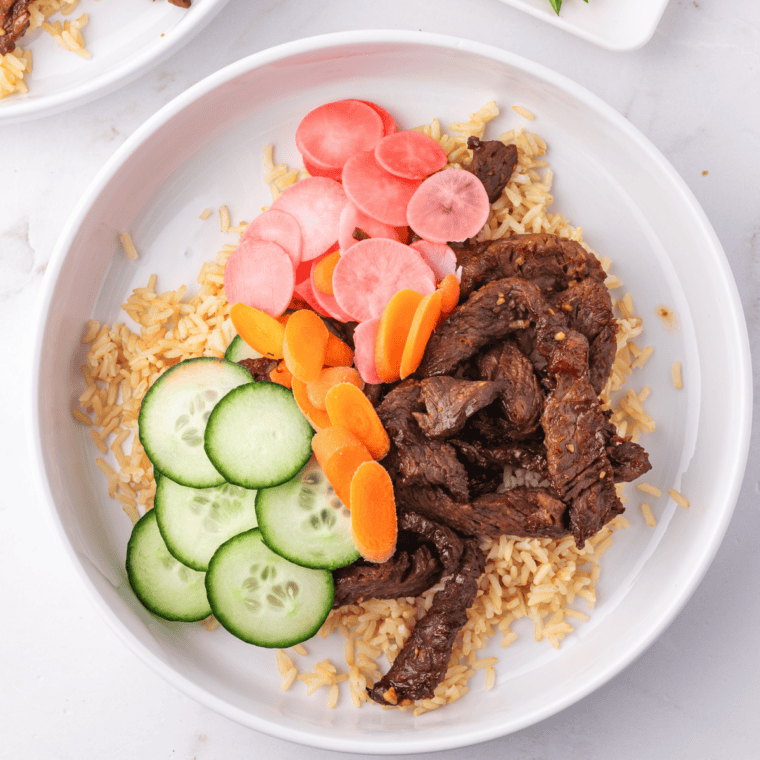
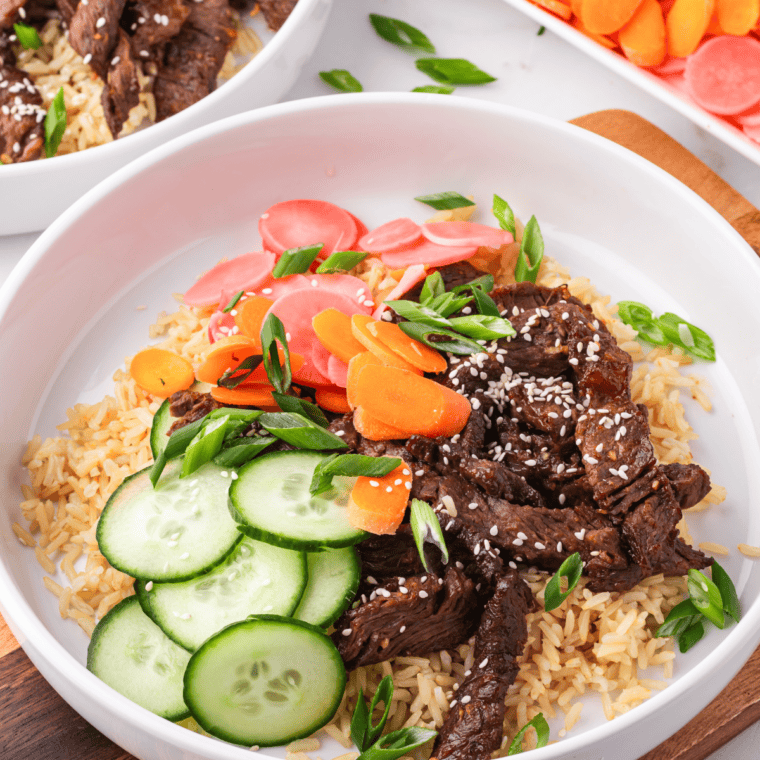
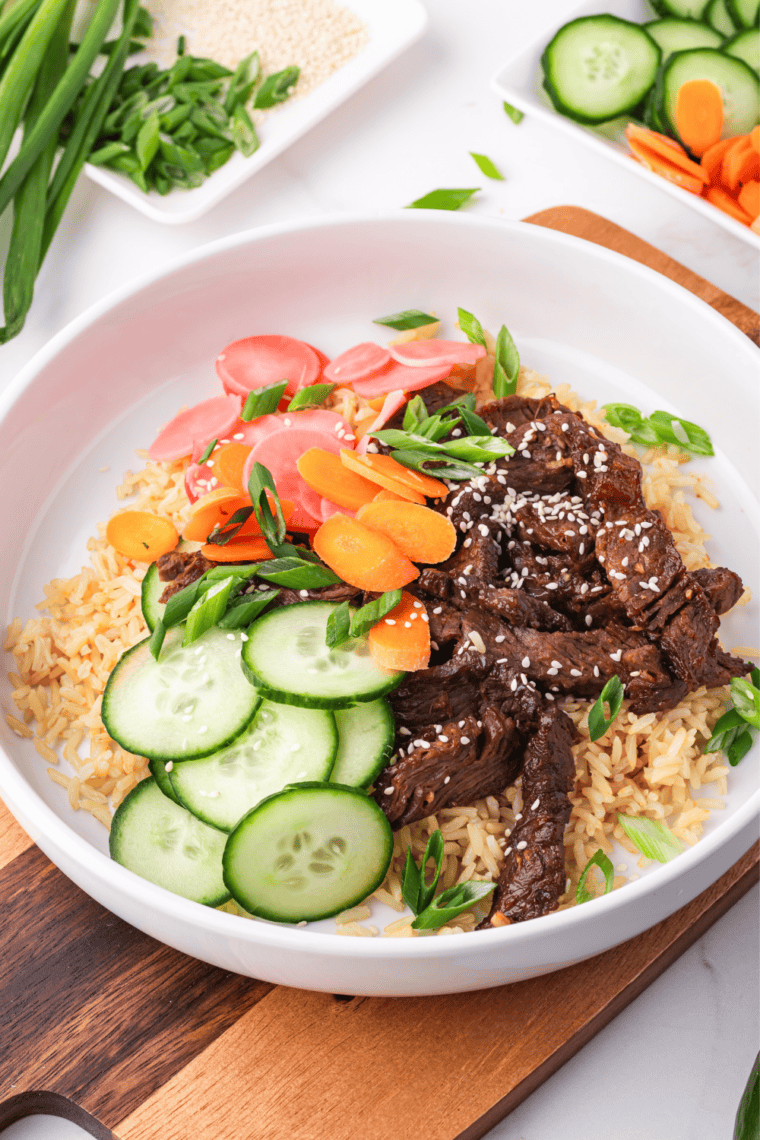
Step 4: Start with warm rice, pile the beef on top, then garnish with scallions and toasted sesame seeds. Add cucumber, carrots, or pickled radish for crunch. Serve right away, while the edges are still crisp.
Tips for the Best Air Fryer Bulgogi Bowls
- Preheat. Beef hitting a cold basket steams before it sears.
- Single layer, always. The mistake almost everyone makes the first time.
- Line the basket if yours has wide slats — thin slices slip through. Add the liner after preheating so it doesn’t fly into the heating element.
- Toast your sesame seeds. Two minutes takes them from decorative to genuinely nutty.
- Turn leftover marinade into sauce. Simmer 3 to 5 minutes until thickened. It held raw meat, so it must reach a full rolling boil.
- Check early your first time. Basket-style air fryers run hotter than oven-style.
What to Serve With Bulgogi Bowls
Kimchi is the obvious partner — tangy and funky against the sweet-savory beef. Quick-pickled cucumbers take 15 minutes in rice vinegar, sugar, and salt. For something green, Garlic Air Fryer Broccoli cooks in the same appliance while the beef rests. And Air Fryer Bibigo Mandu Dumplings make the easiest possible appetizer.
Storage and Reheating
Refrigerator: Cooked beef keeps up to 4 days in an airtight container. Store rice and fresh garnishes separately.
Freezer: Cooked beef freezes up to 3 months. You can also freeze it uncooked, in the marinade — it marinates as it thaws, which makes this a great make-ahead dinner.
Reheating: Air fry at 350°F for 3 to 4 minutes to bring back the crisp edges.
Meal prep: Portion rice, beef, and vegetables into four containers, keeping sauce separate.
Frequently Asked Questions
Can I make bulgogi without an air fryer? Yes. Sear in a cast-iron skillet over high heat for 2 to 3 minutes per side, in batches. Similar crust, more splatter.
How long should I marinate bulgogi? Thirty minutes minimum, 2 hours ideal. Past that, the acid starts breaking down the meat’s texture. To prep further ahead, freeze the beef in the marinade.
What’s the best cut of beef for bulgogi? Ribeye is traditional and most tender. Sirloin balances tenderness and price. Flank is the budget pick — just slice strictly against the grain.
Is bulgogi spicy? Traditional bulgogi isn’t spicy at all. The gochujang adds mild-to-medium heat. Drop it to 1 teaspoon for milder, or leave it out entirely.
Can I use frozen beef? Thaw completely before marinating — frozen meat won’t absorb it. That said, partially frozen beef is easier to slice, so thaw just to the firm stage.
Why isn’t my air fryer bulgogi crispy? Almost always one of three things: overcrowded basket, too much marinade carried over, or no preheat.
Can I double this recipe? Yes. The marinade scales cleanly — cooking is the only bottleneck.
Air Fryer Beef Bulgogi Bowls
Description
Ingredients
- 1 lb beef sirloin or flank steak, thinly sliced
- 1/4 cup soy sauce
- 2 tbsp brown sugar
- 2 tbsp toasted sesame oil
- 2 tbsp rice vinegar
- 1 tbsp gochujang
- 2 cloves garlic, minced
- 1/2 inch fresh ginger, grated
- 3 cups cooked rice, white, brown, or jasmine
- 1/4 cup scallions, chopped
- 1/4 cup sesame seeds
- Cucumber, carrots, or pickled radish, for garnish
Instructions
- Whisk soy sauce, brown sugar, sesame oil, rice vinegar, gochujang, garlic, and ginger together until the sugar dissolves.
- Add the sliced beef and toss to coat. Cover and refrigerate 30 minutes to 2 hours.
- Preheat the air fryer to 375°F. Shake excess marinade off the beef and arrange in a single layer, working in batches.
- Air fry 6 to 8 minutes, shaking halfway, until cooked through with crisped edges.
- Build bowls over rice and top with scallions, sesame seeds, and fresh vegetables.
Equipment
- Chef's knife
- Cutting Board
- Mixing Bowl
- Whisk
- Microplane grater
- Tongs
Notes
- Freeze the steak 20 to 30 minutes before slicing for cleaner cuts.
- Single layer only. Crowding the basket steams the beef.
- Boil leftover marinade 3 to 5 minutes to make a drizzling sauce.
Nutrition
Share this recipe
We can’t wait to see what you’ve made! Mention @forktospoon or tag #forktospoon!