Forget the leftovers nobody touches — this one pound meatloaf is sized for 2 to 4 people, glazed with a sweet-tangy ketchup topping, and on the table in 55 minutes flat. One bowl, one sheet pan, zero loaf pan required, and the milk-soaked breadcrumb trick keeps it moist every single time.

If you have a single pound of ground beef in the fridge and 55 minutes before dinner, you have everything you need for the best meatloaf you’ve ever made. This one pound meatloaf recipe is sized for two to four people, glazed with a tangy-sweet ketchup topping, and engineered to come out moist every single time — no loaf pan, no leftovers you’ll get sick of by Wednesday.
I’ve made this recipe more than a hundred times across two decades of weeknight cooking, and the version below reflects every adjustment that mattered: the milk-soaked breadcrumb trick that keeps the texture tender, the exact oven temperature that gives you a caramelized crust without a dry interior, and the resting time most recipes skip but absolutely shouldn’t.

Why This Recipe Works
A one-pound meatloaf isn’t just a smaller version of a two-pound recipe — it cooks differently, and the ratios have to change. Here’s what makes this version reliable:
A small meatloaf is far more vulnerable to drying out because the surface-area-to-volume ratio is higher than in a big loaf. This recipe compensates with a proper panade — breadcrumbs soaked in milk before mixing — which traps moisture and keeps the interior tender even if you slightly overcook it. The free-form shape (no loaf pan needed) lets more of the surface caramelize, which is where the deep beefy flavor lives. And the glaze goes on partway through baking, not at the start, so it lacquers instead of burning.
The whole thing fits on a quarter sheet pan, uses one mixing bowl, and is on the table in under an hour from the moment you open the fridge.
Ingredients
This recipe makes one loaf serving 2 to 4 people (about four 1-inch slices). Every ingredient earns its place — there’s nothing here for show.

For the Meatloaf
- Ground beef: 80/20 chuck delivers the juiciest, most flavorful results.
- Breadcrumbs: Panko or regular both work to add structure.
- Whole milk: Soaks the breadcrumbs into a moisture-locking panade.
- Egg: Acts as the binder holding everything together.
- Yellow onion: Dice small so they soften fully while baking.
- Garlic: Fresh cloves bring depth; powder works in a pinch.
- Worcestershire sauce: Adds savory, deeply beefy umami flavor throughout.
- Dijon mustard: Brightens the meat mixture with subtle tang.
- Kosher salt: Seasons the loaf evenly without tasting harsh.
- Black pepper: Freshly ground gives the warmest, sharpest flavor.
- Italian seasoning: A balanced blend of dried herbs ties everything together.
- Smoked paprika: Optional, but adds gorgeous color and smoky depth.
For the Glaze
- Ketchup: The classic sweet-tangy base every meatloaf glaze needs.
- Brown sugar: Caramelizes into a glossy, sticky lacquered topping.
- Apple cider vinegar: Cuts sweetness and adds essential bright acidity.
- Worcestershire sauce: Echoes the savory depth inside the loaf.
- Ground mustard: Sharp warmth that balances the brown sugar.
A Note on Ground Beef
The single biggest variable in meatloaf is the fat content of your beef. 80/20 ground chuck is the sweet spot for one-pound meatloaf — leaner than that and you’ll fight dryness; fattier than that and you’ll get a greasy puddle around the loaf. If 80/20 is all your store has, you’re set. If you want to upgrade, a 50/50 blend of ground chuck and ground sirloin gives even better flavor. Avoid 93/7 here unless you adjust by adding an extra tablespoon of milk and a tablespoon of olive oil to the mix.
Equipment
- One large mixing bowl
- One small bowl for the glaze
- A quarter sheet pan or any rimmed baking sheet
- Aluminum foil or parchment for easy cleanup
- An instant-read thermometer — non-negotiable for a small loaf where the difference between 155°F and 170°F is the difference between juicy and dry
How to Make One Pound Meatloaf

Step 1: Preheat the oven to 375°F (190°C) and line a quarter sheet pan with foil or parchment. In your large mixing bowl, combine the breadcrumbs and milk. Stir with a fork and let sit for 5 minutes. The breadcrumbs should absorb all the milk and look like a thick paste. This step is the secret to a tender meatloaf — don’t skip it and don’t shortcut it by just dumping dry breadcrumbs into the meat. Dry breadcrumbs absorb moisture from the beef itself as it cooks, which is why so many meatloaves come out dense and dry.

Step 2: Add the Aromatics and Seasonings To the soaked panade, add the diced onion, minced garlic, egg, Worcestershire, Dijon, salt, pepper, Italian seasoning, and smoked paprika. Whisk it all together with the fork until you have an even, loose mixture. Doing this before adding the beef means the seasonings distribute evenly without having to overwork the meat.
Step 3: Mix in the Beef — Gently Add the ground beef to the bowl. Using your hands or a sturdy fork, mix just until the seasoning mixture is evenly distributed through the meat. Stop the moment it looks combined. Overmixing is the second most common reason for tough meatloaf (the first is no panade). The proteins in ground beef toughen when worked, the same way they do in burgers.

Step 4: Shape and Bake Turn the mixture out onto the prepared sheet pan and shape it into a loaf roughly 8 inches long, 4 inches wide, and about 2 inches tall. A flatter, wider loaf cooks faster and more evenly than a tall, narrow one, and you get more surface area for that delicious crust. Bake at 375°F for 25 minutes while you make the glaze.

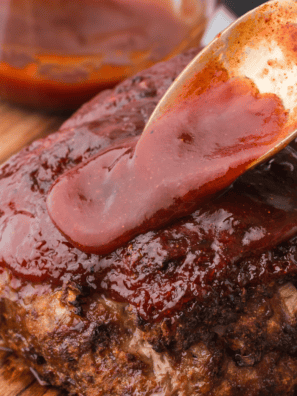
Step 5: Make and Apply the Glaze While the meatloaf bakes, whisk together the ketchup, brown sugar, vinegar, Worcestershire, and ground mustard in a small bowl until smooth. After 25 minutes, pull the meatloaf out and brush about two-thirds of the glaze over the top and sides. Return to the oven for another 15 to 20 minutes, until an instant-read thermometer inserted into the thickest part reads 155°F (68°C).
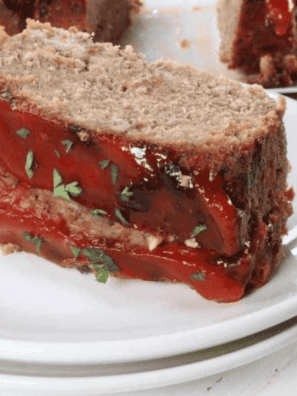
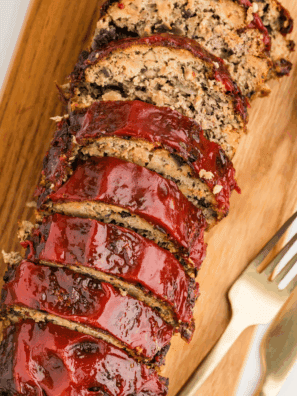
Step 6: Rest, Then Slice Pull the meatloaf and immediately brush on the remaining glaze while it’s hot — the residual heat will set it to a glossy finish. Rest the meatloaf for at least 10 minutes before slicing. During this rest, the internal temperature will climb to a safe 160°F (71°C) and the juices will redistribute. Slice into it too early and you’ll watch all that moisture run out onto the cutting board.

Doneness Temperature Guide
The USDA recommends 160°F (71°C) as the safe internal temperature for ground beef. Because of carryover cooking during the rest, pull the loaf from the oven at 155°F (68°C) — it will climb the last 5 degrees on the counter.
| Pull Temperature | Final Temperature After Rest | Texture |
|---|---|---|
| 150°F (66°C) | ~155°F | Pink, not USDA safe for beef |
| 155°F (68°C) | 160°F (71°C) | Juicy, USDA safe — target this |
| 160°F (71°C) | ~165°F | Safe but starting to dry |
| 165°F+ (74°C+) | 170°F+ | Overcooked, dry |
For ground turkey or chicken, push the pull temperature to 160°F so it finishes at 165°F.
Six Glaze Variations
The classic ketchup-brown sugar glaze is great, but it isn’t the only option. Each of these uses the same brushing technique — apply two-thirds at the 25-minute mark, the rest right after pulling the loaf.
- Brown sugar BBQ. Replace the ketchup with your favorite BBQ sauce, keep the brown sugar, skip the mustard. Good with hickory or Kansas City–style sauces.
- Maple-Dijon. 1/4 cup ketchup, 2 tablespoons maple syrup, 1 tablespoon Dijon, 1 teaspoon soy sauce. Sweet, sharp, a little funky.
- Sweet chili. 1/4 cup sweet Thai chili sauce thinned with 1 tablespoon rice vinegar. Excellent if you’ve added a teaspoon of grated ginger and a splash of soy to the meat mixture.
- Italian-style. Replace the entire glaze with 1/3 cup marinara sauce and top with 1/4 cup grated mozzarella in the last 5 minutes. Effectively a meatloaf parm.
- Bourbon-bacon. Replace the cider vinegar with 1 tablespoon bourbon and stir 1 tablespoon crumbled cooked bacon into the finished glaze.
- Honey-sriracha. 1/4 cup ketchup, 2 tablespoons honey, 1 to 2 teaspoons sriracha, 1 teaspoon rice vinegar. Sweet heat that gets along with rice and steamed greens.

Troubleshooting Common Problems
- My meatloaf came out dense and tough. You overmixed the meat, used breadcrumbs without soaking them, or both. Mix until just combined, and always use a panade.
- My meatloaf came out dry. Most likely you cooked past 165°F internal, or you used 93/7 lean beef without compensating. Use a thermometer, pull at 155°F, and stick to 80/20 unless you’ve added extra fat back in.
- The glaze burned. It went on too early or your oven runs hot. Apply at the 25-minute mark, not at the start, and check oven temperature with an oven thermometer if you suspect a calibration issue.
- The loaf fell apart when I sliced it. Either you didn’t rest it long enough (give it the full 10 minutes), you skipped the egg, or your slices were too thin. Cut 3/4-inch to 1-inch slices with a serrated knife.
- The bottom turned out soggy. This happens when there’s too much grease pooling around the loaf. Next time, place a wire rack on top of the foil-lined sheet pan and bake the meatloaf on the rack — the grease drips through.
- My onions were still crunchy. Dice them smaller (1/4-inch or finer) or sauté them in a teaspoon of butter for 3 minutes before adding to the mixture. A small loaf doesn’t cook long enough to fully soften large onion pieces.
Make-Ahead and Storage
- Make ahead unbaked. You can mix and shape the meatloaf up to 24 hours in advance. Cover the shaped loaf on the sheet pan with plastic wrap and refrigerate. When ready to bake, let it sit at room temperature for 20 minutes while the oven preheats, then proceed with the recipe — it may need an extra 5 minutes in the oven.
- Make ahead baked. Fully cooked meatloaf can be made up to 3 days ahead. Cool completely, wrap tightly, and refrigerate. Reheat slices covered with foil at 325°F for about 15 minutes, or microwave individual slices for 60 to 90 seconds. A splash of beef broth before reheating brings the juiciness back.
- Freezing. Both unbaked and baked meatloaf freeze well for up to 3 months. For unbaked, shape on a foil-lined sheet pan, freeze solid (about 2 hours), then wrap in plastic and foil. Thaw overnight in the refrigerator before baking. For baked, slice first, then freeze portions on a sheet pan before transferring to a freezer bag — this lets you reheat one slice at a time.
- Leftovers idea. A cold meatloaf sandwich on white bread with mayo, lettuce, and a swipe of mustard is one of the great underrated lunches.

What to Serve with One Pound Meatloaf
A one-pound meatloaf serves 2 to 4, so plan two sides — one starchy, one green. Some pairings that have earned their place at this table:
The classic move is creamy mashed potatoes with a glug of cream and a knob of butter. For something faster, a baked sweet potato cooks alongside the meatloaf in the same oven. Crispy smashed potatoes go in a 425°F oven after the meatloaf comes out and benefit from the residual heat. Buttered egg noodles tossed with parsley are weeknight-easy. Garlicky green beans, roasted broccoli with lemon, or a simple wedge salad with blue cheese all work. If you want one side that covers both bases, a cheesy broccoli rice casserole is hard to beat.
Scaling This Recipe
This recipe scales cleanly in both directions. The ratios that matter:
- Breadcrumbs: 1/3 cup per pound of beef
- Milk: 1/4 cup per pound
- Egg: 1 per pound (round up for half-pound increments)
- Salt: 3/4 teaspoon kosher per pound
For a half-pound meatloaf (serves 2), halve everything except the egg — use one whole egg, and you may want to add an extra tablespoon of breadcrumbs to compensate. Bake at 375°F for about 30 minutes total.
For a two-pound meatloaf (serves 6 to 8), double everything. Shape into a single loaf about 10 inches long and bake for 50 to 60 minutes, applying the glaze at the 35-minute mark.
For mini meatloaves, divide the one-pound mixture into 4 portions, shape each into a 3-by-4-inch loaf, and bake at 375°F for 25 minutes total, glazing at the 15-minute mark. Great for portion control and even faster on a weeknight.

Frequently Asked Questions
How long does a one pound meatloaf take to cook? About 40 to 45 minutes at 375°F, plus a 10-minute rest. Total time from oven-on to dinner-on-plates is roughly 55 minutes.
Can I use ground turkey or ground chicken instead of beef? Yes — substitute pound for pound. Because poultry is leaner and tends drier, add 1 extra tablespoon of milk and 1 tablespoon of olive oil to the meat mixture. Cook to an internal temperature of 165°F (pull at 160°F).
Do I need a loaf pan? No, and you actively shouldn’t use one for a one-pound batch. A free-form loaf on a sheet pan gets more crust, cooks faster, and doesn’t sit in its own grease.
Can I make this without breadcrumbs? Yes. Substitute 1/3 cup of crushed crackers (Ritz or saltines), quick oats, or even 2 tablespoons of almond flour for a lower-carb version. Whatever you use, still soak it in the milk first.
Can I make this gluten-free? Yes. Use gluten-free breadcrumbs, certified GF Worcestershire sauce (most contain malt vinegar from barley), and verify your ketchup is GF (most are).
Can I cook this in an air fryer? Yes. Shape the loaf to fit your air fryer basket on a piece of parchment, cook at 350°F for 25 minutes, glaze, then cook for another 5 to 8 minutes until 155°F internal. Total air fryer time is roughly 30 to 33 minutes.
Can I cook this in a slow cooker? Yes, but expect a softer texture and no caramelized crust. Shape the loaf, place on a foil sling in the slow cooker, and cook on low for 4 hours or high for 2 hours. Brush on glaze in the last 30 minutes.
Why is my meatloaf pink in the middle? A faint pink tint can be normal even in fully cooked meatloaf if there’s a lot of onion (onions contain compounds that can hold pink color), or if your beef has been treated with carbon monoxide for retail color. Trust the thermometer, not the color — if it’s 160°F internal, it’s safe.
What internal temperature should meatloaf reach? 160°F (71°C) for beef, 165°F (74°C) for poultry. Pull from the oven 5 degrees below your target — carryover cooking finishes the job during the rest.
Can I prep the meatloaf mixture the night before? Absolutely. Mix and shape the loaf, cover, and refrigerate up to 24 hours. Let it sit out for 20 minutes while the oven preheats so it bakes evenly.
More Recipes You’ll Love
If you loved this one pound meatloaf, here are more easy weeknight dinners and comfort food classics to try next:
More Meatloaf Recipes
- Classic 2-Pound Meatloaf with Brown Sugar Glaze — the full-size version for feeding a crowd
- Air Fryer Meatloaf — ready in 25 minutes with a perfectly crisp crust
- Mini Meatloaves with Bacon — individual portions wrapped in bacon
- Lipton Onion Soup Meatloaf — the nostalgic shortcut version
- Turkey Meatloaf — leaner but just as moist
- BBQ Meatloaf — smoky, saucy, and glazed twice
- Stuffed Meatloaf with Cheese — molten cheese center, crispy edges
- Italian Meatloaf with Marinara — basically meatloaf parm
Perfect Side Dishes for Meatloaf
- Sour Cream Mashed Potatoes — the ultimate creamy classic
- Crispy Smashed Potatoes — golden, crackly edges
- Garlic Butter Green Beans — done in 10 minutes
- Roasted Broccoli with Parmesan — caramelized and crispy
- Cheesy Broccoli Rice Casserole — covers starch and veg in one dish
- Honey Glazed Carrots — sweet, buttery, weeknight-fast
- Buttered Egg Noodles — the simplest comfort side
Easy Ground Beef Dinners
- Sloppy Joes from Scratch — better than the canned version
- One-Pan Beef and Rice Skillet — 30 minutes, one pan
- Hamburger Helper (Homemade) — the boxed classic, made right
- Easy Beef Stroganoff — creamy mushroom sauce over egg noodles
- Cheeseburger Casserole — all the burger flavor, baked
What to Do with Leftover Meatloaf
- Best Meatloaf Sandwich — cold, with mayo and pickles
- Meatloaf Hash with Eggs — breakfast upgrade
- Crumbled Meatloaf Pasta Sauce — surprisingly great over spaghetti

One Pound Meatloaf Recipe
Description
Ingredients
For the Meatloaf
- 1 pound ground beef, 80/20
- 1/3 cup breadcrumbs
- 1/4 cup milk
- 1 large egg, lightly beaten
- 1/2 cup yellow onion, diced
- 2 cloves garlic, minced
- 1 tablespoon Worcestershire sauce
- 1 teaspoon Dijon mustard
- 3/4 teaspoon kosher salt
- 1/2 teaspoon freshly ground black pepper
- 1/2 teaspoon Italian seasoning
- 1/4 teaspoon smoked paprika, optional
For the Glaze
- 1/3 cup ketchup
- 2 tablespoons light brown sugar, packed
- 1 tablespoon apple cider vinegar
- 1 teaspoon Worcestershire sauce
- 1/2 teaspoon ground mustard
Instructions
- Preheat the oven to 375°F (190°C). Line a quarter sheet pan with foil or parchment paper.
- Make the panade. In a large mixing bowl, combine breadcrumbs and milk. Stir and let sit 5 minutes until it forms a thick paste. This is the secret to a moist, tender meatloaf.
- Add the aromatics. To the soaked panade, add diced onion, minced garlic, egg, Worcestershire, Dijon, salt, pepper, Italian seasoning, and smoked paprika. Whisk until evenly combined.
- Mix in the beef gently. Add ground beef and mix with your hands or a fork just until combined. Do not overmix — this is the second biggest cause of tough meatloaf.
- Shape the loaf. Turn the mixture onto the prepared sheet pan and shape into a free-form loaf about 8 inches long, 4 inches wide, and 2 inches tall.
- Bake for 25 minutes. While baking, whisk together all glaze ingredients in a small bowl until smooth.
- Glaze and finish baking. After 25 minutes, brush two-thirds of the glaze over the top and sides. Return to oven for 15 to 20 more minutes, until an instant-read thermometer reads 155°F (68°C).
- Rest and slice. Remove from oven, brush on remaining glaze, and rest 10 minutes (internal temp will climb to a safe 160°F). Slice into 1-inch slices and serve.
Equipment
- Quarter Sheet Pan
- Large Mixing Bowl
- Small mixing bowl
- Instant-read thermometer
- Foil or parchment paper
Notes
- Beef choice matters. Use 80/20 ground chuck for the juiciest result. If using 93/7 lean, add 1 extra tablespoon of milk and 1 tablespoon of olive oil to compensate.
- Use a thermometer. A small loaf is unforgiving — the difference between 155°F and 170°F is the difference between juicy and dry. Pull at 155°F and let carryover cooking finish the job.
- Dice onions small (1/4-inch or less) or sauté briefly first. A one-pound loaf doesn’t bake long enough to soften large onion pieces.
- Don’t skip the rest. Slicing too early lets all the juices run onto your cutting board instead of staying in the meat.
- Storage: Refrigerate leftovers in an airtight container up to 4 days. Freeze sliced portions up to 3 months.
- Reheating: Cover slices with foil and warm at 325°F for 15 minutes, or microwave individual slices for 60 to 90 seconds with a splash of beef broth to refresh.
Nutrition
Share this recipe
We can’t wait to see what you’ve made! Mention @forktospoon or tag #forktospoon!