This copycat Culver’s frozen custard recipe gets you the dense, silky Fresh Frozen Custard you’ve been driving across town for. There are two methods below: a no-cook version for the Ninja Creami, and a classic cooked base for a standard ice cream maker.
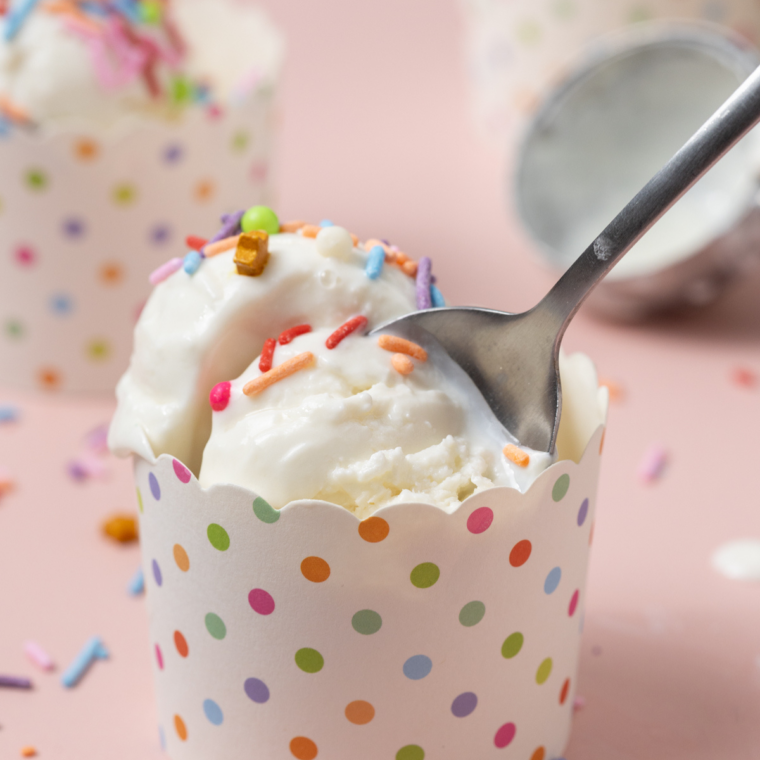
The difference between Culver’s custard and regular vanilla ice cream isn’t the vanilla. It’s three things: egg yolks, almost no air, and a serving temperature roughly fifteen degrees warmer than your freezer. Get those right and you’re there. Miss one and you’ve made good vanilla ice cream, which is not what you came for.
This is the base recipe. Every Flavor of the Day, sundae, and Concrete Mixer is a variation on it, so it’s worth making once and getting right.
Using a Ninja Creami? Skip to that method below — it’s completely no-cook, no stove, no tempering eggs. The freezing and re-spinning steps are where most people go wrong, and they’re covered in detail.
What Makes Frozen Custard Different From Ice Cream
Egg yolks. This is a legal definition, not a style preference. Under the FDA standard of identity, a frozen dairy dessert containing less than 1.4% egg yolk solids by weight is ice cream. At 1.4% or above it must be labeled frozen custard or French ice cream. Those yolks are what create the density and that specific silky, almost chewy pull off the spoon.
Very little air. The industry term is overrun. Commercial ice cream commonly runs 50% overrun or higher — meaning half of what you’re eating is air whipped into it. Frozen custard machines churn slowly and land closer to 20%. Less air, more custard per bite.
A warmer serving temperature. Ice cream is served around 0°F. Frozen custard is served closer to 15–20°F. That’s why it arrives soft and velvety rather than hard-scooped, and why it starts running down the cone almost immediately.
Frozen Custard vs. Ice Cream at a Glance
| Frozen Custard | Ice Cream | |
|---|---|---|
| Egg yolk solids | 1.4% minimum | Under 1.4% |
| Overrun (air) | ~20% | 50% or more |
| Serving temp | 15–20°F | ~0°F |
| Texture | Dense, silky, soft | Lighter, firmer |
| Milkfat | 10% minimum | 10% minimum |
The “fresh” in Fresh Frozen Custard is the fourth piece. Culver’s makes it in small batches through the day rather than freezing it hard and storing it. At home you replicate that by eating it straight out of the machine.
Ingredients Needed
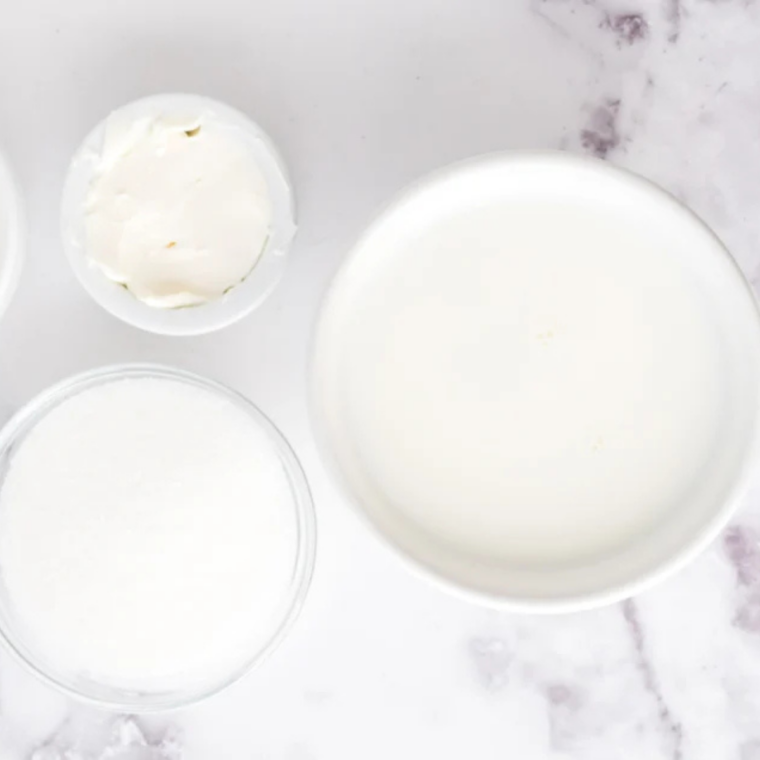
- Heavy cream: Provides the milkfat that gives custard its rich body
- Whole milk: Balances the cream so the base is not heavy
- Egg yolks: The custard difference, creating density and silky smooth texture
- Granulated sugar: Sweetens and lowers the freezing point for softer texture
- Kosher salt: Sharpens the vanilla and balances all that sweetness
- Pure vanilla extract: Added off heat so the aroma is not lost
- Fresh lemon juice: Brightens the dairy without tasting like lemon at all
Ingredient Notes
- Egg yolks are the entire point — don’t reduce them. Six yolks in this quantity of dairy puts you comfortably over the frozen custard line. Save the whites for something else.
- Heavy cream and whole milk at a 2:1 ratio delivers the milkfat you need. Don’t substitute half-and-half or 2% milk. The fat is doing structural work here, not just adding richness.
- Granulated sugar does more than sweeten. It lowers the freezing point, which is what keeps the finished custard soft and scoopable instead of icy. Cutting it changes the texture, not just the sweetness.
- Vanilla extract goes in off the heat, after cooking. Adding it to a hot pot boils off the aromatics you paid for. Prefer a vanilla bean? Split and scrape one into the dairy at the start, then strain the pod out.
- Lemon juice is optional but recommended. A quarter teaspoon in a full batch will not read as lemon — it lifts the dairy and keeps the vanilla from tasting flat, the same way a pinch of salt does. You’ll see this in a lot of frozen custard recipes shared in Creami and ice cream groups, and it’s there for a good reason.
How to Make Culver’s Frozen Custard (Ice Cream Maker Method)
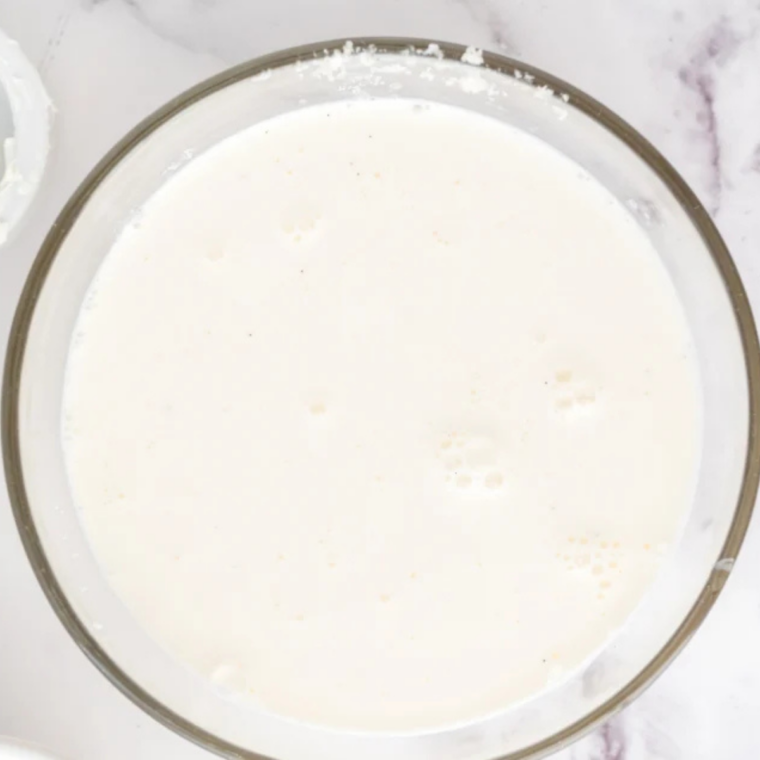
Step 1: Warm the dairy. Combine the cream, milk, and half the sugar in a heavy saucepan over medium heat. Heat until it steams and small bubbles form at the edges, about 175°F. Do not let it boil.
Step 2: Whisk the yolks. While the dairy heats, whisk the egg yolks with the remaining sugar and the salt until pale and slightly thickened. This takes a minute or two of real effort, and it matters — the sugar protects the yolks from seizing when hot dairy hits them.
Step 3: Temper the eggs. Ladle about a cup of hot dairy into the yolks in a slow stream, whisking constantly. Then pour the warmed yolk mixture back into the saucepan, still whisking.
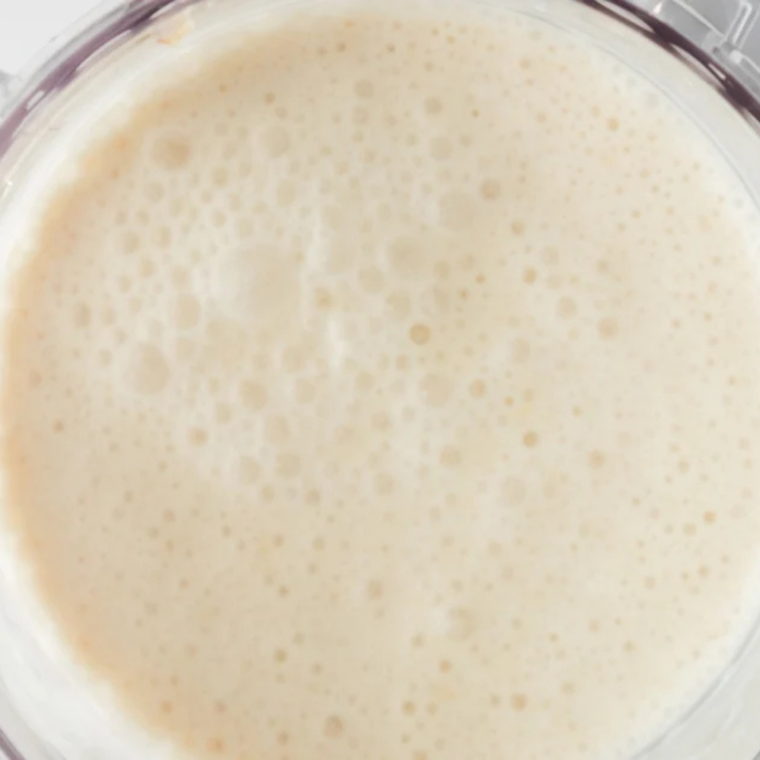
Step 4: Cook the custard base. Over medium-low heat, stir constantly with a spatula, scraping the bottom and corners. Cook until the custard reaches 170–175°F and coats the back of a spoon — drag a finger through it and the line should hold. This takes 5 to 8 minutes. Don’t walk away, and don’t let it simmer.
Step 5: Strain and chill. Pour through a fine-mesh strainer into a clean bowl. This catches any bits of cooked egg and isn’t optional. Stir in the vanilla and lemon juice. Press plastic wrap directly onto the surface and refrigerate at least 4 hours, ideally overnight.
Step 6: Churn. Pour the cold base into your ice cream maker and churn until it reaches the texture of thick soft serve, usually 20 to 25 minutes. Stop as soon as it’s there — over-churning whips in air, which is exactly what you’re trying to avoid.
Step 7: Serve immediately. This is fresh frozen custard and it’s best straight from the machine: soft, dense, just cold enough. For a firmer texture, transfer to a container and freeze no more than 2 hours.
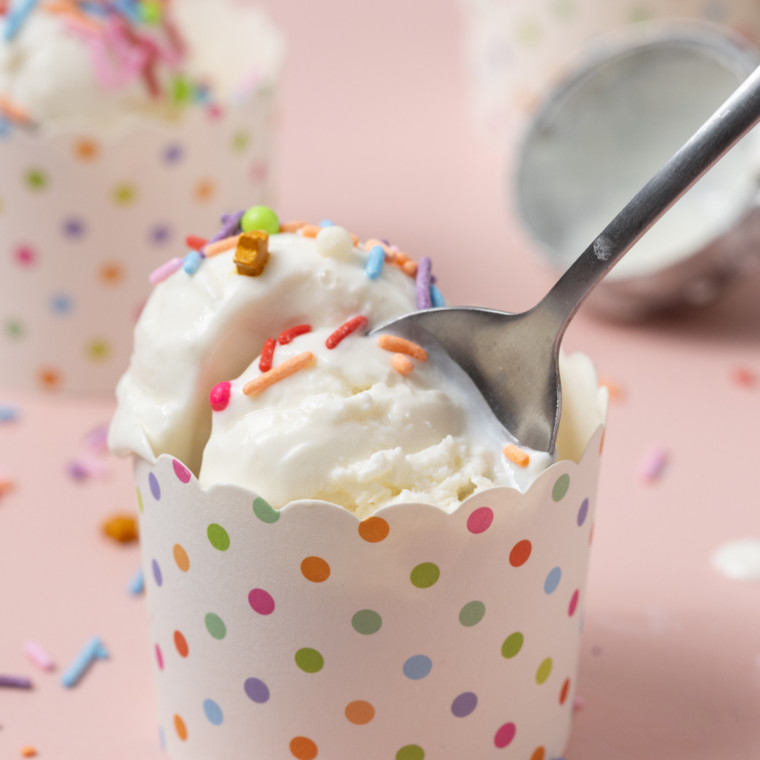
Ninja Creami Frozen Custard (No-Cook Method)
This is the question that comes up most, so here’s the full version — and no, you don’t have to cook anything.
A Ninja Creami actually suits frozen custard better than it suits most ice cream bases. It works by shaving a frozen block into a smooth paste rather than churning air into a liquid, which produces very low overrun — precisely the dense texture custard is supposed to have. The fat and egg yolk in this base are what keep it from turning out chalky, which is the usual complaint with leaner Creami recipes.
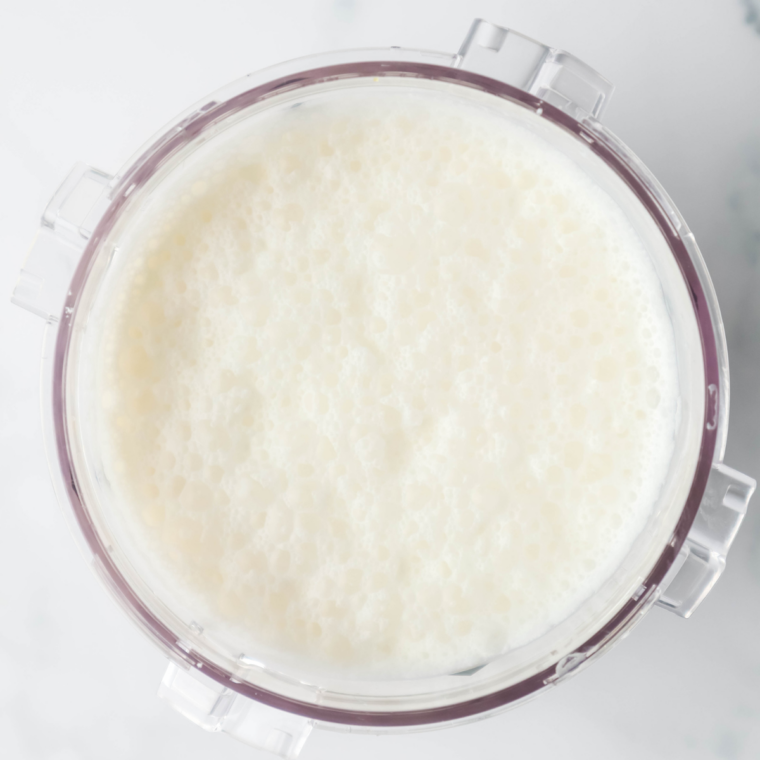
Step 1: Dissolve the sugar first. Whisk the sugar into the milk until you can’t feel any grit when you rub a drop between your fingers. This takes a minute or two of steady whisking. Undissolved sugar is the number one cause of a gritty Creami spin, and there’s no stove to melt it for you.
Step 2: Whisk in everything else. Add the cream, egg yolks, pudding mix, vanilla, and salt. Whisk until completely smooth with no streaks of yolk.
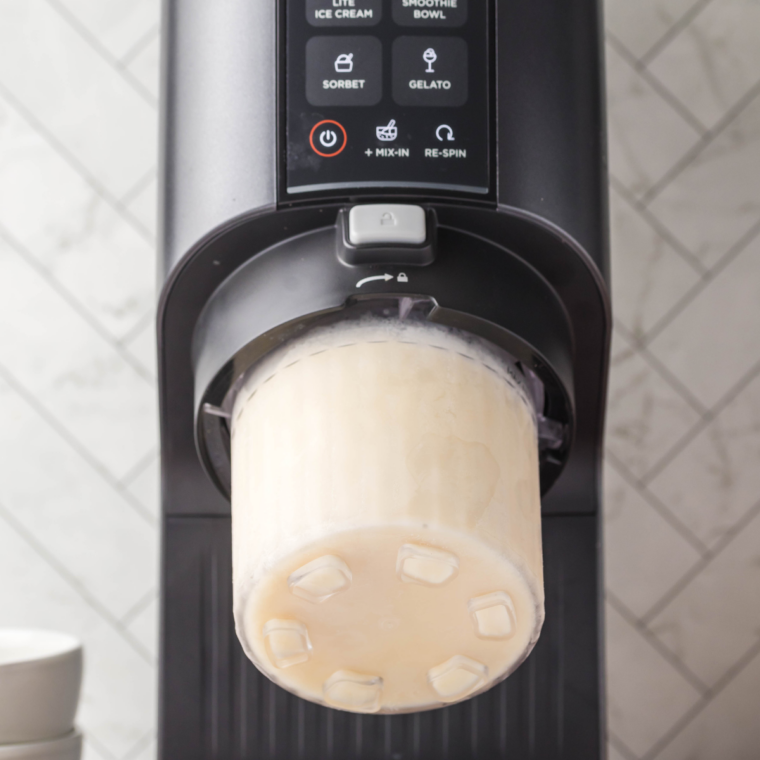
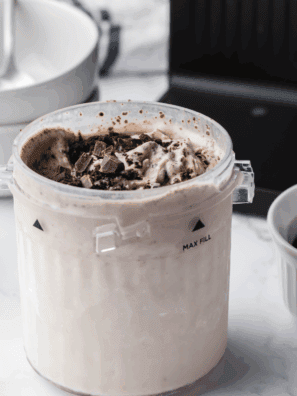
Step 3: Fill the pint to the max line, not past it. Overfilling causes the base to expand against the lid and pushes the pint out of alignment during the spin.
Step 4: Freeze flat for a full 24 hours. Flat is not a suggestion. If the surface freezes at an angle, the blade hits it unevenly and you get a crater in the middle with unspun custard around the edges. Check that your freezer shelf is level, and don’t wedge the pint between frozen items.
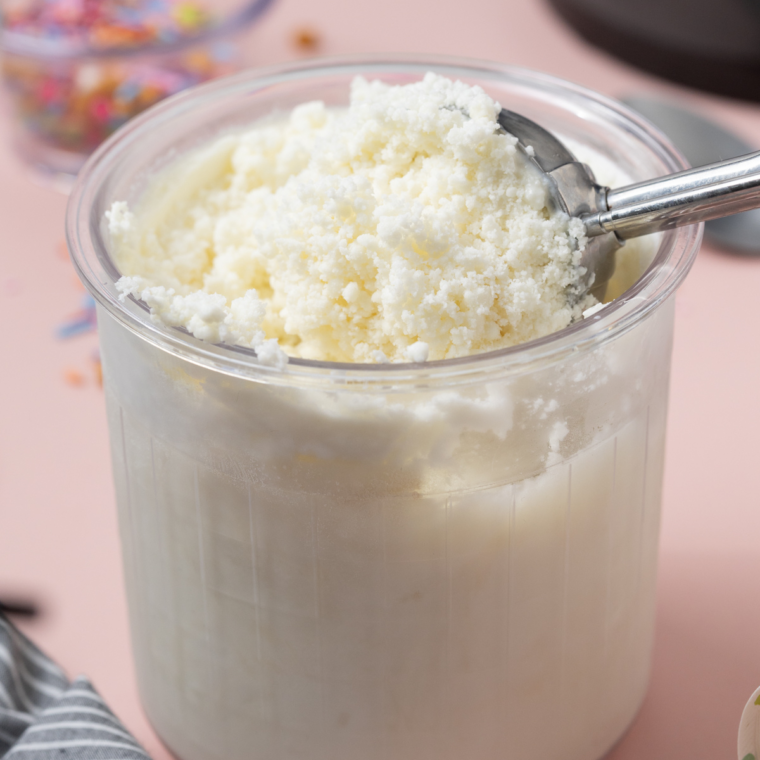
Step 5: Rest 5 to 10 minutes before spinning. Most home freezers run colder than the Creami expects. A short rest on the counter takes the edge off and dramatically reduces crumbling on the first spin.
Step 6: Run the Ice Cream setting. Not Lite Ice Cream, not Sorbet. This base has the milkfat for the full Ice Cream program.
Step 7: Re-spin if it comes out crumbly. This is normal, not a failure. Add 1 tablespoon of heavy cream, then run Re-spin. Repeat once if needed. Most custard bases need one re-spin, some need two.
Step 8: Add mix-ins last. Make a well in the center down to the bottom of the pint, add your mix-ins, and run the Mix-In program. This is exactly how you get to a Ninja Creami Culver’s Concrete Mixer.
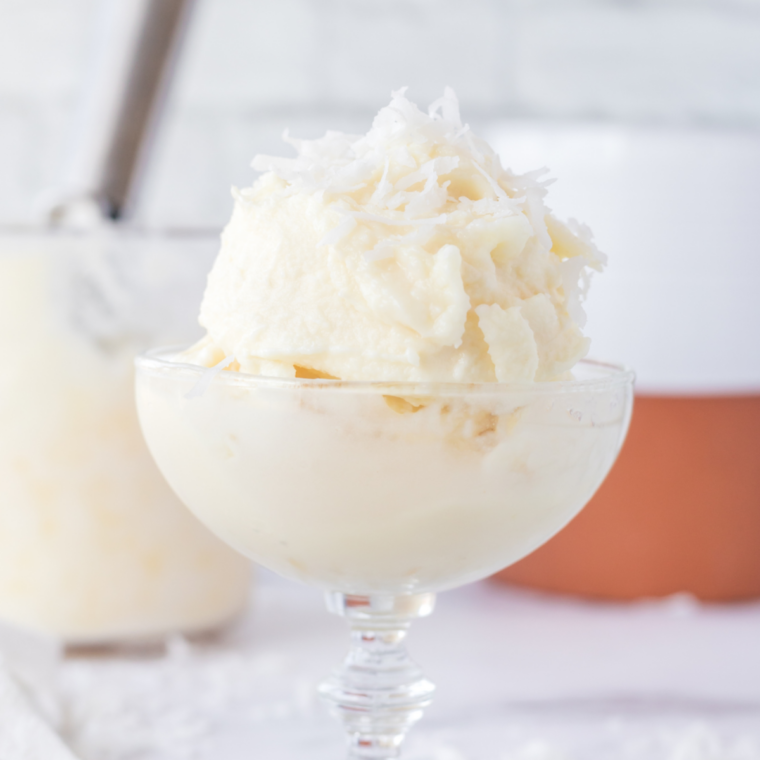
Ninja Creami Troubleshooting
- Came out powdery or crumbly. Almost always too cold. Rest the pint longer next time and re-spin with a tablespoon of cream.
- Hollow tunnel down the middle. The pint froze unevenly or wasn’t filled enough. Fill to the max line and freeze on a level surface.
- Icy rather than creamy. The base wasn’t fully chilled before freezing, or the sugar was reduced. Sugar controls the freezing point, and cutting it makes the block harder for the blade to shave smoothly.
- Melted too fast after spinning. The spin generates friction heat. Refreeze 20 minutes if it’s soupier than you want — or just eat it, since soft serve texture is what Culver’s serves anyway.
- The motor labored or the machine shook. Overfilled pint, or you skipped the rest. Neither is good for the machine.
Why the Overnight Chill Matters
- It’s tempting to churn as soon as the base feels cold. Resist it.
- An aged base churns better and tastes better. Overnight in the refrigerator, the fat globules partially crystallize and the proteins fully hydrate, which means the custard freezes into a smoother texture with fewer ice crystals. The vanilla also has time to distribute through the base rather than sitting on top of it.
- Four hours works. Overnight is noticeably better. Twenty-four hours is better still.
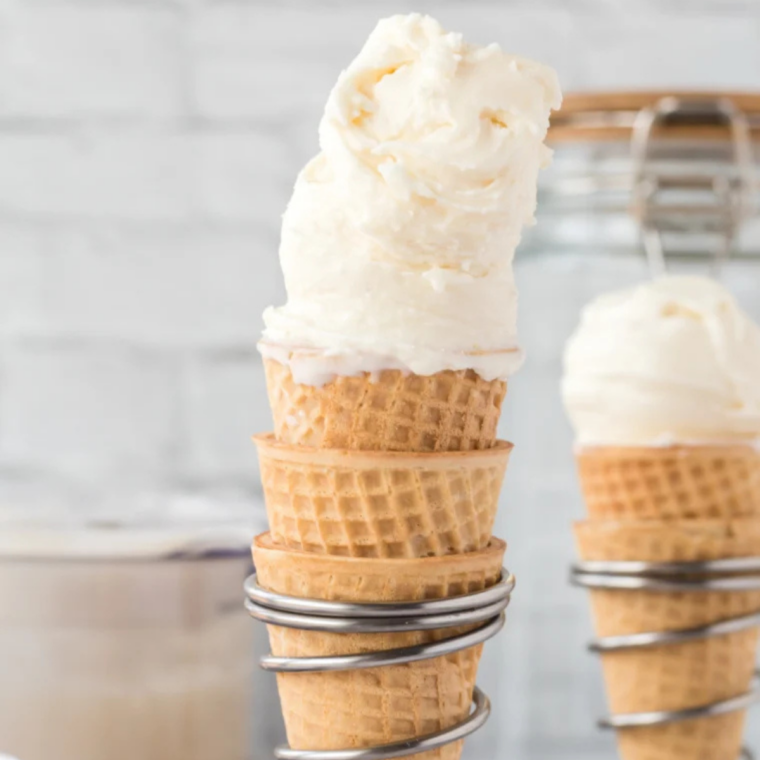
Troubleshooting the Custard Base
- Scrambled bits in the custard. Heat was too high, or you stopped stirring. The strainer saves most batches. Next time keep it at medium-low and keep the spatula moving.
- Icy instead of creamy. Usually an under-chilled base, or reduced sugar. Both create larger ice crystals.
- Never thickened. You pulled it off the heat too early. It needs to reach 170°F to set, and a thermometer removes the guesswork entirely.
- Too soft to scoop after churning. That’s correct for fresh frozen custard. Want it firmer? Give it an hour or two in the freezer.
- Rock hard the next day. Homemade custard contains no commercial stabilizers, so it freezes harder than store-bought. Let it sit on the counter 10 to 15 minutes before serving.
Flavor Variations From This Base
This vanilla base is the foundation for everything else.
- Chocolate frozen custard: Whisk ⅓ cup cocoa powder into the dairy at the start, or melt 4 ounces of chopped chocolate into the hot strained custard.
- Mix-ins: Fold cookie pieces, candy, or brownie chunks in during the last minute of churning — or after the fact, Concrete Mixer style.
- Swirls: Layer caramel, hot fudge, or fruit puree into the container as you transfer the churned custard, then drag a knife through once. Don’t stir it in.
- Toasted and steeped flavors: Steep the dairy with toasted pecans, coffee beans, or cinnamon sticks for 30 minutes, then strain and proceed.
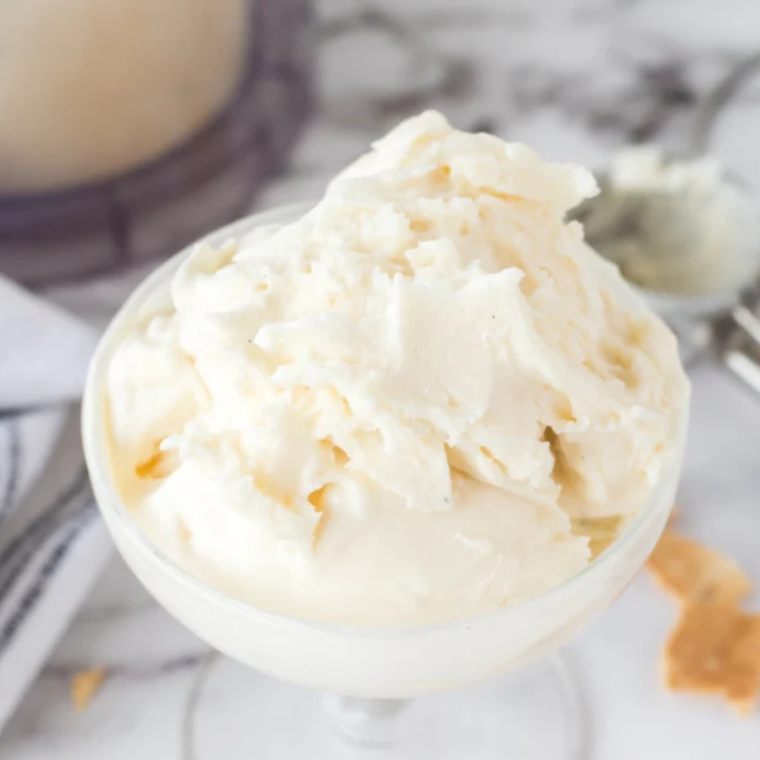
Storage
Store in a shallow airtight container with plastic wrap pressed onto the surface. It keeps 2 weeks, though texture is best in the first three or four days.
The uncooked base keeps 3 days in the refrigerator before churning, so you can cook it well ahead.
Don’t refreeze custard that has fully melted — the texture won’t come back.
Making It a Full Culver’s Night
If you’re recreating the whole meal rather than just dessert, the custard is the finish. Start with air fryer copycat Culver’s cheese curds and copycat Culver’s chicken tenders, and make the base the night before so it’s ready to churn while dinner cooks.
Frequently Asked Questions
What is the difference between frozen custard and ice cream?
Egg yolks and air. Frozen custard must contain at least 1.4% egg yolk solids by weight to be labeled custard, and it’s churned with far less air than ice cream — roughly 20% overrun versus 50% or more. It’s also served warmer, around 15–20°F, which is why it’s soft and velvety instead of hard.
Can I make Culver’s frozen custard in a Ninja Creami without cooking it?
Yes. Use the no-cook method above: whisk the base with pasteurized egg yolks, fill a pint to the max line, freeze flat 24 hours, rest 5 to 10 minutes, and run the Ice Cream setting. The Creami shaves a frozen block rather than churning air in, so you get very low overrun — exactly what makes custard taste like custard.
Do I have to use pasteurized eggs in a no-cook base?
Yes. Without a cooking step the yolks are never heated, so they need to be pasteurized before they go in. Pasteurized liquid egg yolk cartons and pasteurized shell eggs are both widely available and neither changes the flavor.
Why add pudding mix to a no-cook Creami base?
Instant pudding supplies the starch and emulsifiers a cooked custard develops on the stove. It’s what keeps the spun texture smooth rather than icy, and it’s undetectable in the finished custard.
Why does my Ninja Creami custard come out crumbly?
The pint is too cold. Let it sit on the counter 5 to 10 minutes before spinning, then add a tablespoon of heavy cream and hit Re-spin. Most custard bases need one re-spin, and that’s normal.
Do I need to freeze the Creami pint the full 24 hours?
Yes. A partially frozen block spins into slush and strains the motor. Twelve hours isn’t enough for a base this rich.
Which Ninja Creami setting should I use for frozen custard?
Ice Cream, not Lite Ice Cream or Sorbet. This base has the milkfat for the full program.
Do I have to use six egg yolks?
If you want it to legally and texturally be custard, yes. Fewer yolks makes a perfectly good French-style ice cream, but you lose the density that makes Culver’s taste the way it does.
Why do some frozen custard recipes add lemon juice?
A tiny amount of acid brightens the dairy and keeps the vanilla from tasting dull. A quarter teaspoon in a full batch is undetectable as lemon — you’d only notice if you left it out and compared side by side.
Can I make this without an ice cream maker or a Ninja Creami?
Not well. No-churn condensed milk methods rely on whipped cream for structure, which builds air in — the opposite of what custard needs. You’d be making a different dessert.
Why is my homemade frozen custard harder than Culver’s?
Two reasons: no commercial stabilizers, and your freezer runs about 15 degrees colder than a custard machine. Let it temper on the counter before serving.
Is Culver’s custard really made fresh every day?
Yes. It’s made in small batches throughout the day rather than frozen and stored, which is where the Fresh Frozen Custard name comes from.
Can I use pasteurized egg yolks?
You can. Cooking the base to 170°F handles food safety on its own either way.
More Culver’s Copycat Recipes
Once you’ve got the custard down, these are the ones worth making next.
Ninja Creami Culver’s Concrete Mixer — the natural next step from this base. Fold your mix-ins straight into the pint and run the Mix-In program.
Air Fryer Copycat Culver’s Cheese Curds — crispy shell, gooey center, no deep fryer required.
Easy Copycat Culver’s Chicken Tenders — juicy inside with the seasoned crunch the restaurant version is known for.
Easy Copycat Culver’s Buffalo Chicken Tenders — the same tenders with a buttery buffalo toss.
Culver’s Fish Sandwich — flaky cod on a buttered bun, made in the air fryer.
Easy Culver’s Signature Sauce — the creamy, tangy buttermilk and Parmesan sauce that goes on everything.
Culver’s Tartar Sauce — extra creamy with sweet pickle bites, ready in five minutes.
Culver’s Coleslaw — crisp, lightly sweet, and the right side for anything fried.
Culver’s George’s Chili — serve it with shredded cheddar, diced onion, and saltines like they do.

No-Cook Ninja Creami Culver’s Frozen Custard
Description
Ingredients
- 1 cup heavy cream
- 1 cup whole milk
- 3 pasteurized egg yolks, or 3 tablespoons pasteurized liquid egg yolk
- ⅓ cup granulated sugar
- 1 tablespoon instant vanilla pudding mix
- 2 teaspoons pure vanilla extract
- Pinch of kosher salt
Instructions
- Whisk the sugar into the milk until fully dissolved and no grit remains when you rub a drop between your fingers.
- Add the heavy cream, egg yolks, pudding mix, vanilla, and salt. Whisk until completely smooth.
- Pour into a Ninja Creami pint, filling to the max line but no higher.
- Freeze flat on a level shelf for a full 24 hours.
- Let the pint rest on the counter 5 to 10 minutes before spinning.
- Run the Ice Cream setting.
- If the custard comes out crumbly, add 1 tablespoon heavy cream and run Re-spin. Repeat once if needed.
- For mix-ins, cut a well to the bottom of the pint, add them, and run the Mix-In program.
Equipment
- Ninja Creami Ice Cream Machine
- Ninja Creami Pint Container
- Ninja Creami Pint Container Lid
Notes
Nutrition
Share this recipe
We can’t wait to see what you’ve made! Mention @forktospoon or tag #forktospoon!