Ten ingredients, ten minutes, and the heat never goes above a warm bath. This is the Bachan’s copycat that actually tastes like the bottle — sweet-savory, soy-forward, thick enough to cling, loud with fresh ginger and garlic.
Bachan’s is cold-filled. It says so on the label, and every copycat recipe I’ve read repeats it — right before telling you to simmer the sauce for twenty minutes. If the company bottles it without cooking it, why are we all reducing it in a saucepan?
This one doesn’t. Stir, warm just enough to dissolve the sugar, cool. That’s the whole method.
About the Name: Bachan’s, Not Banchan’s
Worth clearing up first, because it trips up nearly everyone searching for this.
The brand is Bachan’s — BAH-chan’s. It comes from bāchan (ばあちゃん), the affectionate Japanese word for grandmother. The company is named for the founder’s grandmother, and the sauce is her multi-generational family recipe.
It is not “Banchan’s.” Banchan (반찬) is Korean, and it means the little side dishes that come with a Korean meal — kimchi, pickled radish, seasoned spinach. Different language, different country, different food entirely.
The two get swapped constantly, and there are copycat recipes online filed under the wrong one. If you searched for “Banchan’s Japanese BBQ sauce,” you’re in the right place. You just want Bachan’s.
What Is Bachan’s Japanese Barbecue Sauce?
Bachan’s is a tare-style Japanese barbecue sauce, in the tradition of the glazes brushed over yakitori and yakiniku. If you’ve only met American barbecue sauce, the difference is immediate: no smoke, no liquid smoke, no molasses murk, no ketchup base.
It’s soy sauce and sugar doing the heavy lifting, cut with mirin and rice vinegar, then hit with raw aromatics. The company describes it as ten simple ingredients, cold-filled in small batches. Two claims from their own bottle matter enormously for copying it:
- They cold-fill. Cold-filling means bottling at ambient temperature rather than hot-filling, which is the usual heat-based route to a shelf-stable sauce. Founder Justin Gill has said it took 49 iterations to land a cold-filled, shelf-stable version of the family recipe — that’s what formulating around a heat step looks like. Draw the obvious conclusion about how much cooking this sauce wants.
- They add no water. None. The sauce is full strength.
Both of those are load-bearing, and both are where most copycat recipes go wrong.
Why Most Bachan’s Copycats Fail
Four mistakes, over and over.
- They add water. Bachan’s says outright that they don’t. Some copycat recipes call for a full cup of it. You cannot dilute a concentrated finishing sauce by a cup and land anywhere near the original — you get something that tastes like the idea of the sauce from across a room.
- They lean on tomato paste. Tomato paste is fourth on the label, behind soy sauce, cane sugar, and mirin. Recipes calling for a whole 6-ounce can produce a thick red paste that tastes like sweetened tomato, and then need all that water to thin it back down. You want 3 tablespoons. Enough for body and a low background hum of umami. Not enough to announce itself.
- They simmer it. Twenty minutes of reduction cooks the life out of the ginger, dulls the garlic, turns the green onion to sad confetti, and boils off the delicate aroma mirin exists to provide. Plenty of these recipes note that Bachan’s is cold-filled in the same breath. Nobody follows the thought anywhere.
- They strain it. Pour this through a fine mesh strainer and you’ve thrown the recipe away. Look at a real bottle: visible flecks of green onion suspended in it. That texture is the product. Straining removes precisely the thing you’re copying.
- They use low-sodium soy sauce. Then they wonder why it tastes flat. Bachan’s runs about 520mg of sodium per tablespoon. It’s a salty sauce. That’s the job.
Ingredients
The label lists ingredients in descending order by weight, which is a free blueprint. These amounts follow it.
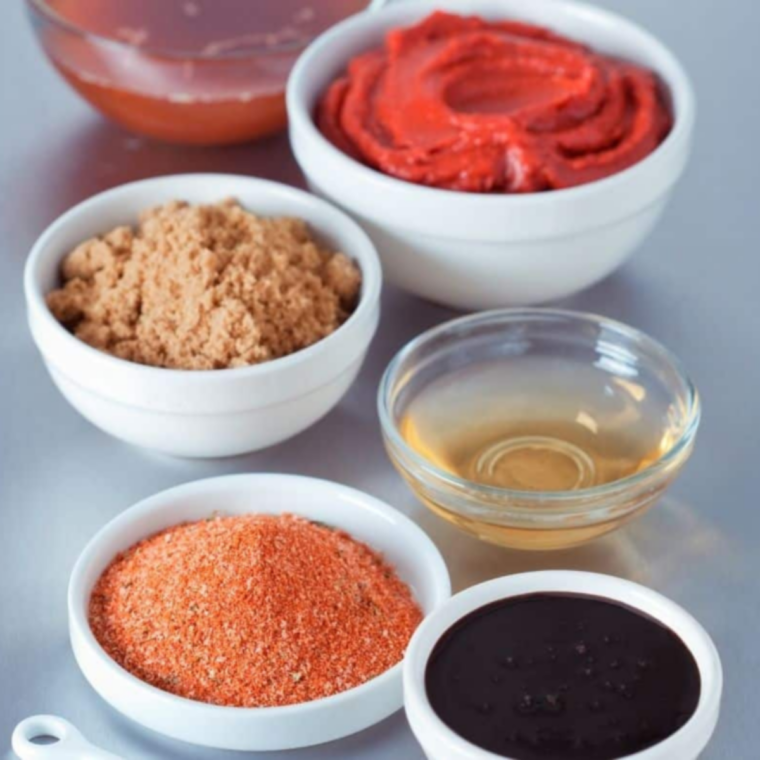
The base:
- 1 cup soy sauce — Japanese-style shoyu (Kikkoman, Yamasa) at full strength. Not low-sodium, not Chinese light soy. Shoyu is brewed with wheat and lands sweeter and rounder. Single most important choice in the recipe.
- ½ cup cane sugar — Sugar is second on the label, ahead of everything but soy sauce. Not a typo, not the place to economize.
- ⅓ cup mirin — Real hon-mirin if you can find it. “Aji-mirin” is a sweetened cooking wine substitute; it works, but it’s pre-sugared, so taste before adding all the cane sugar.
- 3 tablespoons tomato paste — Three tablespoons. Not a can. You should not taste tomato in the finished sauce.
- 2 tablespoons unseasoned rice vinegar — Seasoned rice vinegar has sugar and salt in it already and throws the balance.
The aromatics:
- 2 tablespoons grated fresh ginger — Microplane, not a knife. Powdered ginger is a different ingredient with a different job.
- 3 tablespoons minced green onion — Whites and greens both. These stay in.
- 1 tablespoon grated garlic — About 3 to 4 cloves. Same microplane.
- ¼ teaspoon sea salt — Taste first.
- 2 teaspoons toasted sesame oil — Toasted, not plain. It’s last on the label for a reason: it’s an accent, and a heavy hand turns the whole batch into sesame. Resist.
No water. Not an omission. The bottle doesn’t have any either.
How to Make Copycat Bachan’s Sauce
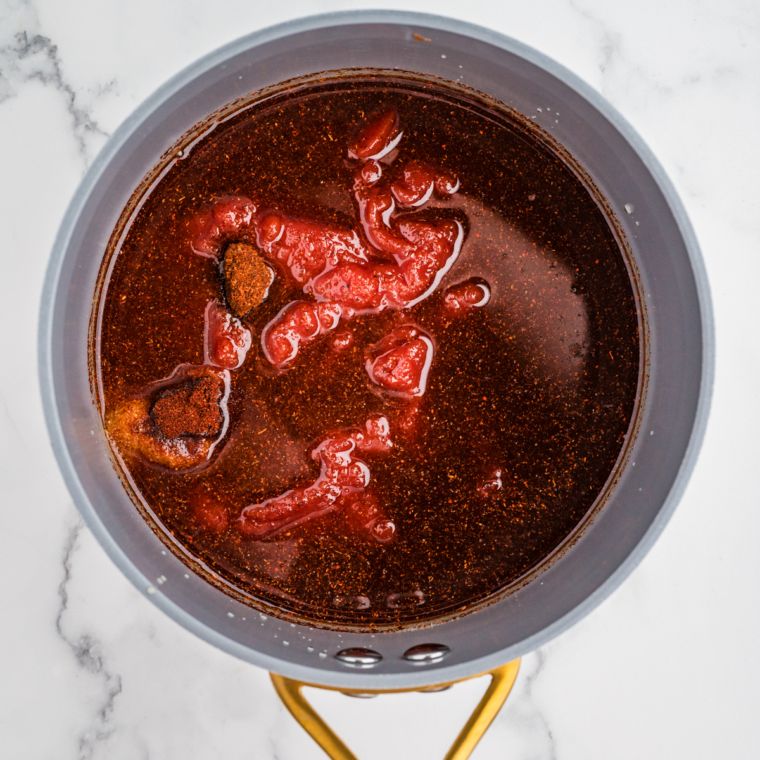
Step 1: Whisk the tomato paste into the mirin first. Off the heat, in a small saucepan, work them together until smooth. Tomato paste dropped straight into a cup of soy sauce will sulk in clumps forever. Fifteen seconds here is why you’ll never need a strainer.
Step 2: Add Soy sauce, sugar, rice vinegar, ginger, green onion, garlic, salt, sesame oil. Whisk.
Step 3: Lowest heat your burner does. Warm-to-the-finger, roughly 120–140°F. Stir until the sugar dissolves completely and the sauce looks glossy rather than grainy. Two to four minutes.
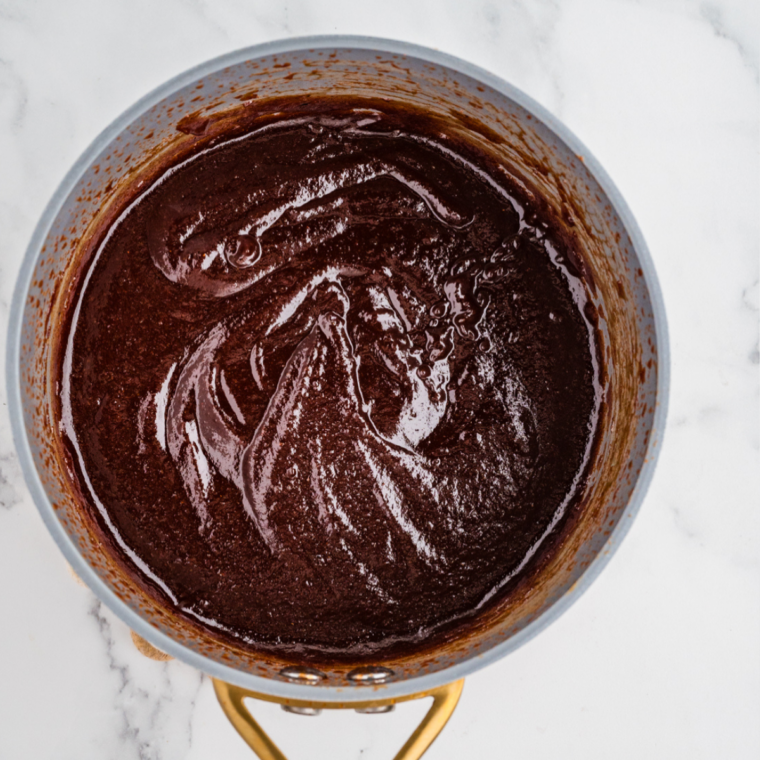
Step 4: Do not let it boil. Not a simmer. Not a “gentle bubble.” Bubbles at the edge means pull it off.
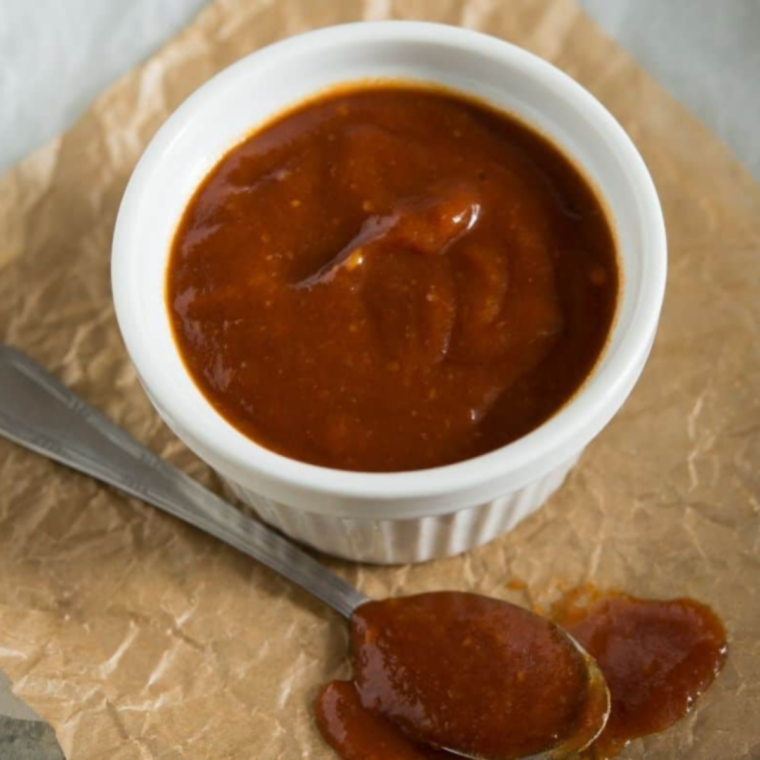
Cool and jar. Room temperature, then into a clean glass jar. It thickens slightly as it cools. Don’t strain it.
Yield: about 2 cups. Active time: 10 minutes.
Why You Don’t Boil It
The bottle you’re copying gets filled cold. That’s the short answer. The long answer is that heat here is purely subtractive:
- Mirin’s aroma is volatile. Its whole contribution is a delicate sweet perfume, and it evaporates. Boiling mirin is throwing money in a pot.
- Raw garlic and ginger are bright because they’re raw. The sulfur compounds in garlic and the gingerol in ginger are what make this taste alive. Cook them and you get mellow. Mellow is the enemy.
- Green onion turns gray and grassy. It’s an accent, not a vegetable.
- Soy sauce concentrates. You started with a cup. You don’t need it saltier.
Warming does exactly one job: dissolving sugar. Once that’s done, heat has nothing left to offer. Turn it off.
Using It in the Air Fryer
This is where the sugar content stops being trivia and starts setting off smoke alarms.
An air fryer is a convection oven with a small chamber and a fast fan. Sugar that would slowly caramelize on a grill goes from glaze to carbon in about ninety seconds at 400°F. So:
Sauce at the end. Always. Cook the protein naked or lightly oiled, then toss or brush in the last 2 to 3 minutes, and drop the temp to 350–360°F for that window if your machine runs hot.
Two coats beat one. Thin layer, ninety seconds, second layer, ninety seconds. You get lacquer instead of a scorched shell over raw sauce.
Line the basket for the glaze step. Sugar and perforated metal are not friends. A parchment round for the final minutes saves you fifteen with a scrub brush.
Marinating? Pat it dry first. Wet sauce in a convection chamber steams before it browns. Marinate, drain, cook, then sauce.
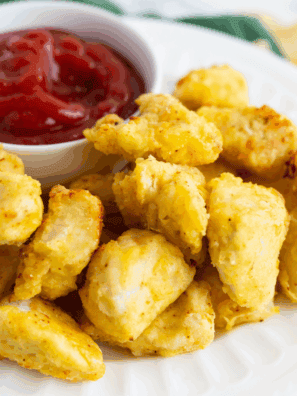
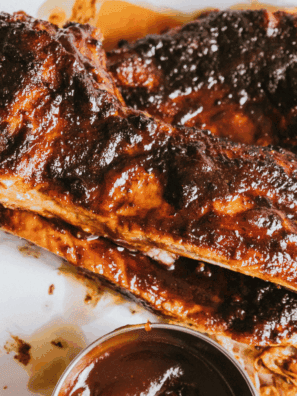
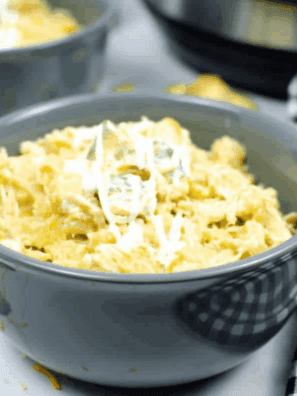
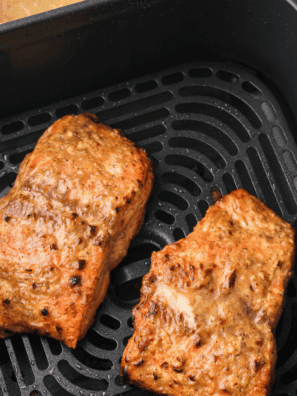
Spoke recipes built on this sauce:
One rule, air fryer or not: marinade that touched raw meat gets thrown out. Don’t brush it back on. Reserve a separate portion for glazing before the raw protein ever goes in.
Other Ways to Use It
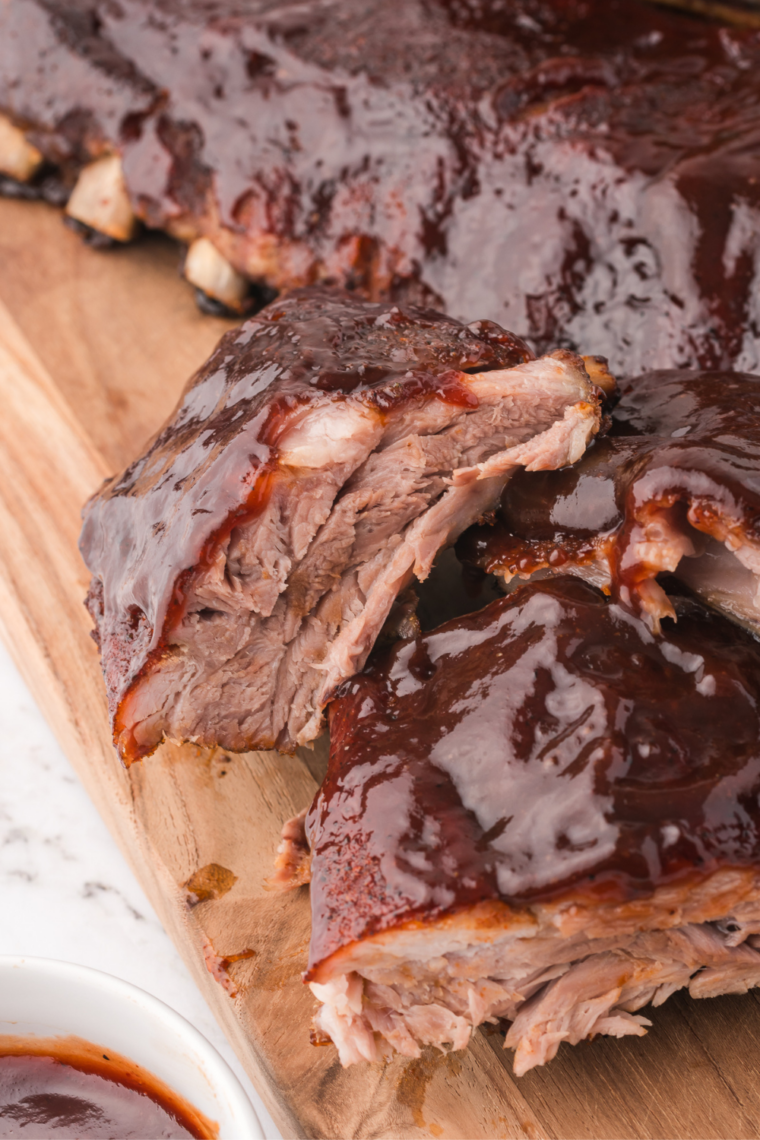
Dipping sauce. Straight from the jar, cold. Gyoza, dumplings, karaage, fries. Rice bowls. Drizzled over rice with anything on top. Stir-fry. Splash it in at the end, off the heat or nearly. Burgers and sandwiches. Spread on the bun.
Storage
Refrigerate in a sealed glass jar. It keeps two to three weeks.
Worth being precise about why, since the bottle keeps far longer: it’s not a preservative difference — Bachan’s doesn’t use preservatives either. It’s that they formulate for shelf stability and cold-fill under process control, and you’ve just put raw grated ginger, raw garlic, and fresh green onion in a jar in your kitchen. The salt and vinegar are doing real work. They aren’t doing all of it. Refrigerate for the aromatics.
It will separate. Shake it.
For longer storage, freeze in an ice cube tray, then bag the cubes. About three months, thaws in minutes.
Variations
- Thicker glaze: Pour off what you need into a small pan, whisk in ½ teaspoon cornstarch slurried with 1 tablespoon cold water, heat that portion until it thickens. Leave the master batch alone.
- Spicy (copycat Bachan’s Hot & Spicy): The spicy version’s label swaps in red jalapeño puree, high up — third, ahead of mirin. A tablespoon of fermented chili paste or sambal gets you close.
- Sesame seeds: A tablespoon of toasted sesame seeds after cooling.
- Too salty for you: Thin with water a tablespoon at a time — but dilute down from full strength rather than building it watery. You can always add water. You can’t take it out.
- Gluten-free: Bachan’s makes a dedicated gluten-free version, which tells you the original isn’t. Swap tamari for the shoyu and check your mirin. Flatter, more savory, still good.
FAQ
Is it Bachan’s or Banchan’s? Bachan’s. From bāchan, Japanese for grandmother. Banchan is the Korean term for side dishes — unrelated. The misspelling is everywhere, including on other copycat recipes.
What are the ingredients in Bachan’s? The Original’s label: soy sauce, cane sugar, mirin, tomato paste, ginger, green onion, rice vinegar, garlic, sea salt, and toasted sesame oil. Ten, listed heaviest first. This recipe uses that exact set in roughly that proportion.
Is this exactly like Bachan’s? No. It’s close — the sodium works out within about 8% of the bottle per tablespoon — and to my palate it’s brighter, because the aromatics are freshly grated rather than processed months ago. It won’t keep as long. That’s the trade.
Why does my copycat taste like tomato? Too much tomato paste. Some recipes call for a full 6-ounce can, roughly six times what this needs. Tomato paste is fourth on Bachan’s label, not a base.
Should I add water? No. Bachan’s states they add no water to their sauce. Recipes calling for a cup of it are making something else.
Should I strain it? No. The suspended green onion is part of what you’re copying.
Can I use brown sugar? You can, but you’ll get a molasses note that pulls it toward American barbecue. The label says cane sugar. Use cane sugar.
Do I need mirin? More than you’d think. In a pinch: 3 tablespoons dry sherry or sake plus 1½ teaspoons sugar. Skipping it leaves a hole.
Why is my sauce grainy? The sugar didn’t dissolve. Warm it again — gently — and keep stirring.
Can I double it? Yes, straight multiplication. Only the finishing salt scales awkwardly, so taste first.
Is it gluten-free? Not as written; soy sauce contains wheat. Use tamari and check your mirin.
Copycat Bachan’s Japanese Barbecue Sauce
Description
Ingredients
- 1 cup soy sauce, Japanese shoyu, full strength — not low-sodium
- 3/4 cup cane sugar
- 1/3 cup mirin, hon-mirin preferred
- 3 tablespoons tomato paste
- 2 tablespoons rice vinegar, unseasoned
- 2 tablespoons fresh ginger, grated
- 3 tablespoons green onion, minced
- 1 tablespoon garlic, grated (3–4 cloves)
- 1/4 teaspoon sea salt, to taste
- 2 teaspoons toasted sesame oil
Instructions
- Bloom the tomato paste. In a small saucepan, off the heat, whisk the tomato paste into the mirin until completely smooth. Skipping this leaves clumps that no amount of stirring will fix later.
- [3 tablespoons tomato paste, 1/3 cup mirin]
- Combine. Add the soy sauce, cane sugar, rice vinegar, ginger, green onion, garlic, sea salt, and sesame oil. Whisk together. Do not add water.
- [1 cup soy sauce, 3/4 cup cane sugar, 2 tablespoons rice vinegar, 2 tablespoons fresh ginger, 3 tablespoons green onion, 1 tablespoon garlic, 1/4 teaspoon sea salt, 2 teaspoons toasted sesame oil]
- Warm gently. Set over the lowest heat and stir until the sugar dissolves completely and the sauce turns glossy instead of grainy — 2 to 4 minutes. It should feel warm to the finger, around 120–140°F. Do not let it simmer or boil. Bubbles at the edge of the pan mean pull it off.
- Cool and store. Let it come to room temperature, then pour into a clean glass jar. Do not strain — the green onion suspended in the sauce is part of what you’re copying. It thickens slightly as it cools.
Equipment
- Small Saucepan
- Whisk
- Microplane or fine grater
- Glass jar with a tight lid
Notes
- Don’t boil it. Mirin’s aroma is volatile and evaporates. Raw garlic and ginger are bright because they’re raw. Warming has one job — dissolving the sugar. Once that’s done, turn off the heat.
- Don’t strain it. Blooming the tomato paste in mirin first means there’s nothing to strain out.
- Don’t add water. Bachan’s doesn’t. It’s a concentrated finishing sauce, not a thin marinade.
- Full-strength soy sauce only. Low-sodium versions taste flat here.
- Glazing: the sugar content means it burns. Brush on in the last 2–3 minutes of cooking, never before. In an air fryer, drop to 350°F for that window and use two thin coats.
- Marinade that touched raw meat gets discarded. Reserve a separate portion for glazing first.
- Storage: sealed glass jar in the fridge, 2–3 weeks. It separates; shake it. Freezes in an ice cube tray for about 3 months.
- Thicker glaze: pour off what you need, whisk in 1/2 tsp cornstarch slurried with 1 tbsp cold water, and heat that portion only.
Nutrition
Share this recipe
We can’t wait to see what you’ve made! Mention @forktospoon or tag #forktospoon!