The frozen dessert machine that took over TikTok is genuinely great — but the learning curve is real, and three mistakes ruin more pints than everything else combined..
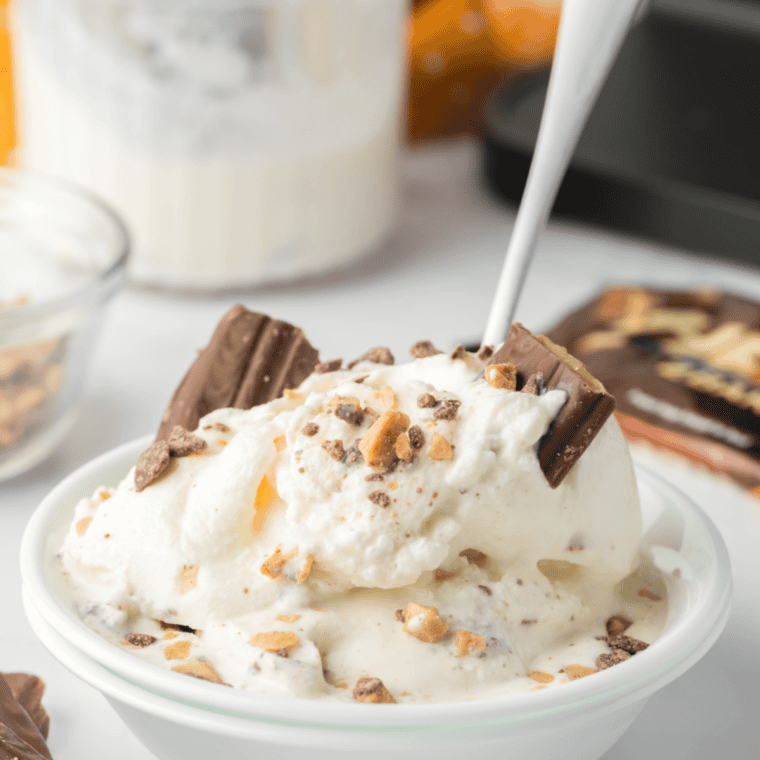
Chalky. Crumbly. Vaguely insulting. I had watched roughly forty seconds of TikTok footage of someone pulling out a perfect swirl of cookies-and-cream and assumed the machine did all the work.
It does not. Or rather — it does, but only if you understand what it’s actually doing, which almost nobody explains before you buy one.
Six months and something like ninety pints later, I’ve made peace with it. I make better ice cream at home than most of what I can buy. But I want to tell you the parts that don’t make it into the viral clips.
First: this isn’t an ice cream maker
That sounds pedantic. It matters more than anything else in this article.
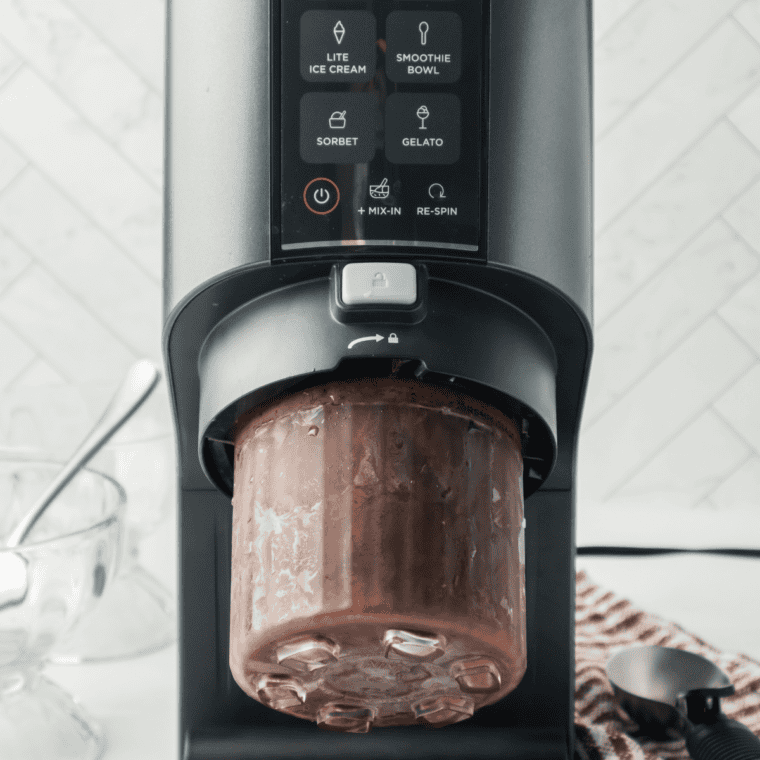
A traditional ice cream maker churns a liquid base while it freezes, whipping air in as ice crystals form. The Ninja Creami does the opposite. You freeze your base solid — a full 24 hours, no shortcuts — and then the machine shaves that frozen block down with a spinning blade into something impossibly smooth. Ninja calls it “Creamify” technology. Functionally, it’s a very precise, very loud pulverizer.
Understanding that single fact fixes most beginner problems. The machine cannot add what isn’t there. If your base is thin, watery, or fat-free, no amount of spinning will invent creaminess. Garbage in, gravel out.
The three Ninja Creami mistakes that wreck pints
1. You didn’t freeze it long enough
Twelve hours isn’t enough. Overnight isn’t reliably enough. Give it a true 24 hours on a flat surface in the coldest part of your freezer — not the door, not stacked on a bag of peas at an angle.
That last part matters more than it sounds. A tilted pint freezes with a slanted top, the blade hits it unevenly, and you get a pint that’s powder on one side and a solid puck on the other. Freeze level. Every recipe worth following will tell you this, and my GLP-1 protein ice cream spells it out as its own step for exactly this reason.
2. You’re scared of the Re-spin button
First spin comes out powdery? That’s normal, not failure.
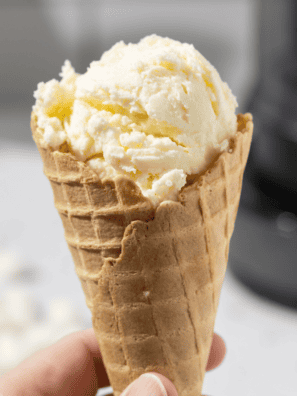
Add a splash of milk — a tablespoon poured into a hole you’ve dug in the center — and run Re-spin. This is the single most useful thing I learned, and it rescues probably one in three of my pints. Experienced users treat Re-spin as a standard step, not an emergency measure. Fruit bases are especially prone to it; my peach gelato almost always needs one, and it comes out silky every time once it gets one.
If it’s still crumbly after the first Re-spin, run a second. You cannot over-spin a pint into ruin. You can absolutely under-spin one.
3. Your base has no body
Fat, sugar, and protein all suppress ice crystal formation. Strip all three out and you get ice.
If you’re making a lighter base, something has to do structural work: Greek yogurt, a scoop of protein powder, a little cream cheese, a mashed banana, even a quarter-teaspoon of xanthan gum. Sugar-free syrup alone won’t cut it — it sweetens without adding any of the dissolved solids that keep a base from freezing into a brick.
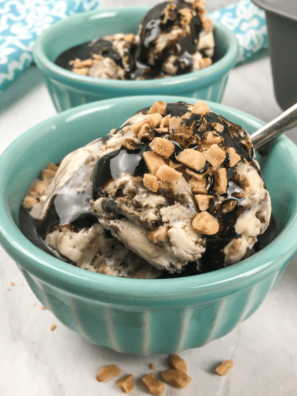
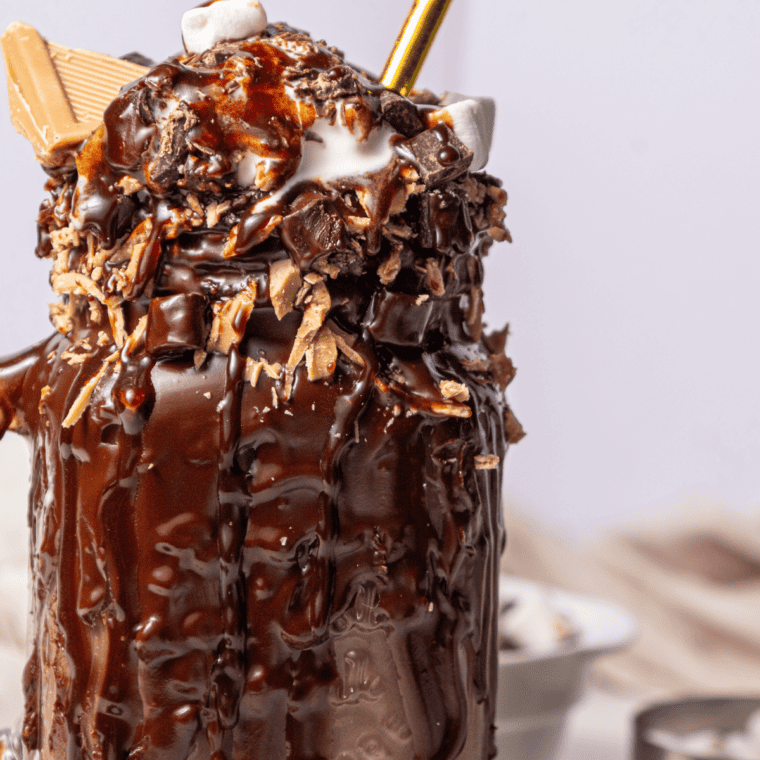
This is also why the classic rich bases are so forgiving. Something like chocolate malt ice cream is built on heavy cream and sugar, and it comes out smooth almost regardless of what you do to it. If your first few pints have been disasters, start there and work down toward the lighter stuff once you know what “right” looks like.
The protein ice cream thing is not hype
I was skeptical. I’m not anymore.
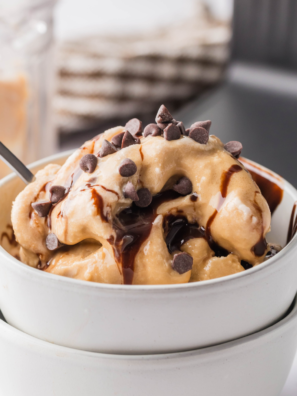
A blended base of cottage cheese, protein powder, milk, and sweetener — frozen 24 hours, spun on Lite Ice Cream, then re-spun — produces a dessert with serious protein and a texture that has no business being that good. This is genuinely why the machine went viral in fitness circles, and it’s the use case that turned mine from a novelty into an appliance I use weekly. This one runs 16 grams of protein for 183 calories, which is roughly the whole argument in one line.
The trade-off: protein powders vary wildly. Whey isolate behaves differently than casein, which behaves differently than plant blends. Expect to burn a few pints figuring out which brand plays nicely with your machine.
Which model, briefly
There are three in the current lineup, and the differences are simpler than the marketing suggests.
The original Ninja Creami has seven programs and 16 oz pints. It’s the right choice for most people — everything essential is here.
The Creami Deluxe uses larger 24 oz pints and adds programs split between scoopable and drinkable, including a few the original simply doesn’t have. The Creamiccino is the obvious example: it’s a dedicated button on the Deluxe and doesn’t exist on the original at all. Worth the upgrade if you’re feeding a family and tired of making two pints back to back.
The Ninja Swirl by Creami is the newest and priciest, and the only one that dispenses actual soft-serve through a lever. Genuinely fun. Genuinely more parts to wash.
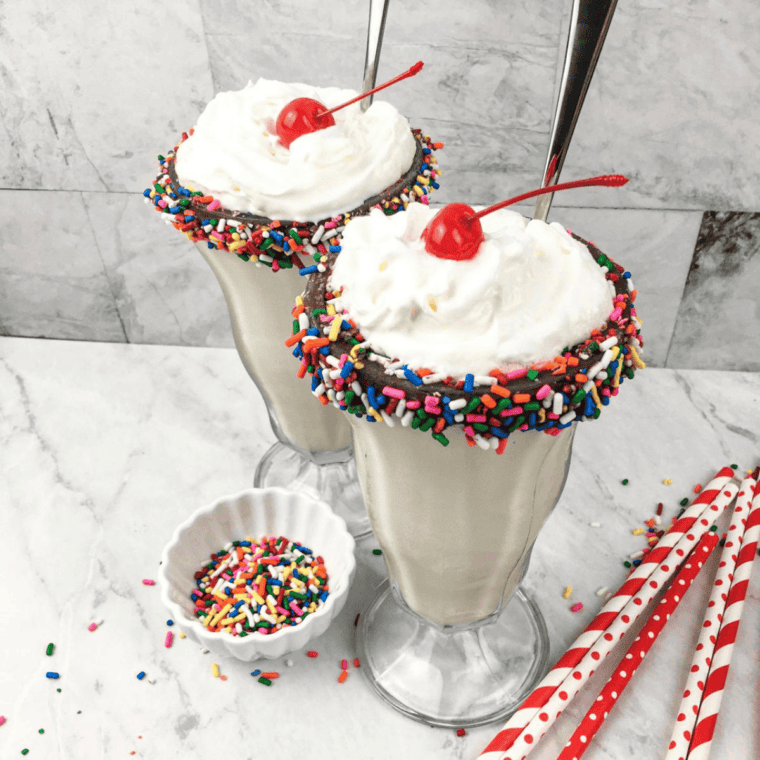
Here’s the thing worth knowing before you feel locked out: most Deluxe-only recipes have a workaround. My frappe recipe covers this — no Creamiccino button just means you spin on Lite Ice Cream, add two tablespoons of milk, and re-spin on Milkshake. Same drink, one extra step. Don’t upgrade over a button.
One warning that does catch people out: pints are not universally interchangeable across models. Check compatibility before buying a stack of spares.
The honest downsides
It’s loud. Around 70–75 decibels, comparable to a powerful blender. You will not be making a quiet midnight pint while the house sleeps.
It requires planning. The 24-hour freeze means spontaneous ice cream is off the table. You are always eating the dessert you decided on yesterday. I’ve come to like this — it makes dessert deliberate rather than impulsive — but it’s a real behavioral change.
Storage is a genuine issue. The pints take up freezer real estate, and once you’re rotating four or five bases at a time, you’ll notice. Measure your freezer before you commit to a bundle.
Washing up. The paddle, the lid, the pint, every time. It’s not terrible. It’s not nothing.
Would I buy it again?
Yes, and it isn’t close.
Not because it makes the best ice cream I’ve ever eaten — a proper compressor churn machine still edges it on classic custard bases. But because it made dessert something I make rather than something I buy, with exactly the ingredients I choose. That shift is worth more to me than the last five percent of texture.
Just go in knowing what you bought: a frozen-block shaver that rewards patience, good fat content, and a willingness to press Re-spin without shame.
Your first pint will probably be bad. Make a second one.
Quick start: your first pint, done right
- Blend your base until completely smooth — no lumps, no un-dissolved powder. Let the foam settle a few minutes before pouring.
- Pour to the max fill line, not above it.
- Freeze flat for a full 24 hours.
- Run the program that matches your base — Lite Ice Cream for lower-fat, Sorbet for fruit-and-water bases, Gelato for anything egg-enriched.
- If it’s crumbly, dig a hole in the center, add a tablespoon of milk, and Re-spin. Repeat once if needed.
- Mix-ins go in after the main spin, using the Mix-In program.
Once you’ve got a good pint under your belt, the full Ninja Creami archive is where I’d go next.