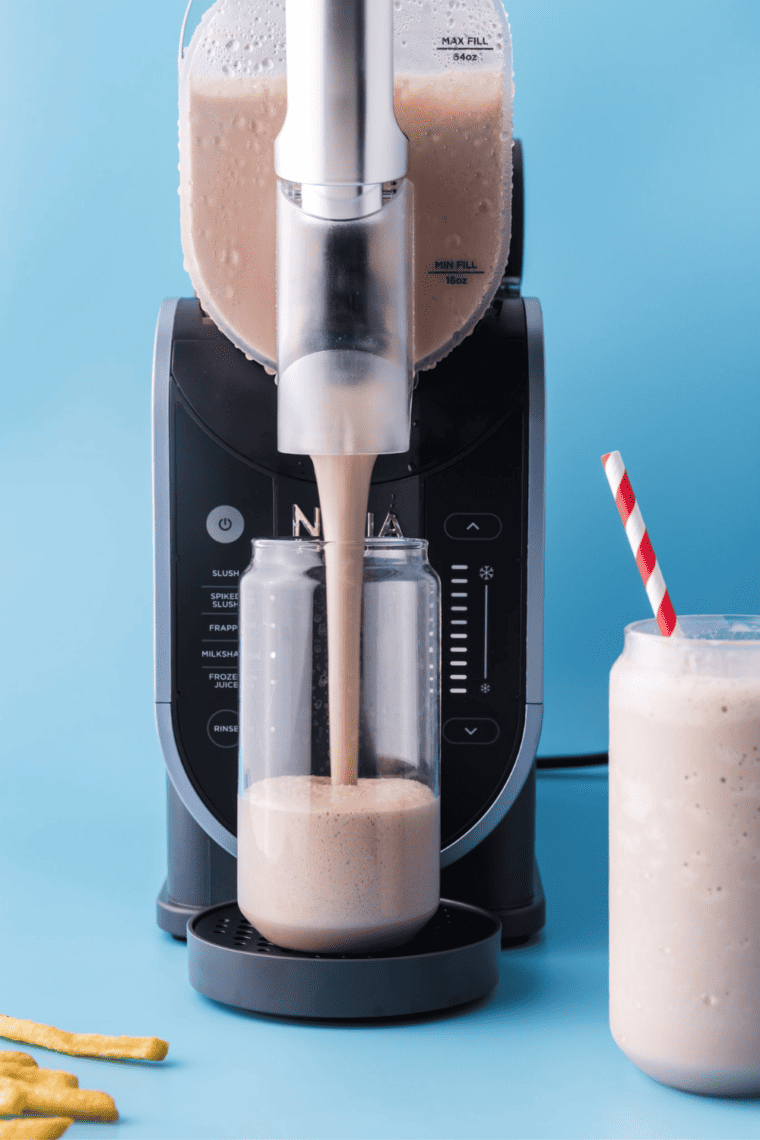
The Ninja Slushi fails in ways that don’t make sense until you understand what’s happening inside it. There’s no ice and there are no blades. A compressor chills a metal cylinder, and an auger scrapes liquid against it until the batch turns to slush.
That design creates a specific set of problems. The machine can only freeze what’s chemically freezable, and it tells you when something’s wrong using a language of flashing lights that the manual explains once and then never mentions again.
Here’s every common problem, what the machine is actually telling you, and how to fix it.
The 60-Second Checklist
Run through this before troubleshooting anything specific.
- Is there at least 16 oz in the vessel? Below the minimum, the auger can’t work properly.
- Are you above the 64 oz max fill line? Overfilling causes overflow and poor dispensing.
- Did you chill the liquid first? Room-temperature liquid adds 15 or more minutes and gives worse texture.
- Is the vessel seated and locked onto the base?
- Is the drink actually sweetened? Diet soda and sugar-free mixers will not freeze in this machine.
- Are you on the right preset? A cocktail on plain SLUSH will never turn to slush.
What the Flashing Lights Mean
This is the part almost nobody explains, and it’s the difference between a two-minute fix and an hour of guessing. Both alerts flash the temperature control LEDs one at a time and beep every minute for fifteen minutes — but the direction tells you which problem you have.
LEDs flashing downward, starting at the top: not enough sugar
Your mix is below the sugar minimum. The machine can’t form ice crystals without dissolved sugar to work with.
The fix: add 1 to 2 tablespoons of sweetener per serving — flavored syrup, juice, sugar, maple syrup, agave, honey, or simple syrup. Combine it with the base before pouring it in. Granulated sugar dropped into a running vessel sinks and doesn’t dissolve.
LEDs flashing upward, starting at the bottom: too much alcohol or sugar
The opposite problem. Too much of either lowers the freezing point past what the machine can reach.
The fix: add 1/4 cup of water, soda, tonic, seltzer, or plain chilled coffee or tea per serving to dilute it.
If you want the actual numbers behind both alerts — the sugar floor and the alcohol ceiling — why isn’t my Ninja Slushi freezing breaks down the percentages and how to hit them.
Why Won’t My Ninja Slushi Turn On?
Check the outlet with something else first — a tripped GFCI looks identical to a dead appliance.
If it has power but won’t start a program, the issue is almost always assembly. The vessel, lid, and auger all have to be seated correctly for the machine to run. Take everything apart and reassemble deliberately rather than trying to nudge it into place.
If every button is blinking at once, that’s widely reported as a safety interlock refusing to clear. Unplug the unit, wait a minute, fully reassemble, and plug back in. If it persists through several attempts, it’s a warranty conversation rather than something to fix at home.
Why Did My Ninja Slushi Stop Mid-Cycle?
Motors shut down protectively when they get too warm or when the auger meets more resistance than expected — usually a batch that’s frozen harder than the setting intended.
Turn it off, let it sit 15 to 20 minutes, and restart. If it stops repeatedly on the same batch, the mix is too thick for the temperature level you selected. Lower the level a notch and let it recover.
Why Has It Been Running an Hour With Nothing to Show?
If you’re getting no alert lights at all, the machine thinks everything is fine and just hasn’t reached your target texture. Increase the temperature control by one level, wait 10 to 15 minutes, and check. Repeat if needed.
If you’re getting alerts, go back to the flashing-light section above — it’s a sugar or alcohol problem, and no amount of extra time will fix it.
If you’re on the wrong preset, that’s its own failure. Each preset targets a different temperature, and a cocktail run on SLUSH will hit its target and beep at you while remaining a cold drink. Which preset to use and when covers the differences.
Why Is My Slush Too Thick?
The temperature level is set too high, or the batch has been holding at temperature for a long time. Press the bottom arrow to decrease the level and give it a few minutes to loosen.
Thick slush is also the main cause of dispensing trouble, which is the next problem on this list.
Why Is My Slush Too Thin?
Increase the temperature level by pressing the top arrow. Higher level means colder and thicker, which reads backwards until you get used to it.
If it won’t thicken at any level, you’re at the edge of what the mix can do — usually too much alcohol. Dilute and re-run.
Why Won’t My Ninja Slushi Dispense?
Three things fix nearly every dispensing problem:
- Fill closer to the max fill line. A low vessel dispenses poorly.
- Leave the unit running. Dispensing from a stopped machine doesn’t work well.
- Lower the temperature level. More sippable drinks flow out much more smoothly than very thick ones.
If the spout is genuinely blocked, run a rinse cycle rather than poking anything into it.
Why Is My Ninja Slushi Leaking?
Check the drip tray first — condensation collects there by design, and a full tray reads as a leak. Empty it and watch again.
Actual leaking usually traces to the vessel not being fully seated, a spout shroud that wasn’t reattached after cleaning, or a seal with residue on it holding it slightly open. Disassemble, clean everything, dry it fully, and reassemble.
Why Does It Smell, or Feel Sticky Inside?
Sugar residue left in the auger housing is the culprit, and it’s the single most common maintenance failure with this machine.
The rinse cycle exists for exactly this:
- Dispense any remaining drink.
- Stop the current preset, then press RINSE.
- Add hot water up to the max fill line.
- Dispense the water immediately — it comes out fast, so use a large bowl.
- Press RINSE again to stop, then power off.
Repeat until the water runs clear. The rinse cycle is not a substitute for washing — take the parts off and wash them by hand or in the dishwasher afterward. Full details are in how to clean your Ninja Slushi.
One habit that prevents most of this: don’t stop the preset until everything has been dispensed. Slush left sitting in a powered-off vessel sets up and becomes far harder to clean out.
Why Did My Milkshake Come Out Foamy or Separated?
Dairy behaves differently from juice and soda. Over-aerating a dairy drink is one of the few Slushi mistakes that doesn’t fully reverse — you can re-run it, but the texture won’t completely recover.
Use the dairy-appropriate preset from the start rather than correcting later. For a base that reliably works, the Ninja Slushi protein milkshake is a good template.
When It’s Actually Broken
Contact Ninja if:
- Every button blinks and won’t clear after several full reassemblies
- The motor won’t run after a 20-minute cooldown and a confirmed working outlet
- The auger doesn’t turn even with the vessel correctly seated
- You hear grinding, or the compressor never kicks on at all
The model number is on the base. Keep your purchase date handy.
Ninja Slushi FAQ
Can I use diet soda? No. Sugar substitutes won’t produce the ice crystal structure this machine depends on, and you’ll get the low-sugar alert.
Why does my drink need to be chilled first? Room-temperature liquid adds significant time and produces a coarser texture. Chilling costs you nothing and improves every batch.
What’s the minimum I can make? 16 oz. Below that, there isn’t enough liquid for the auger to work against.
Does higher temperature level mean warmer? No — and this trips up nearly everyone. Higher level means colder and thicker. Lower means more sippable.
Can I fix a batch that’s already wrong? Usually yes, for sugar and alcohol problems. Dilute or sweeten and re-run. Over-aerated dairy is the exception.
Do I have to run the rinse cycle every time? Yes, and immediately. Sugar residue hardens fast, and a cycle skipped tonight becomes a real scrubbing job tomorrow.
The Short Version
Nine times out of ten, a Ninja Slushi problem is the drink, not the machine — too little sugar, too much alcohol, or the wrong preset. The flashing lights tell you which, as long as you know that downward means add sugar and upward means dilute.
New to the machine, or want the full picture before your next batch? Start with how to use the Ninja Slushi.